Tag Archives: travel

Tasmania’s Flinders Island….Day 1

18 Apr

Dear Reader:

The Black Tiger Snake is a good two metres long with its head raised towards me. However, I am safely seated in the driver’s seat of the rented SUV.

The reflection in the side mirror suggests a cautious approach to photographing a large Black Tiger Snake

I am spending seven days exploring Tasmania’s Flinders Island in Bass Strait, the largest of the Furneaux Island group. My apologies for straying from my usual South Australian blogs but this fascinating Island is certainly worth a few posts.

Typical Flinders Island coastline

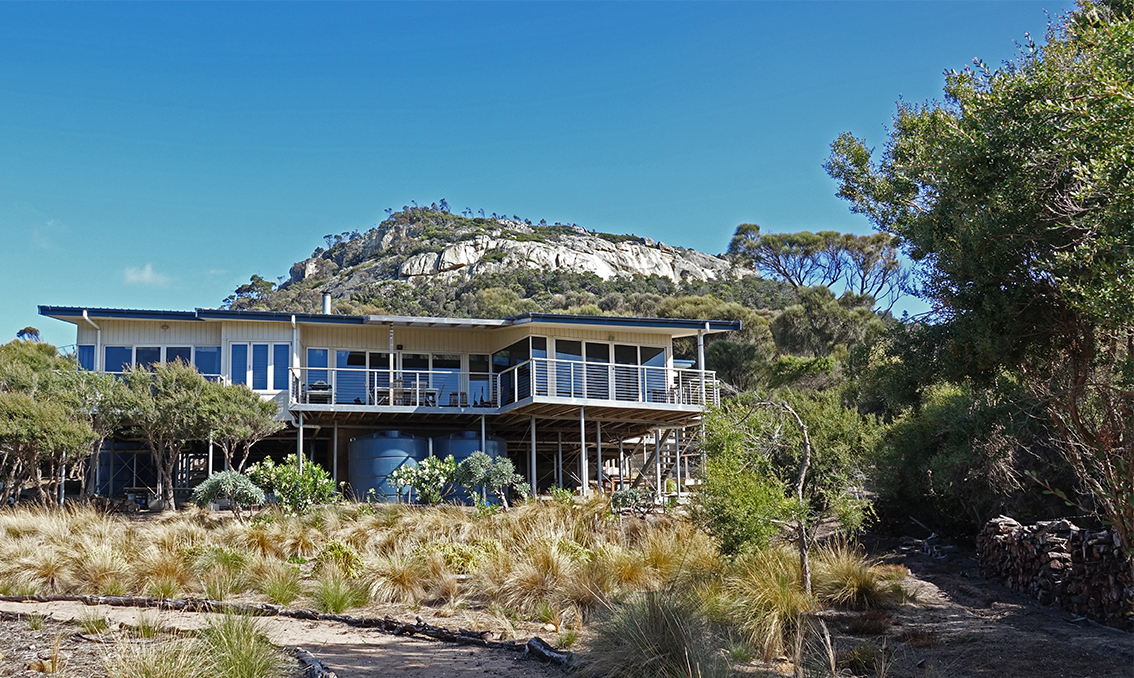
Nautilus, the coastal rental we are staying in, is truly wonderful; beautifully appointed and self-contained it offers panoramic views of the coastline.

View from Nautilus’s main living area

Unpacked and settled in, I take the path through the back garden and a  few metres of scrub emerging onto a granite platform which typifies this section of coast.

A gap in the scrub leads to the coast
Nautilus from the bottom of the garden area

The rugged outcrops and cliffs extend both ways along the shoreline, punctuated on the eastern flank by a bay with and stretch of golden sand. The sand yields Topaz crystals called ‘Killiekrankie Diamonds’. named for the tiny settlement and beach where they are found.

Killiecrankie’s bay and beach

A small bench sits on the border between scrub and granite. It is the perfect place to enjoy the striking scenery and look out for seabirds, dolphins and other coastal wildlife. I do not have to wait too long as a pod of dolphins cruises past several hundred metres out to sea while both Silver Gulls and Pacific Gulls fly along the seashore.

A Pacific Gull flies past

The sun is getting lower in the sky and there is just enough time to explore one of the many rockpools worn into the granite and accessible at low tide. This cursory look reveals periwinkles in the splash zone, limpets along the waterline and an occasional red anemone.

Rockpool in the granite coastline
Three Limpets amongst the Periwinkles….both use their tight sealing processes to retain water and can survive low tide exposure

Evening is closing in and it’s time to get back and start preparing dinner. Approaching the steps leading to the house, I notice a Red-necked or Bennett’s Wallaby in the driveway. It doesn’t seem too perturbed by my presence and hops into the nearby tree-line then stops and looks back at me.

A Red-necked Wallaby bounds across the path behind the house

My first day on Flinders Island has been quite exciting and I hope for more revelations as the week goes by.

Cheers

Baz

Additional notes

Other animals seen, heard but not photographed, Kookaburra, Fairy Wrens, Black Currawong, cormorant species

The camera used for this post is a Sony RX10 111

Please pass on this blog title and or contact information (URL) to any person or organisation with an interest in taking walks and enjoying wildlife in SA.

Click on these links and see more South Australian stories and pictures in my Weekend Notes articles as well as locating similar blogs on Feedspot’s top 20 Australian wildlife blogs

https://www.weekendnotes.com/adelaide/writer/452/

https://blog.feedspot.com/australian_wildlife_blogs/

Wirrina Foreshore Reserve

25 Mar

Dear Reader:

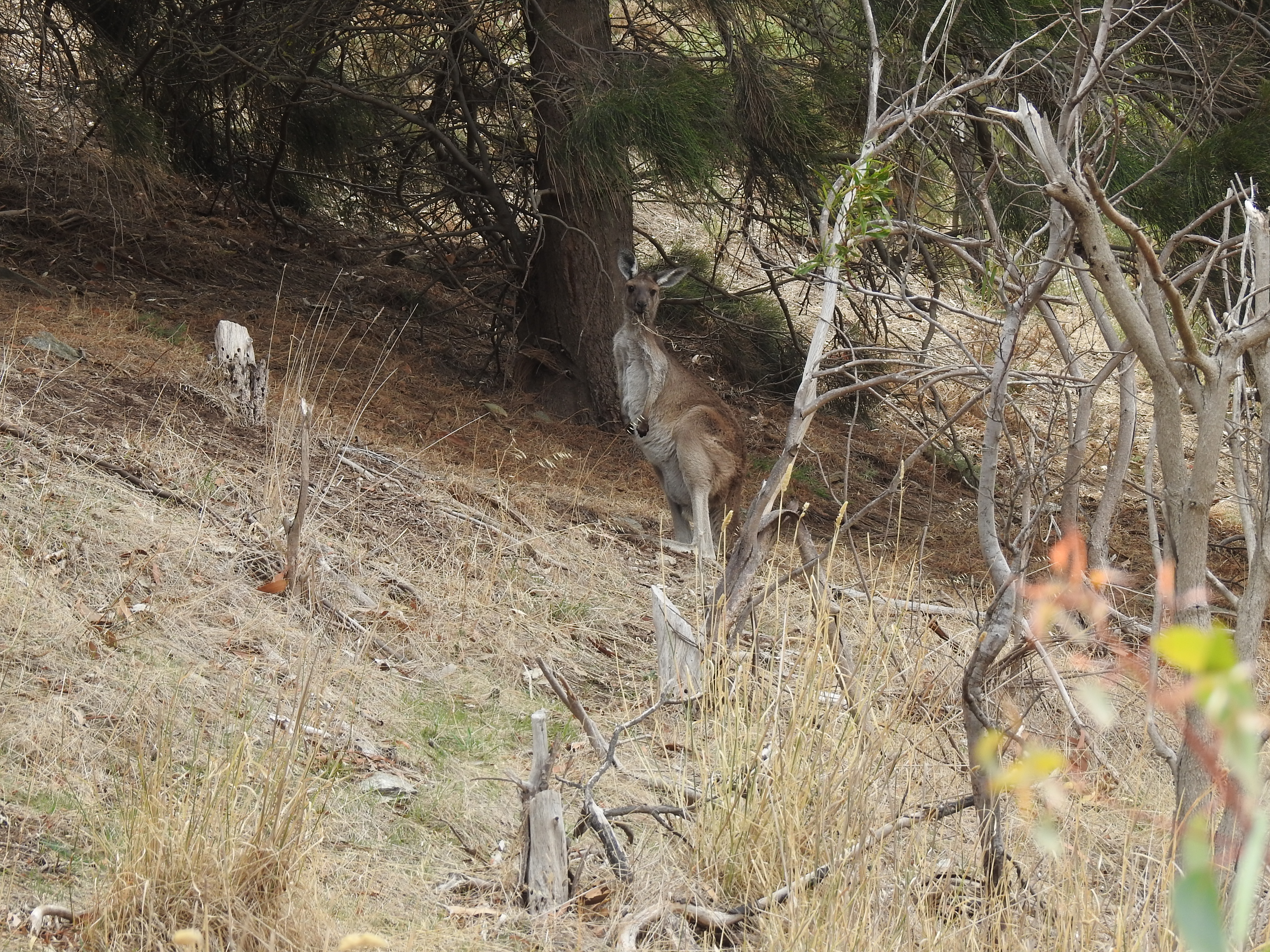
The Western Grey Kangaroo stops feeding and looks at me, twitches its ears then hops deeper into the bushes where it is joined by a second roo.

Western Grey Kangaroo
Then there were two

I am driving along the access road to Wirrina Cove marina, where I will walk along the Wirrina Foreshore Reserve. It is a rather overcast day which adds a few extra photographic challenges.

Beginning of the walk

Like other parts of the Fleurieu the story told by the rock formations is fascinating. The areas geoheritage includes: deep sedimentary basins, massive plate tectonic collisions, glaciation and mountain formation.

Rock formations along the shoreline

At low tide the rocky foreshore is a maze of rockpools. Within each of these ecological niches lives a wonderful variety of marine organisms such as anemones, sponges, seasnails and crustaceans; to mention just a few.

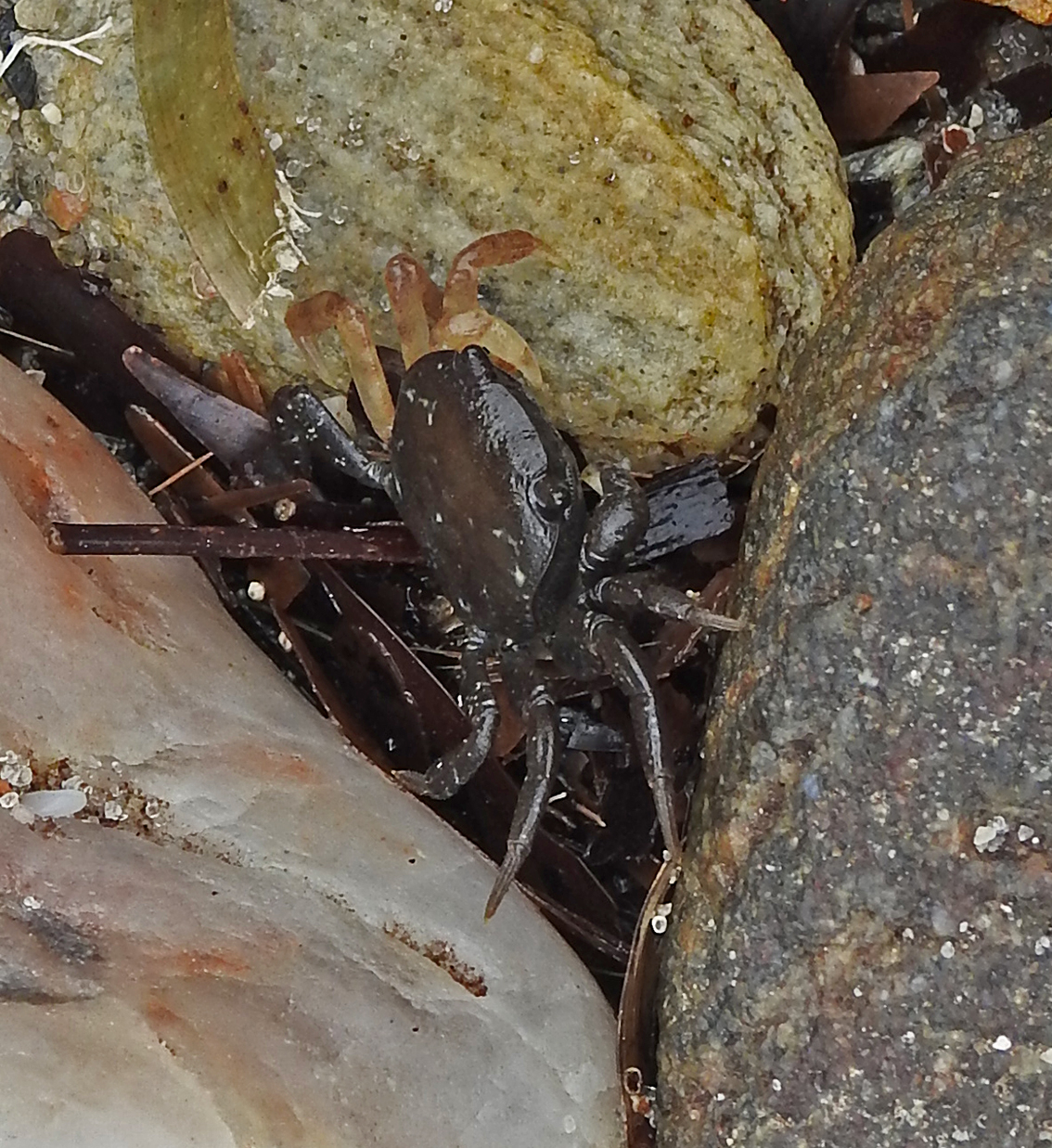
Shore crab species on the edge of a rockpool
Turban Shell

Banks of seaweed cover some parts of the shoreline and I am amazed to see an Australian Magpie probing the weed. Closer observation suggests it might be gathering nesting material.

Australian Magpie in seaweed pile

After spending some time exploring the edges of the pools, I move back to the trail to capture a few images of the typical birdlife. There are White-faced herons stalking the shallows, Pied Cormorants and Masked Lapwings resting on the rocks and a pair of grebes further out to sea.

White-faced Heron

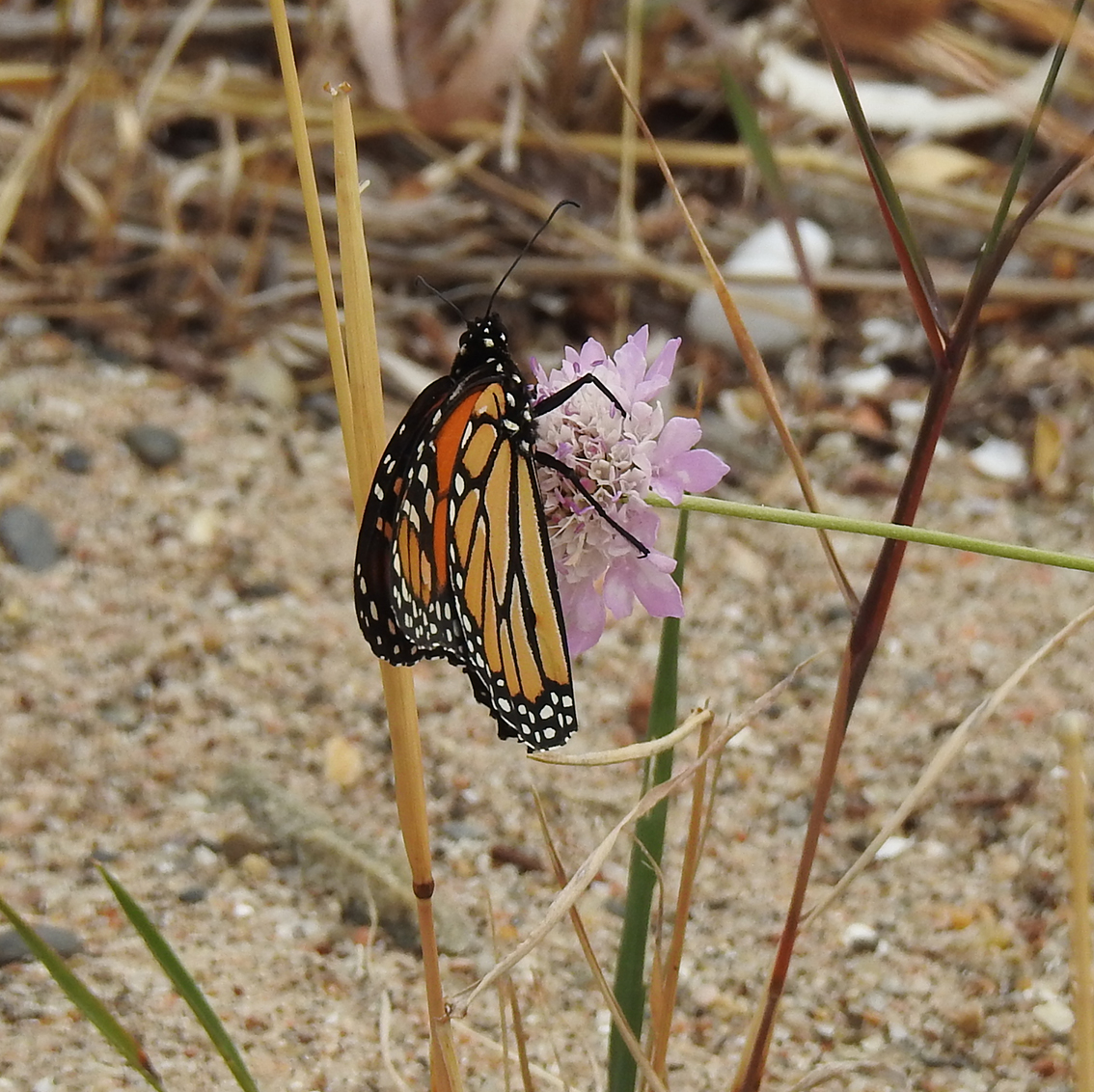
Having captured images of molluscs, birds, crustaceans and marsupials, I turn my attention to plants, insects and other life forms. Butterflies and native bees are feeding on flowering Scabia blooms, lichens coat the rock formations and Cushion Bushes colonise niches in the rock formations.  

The weather closes in and it is time to leave the walking trail. However, I am determined to return on a warmer, sunnier day with some snorkeling gear to further explore this fascinating area.

Cheers

Baz

Additional notes

The camera used for this post is a Nikon Coolpix P900

This is an easy walk and drive which is quite suitable for families and seniors. It is dog friendly.

Please pass on this blog title and or contact information (URL) to any person or organisation with an interest in taking walks and enjoying wildlife in SA.

Click on these links and see more South Australian stories and pictures in my Weekend Notes articles as well as locating similar blogs on Feedspot’s top 20 Australian wildlife blogs

https://www.weekendnotes.com/adelaide/writer/452/

https://blog.feedspot.com/australian_wildlife_blogs/

, , , , , , , , ,

Driving the James Track to the Myponga Conservation Park

11 Mar

Dear Reader:

A Short-billed Corella perches in the fork of a gum tree. Its raucous call resonating through the still morning air.

Short-billed Corella

I am driving the largely unsealed road between Myponga and the conservation park of the same name. For a summer’s day, it is refreshingly cool but the dryness of the surrounding countryside tells a different story.

James Track

A few minutes after seeing the corella, I catch a glimpse of a group of Straw-necked Ibises strutting through the pale, yellow grass. They turn to watch me then fly off towards the coast.

Straw-necked Ibises

Further down the road there are dozens of Rose-breasted Cockatoos (Galahs) in a stand of trees. All but one takes to the air as I leave the car to take a shot of them. The plucky little bird drops out of the gum tree and hops onto an old, circular concrete well and starts to drink.

Just taking a little drink

The road takes a sweeping bend and starts to climb. I find a good vantage point and scan the broad expanse of dry pasture with my telephoto lens. What I missed from the vehicle soon becomes apparent. There are Western Grey Kangaroos scattered across the landscape in small groups of two to six animals.

Roos in the landscape
Western Grey Kangaroo (through the telephoto lens)

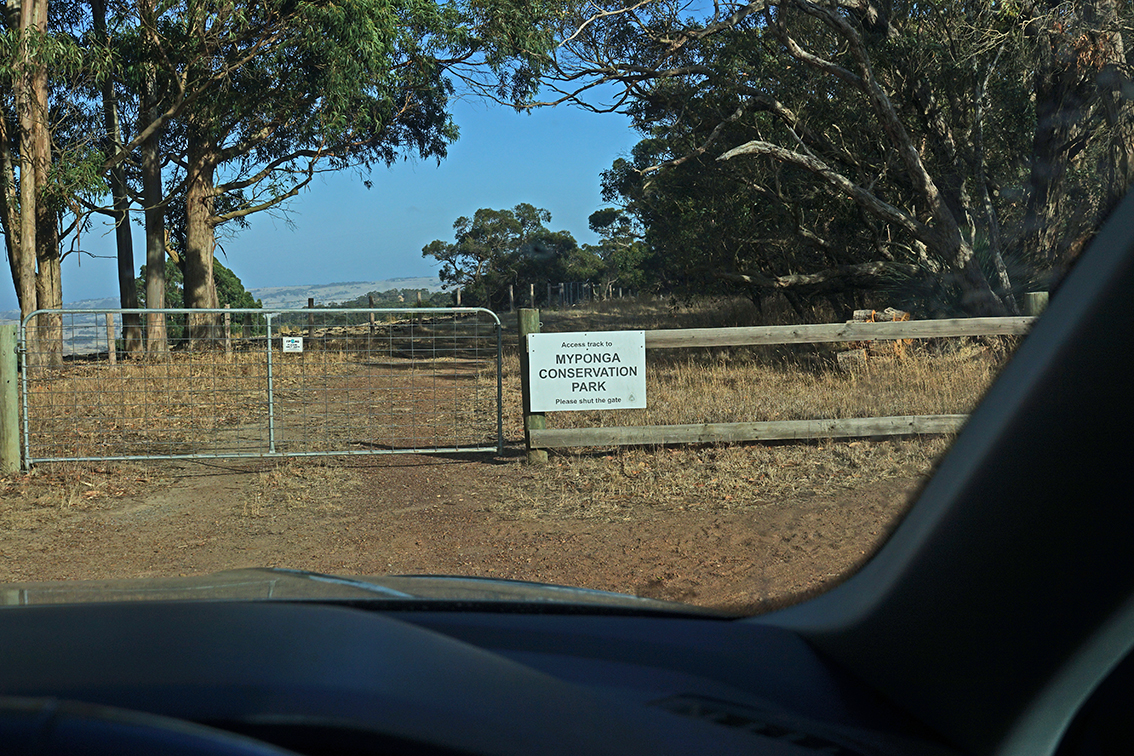
The terrain changes from lightly wooded pasture to scrub with an overstory of smaller eucalypts. Several kilometres on, I reach a gated entrance to the Myponga Conservation Park alongside a local property.  

Change if terrain near the park

Taking care to close the gate behind me I drive through a combination of rolling hills, farmland, and dense scrub. The track is about two kilometres long and ends in an open space wide enough to turn around.

Inside the park

Two trails; The Echidna and Wren, branch off from the end of the road into the park and alongside some farmland. As a bonus, there is a spectacular view across the hills towards the ocean.

Trails at the end of the park

My goal for today achieved, I drive back along the trail. At the gate I meet a local property owners and chat to him about the area. He tells me that the park is best explored in spring when the plants are in flower providing food for a range of animals.

Myponga Conservation Park gate

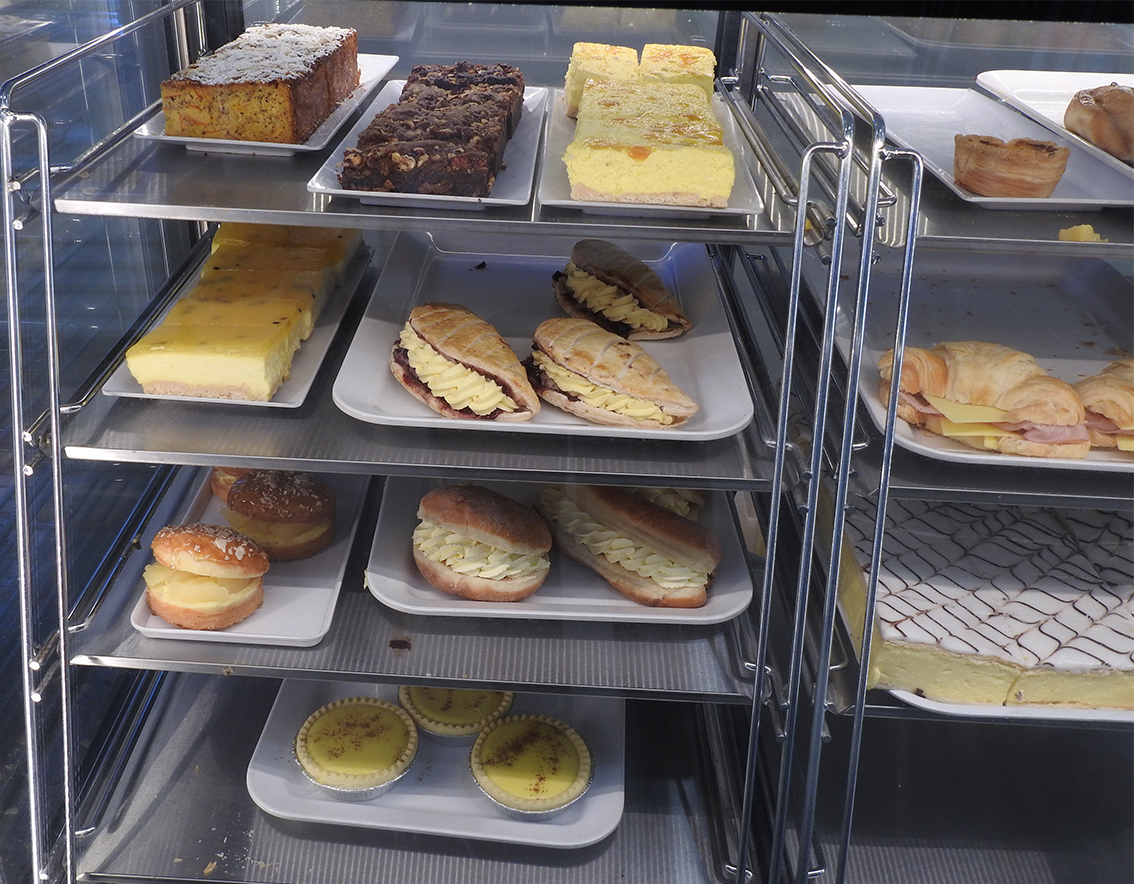
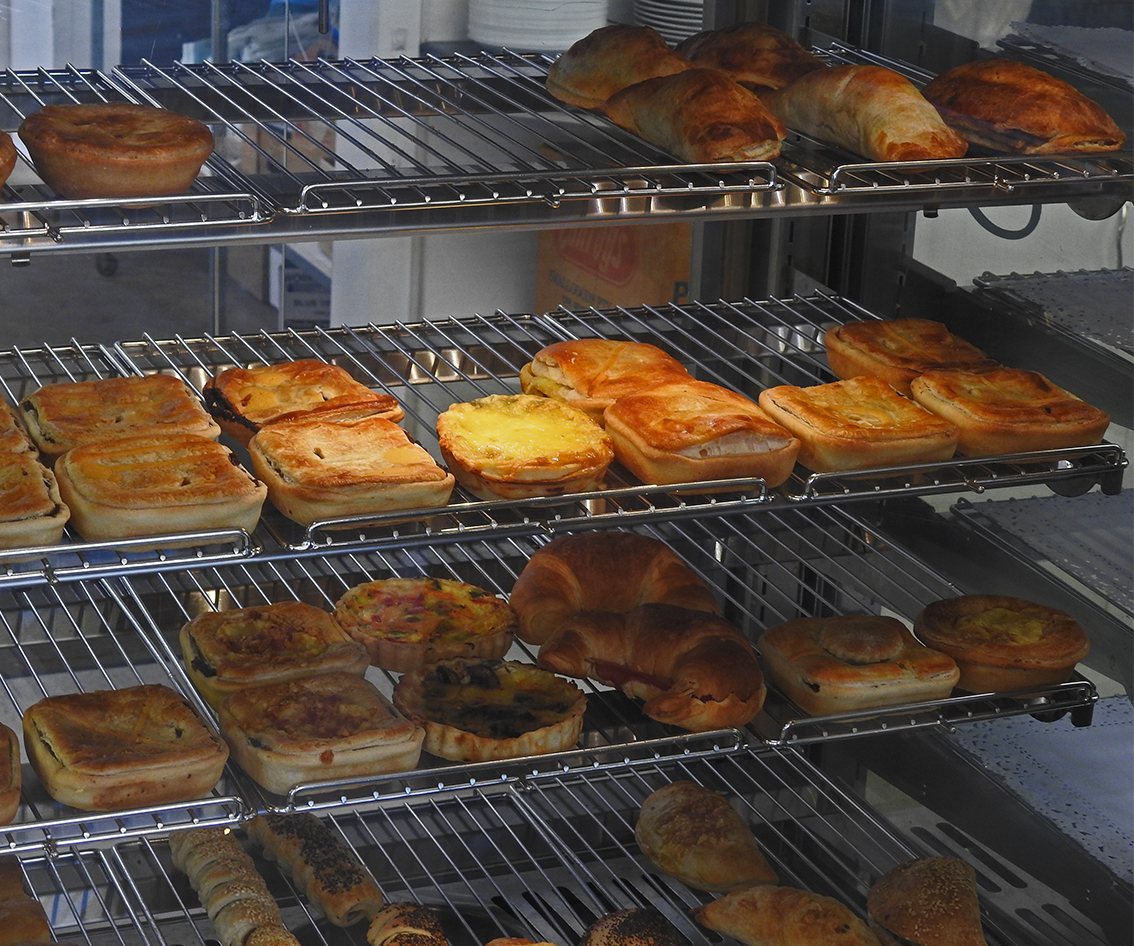
I return to Myponga back along The James Track where I enjoy the delights of the local bakery before heading home to review my images and make a note in the diary to return in the spring. 

Bakery delights

Cheers

Baz

Additional notes

The camera used for this post is a SONY RX10 Mark 3

This is an easy drive which is quite suitable for families and seniors.

Please pass on this blog title and or contact information (URL) to any person or organisation with an interest in taking walks and enjoying wildlife in SA.

Click on these links and see more South Australian stories and pictures in my Weekend Notes articles as well as locating similar blogs on Feedspot’s top 20 Australian wildlife blogs

, , ,
, , ,

Scott Creek Wildlife and History

27 Oct

Dear Reader:

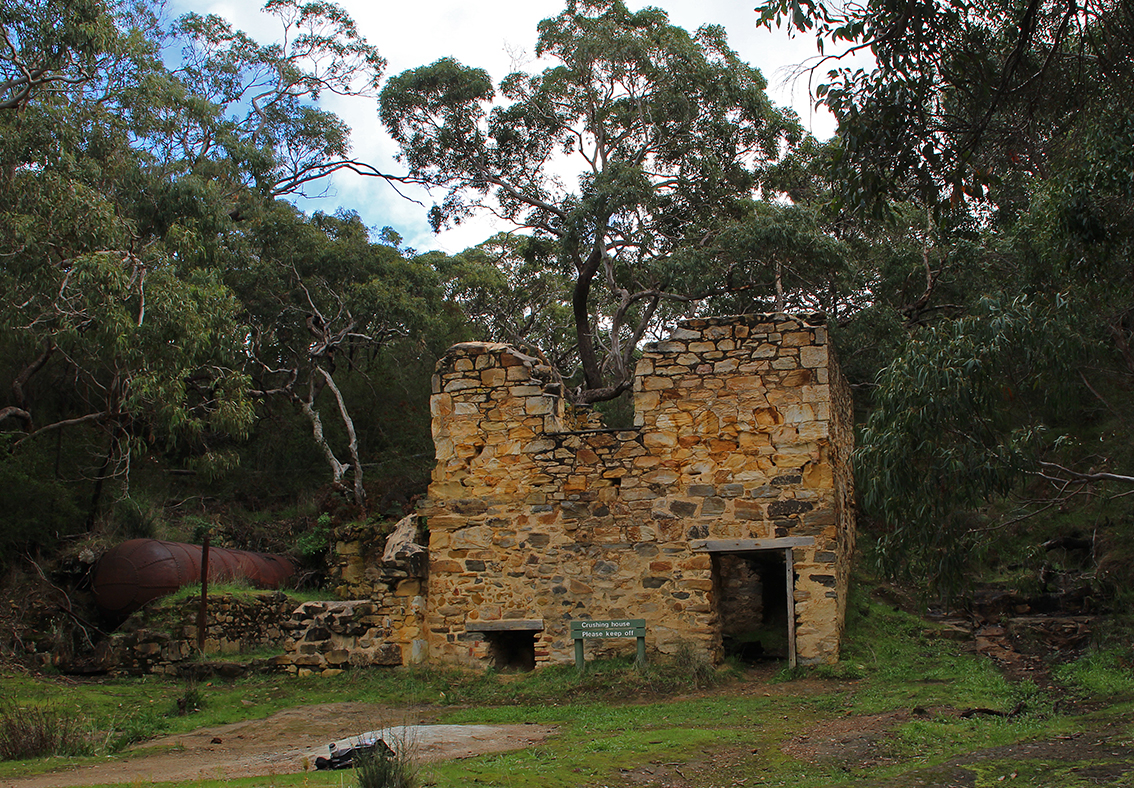
The old cottage has stood sentinel by the Scott Creek Road from the late 1830s. Despite some graffiti, scourge of a modern era, it bears witness to bygone days of hardship and toil. Today a pair of magpies is foraging amongst the overgrown garden and swallows are nesting in the stonework.

Old cottage with lilies in foreground

 The Scott Creek Conservation Park is just 30 kms from Adelaide: a lovely drive along winding hills roads surrounded by scrub and rural properties. It is a haven for a vast number of animals including grey kangaroos, koalas, numerous reptiles and around 150 bird species and that is without considering the insects and spiders. More than enough to delight any photographer. Add an old mine site to this biological diversity and you have the perfect place for a day’s outing exploring some classic South Aussie bushland with a little history thrown in.

Walking trail and bushland

The creek passes under an old bridge. It is overgrown with reeds and bushes with just a trickle of water visible from the banks. Superb blue wrens are darting around in the undergrowth, the males in bright mating plumage are displaying to the duller coloured females. I walk along a fallen tree that spans the creek to get a better vantage point. From my perch I spot an eastern water skink basking on a long dead branch. The little reptile is waiting to pounce on insects, spiders and even smaller lizards.

Eastern water skink

A gravel and dirt path leads up to an old copper and silver mining site. Interpretive signs make for interesting reading about our state’s early mining history and an old abandoned plough adds a certain agricultural touch to the walk.

Old machinery

Numerous parrot species are common throughout the park and a pair of rainbow lorikeets watches me as I walk beneath the massive red gum they are using as a perch. High above I notice the unmistakable slow wing beat of yellow tailed black cockatoos. And the characteristic chiming call of Adelaide rosellas accompanies me while I stroll around the mine site looking for lizards and insects that might use the ruins as a home.

Rainbow lorikeets

 Before climbing into the car for the drive home I take one last look into the higher branches of the trees surrounding the creek. I am rewarded by solitary koala watching me intently from a fork in the trunk. A nice farewell from this lovely patch of South Australian bushland.

Koala climbing

Cheers

Baz

Additional notes

This is an easy drive which is quite suitable for families and seniors.

 I have recently spent time in Africa and the link below will allow you to enjoy images and text describing some of my encounters with the wonderful wildlife of Botswana and Zambia. I will attach a new image and notes to accompany each post.

https://wildlifemomentssa.blogspot.com