Tag Archives: water birds

Barker Inlet and Greenfields Wetlands …a road trip

23 Feb

Barker Inlet and Greenfields Wetlands ….a road trip

Dear Reader:

As I cruise along the highway between Port Adelaide and Salisbury a succession of lagoons, ponds and wetlands flash past my windscreen. Over the last couple of decades this once industrial wasteland has become a haven for wildlife and an integral part of the system converting run off into clean water that flows back into the ocean.
1Torrens Island power station

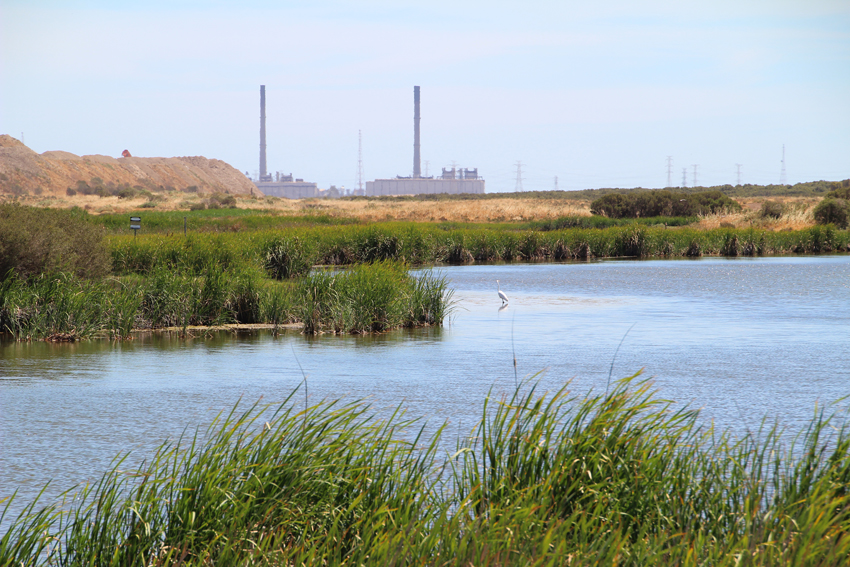
Torrens island power station looms behind the wetlands


There are several parking bays along the way that provide vantage points and access to walking paths into the wetlands. In rather an anomalous environmental scene the first one that I explore has the Torrens Island Power Station as a backdrop. And, a family of maned ducks are sheltering amongst the reeds in the foreground.

2

Maned ducks


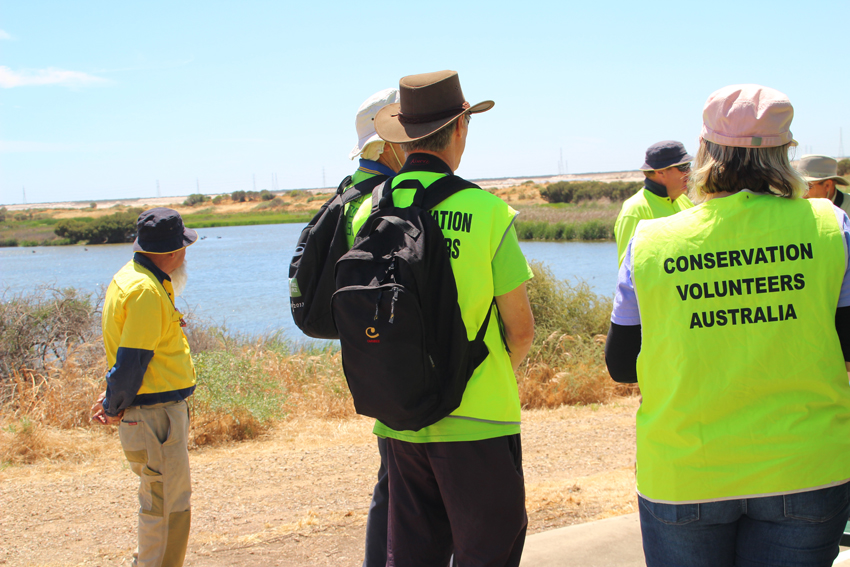
I drive another couple of kilometres to a large siding where two 4WD vehicles with council logos on them are parked by a path into the wetlands. A small group of volunteers are working on clearing weeds, counting bird species and making other environmental observations about the health of the ecosystem.
3

Those who care


Leaving the voluntary workers to their work I find the next promising entrance and park my car. A sign indicates that we have moved into the Greenfields Wetlands. The track leads to an old bridge then follows an embankment along the edge of a small lake. The twittering of wrens provides a constant sound track as I scan for water fowl and reptiles along the edge of the reeds. There are coots, swamp hens and Pacific black ducks as well as turtles and water skinks along this section of wetland but it is a glorious little blue wren draws the attention of my long lens.

4 2

Male superb blue wren


The watercourse ends in a sluice gate that regulates water flow between the ponds and on one side I can see the swirl and splash of large fish feeding in the shallows. They are carp, an unwelcome guest in any ecosystem and their eradication is probably another task for the council and other environmental protection agencies that watch over these important resources.

5

Carp feeding in the shallows


My final stop, just before the salt pans is particularly fruitful as there is a mixed population of black swans, herons and spoonbills feeding in a shallow lagoon. It is always interesting to observe these quite diverse species with their individual feeding styles and uniquely evolved body parts. Their beaks, legs and feet have developed unique characteristics over time for feeding in the same area but utilising different food sources and therefore not competing.

6

A mixed group of waterbirds


And, as is so often the case, my thoughts also turn to food. The Watershed Cafe, just over the bridge, is opportunely positioned on another part of the Greenfields system near Mawson Lakes. Sitting on the edge of a reed fringed lake it is the perfect place for coffee and cake at the end of my wetlands drive.


Cheer

Baz

Walkerville’s Bickle Reserve…..Fairies in the Garden

4 Sep

Fairies in the Garden

Dear Reader:

As I have categorically stated in several of my posts, “I am no botanist”. I love gardening and appreciate the wonderful diversity of South Australia’s flora but remembering all the different classifications, names and botanical intricacies is just a little too much like hard work. Instead, I rely on a couple of field guides to common plants in the Adelaide area, phone a friend or simply make reference to those yellow bushes or tall straight eucalypts. Hopefully, this gap in my naturalistic armoury will be narrowed as I write more nature posts, though the signs are not promising. So: it is with some trepidation that I lead into the following piece …….

P1130228

Pink fairy (Caladenia species)

IMG_8066

The Torrens near Bickle Park

 ….It is a cool winter’s day, slightly overcast and I am on my knees examining a glorious little patch of native orchids. Most are pink fairies but there is one tiny delicate bloom, the size of a little finger nail, called a gnat or mosquito orchid. Nearby several of the flat prostrate leaves indicate where other orchids will appear in the near future.

P1130247

Gnat orchid (Cyrtostylis species)

All of these species are endemic to the area and though a few might have grown naturally, most are the result of a dedicated group of volunteers who are revegetating this area which is part of the Vale Park Wildflower Walk. The section I am exploring is alongside the Torrens River just east of the autobahn bridge near the Bickle Reserve. Several of the Vale Park group are holding an open morning and explaining the importance and biology of the plants they have established.

P1130234

Chatting about orchids

IMG_8071

Native Wisteria (Hardenbergia)

IMG_8099

Purple swamp hen

As I listen to information about the relationship of certain fungi in the soil to the propagation of orchids and marvel at the spidery native clematis and hardenbergia that are climbing up some eucalypts (big tall ones) I notice a pair of purple swamp hens foraging in the long grass by the river. Leaving the group I pursue the birds and make my way along the bank where there are also dusky moorhens in the reeds and crested pigeons feeding near the bikeway.

IMG_8059 edit

Dusky moorehen

Rejoining the group I chat about the importance of maintaining our wild heritage for future generations and learn about Aboriginal use of some types of native plants including orchids. Predictably in this group I encounter another wildlife photographer and the conversation fluctuates between nature and the lenses we have used for different purposes.

IMG_8088

An occasional visitor

In the course of our conversations one of the replanting team asks me if I have any images from the area and I remember that on a bike ride along this part of the linear park trail I had photographed a koala high in the largest eucalypt overshadowing the orchid beds. But, in keeping with my botanical prowess I forget to ask what kind of species it is (probably a tall, straight one).

Until the next journey into SA’s natural wonders

Cheers

Baz

PS

Check out Geotravelling a new site that I have attached that celebrates the natural, cultural and urban diversity of our planet through my travel photographs.

Whyalla to Point Lowly…a top coastal drive

16 May

Dear Reader:

The road from Whyalla to the Point Lowly intersection has dense mallee scrub on both sides. Kangaroos are not uncommon but hard to spot amongst the grey, green foliage. Sometimes a kite or eagle can be seen gliding on a thermal, scouring the scrub for prey.

Low Scrub Whyalla

Classic scrub with acacia in bloom


As I turn right and head towards the coast the landscape changes. The trees and bushes give way to stretches of saltbush and dried out shallow salt pans. Not much can survive in this country but I have seen emus foraging along these coastal badlands. I am not disappointed; catching sight of a fully grown male with his adolescent chicks just a few hundred metres from the fence-line.

1

Adult emu with a half grown chick in saltbush


The road turns quite sharply heading back down the peninsula. The salt bush landscape reverts back to low coastal scrub. This ecosystem is characterised by acacias and smaller eucalypts where various parrots, wrens and honeyeaters are feeding along the edge of the road. A sandy track leads down to the beach where a small group of shacks nestle into the scrub, all with a wonderful view back across the shallow gulf to Whyalla.

2

Red track, green scrub and blue coast


3

Whyalla across the bay


After my beach side detour I drive back onto the main road and continue on to my destination. Point Lowly and the associated LPG gas complex of Point Bonython are part of the 12 kilometre Freycinet trail that winds around Fitzgerald Bay. The trail which is ideal for cycling, walking or driving, features interpretive signs that explain Aboriginal and European history as well geological and biological features.

6

Point Lowly lighthouse


9

Gulls and cormorants


However, my trip today is simply exploratory and I will leave the trail for another time. Just a wander around the lighthouse, shoreline and nearby scrub will suffice. And the local sights more than live up to expectations. A mixed group of gulls and cormorants is roosting on a rocky outcrop while a pacific gulls glides above the inshore rockpools. Near the lighthouse a glorious little wood swallow perches on the guttering of a local shack expectantly watching a family BBQ.

8

Pacific gull hunting


12

Wood swallow on guttering


My appetite whetted for the next visit I turn the car and head back.


Until our next adventure

Cheers

Baz

North Adelaide……the lion circuit

8 May

Dear Reader:

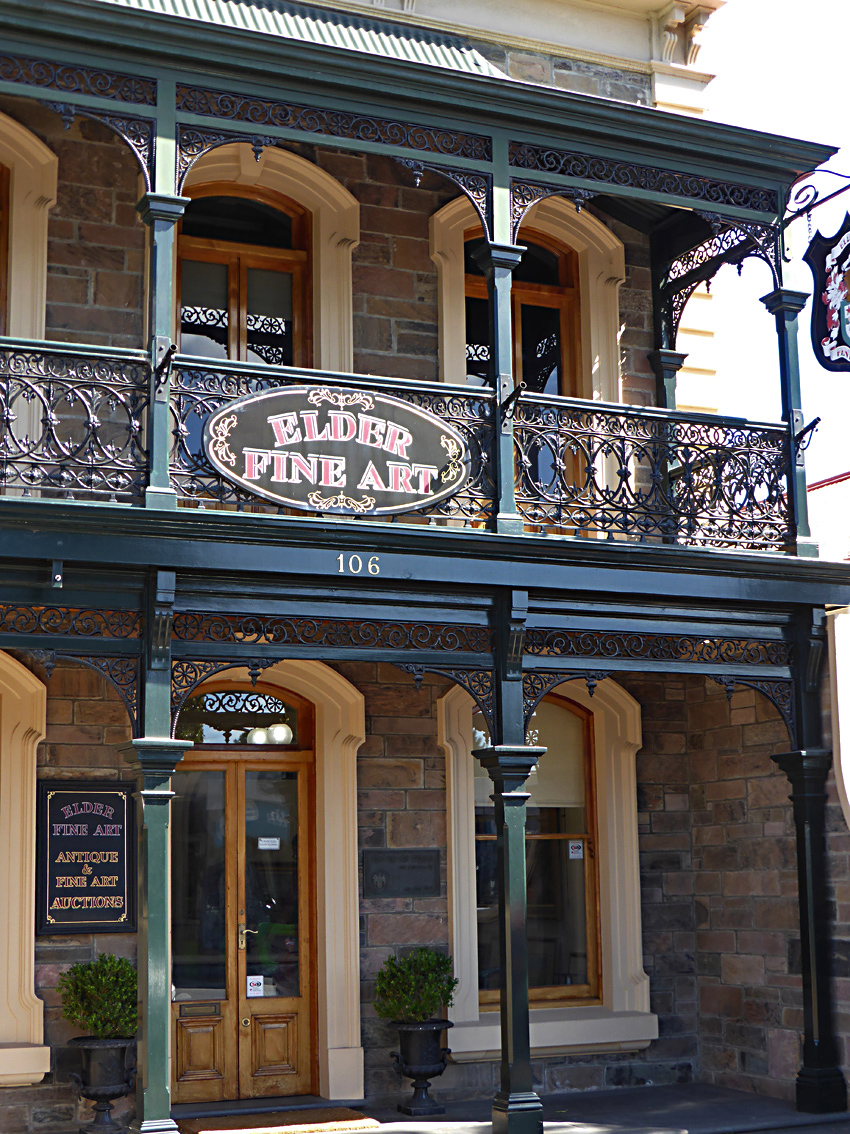
It is a mild sunny morning and I am enjoying one of my favourite bike rides. Starting at The Lion Hotel I ride away from the city along Melbourne Street to the Park Terrace intersection. The street is an eclectic mixture of cafes and niche retailers selling anything from clothes to antiques and Persian rugs.

2

Classic old building converted into shops and galleries


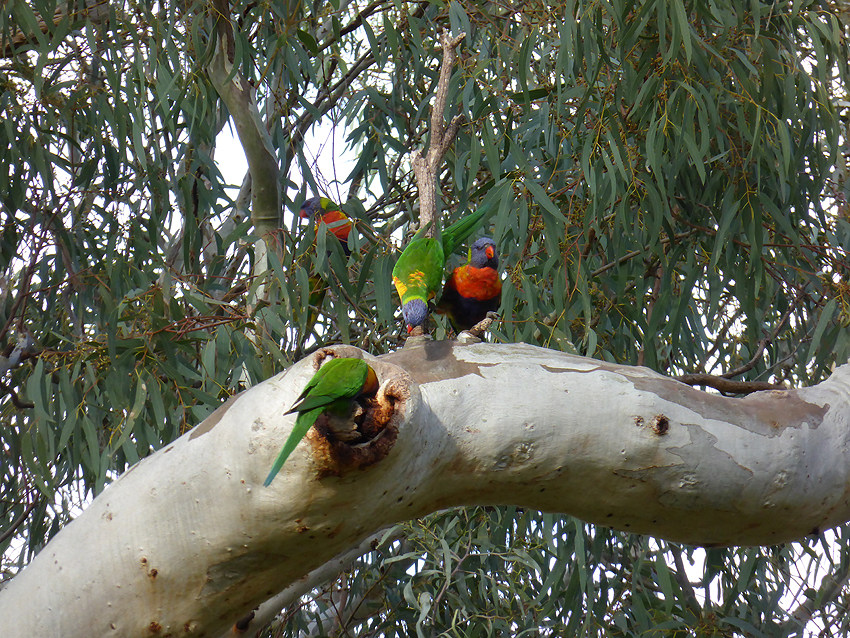
Crossing Park terrace I wind my way through narrow streets and past some lovely old homes to intersect the path that runs alongside the Torrens River before it hits the city proper. The river has cut a narrow gorge through the ochre coloured rocks and tall eucalypts dominate the trail. A pair of rainbow lorikeets is fussing around a nesting hole and one bird takes flight as I dismount to take a closer look.

P1030399

Rainbow lorikeets nesting


A wooden boardwalk descends towards the river and the weir that controls the water flow. Common pigeons can often be seen foraging along the steep hillside early in the mornings. I think that the clay might supplement their diet and aid digestion.

5

Boardwalk trail along the river


6

Common pigeon feeding on cliff-side


Where the walkway levels out a small bridge splits the trail with one path leading back into the city and the other north east to the foothills. I head for the city. The track is flatter here and I pass numerous joggers and other cyclists all enjoying the fine weather.

7

Foot and cycle crossing near St Peters


4

Large dragonfly resting in a bottle brush near the river bank


Just past the little foot bridge the path sweeps under the much larger Hackney Road Bridge that carries the majority of traffic into the eastern side of the city. Here, the river widens, slows and becomes the Torrens Lake. As if to herald the change, a graceful snowy egret stands sentinel-like amongst the reeds watching for prey. Further along the waterway, a great cormorant perches close by with similar intent. These larger predatory water birds seem to indicate a greater abundance of prey in the lake.

8

Signage explains Aboriginal connections and other historical facts


9

Great Cormorant perching on the lake behind the zoo


egret edit

Egret hunting in reeds


Although the path follows the lake right along the northern edge of the city, I only ride a couple of hundred metres further to the Frome Road Bridge. Pausing briefly to take in the view of the lake, city and zoo from the top of the bridge, I turn right and head past the playing fields riding parallel to Mackinnon Parade through an avenue of massive, stately eucalypts. Cyclists, joggers and football players of all codes share this green space with cockatoos and other parrots that squawk in the trees and feed in the grass.

10

Cockatoo foraging on the oval near McKinnon Parade


Left near the end of the tree line and I’m back where I started and ready for coffee or breakfast at The Lion.

1

Back at The Lion


A brilliant way to spend the morning!!

Try it some time!!!

Cheers

Baz

Hallet Cove….a scrub and coastal walk

3 Apr

The walk from the park’s entrance is striking with the ocean forming a sapphire backdrop to the greens and greys of the scrub. Along the edge of the track stands of eucalypts dominate an understory of acacias, banksias and native grasses. Near the top of the trail, several wattle birds are feeding on a late autumn splash of flowers in the crown of a flowering gum. The largest of all the honeyeaters, these birds have a grating call reminiscent of an out of tune bagpipe.

IMG_0547

View from the park entrance


wat 1

Wattle bird


I scramble further down the track listening to the twittering of scrub birds in the bushes. It is difficult to identify any particular species and almost impossible to photograph them. After walking for a couple of hundred metres, I catch a glimpse of some wrens and miner birds deep in the labyrinth of foliage. Where the trail runs alongside a small creek at the foot of the hill, a singing honeyeater is perched on an exposed branch, finally providing one easy target.

IMG_2486

Singing honeyeater


Hallet Cove Conservation Park runs parallel to the coast about half an hour’s drive south of the city centre. It encompasses a range of habitats from sclerophyll forest to coastal heath and a classic wave cut platform below the cliff face. In addition to a healthy population of native animals the park has extraordinary geological and marine features that I will explore more fully in a later post. 

IMG_0553 - Copy

The track winds through the scrub near a creek bed


I meet a group of elderly walkers on a small bridge that crosses the creek where the path starts to climb towards the top of the cliffs. As they tramp across the wooden planks a large water skink runs across, pausing momentarily before disappearing over the edge into the reeds.

IMG_6338

Skink on the bridge


Climbing southward up the track I take note of the dramatic changes in terrain. The hillside that rises from the cliff tops is dominated by low wind-swept shrubs and grasses and the coastline is defined by the wave cut platform. Near the edge of the cliffs, two magpies are probing the undergrowth with their long, powerful beaks. Suddenly the birds become agitated and take to the air. I look around for the source of their distress and catch sight of a kestrel hovering high above them. But this kestrel has made an error of judgement that soon becomes apparent as the maggies take it on in an aerial dogfight.

IMG_6329

Minding my own business


IMG_0672

Kestrel hunting


IMG_0683

Not on my turf


The final section of my trail follows the boardwalk along the top of the cliffs. I can see pacific gulls foraging in the rock-pools on the exposed shore and a colony of cormorants roosting on a rocky outcrop out to sea.

IMG_6347

Cormorants on offshore outcrop


After following the contours of the hillside for a kilometre the boardwalk slopes down to a stretch of beach, finally terminating at a car park and local eatery…The Boatshed Cafe. Simply grabbing a croissant and soft drink to eat on the beach or choosing a light meal from the excellent menu is an ideal way to wind up a morning stroll.

IMG_0570

Descent to the beach and cafe


I hope you enjoyed this little adventure

Cheers

Baz

Wynne Vale Dam Walk

17 Feb

The sulphur crested cockatoos are perched up high in the river gums that surround the dam. Their loud and raucous calls fill the air and drown out the sounds of the other birds that live and feed around the water’s edge. Every few minutes some of the large, white parrots fly down into the acacia bushes that grow along the pathway in search of food. They tear off some of the brown, elongated pods and fly back into the higher branches where they manipulate them with their feet and beaks to extract the seeds.

Acacia pods with seeds exposed

Acacia pods with seeds exposed


Sulphur crested cockatoo eating acacia seeds

Sulphur crested cockatoo eating acacia seeds


Wynne Vale Dam is just a fifteen minute bike ride north of Tea Tree Plaza along the Dry Creek trail which can be easily accessed from the bridge over Ladywood Road near the Modbury Hotel. It is a great way to break up the shopping chores or get some exercise after lunching at one of the nearby hotels and restaurants. The small lake is part of a stormwater reclamation and creek improvement project and is surrounded by a track with viewing platforms, interpretive signs and a sizeable earthen dam on the southern edge.

Wynne Vale Dam from the viewing platform

Wynne Vale Dam from the viewing platform


After watching the birds feeding for a few minutes I climb back on my bike and cycle round to the other side of the dam. Leaving the pathway I shift the mountain bike into low gear and pedal along an exposed stretch of the embankment bumping over a tangle of roots that radiate from a stand of partly submerged trees. Their skeletal trunks and branches are the perfect vantage points for a white faced heron to scope out its prey and a freshwater turtle to bask in a patch of early morning sunshine. White faced herons are quite common along the banks but the turtle is a more unusual sighting.

White faced heron survey its kill zone

White faced heron surveys its kill zone


Short necked turtle on a tree branch

Short necked turtle on a partially submerged tree branch


Just as I start to move off to my next location I catch site of a medium sized bird roosting high in one of the old willows that overhang the water. It is a nankeen night heron. Easily recognised by their cinnamon plumage and shorter powerful, beaks these herons tend to stay hidden during the day feeding in the morning, evening and sometimes at night; a behaviour that is referred to as crepuscular.

In the winter months the water level rises considerably covering the embankment

In the winter months the water level rises considerably covering the embankment


Nanakeen night herons feed on aquatic invertebrates and small fish

Nankeen night herons feed on aquatic invertebrates and small fish


After photographing the heron I cycle around the lake once more to make sure that I haven’t missed anything too obvious then head back down the western side of the creek. Where the dam ends and the creek re-emerges there is a line of exceptionally tall river gums. And there, right in my line of vision, are two koalas climbing up into the branches. Koalas, nankeen night herons and a turtle on one short ride. Not a bad morning’s work.

A pair of koalas climbing. Probably an adult fmale and mature joey.

A pair of koalas climbing. Probably an adult female and mature joey.


Thanks for reading this post.

I hope you enjoyed it.

Tell a friend who might be interested.

Cheers

Baz

Marion’s Warraparinga wetlands

24 Jan

Dear Reader:

There is a Kookaburra high in the red river gum near the entrance to the Warraparinga wetlands. It chortles out its laughing call alerting just about every wild creature in the area. However, the main purpose of its famous laugh is proclaiming to other kookaburras whose turf it is and how eligible one is for mating. As I sit and listen I cannot help but wonder what the original people who inhabited this land thought about these iconic Australian birds and the other animals that lived here.

A kookaburra sits in the old gum tree

A kookaburra sits in the old gum tree (click to enlarge all images in this post)


For tens of thousands of years before European settlement the Kaurna people roamed the Adelaide plains and south coast. They used both forest and grasslands to hunt for kangaroos, possums and birds. The creeks and wetlands provided turtles, yabbies and fish. Reeds and other plants were a source of food, medicinal remedies and the raw materials for weaving and building.

A timeline describing aspects of Kaurna culture

A timeline describing aspects of Kaurna culture


 Although Aboriginal peoples used symbols, they never developed writing. Their laws, ideas, family histories and seasonal maps were passed from one generation to the next by a series of stories some of which are referred to as Dreaming Stories and often relate to spirit ancestors. One such story is that of Kulutuwi a young boy who is killed by his stepbrothers and carried to his resting place by his uncle Tjilbruke. It describes how the tears that Tjilbruke shed formed the little creeks along the Fleurieu Peninsula. Warraparinga, which comes from the Kaurna warri parri and means windy place by the river is on Sturt Creek near the start of the Tjilbruke trail in the suburb of Marion. It is a wetland complex and home to the Living Kuarna Cultural Centre which has interpretive displays, an art gallery, performing space and cafe.

The creek flowing freely after summer rain

The creek flowing freely after summer rain


An acrobatic white plumed honeyeater feeding on small insects

An acrobatic white plumed honeyeater feeding on small insects


 Leaving the kookaburra to its vocal gymnastics, I walk through a sculpture garden and down to the creek which is flowing quite swiftly as it has rained heavily in the last week. The rain has also stimulated some plants to flower and there is a healthy population of insects in the bushes and trees. The typical ‘wick wicky’ call alerts me to several white plumed honeyeaters that are energetically picking off lerps and ants high in the tall eucalyptus trees by the water. I spend a good ten minutes trying to get a definitive shot that shows their hunting strategies.

Galah feeding on the ground

Galah feeding on the ground


Rose breasted cockatoo or galah performing beak maintenance duties

Rose breasted cockatoo or galah performing beak maintenance duties


In the same stand of trees both rosellas and cockatoos are sheltering amongst the foliage. The cockies are particularly interesting as they have been feeding on the ground pulling up tubers and searching for seeds then returning to the trees to wipe their beaks on the branches; whether to clean, sharpen or what?…I am not sure.

Reeds by the banks of a small lake help filter out pollutants

Reeds by the banks of a small lake help filter out pollutants


Purple swamp hens are often seen using their huge feet to climb over reeds

Purple swamp hens are often seen using their huge feet to climb over reeds


Eurasian coots are found in Asia, Australia, Africa and Europe

Eurasian coots are found in Asia, Australia, Africa and Europe


 The trail is well defined and leads me past several different ecosystems. One of these is a chain of ponds that are surrounded by reeds. South Australia’s urban wetlands have been developed to help filter storm water run-off and improve the health of our creeks but they also serve as a wonderful habitat for water birds. Eurasian coots, purple swamp hens and dusky moorhens are all feeding close to the reeds and these birds would have been part of the diet of the Kaurna people who hunted along the nearby Sturt Creek.

The lobby of the Living Kaurna Cultural Centre

The lobby of the Living Kaurna Cultural Centre


Having spent a couple of hours exploring the trails and stopping to capture a representative batch of images, I wind up back at the cultural centre for a well earned cup of coffee and a pastry. In the next room there is a wonderful display of indigenous art and a timeline displaying the history of the Kuarna people. It seems a fitting and reflective way to end my first visit to this rather special park in the heart of Adelaide’ southern suburbs.


Until our next adventure

BAZ

A Stroll with a New Camera

1 Nov

Dear Reader:

Like all photographers I enjoy equipment. Every so often I can even justify buying a new camera. With an overseas trip to Italy looming I needed a light compact zoom that would fit easily into my pocket. In truth I had been thinking of getting the same kind of equipment to carry when cycling along the parkland trails that I enjoy each weekend. Too often, I had decided not to take my DSLR or super-zoom because thy were that bit too cumbersome or the weather looked threatening. And on nearly every occasion some exquisite little wildlife moment went un-recorded.

Small lake near McIntyre Rd f3.3 @1  320 sec ISO100, click to enlarge

Small lake near McIntyre Rd; f3.3 @1 320 sec ISO100, click to enlarge all images on this page.

Australan grebe f6.4 @ 1 200th sec ISO  400; click to enlarge

Australian grebe; f6.4 @ 1 200th sec ISO 400


A little compact would serve both purposes and popping a plastic bag in my bike pants (not the lycra variety I assure you) would take care of any wet weather problems. My camera of choice was a Panasonic TZ40, a pocket sized camera with a respectable 20x zoom. They were on special with a new model coming out and my old Pana’ FZ40 had always proved a reliable unit capable of producing some extremely sharp images.

Sacred Ibis reflections f5.9 @ 1 320th sec ISO 100

Sacred Ibis reflections; f5.9 @ 1 320th sec ISO 100

Red flowering gum, f5.9 @1 200 th sec ISO  100

Red flowering gum, f5.9 @1 200 th sec ISO 100


Armed with my new acquisition, I chose some familiar turf to see what the little camera could do. Tea tree Plaza is a large shopping mall on the north eastern fringe of Adelaide’s suburbs. There are some nice cafes to get an early morning ‘cuppa’ before you set off across the adjacent park to intersect Dry creek by the bridge over Montague Road. From there, a network of paths, trails and tracks wind south along the creek towards the coast or north into the foothills.

Rainbow lorikeets examining tree hollow f6.4 @1 125  th sec ISO 250

Rainbow lorikeets examining tree hollow; f6.4 @1 125 th sec ISO 250

Mudlark collecting nesting material;  f2.9 @ 1 125th sec ISO 400

Mudlark collecting nesting material; f2.9 @ 1 125th sec ISO 400


I decided to take the southern bike trail that follows the creek down to McIntyre road then work my way back to the bridge along the bush tracks that hug the other side of the waterway; a nice journey of around 3kms that includes several small lakes, patches of quite dense scrub and some towering old river gums.

Maned duck with chicks;   f5.6 @ 1 80sec ISO 160

Maned duck with chicks; f5.6 @ 1 80sec ISO 160

Black duck taking off;  f6.4  @1 250 th sec ISO 100

Black duck taking off; f6.4 @1 250th sec ISO 100


In this post, I will not describe each particular wildlife encounter, instead the pictures and brief captions can tell the story. There was a little post image tidying up through Photoshop but in my humble opinion the little camera did a good job as a backup and will certainly sit in my pocket on many a bike ride or travel adventure in the future.


Until our next chat

Cheers

Baz  

Wildlife and Pub Food at the Port

25 Oct

Dear Reader;

It is a mild spring afternoon and there is barely a breath of wind to ruffle the waters of the inner harbour. A pair of sooty oyster catchers are foraging between the exposed rocks on the southern embankment. They are using their powerful blade-like beaks to prise shellfish from the rocks and dig in the sand for worms and crabs. The bright red beaks and eyes look like they have been painted by an artist with an exaggerated disposition for contrast.

IMG_4312

Sooty oyster catchers foraging at low tide (click on all images to enlarge)

IMG_4326

Soon to be lunch


I am walking around the wharves and shoreline of Port Adelaide. Originally nicknamed Port Misery by the early settlers who came ashore amongst the mangroves, mud and mosquitoes that once dominated the area; the Port has undergone many changes. Once a lively harbour that berthed dozens of ships delivering the provisions to establish a new colony; it is now a quieter, quayside community. People now come to the Port from the city, just 15 minutes away, to visit the maritime museum, shop at the weekend markets or go for a cruise along the Port River to catch sight of the world’s only urban dolphin pod.

IMG_4337

Dolphin cruise ship moored at the wharf


From the foreshore I walk past the pub and on to the old Birkenhead Bridge, the first bascule or lifting bridge in Australia. Glancing down at the old jarrah poles, driven hard into the river bed where they once stood as moorings, I notice that several silver gulls have chosen the iron clad posts as nesting sites. Every so often one of the birds lifts off its scruffy nest and checks the eggs, sometimes giving one a little push with its beak, perhaps to keep the distribution of heat even.

P1060700

Nesting silver gull

P1060692

Silver gull adjusting egg position


I watch the birds for half an hour. While one sits on the nest the other flies off in search of food further along the shoreline amongst the same rocks the oystercatchers were exploring just a little while ago. The foraging gull tugs on the end of a tube worm protruding from the fine sand and mud. It is about to extract the hapless invertebrate when a mudlark, usually a woodland species, emerges from a clump of nearby bushes and relieves the seabird of its prize.

IMG_4342

Mudlark feeding along the shoreline


Like the gull and mudlark I figure it’s about time for lunch and head for the Birkenhead Tavern and one of the best chicken schnitzels the Port has to offer.

the pub

Birkenhead tavern

Sorry, only one post this month!!!!!

Have been travelling overseas

Until next time

Cheers

Baz

Mount Barker’s Wetland Wonders

8 Jun

Dear Reader;

It is a glorious autumn day, perfect for a little bird-watching and a stroll around the water.


The tiny plover has been edging around the reed beds for the last ten minutes, finally coming out of the dense cover around the lake to probe the mud for worms and other avian niceties. The colourful little wader seems more confident and continues to feed just forty metres from where I am concealed in the undergrowth; a little too close to bull ant nest for comfort. Eventually it comes close enough for me to fire off a couple of shots before taking off abruptly, spooked by a pair of maned ducks cruising low over the water.


P1070914

Black-fronted plover (click to enlarge)


I am at the Laratinga wetland on the edge of Mount Barker, the largest town in the Adelaide Hills. The word Laratinga comes from the indigenous name for the Mt Barker Creek and near the entrance of the wetlands there is magical series of portraits that relate episodes within the timeline of the original inhabitants of the area, the Peramangk people. Mount Barker is a busy regional centre with plenty of places to buy fresh local ingredients for making up a picnic lunch to enjoy while you wander around the wetlands observing the diverse collection of plants and animals that live there.

P1070892

Portraits at the wetlands (click to enlarge)


Leaving my hiding place on the edge of the lake, I follow one of the many trails that zigzag through the reserve. Near the edge of another patch of reeds a small flock of ibis are feeding in the shallows. Their distinctive curved beaks and greater size means they might be feeding in the same habitat as the little plover but their prey will be distinctly different. Such a variety of beaks, feet and size is one of the reasons that so many different species of birds can feed together in the same area without destroying the food supply. But the wetland is not reserved for wildlife enthusiasts and a jogger runs a little too close to the flock causing the them take to the air. Despite this being a fairly recent wetland, constructed by the council to filter water naturally, wildlife and people live quite harmoniously and the birds soon return to their chosen spot and resume dining.

P1070923

Ibis in flight (click to enlarge)


Although I have caught a fleeting glimpse of a couple of turtles in the shallow pools and the undergrowth has more than healthy population of insects; it is the bird life that is dominating my walk around the wetlands. The reeds that encircle the water are a veritable cathedral of birdsong. I can hear the twitter of finches and reed warblers in the tangle of greenery and occasionally catch sight of one of the tiny birds flitting amongst them. Finally a superb blue wren makes a more prolonged appearance as it perches on a reed stem giving me just enough time for one last shot before I leave.

P1070928

Superb blue wren (click to enlarge)


Cheers

Baz