Tag Archives: western grey kangaroo

Khaiserstuhl CP, Wildlife in Wine Country

16 Apr

Dear Reader:

The predatory bird circles high in the morning sky then swoops down low to within a hundred metres of me. A Wedge-tailed Eagle, Australia’s largest bird of prey.

Wedge-tailed Eagle hunting

I am heading for the Kaiserstuhl Conservation Park, a twenty minute drive from Nuriootpa in the Barossa Valley and around 90 kms from Adelaide. Kaiser Stuhl was a popular winery, now incorporated into Penfolds, that flourished in the region for over half a century. The name comes from a prominent hill in the Barossa. Indigenous people referred to the area as Patpoori which means little grass tree, a species common to the area.

Beginning of the Wallowa Trail

As I approach the park from Tanunda Creek Road the boundary between native scrub and vineyards is quite obvious; a metaphor for the unique blend of beautiful countryside and rural endeavour that typifies the Barossa Valley.

Scrub and vines on the periphery of the park

I leave the car opposite the entrance to the park and clean my boots in the scrubbers provided which lessens the chance of transferring Phytophthora (root rot) infection. Two Tracks, Stringybark and Wallowa are clearly marked and I choose the latter. Within a few metres I spot a group of Superb Fairy Wrens in the undergrowth; their fluffy plumage suggests that some are juveniles.

A juvenile Superb Fairy Wren is well camouflaged in the leaf litter

Leaf Curling Spider inside leaf and attached to web

To my surprise and delight there are numerous identification plates near the base of some bushes and trees. As I am not a particularly competent botanist, being able to easily name some of the plants I encounter when constructing my posts is a real bonus. I wish more parks would follow this example. I pass some banksias which have been fire blackened, a process which opens up their seed pods helping to rejuvenate fire affected bushland. Further along the trail I notice a Leaf Curling Spider which has built its web, and suspended home, in a Grass Tree.

Eucalypt and Grass Tree (Xanthoria) scrub
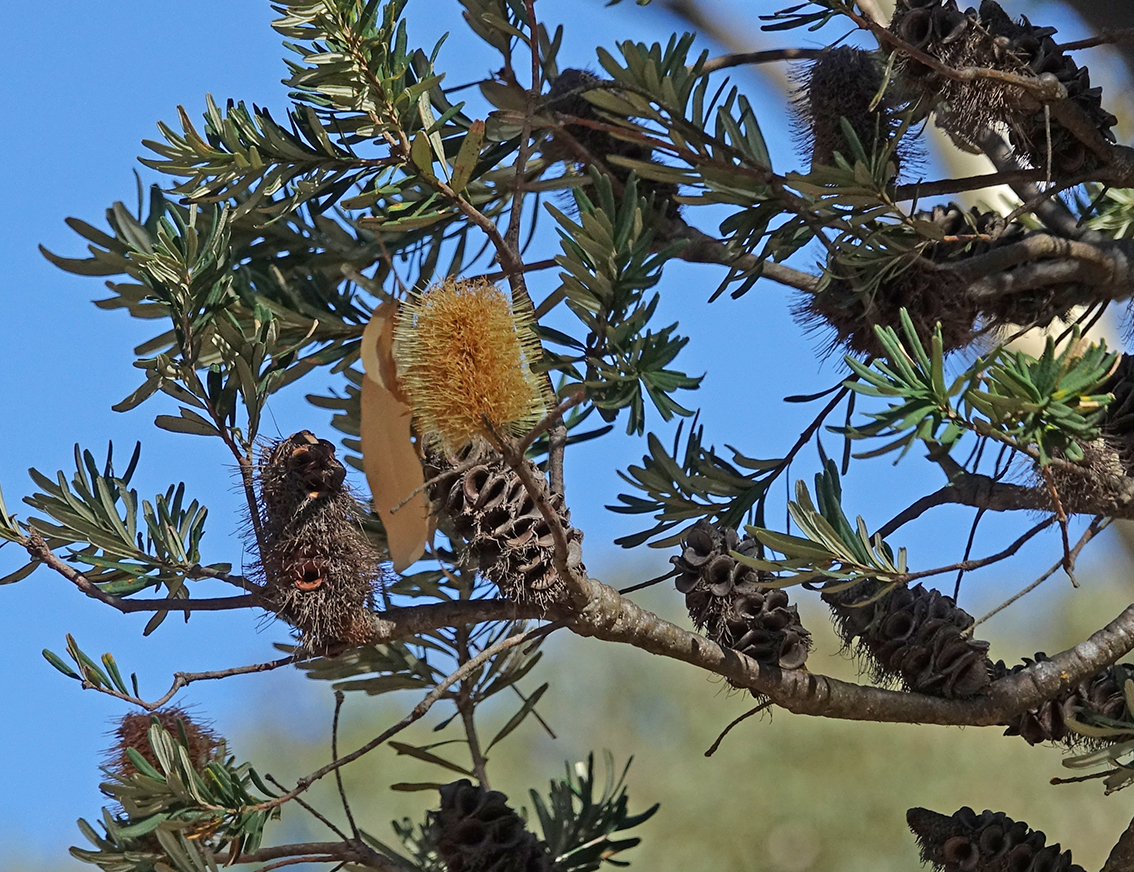
 

Banksia species showing flower and open seed pods


There are smaller birds in the canopy and I use the full extension of my Sony RX10 3 to identify them. However, getting a clear photograph proves impossible. Later examination and a lot of Photoshopping reveals them as: Silvereyes, a pardalote species, Crescent Honeyeaters, New Holland Honeyeaters and a Scarlet Robin.
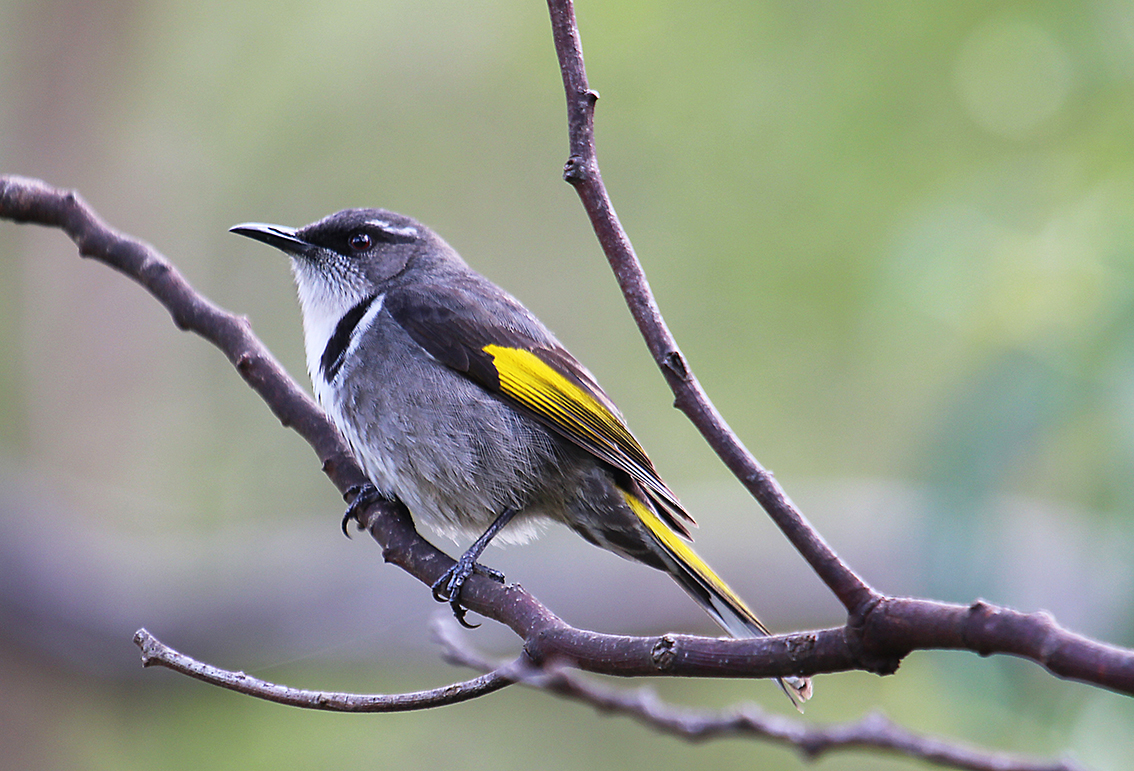
Crescent Honeyeater (Image from my stock photos)

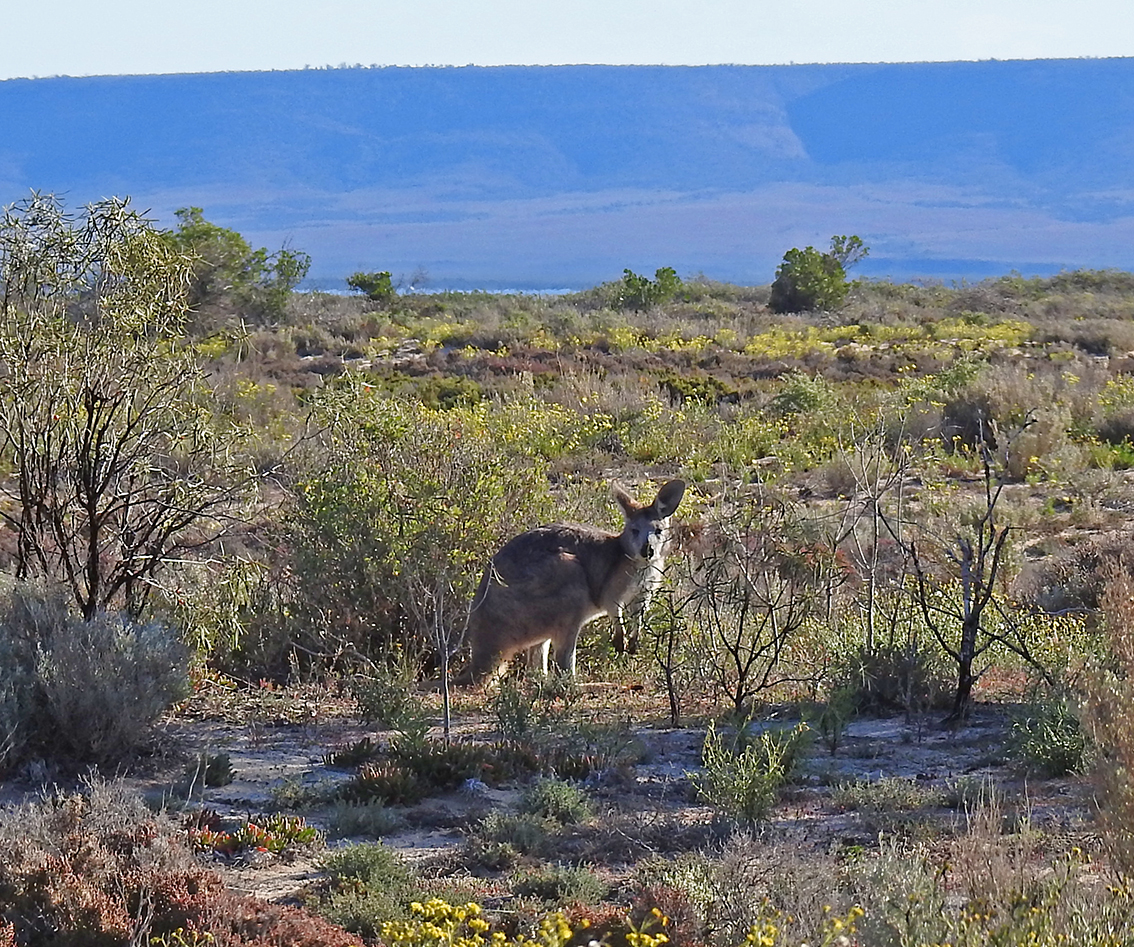
Time is marching on and I have an appointment in Nuriootpa to learn more about the Khaiserstuhl name and its history; which I will reveal in a later post. As I retrace my way to the entrance I hear the distinctive rustle of a larger animal in the scrub to my left. I freeze and ease the camera around slowly. A pair of Western Grey Kangaroos are standing motionless about fifty metres away. An adult and half grown joey. A lovely way to finish my walk.

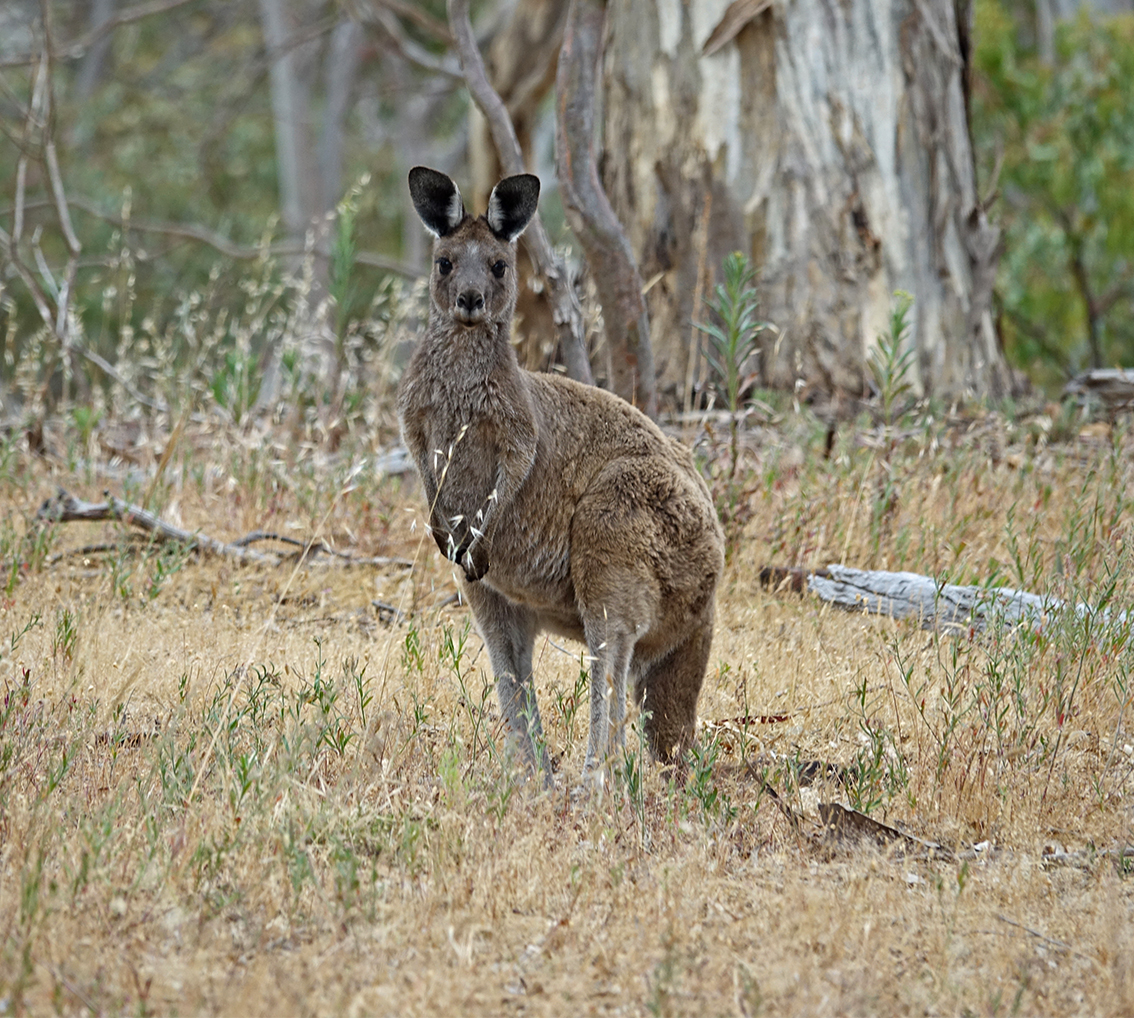
Adult Western Grey Kangaroo

Western Grey Kangaroo joey

Cheers

Baz

Additional notes

This is an easy walk and pleasant drive which is quite suitable for families and seniors. There are trail markers as well as panels with maps and other information.

Please pass on this blog title and or contact information (URL) to any person or organisation with an interest in taking walks and enjoying wildlife in SA.

Click on these links and see more South Australian stories and pictures in my Weekend Notes articles as well as locating similar blogs on Feedspot’s top 20 Australian wildlife blogs

https://www.weekendnotes.com/adelaide/writer/452

https://blog.feedspot.com/australian_wildlife_blogs

Monarto’s Wildlife Roads

30 Mar

Dear Reader:

David notices a pair of brightly coloured Mulga Ringneck parrots landing in a tree by the roadside. I pull the car over and power down the window to allow both of us to capture some images.

Mallee Ringneck

On this initial foray into the bushland around Frahns Farm, in the Monarto area, we are exploring the roads surrounding a fenced off region which is being revegetated. We have travelled north along Frahns Farm Road after leaving the old Princes Highway then headed west along Disher Hill Road before returning south to the highway along Wattle Road.

At the crossroads of Theile, Peach, Frahns Farm and Disher Hill Roads 1

At the crossroads of Theile, Peach, Frahns Farm and Disher Hill Roads 2

We stop several times on Disher Hill Road and walk along the roadside for a few hundred metres scanning the terrain for wildlife. There is a continual background noise from the aptly named babblers (White-browed Babblers). In addition, tiny Silvereyes, Diamond Firetail Finches and wren species flit through the bushes and canopy, adding their tweets and twitters to the avian symphony.

White-browed Babbler

Further along Disher Road we are lucky enough to spot and photograph a solitary Brown Treecreeper and a group of White-winged Choughs engaging in their entirely different feeding strategies. The treecreeper meticulously searches the branches for insects while the gang of omnivorous choughs rake their way through the leaf litter.

White-winged Choughs

Brown Treecreeper

As I turn to get back into the car, a movement in the scrub catches my eye. A pair of Western Grey Kangaroos are moving slowly through the trees on the other side of the road. I catch one in the viewfinder before they bound away.

Western Grey Kangaroo

There were a few insects in the area…..Monarch Butterfly feeding

The drive back along Wattle towards the old Princes Highway provides a mixture of scrub, pasture and crop fields. There are freshly shorn sheep in a holding paddock. Little Ravens and Australian Magpies  perch in the trees and we catch sight of a lone bunny and a few more roos in the distance.

A little chilly without our coats on

As well as the wildlife along these roads there have been some interesting ruins and the more contemporary Mannum to Adelaide pipeline; both of which help provide some additional photographic perspectives to our drive.

The Mannum to Adelaide pipelines snakes through the scrub and rural landscape

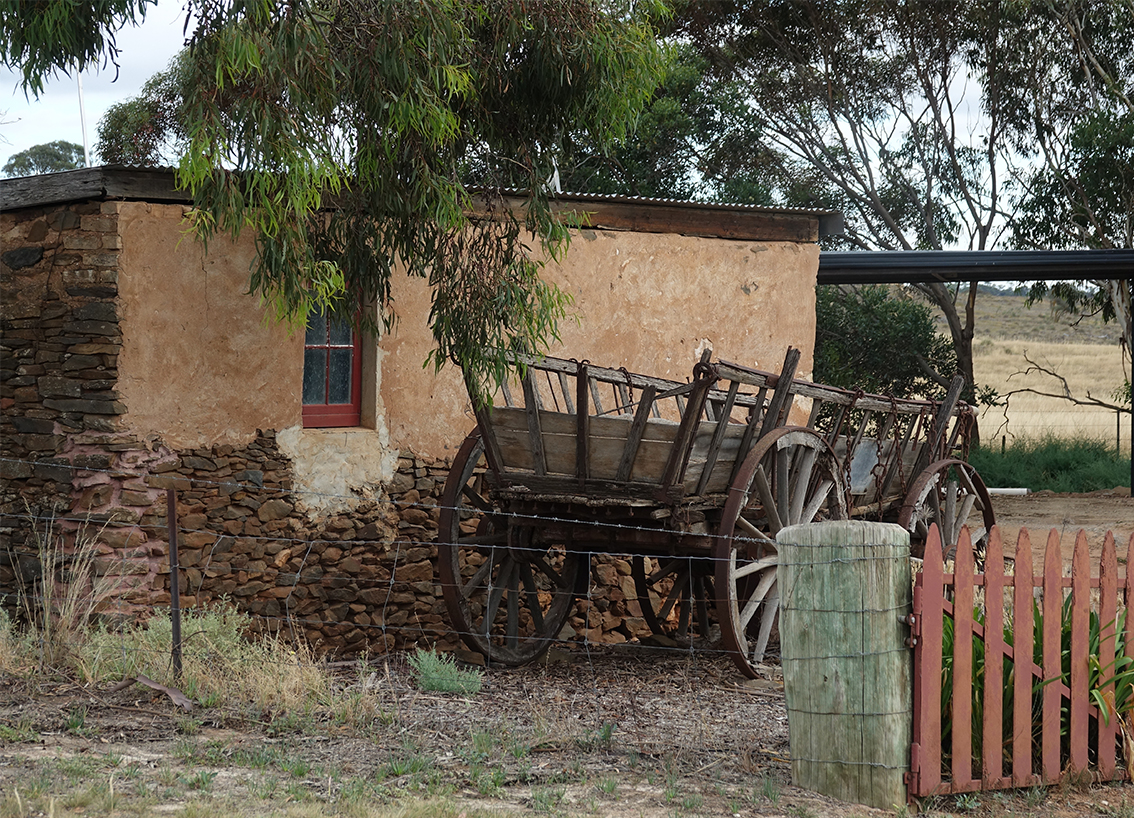
Old farmhouse

The final stop on our day exploring Monarto’s backroads is an old service station in Callington, a small township just off the Princes Highway. We top up the car and enjoy a couple locally made pies while sitting on an old couch in front of the station.

Callington service station, post office and general store

Cheers

Baz

Additional notes

This is an easy drive which is quite suitable for families and seniors.

Please pass on this blog title and or contact information (URL) to any person or organisation with an interest in taking walks and enjoying wildlife in SA.

Click on these links and see more South Australian stories and pictures in my Weekend Notes articles as well as locating similar blogs on Feedspot’s top 20 Australian wildlife blogs
https://www.weekendnotes.com/adelaide/writer/452

https://blog.feedspot.com/australian_wildlife_blogs

South Para Reservoir’s Water, Wine and Wildlife

13 Feb

Dear Reader:

There’s a small mob of Western Grey Kangaroos feeding close to the path where I am starting my walk. Leaning against a tree, I steady the camera. The roos detect either sound or scent and bound away into the thicker scrub.

Up Up and Away

I am taking a walk around the South Para Reservoir near Williamstown about an hour’s drive from Adelaide’s CBD. The road winds through the Adelaide hills and encompasses a range of environments from rural to wilderness. Unfortunately, it is a bit of a grey day. Not brilliant for photography.  

South Para Reservoir

The track leads down to the water where a kayaker is bringing the craft back to dry land. This reservoir is open for fishing, kayaking, cycling and walking unlike many of our other reservoirs.

A recreational paddle

There are numerous butterflies in the area but it is hard to spot them until they take flight. Eventually I get a reasonably clear shot and identify the species as a Common Brown.

Common Brown

On the water’s edge I can just make out some large birds. I suspect they are either Cormorants or Snake Birds (Anhingas). I approach warily, lie down in the grass and focus. There are two distinct species; a Pied Cormorant and a Great Cormorant.

Pied Cormorant

Working my way around the water’s edge I discover a dry creek bed and another track heading back towards the main road. I follow the creek bed up a gentle slope towards a rocky outcrop. A large male kangaroo watches me from the scrub as I walk. He seems relaxed and stays still enough for a long-range shot.

Just watching

Continuing along the cross track I suddenly freeze and hold my breath. Three adult Emus are walking towards me and have, either not registered my presence, or are not unduly phased by humans. I raise the camera slowly and wait as they approach to within thirty metres. I take a series of shots before they veer away pecking for seeds, insects and whatever else they might find in the dry scrub.

The Emus gang

Emus close by me

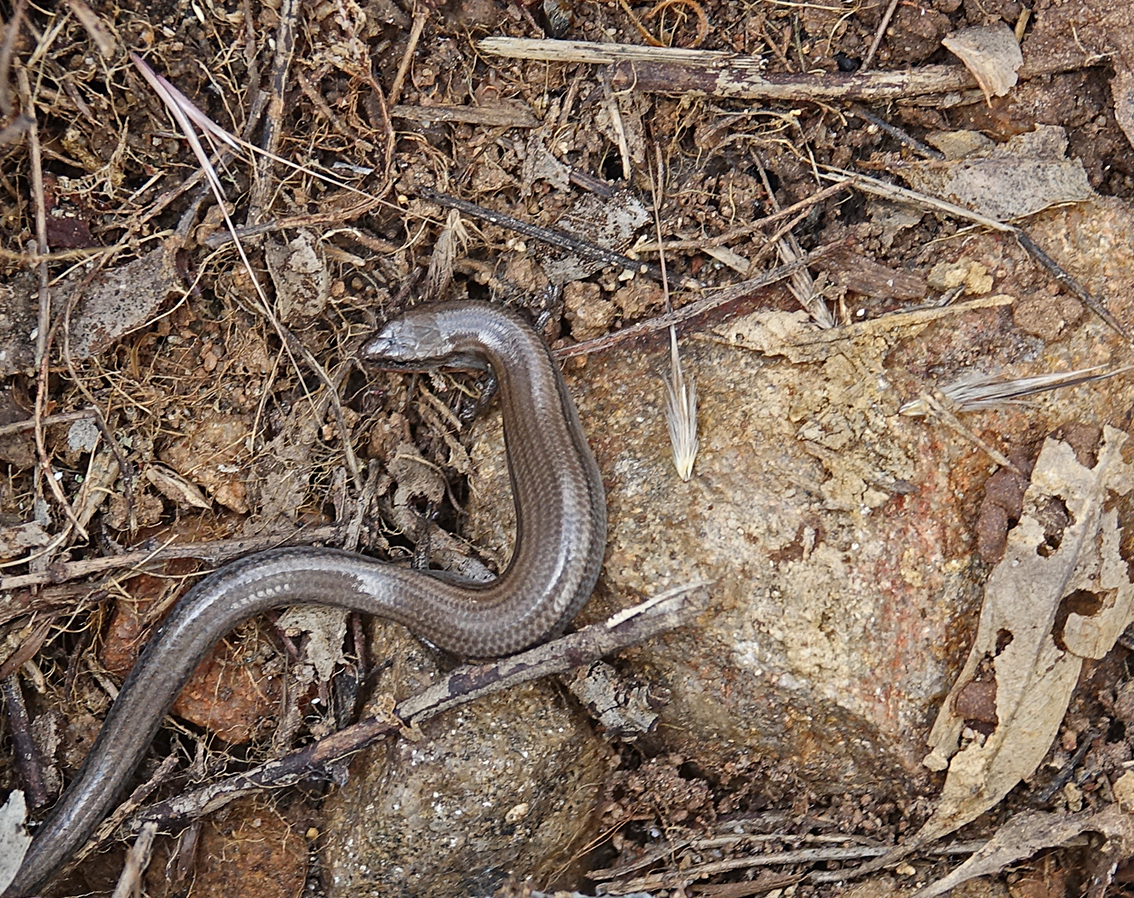
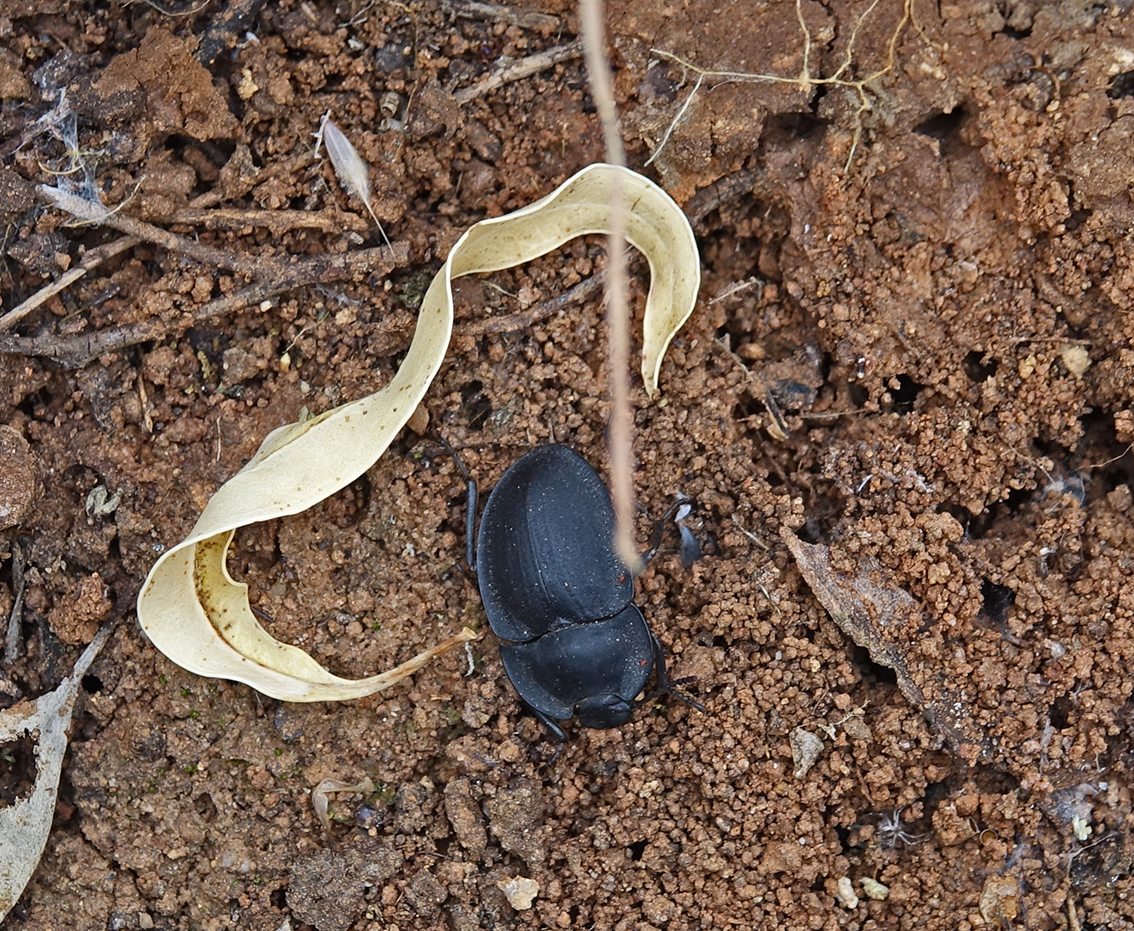
As I traverse move up the trail, I notice a variety of wildlife including; musk Lorikeets Sulphur Crested and Rose Breasted Cockatoos, more butterflies, a few native bees as well as ant nests and termite mounds. I turn over a couple of rocks and dead branches (replacing them carefully afterwards), uncovering a snakelike Three-toed Earless Skink and Pie-dish Beetle.

Three-toed Earless Skink

Pie-dish Beetle

With my walk at an end, I drive on towards Williamstown for lunch at the little bakery across from the creek. However, I do make one more stop on the way at Linfield Road Winery which has a charming bed and breakfast attached. An ideal place to stay when I make my next foray into the wonderful north-eastern region of the Adelaide Hills.

B&B for next time

Linfield Road Winery vines

Cheers

Baz

Additional notes

This is an easy walk/drive which is quite suitable for families and seniors with public toilets, barbecues, parking and other facilities nearby.

Please pass on this blog title and or contact information (URL) to any person or organisation with an interest in taking walks and enjoying wildlife in SA.

Click on these links and see more South Australian stories and pictures in my Weekend Notes articles as well as locating similar blogs on Feedspot’s top 20 Australian wildlife blogs

https://www.weekendnotes.com/adelaide/writer/452 https://blog.feedspot.com/australian_wildlife_blogs

Birdwood’s Cromer Conservation Park… Part 1

26 Feb

Cromer Conservation Park… Part 1

Dear Reader:

Red and Pink Gums as well as Long Leafed Box trees tower above me. They echo with birdsong which ranges from the twittering of finches and pardalotes to the raucous calls of lorikeets. My Nikon P 900 has a phenomenal telephoto and I use it to scan the treetops in the hope of identifying the birds and capturing an image or two.

Eventually I spot a Red Wattlebird and a Musk Lorikeet close enough to photograph. The silhouette of the wattlebird calling is a particularly pleasing image. While I continue to search the foliage for a makeable shot I watch a pair of Adelaide Rosellas flit between trees and high above me a kestrel is circling.

My destination today is the Cromer Conservation Park about 5 Kms from Birdwood. This small, fenced off section of bush is all that remains of the original scrub that once blanketed this part of the ranges. As such, it is an important repository of endemic plant and animal species. Indeed, over 100 bird species have been recorded in the park and I am sure plant and invertebrate tallies would also be high.

As I walk slowly along the main pathway near the boundary fence I notice another faint track winding into the scrub. I step cautiously and stop to listen every few paces. There is a rustle in the bush a dozen metres ahead and a Western Grey Kangaroo suddenly appears. We both freeze. I slide the Nikon up the rapid release strapping to eye level and take a wide angle shot for context then a close-up. The second click of the camera alerts the roo which swivels its ears, looks in my direction, then bounds away.

The sun is well up, the day is warming and with a rise in temperature the sounds of the scrub also change. Cicadas start to buzz and Fairy Wrens twitter in and around the grass trees which seem to be the centre of their territories. My morning walk is almost over therefore I decide to focus on the smaller plants and animals surrounding me. Although it is late summer there are still a few plants in bloom. The delicate, little Flax Lilies growing along this trail catch my attention. However, my final image for today is of a tiny speckled spider living under the bark of a long dead gum tree…….to be continued

Hannaford Hump Drive

2 Dec

Dear Reader:

I leave the bitumen and continue along a well graded, unsealed road. A landscape of rural pasture and scrub borders the dirt road overhung by tall eucalypts. I stop on the verge and scan the trees with my long lens. While I search for wildlife visually, I hear the faint thumping call of a Common Bronzewing. It takes a few minutes to locate the bird but I eventually find it perched on a branch just in camera range.


Common Bronzewing

I am taking a late afternoon drive along the quirkily named Hannaford Hump Road which branches off One Tree Hill Road north east of the roundabout junction with Golden Grove Road in the suburb of Greenwith. Hannaford Hump then becomes Airstrip Road which leads to the sealed Mt Gawler Road. Both Hannaford Hump and Airstrip Roads are surrounded by large areas of accessible scrub and rural countryside dotted with small properties and farms.


Roadside bush

A little further along Hannaford Hump Road I park the car and walk along one of several fire tracks that lead into the Mount Crawford Forest Reserve. The well maintained track is skirted by dense scrub dominated by low growing gums, acacias and a variety of native bushes, grasses and ground covers….a botanist’s dream.


Fire track entrance

Flax-Leafed Logania

I walk a kilometre along the track stopping frequently to listen for bird calls. In this bushland setting it is best to let the wildlife come to you as animals are wary of anything that appears to be stalking them. I catch sight of numerous wrens, finches and other small birds darting between bushes but photographing them is nigh on impossible. Eventually a pair of Adelaide Rosellas perch on a dead branch at extreme camera range and I take the shot steadying the camera against a tree trunk. The vibration reduction in my Nikon P900 works well and I get a passable result considering the distance and fading light. 


Adelaide Rosellas

Further along the road I stop at another fire track. This one is flanked by even denser bush and some taller shrubs and gums as well as a smattering of grass trees. I find a narrow opening in the scrub and walk in about twenty metres then sit quietly. Small birds are flitting between branches but they are hard to line up. Eventually one settles close enough to get a clear shot. Later I determine it to be a thornbill species; probably a Red Striated Thornbill.


Striated Red Thornbill…probably

Evening is closing in and the light is making photography more challenging so I turn for home and watch the other, more rural side of the road as I drive. Unexpectedly, I notice some kangaroos feeding in the long grass. When I stop to take a shot I catch sight of a crow perched on a branch; perfectly silhouetted against the wheat coloured background.


Australian Raven

Western Grey Kangaroos in grassland

Small group (mob) of Western Grey Kangaroos feeding at dusk

It has been a really wonderful drive along this unusually named road so close to the suburbs yet rarely explored by the nearby residents. In fact there are many trails, tracks and roads throughout this part of the foothills that are worth exploring when you have a few hours to spare.

Cheers

Baz

Additional notes

This is an easy drive and simple walks, which are quite suitable for families and seniors.

Please pass on this blog title and or contact information (URL) to any person or organisation with an interest in taking walks and enjoying wildlife in SA.

See more South Australian stories and pictures in Weekend Notes

https://www.weekendnotes.com/profile/651267/

Winninowie National Park and Chinaman’s Creek

3 Sep

Winninowie National Park and Chinaman’s Creek

Dear Reader:

The track to Winninowie National Park comes off the main highway between Port Germein and Port Augusta. Low flat scrub borders the road on both sides with the coast in front and the Flinders Ranges foothills behind. Barbed wire fencing keeps small groups of sheep from wandering onto the road. Crested Pigeons, Galahs and some smaller unidentifiable bird species can be seen in the scraggly bushes bordering the pasture. In the distance I can just pick out a tree-line marking the edge of the national park: from there the road meanders towards the coast.

Typical coastal scrub

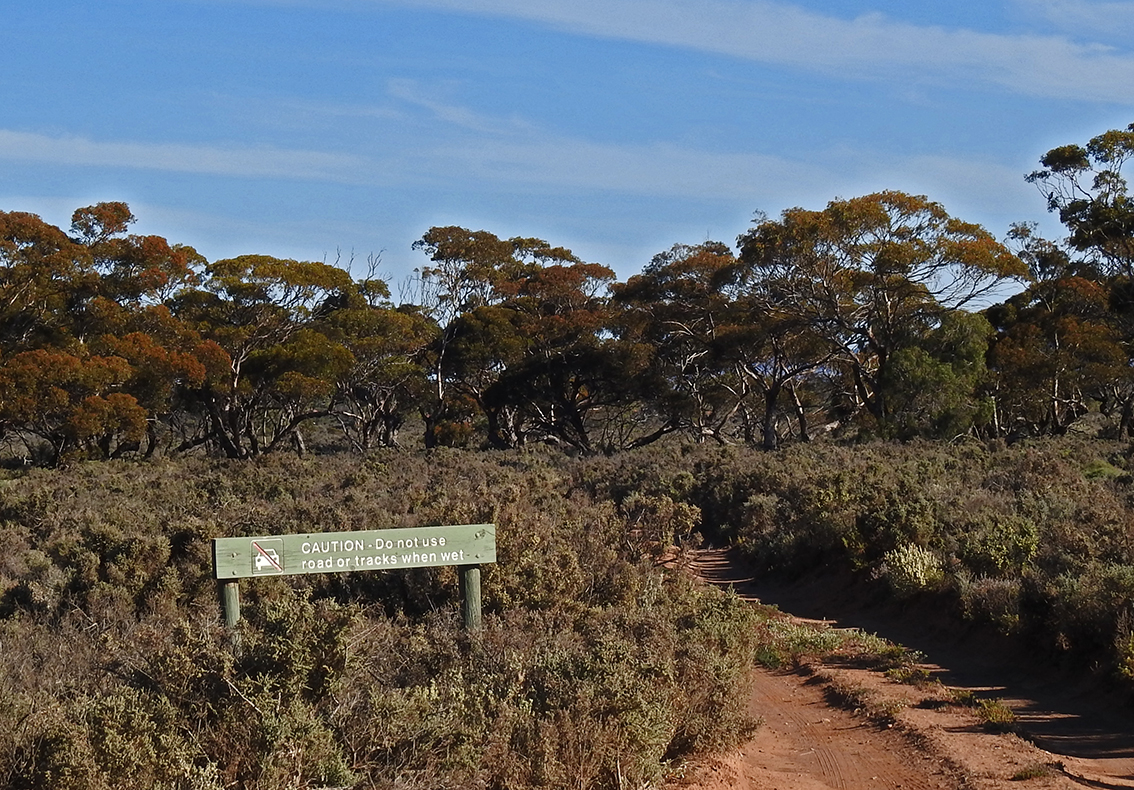
 A few hundred metres past the first stands of eucalypts we come across a smaller track veering to the left. The track has a sign that warns against use in wet weather but there has been a little rain over the last few days and today is fine and clear. We slip the vehicle into 4WD low range as a precaution and with a little slippage and much lurching, explore the trail.

Grey Butcherbird 

I tap Geoff on the shoulder and ask him to stop and power down his window. Only metres from the car, a Grey Butcherbird is perched on a dead tree branch. These fascinating birds have the rather unsavoury habit of impaling their prey on sharp branches where they are stored for later consumption. A kind of avian serial killer complete with trophies.

Euro in scrub

Our next encounter is on my side of the car. I notice a flash of grey in the undergrowth. Geoff sees it too and we slide to a halt. I am expecting to see a Western Grey Kangaroo and I am pleasantly surprised to spot a Wallaroo or Euro. These robust cousin of the more common Western Grey Kangaroo are more commonly found in the higher regions of the Flinders Ranges which form a backdrop to the coastal plain we are traversing.

Crested Pigeons 

Of course, the usual wildlife is abundant here; Australian Magpies, Crested Pigeons, a variety of parrots and even some Miner Birds. There are also Emus which occasionally sprint across the trail making photographing them almost impossible. Eventually I spot a small group way out in the scrub grazing under some trees. My Nikon P900 has excellent range and I tend to use it as a spotting scope at extreme distances. I decide to take a chance; stop the car rest and squeeze. Considering the range and lighting conditions I am pleasantly surprised by the result.

Emu at distance  

The track ends at a wide expanse of shallow beach coated in seaweed with a wonderful view across Gulf St Vincent to the low hills of the Eyre Peninsula. We return along the same path and then head down to Chinaman’s Creek; a little outpost set amongst mangroves with a few shacks and a boat ramp, an area I have written about previously.

Chinaman’s Creek 

After fossicking about in the mangroves it is time to head for home and lunch at Port Germein; a good half an hour’s driving time. We decide not to stop on the return drive unless something extraordinary makes an appearance and as a parting gift, that does happen. A loan Western Grey Kangaroo bolts in front of the car and presents the perfect picture with the foothills of the Flinders in the distance. Then one final encore as lovely Red Capped Robin sits in a thorn bush near the road………a nice way to end a perfect afternoon. 

Roo in flight

Red-capped Robin

Cheers

Baz

 Additional notes

This is an easy drive in dry weather which is quite suitable for families and seniors but requires 4wd in the wet. The National Park bans Dogs. 

 Please pass on this blog title and or contact information (URL) to any person or organisation with an interest in taking walks and enjoying wildlife in SA.

See more South Australian stories and pictures in Weekend Notes

https://www.weekendnotes.com/profile/651267/

The Old Talisker Mine

15 Nov

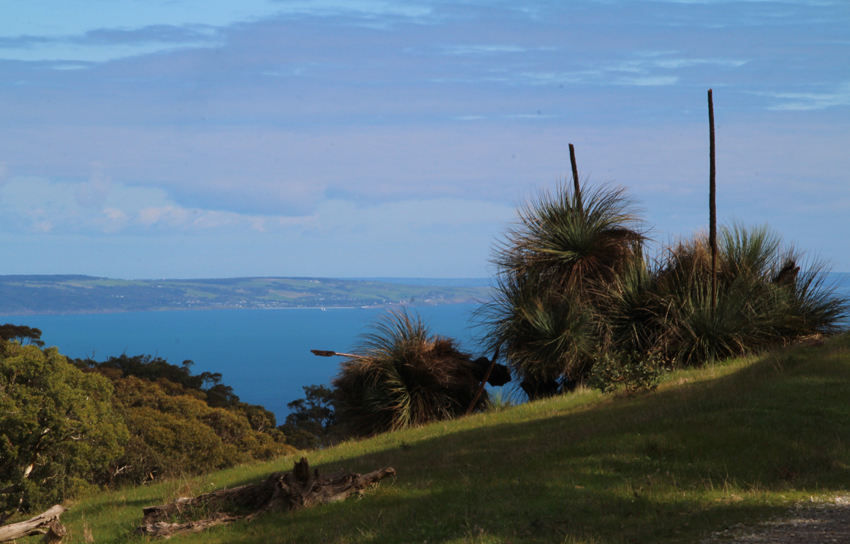
The view from the top of the hill is spectacular. Soft winter pasture still covers the ground in sharp contrast to the spiky Xantheria or grass plants that characterize the harsh coastal scrub and the blue of Baxter’s Passage and hazy profile of Kangaroo Island beckon on the horizon.


Backstair's passage and Kangaroo Island

Backstair’s passage and Kangaroo Island (double click to enlarge all images on this page)


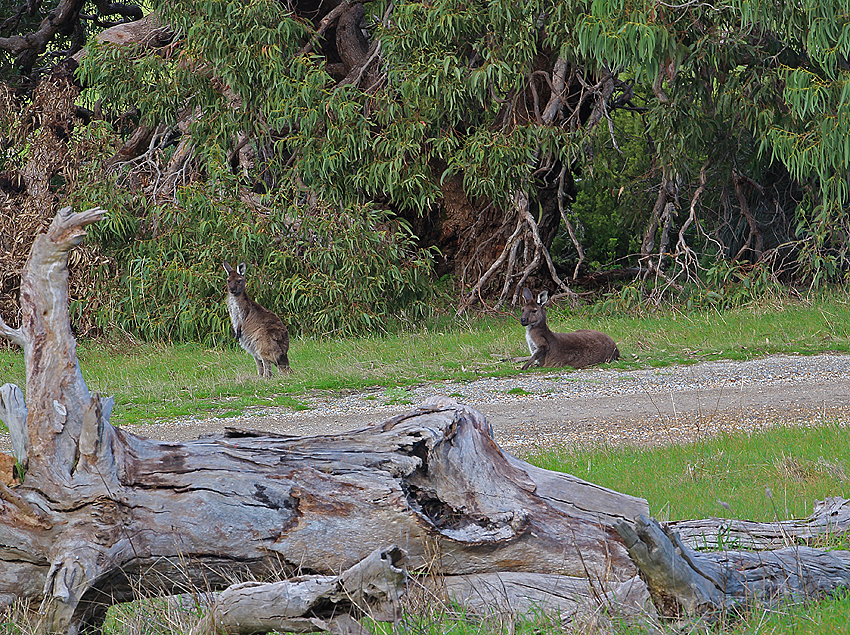
As I get out of the 4WD to capture this image I notice a pair of western grey kangaroos on the edge of the scrub no more than 20 meters from the vehicle. They are wary, ears twitching and sniffing the air. One is considerably larger than the other. They are probably a mother with a joey at heel and her pouch looks a little enlarged suggesting that she may have another little one tucked away. There could even be two in the pouch; one permanently attached to the nipple while the other simply enjoys the ride. In good times kangaroos can multiply quickly.

Western greys by the track

Western greys by the track


I am in the Talisker National Park about an hour and a half journey from the city and 10 kms from Cape Jervis at the toe of the Fleurieu Peninsula. The park centres around a series of bush trails that surround an abandoned silver and lead mine dating from the 1860s. Old machinery, buildings and shafts add an historic dimension to an area rich in scenery and wildlife.

Crushing house and old boiler

Crushing house and old boiler


From my cliff top lookout I backtrack along the dirt roads to the entrance of the old Talisker mine site. The walking trail to the mine is not too steep but the scrub on both sides is dense and full of life. In both the treetops and bushes I can hear the calls of wrens and honeyeaters. Eventually one of the delicate little birds pauses on a branch to announce its territory.

Crescent honeyeater

Crescent honeyeater


The track ends in a small clearing where the rusted remains of crushers, boilers and old buildings mark the main site. They are all that is left of a mine that once was the workplace of dozens of miners and supported a community of 300 souls at nearby Silverton; now also long gone.

Pied currawong

Grey currawong


The buildings are surrounded by a forest of eucalypts and I can hear the more distinctive movements of a larger animal in the branches on the far side of the crushing plant. I focus my long lens on the area and start to search for the perpetrator, expecting another roo or even a possum disturbed from its daytime sno0ze. But it is a large crow-like bird that I spot amongst the leaves and branches, a pied currawong, a relative of the white backed magpies that are so common on the plains where I live. Currawongs are a group that I have rarely photographed successfully as they tend to be a little more wary than their magpie cousins.

Bush track surrounded by eucalypt forest near the park entrance

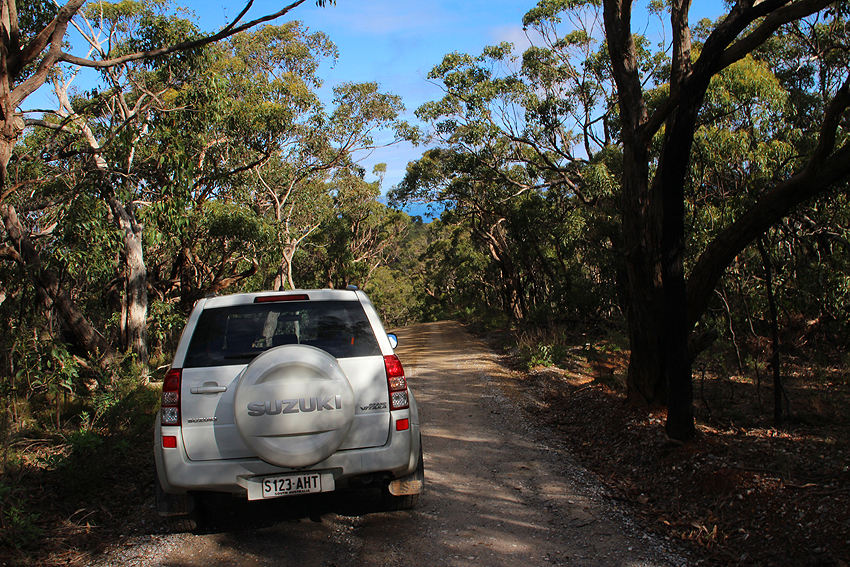
Leaving the park along a bush track


It has been quite a long day walking, driving and stalking wildlife and the ruins are a great place to sit and unpack a well anticipated lunch picked up at the local Yankalilla bakery; nothing flash, just a steak and mushroom pie and an indulgent apricot tart to round off the meal. Good South Aussie ‘tucker’ to fuel up for the walk up the hill and drive home.


Cheers

Baz