Archive | Coastal RSS feed for this section

Hallet Cove….a scrub and coastal walk

3 Apr

The walk from the park’s entrance is striking with the ocean forming a sapphire backdrop to the greens and greys of the scrub. Along the edge of the track stands of eucalypts dominate an understory of acacias, banksias and native grasses. Near the top of the trail, several wattle birds are feeding on a late autumn splash of flowers in the crown of a flowering gum. The largest of all the honeyeaters, these birds have a grating call reminiscent of an out of tune bagpipe.

IMG_0547

View from the park entrance


wat 1

Wattle bird


I scramble further down the track listening to the twittering of scrub birds in the bushes. It is difficult to identify any particular species and almost impossible to photograph them. After walking for a couple of hundred metres, I catch a glimpse of some wrens and miner birds deep in the labyrinth of foliage. Where the trail runs alongside a small creek at the foot of the hill, a singing honeyeater is perched on an exposed branch, finally providing one easy target.

IMG_2486

Singing honeyeater


Hallet Cove Conservation Park runs parallel to the coast about half an hour’s drive south of the city centre. It encompasses a range of habitats from sclerophyll forest to coastal heath and a classic wave cut platform below the cliff face. In addition to a healthy population of native animals the park has extraordinary geological and marine features that I will explore more fully in a later post. 

IMG_0553 - Copy

The track winds through the scrub near a creek bed


I meet a group of elderly walkers on a small bridge that crosses the creek where the path starts to climb towards the top of the cliffs. As they tramp across the wooden planks a large water skink runs across, pausing momentarily before disappearing over the edge into the reeds.

IMG_6338

Skink on the bridge


Climbing southward up the track I take note of the dramatic changes in terrain. The hillside that rises from the cliff tops is dominated by low wind-swept shrubs and grasses and the coastline is defined by the wave cut platform. Near the edge of the cliffs, two magpies are probing the undergrowth with their long, powerful beaks. Suddenly the birds become agitated and take to the air. I look around for the source of their distress and catch sight of a kestrel hovering high above them. But this kestrel has made an error of judgement that soon becomes apparent as the maggies take it on in an aerial dogfight.

IMG_6329

Minding my own business


IMG_0672

Kestrel hunting


IMG_0683

Not on my turf


The final section of my trail follows the boardwalk along the top of the cliffs. I can see pacific gulls foraging in the rock-pools on the exposed shore and a colony of cormorants roosting on a rocky outcrop out to sea.

IMG_6347

Cormorants on offshore outcrop


After following the contours of the hillside for a kilometre the boardwalk slopes down to a stretch of beach, finally terminating at a car park and local eatery…The Boatshed Cafe. Simply grabbing a croissant and soft drink to eat on the beach or choosing a light meal from the excellent menu is an ideal way to wind up a morning stroll.

IMG_0570

Descent to the beach and cafe


I hope you enjoyed this little adventure

Cheers

Baz
A Walk Around West Lakes

14 Mar

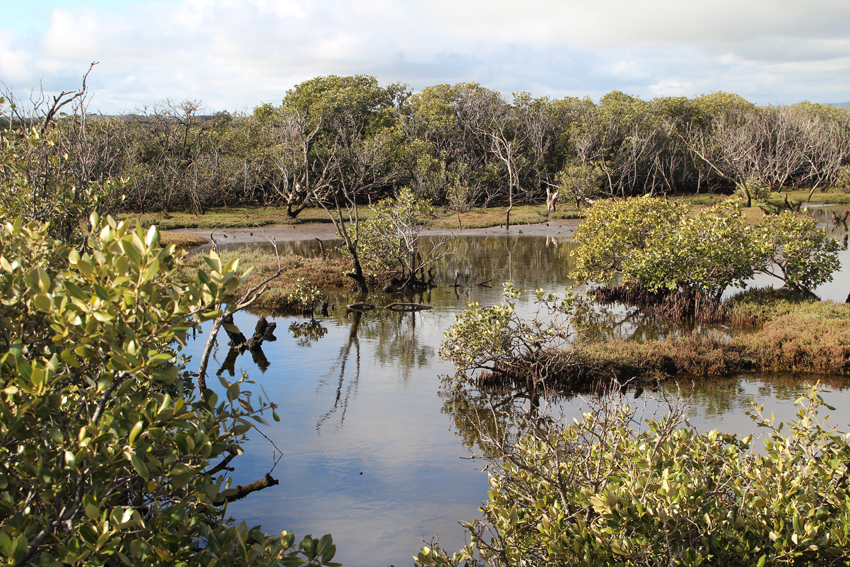
Dear Reader: Once upon a time when I was several decades younger and people thought less about the environment, there was a mangrove swamp behind the dunes near Tennyson Beach. The government of the day and even the general public cared little for mangroves and even less for anything described as a swamp. Consequently, they allowed developers to ‘liberate’ this area from its unproductive state and create a new suburb in its place. The result was West Lakes. For some, the loss of this unique wetland was an environmental tragedy as such areas are important nurseries for many marine species and significant wild places to be cherished.

IMG_2585

Nearby mangrove swamp demonstrates what the area looked like before development

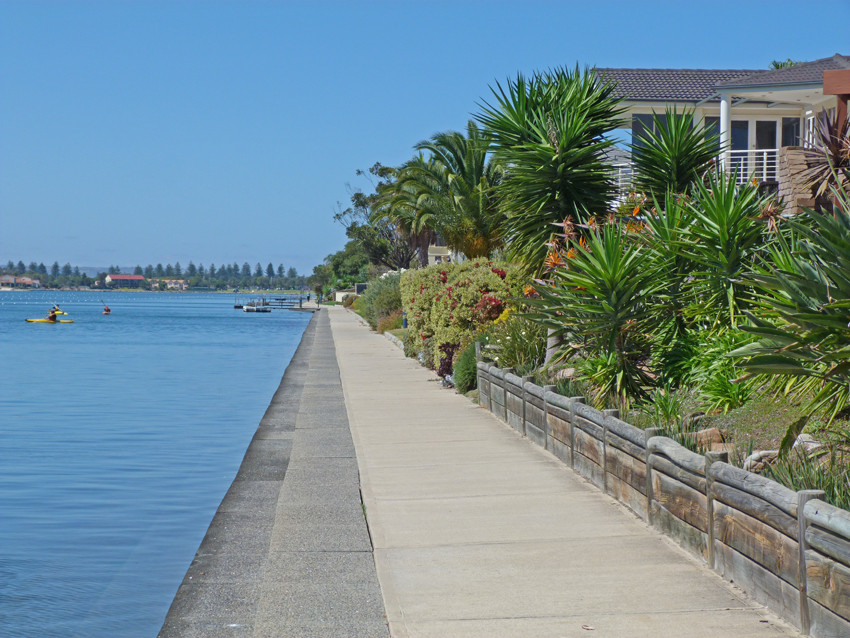
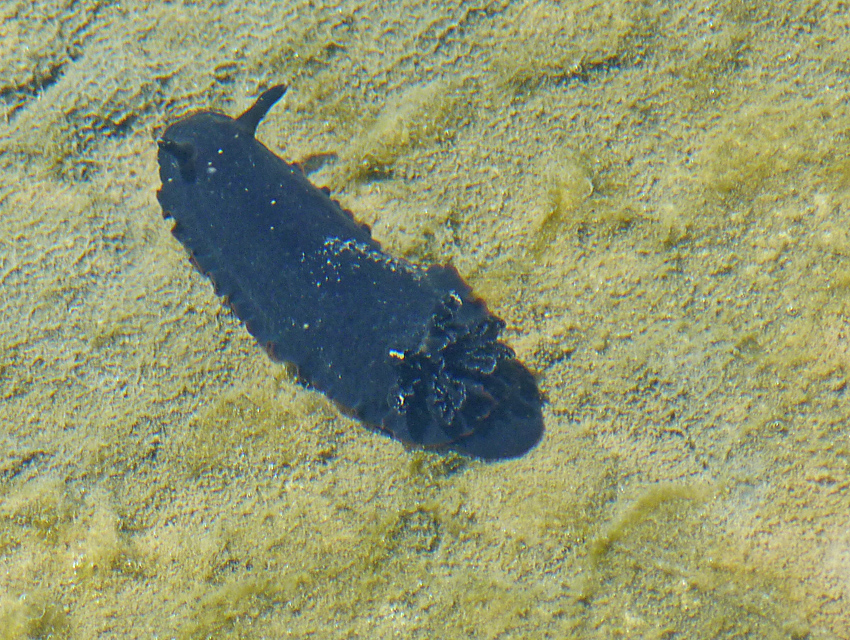
  History aside, West Lakes remains a worthwhile place to visit and walking around the man-made lake on a fine autumn afternoon still provides many interesting wildlife encounters. Instead of samphire swamp and mangrove forest, the edge of the lake is defined by fine sand and a ruler straight concrete edge which steps down into the water. Despite its artificial nature, marine invertebrates and small fish still feed on the algal growth that clings to this constructed shoreline. And on occasions I have even seen nudibranchs, a kind of sea slug with a prominent flower like gills on their backs, grazing on the concrete surfaces.

P1100002

West Lakes today

P1100014

A grazing nudibranch species

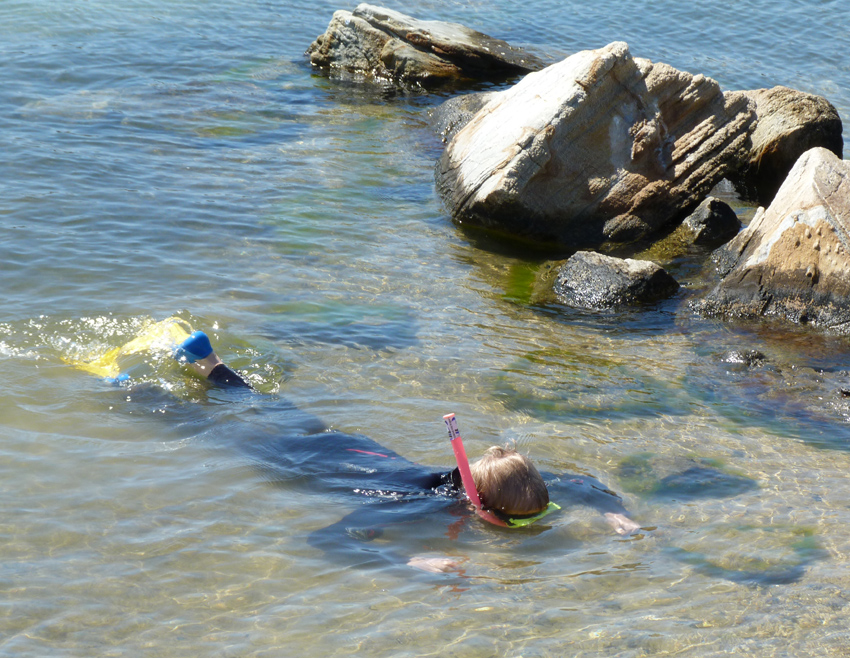
  Because the lake has a less diverse ecology than the original swampland, there are fewer fish species; although sizeable bream, mullet and even the occasional mulloway make it a popular venue for anglers. In fact, the people who live on its shore often feed the resident bream and have quite large schools living near their private jetties and landings. These fish are generally off limits to the fishers but school children who snorkel off the West Lakes Aquatic Centre get quite a thrill when an instructor lures a school from a nearby pontoon.

P1100030 edited

Large bream close to the shoreline

P1090979

School student snorkelling near the aquatics centre

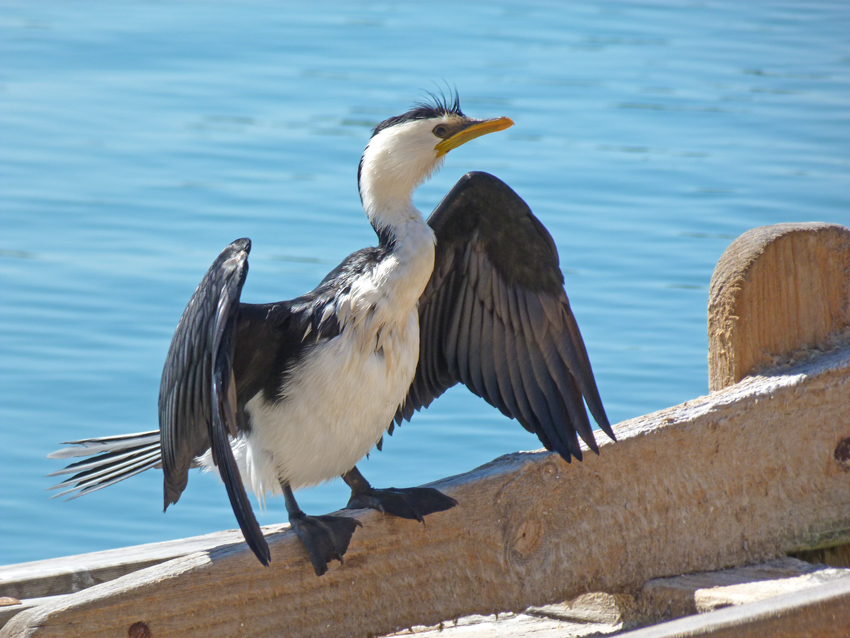
  The fish, crabs and sundry other creatures inevitably attracts predators. Because of the intakes that feed water in from the sea, sharks are virtually unheard of in the lake system and the main hunters are seabirds. Pelicans and cormorants are common and the ubiquitous silver gulls carry out their indispensible clean up duties along the shoreline.

P1100019

Little pied cormorant drying its wings on a pontoon

  Various paths and roads follow the course of the lake system. Walking or cycling along them in the evening and early morning is best for wildlife encounters. However, even at midday when the sun is up and all is relatively quiet on the wildlife front, the well-tended gardens along the fringe of the lake still attract a wide variety of common urban birds as well as insects and the occasional lizard.

P1100023

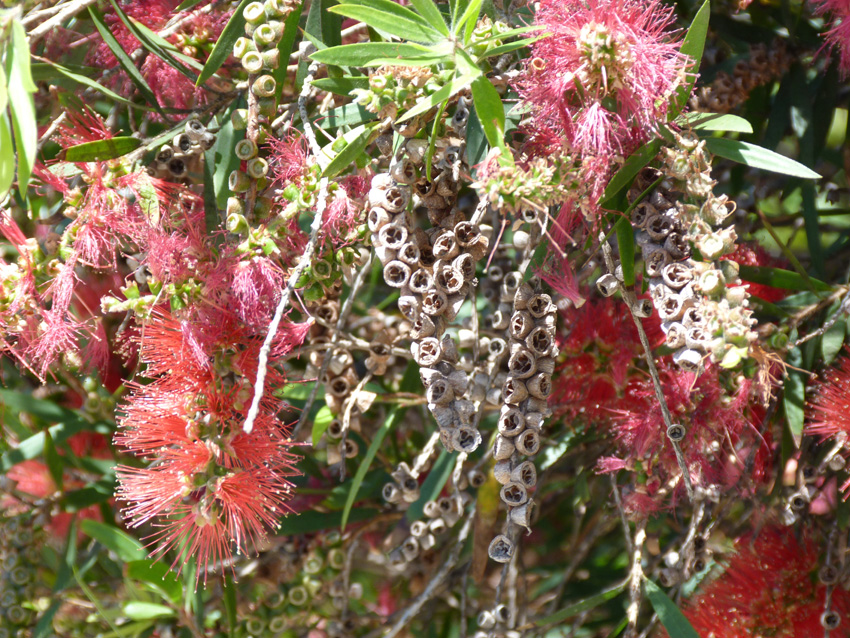
Bottle brush in lakeside gardens

P1100024

Gaura in lakeside gardens

P1100010

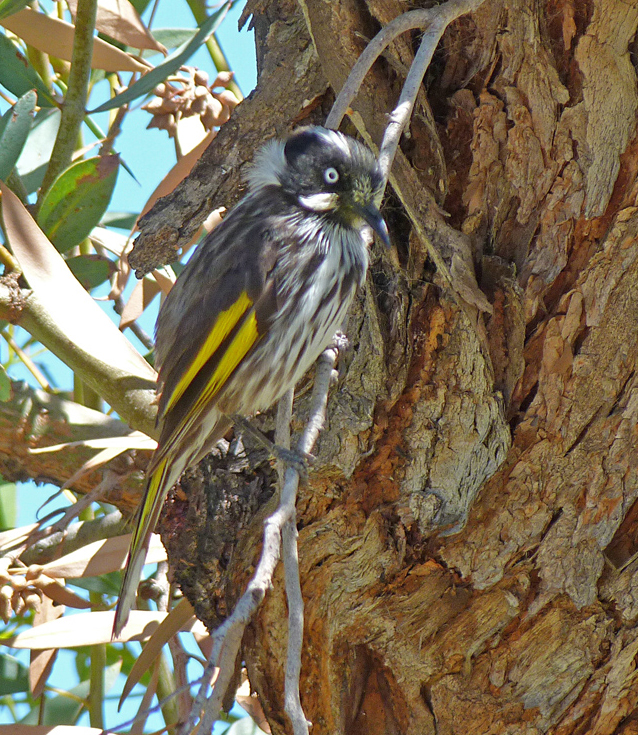
New Holland honeyeater feeding in garden

  Finally, a couple of considerations for those contemplating a walk around the lake. Start at the aquatics centre off Military road as there is a nice little cafe overlooking the water. And take a look at the Tennyson Dunes just across the road from the lake. They separate the urban zone from the seashore and are yet another wonderful South Aussie environment to explore… (see ‘Seaside Dragons’…30th Dec 2012)   Until next time Cheers Baz

Robe…..raptors, reptiles and rough roads

7 Feb

Dear Reader:

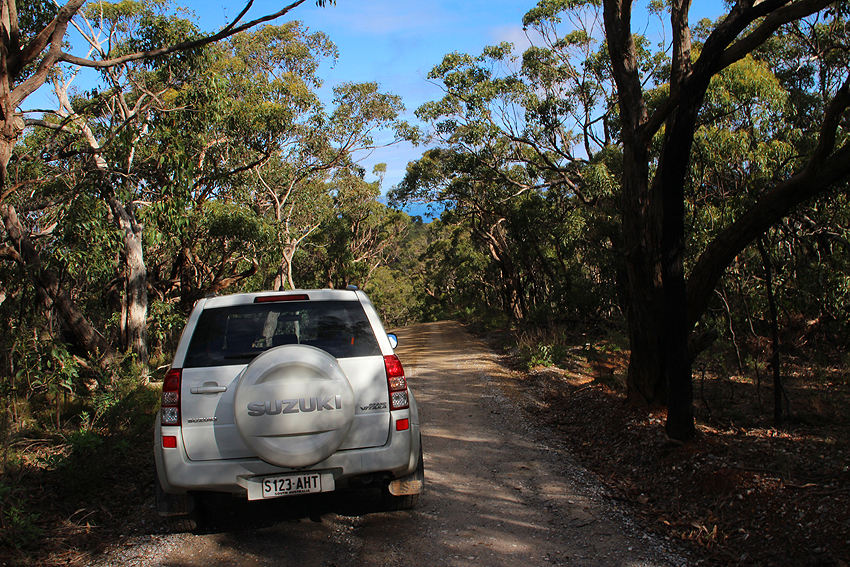
To be entirely honest, the track hadn’t looked too difficult. My tyres were suitably deflated and the little Suzuki had a punchy V6 motor. What the hell! I backed up onto the hard packed dirt road, gunned the motor and headed up the sand dune towards the beach, scaring the daylights out of a pair of emus that had been feeding in the coastal scrub.

A pair of emus feeding in the coastal scrub

A pair of emus feeding in the coastal scrub


Marker posts driven into the sand had indicated the route was suitable for 4WD but I lost a little traction on the climb and one wheel slipped off the trail. The car slid, the sand pushed up hard underneath and there I was, stuck. Over the next half an hour I tried every way I could think of to get free from the sand trap; brush under the wheels, digging out some of the sand wedged under the chassis and swearing in several languages; all to no avail. I wasn’t going anywhere.

The edge of a coastal dune

The edge of a coastal dune


Feeling rather stupid and just a tad worried, it was 40C and though I had a water bottle and my mobile phone, it was a good hour’s walk back to the main road. Furthermore, I couldn’t remember seeing any signs of habitation when I had driven from Robe into the Little Dip Conservation Park earlier in the day. But my choices were somewhat limited and so, with my camera slung over my shoulder, I started off to get some help.

Numerous frehwater lakes in the the conservaion park provide a haven for wildlife

Numerous frehwater lakes in the the conservaion park provide a haven for wildlife


Within half an hour of trudging along the sandy trail I realised this was going to be a hard walk. Every 30 minutes I found a little shade took a sip out of the bottle and rested for 5. Eventually I reached the junction of the trail and the main road back to town. Sitting quietly in the shade of a park information sign, I sipped on my water bottle and waited for a few minutes in the hope that another vehicle might be heading my way. No such luck, but a rather feisty bearded dragon did saunter across the road and give me a long hard stare before disappearing into the scrub.

Bearded dragons tend to freeze when threatened relying on their camouflage to avoid predators

Bearded dragons tend to freeze when threatened relying on their camouflage to avoid predators


Suitably unrefreshed and distinctly grumpy, I started along the road back to Robe. Earlier in the day and in stark contrast to my present predicament, I had been enjoying a civilised meal of local crayfish and salad in a boutique restaurant. After a couple of kilometres I noticed a swamp harrier that had settled on a fence line after scanning the fields for prey. The fence ended  in a cattle grid  near a long driveway that led to a farmhouse that I had not seen earlier. It was one of those typically Australian country homes, old sandstone with return verandahs that spoke of generations of farmers that worked this rugged landscape.

A swamp harrier rests on a fence post

A swamp harrier rests on a fence post


It turned out that I was in luck. The farmer, who was tired of rescuing inexperienced off roaders, kindly offered me a drink and some sandwiches. When I told him I was in the park photographing wildlife for a children’s book on reptiles he shared some of the interesting encounters with native animals he had experienced recently. Ten minutes turned into a couple of hours and because of our mutual interest in natural history, he offered to use the farm truck to haul me off the dune.

The kindness of strangers

The kindness of strangers


As we approached my SUV I noticed the curved imprint of a large snake that had taken shelter under the front of the vehicle. Now that would have made a good shot!!

A brown snake flicks out its forked tongue to pick up chemical signals given off by prey.

A brown snake flicks out its forked tongue to pick up chemical signals given off by prey.


With the car back on track we sat in the scrub and had a cold drink before I headed back for a shower and a good night’s rest. Offering to pay for my rescue did not seem appropriate. Instead, I promised to send him some copies of the wildlife books I had recently written for his grandchildren and to stop in for coffee the next time I headed down to Robe and the limestone coast.

Many of Robe's restaurants, galleries and B&Bs are based in classic old buildings

Many of Robe’s restaurants, galleries and B&Bs are housed in classic old buildings


Until our next excursion

BAZ

PS

I think the raptor is a swamp harrier; any help on this identification would be appreciated

B

Henley Square……Crabs, Coffee and Coastline

13 Jan

Dear Reader:

The morning is warm and still with hardly a breath of wind. Although the water is not as clear as I would have liked it is worth putting on a mask and flippers to explore the shallows alongside the jetty.

Henley jetty on a summer's day

Henley jetty on a summer’s day (click to enlarge all images)


As I swim into the shadows beneath one of the jetty piles I can just make out a school of sizeable bream with a few silver whiting scattered amongst them. They are massing near the wooden posts directly below several fishermen who have empty buckets and a look of ‘no luck today’ on their faces.


School of bream under the  jetty

School of bream under the jetty


The wind is strengthening a little which often stirs up the sand and makes underwater photography challenging to say the least. It is time to switch to macro settings and look for small organisms on the sandy bottom. Numerous furrows snake across the undulating sand like roads through desert dunes. I follow one trail and probe the end point gently with my dive knife to see if I can reveal the perpetrator…no luck. But my digging does annoy a swimmer crab half buried in the sand only an arm’s length away. The little creature immediately strikes an aggressive pose angling up towards me with nippers spread and ready to attack.

Sand crab, note the swimming paddles on the rear legs and the faint furrow in the sand made by a sea snail

Sand crab, note the swimming paddles on the rear legs and the faint furrow in the sand made by a sea snail


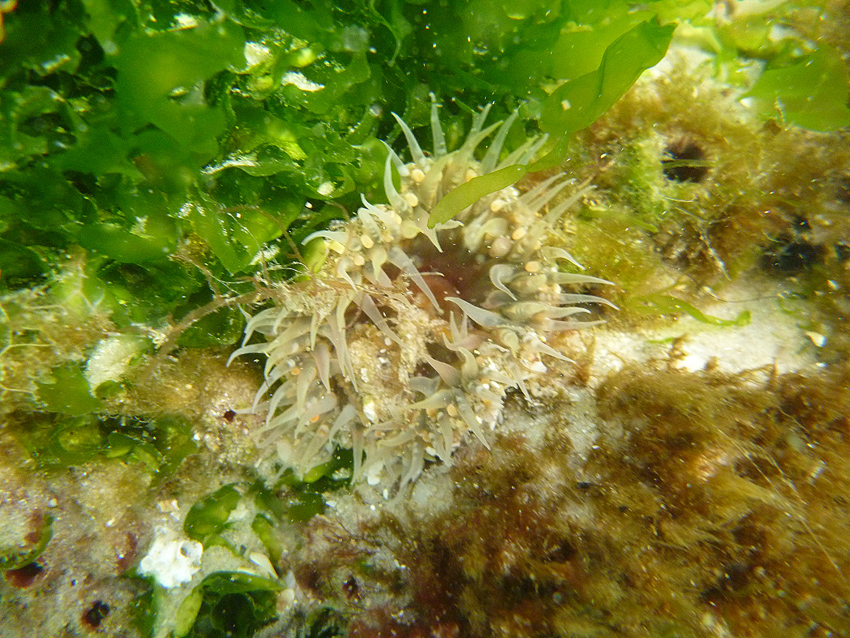
Anemone, sea squirt and green algae attached to a jetty pile

Anemone, sea squirt and green algae attached to a jetty pile


I spend a few more minutes exploring the various organisms that cling to the jetty piles. Satisfied with a few close up shots of anemones and sea squirts, I head for the change rooms and outdoor shower to wash off my gear. And then, the all important decision…. which of the beachside al fresco restaurants for coffee and breakfast? Henley Square at the foot of the jetty is one of Adelaide’s favourite beachside haunts where you will invariably find an eclectic collection of walkers, cyclists, fishers and even the odd naturalist; all enjoying the coastal ambience and quality restaurants.

Cafe culture on a sunny morning

Cafe culture on a sunny morning


Coastal strip of dune vegetation including the pine used as vantage point by a nankeen kestrel

Coastal strip of dune vegetation including the pine used as vantage point by a nankeen kestrel


Refuelled and refreshed by my morning dip I walk south along the bikeway that skirts this section of coastline. Between the beach and the path there is a long stretch of low coastal dunes that have been revegetated over the last decade providing an interesting ecosystem that is home to a variety of plant and animal species.

Nankeen kestrel in flight. one of the more common raptors that feeds mainly on ground dwellers but will attack other birds

Nankeen kestrel in flight. one of the more common raptors that feeds mainly on ground dwellers but will attack other birds


Several small groups of sparrows and some honeyeaters are flitting through the foliage but they seem extremely nervous. The reason for their apprehension soon becomes obvious as a nankeen kestrel perches on a tall pine tree to survey its hunting zone. The bird of prey, however, does not go unnoticed by a pair of noisy miners that dive bomb the predator and force it to take to the air again.

Blue bees are a small native species that have a more errtic, zippy flight pattern than common honey bees

Blue bees are a small native species that have a more erratic, zippy flight pattern than common honey bees


A spcies of White butterfly feeding on coastal blooming plants

A species of white butterfly feeding on coastal blooming plants


The temperature is rising and the chance of spotting larger animals diminishing as the day progresses and they seek shelter from the sun. I turn back towards the jetty and focus my attention on the unique coastal plant life and the bees, wasps and butterflies that feed on the various flowering shrubs. Near one of the sandy tracks that lead down to the water a thick stand of acacias, with delicate blue flowering grasses growing amongst them, is attracting native blue bees and several varieties of butterflies. Tricky images to capture as the bees are speedy, erratic little creatures and the butterflies are only landing on the blossoms for a few seconds.

Despite their bulk pelicans are graceful in flight.

Despite their bulk pelicans are graceful in flight.


Australian pelicans have a wingspan of around 2 metres

Australian pelicans have a wingspan of around 2 metres


By the time get back to the square I am ready to sit under one of the square’s cafe umbrellas and sip a long cool drink while watching the locals enjoying another warm South Aussie day at the beach. It’s hot now and time to drive home and sort my pictures. I slip the camera strap over my shoulder ready to leave as one final image presents itself. An Australian pelican glides in low over the water and gracefully deposits itself on one of the jetty light poles and glances in my direction…..thanks!!


Until we chat again

Baz  

The Old Talisker Mine

15 Nov

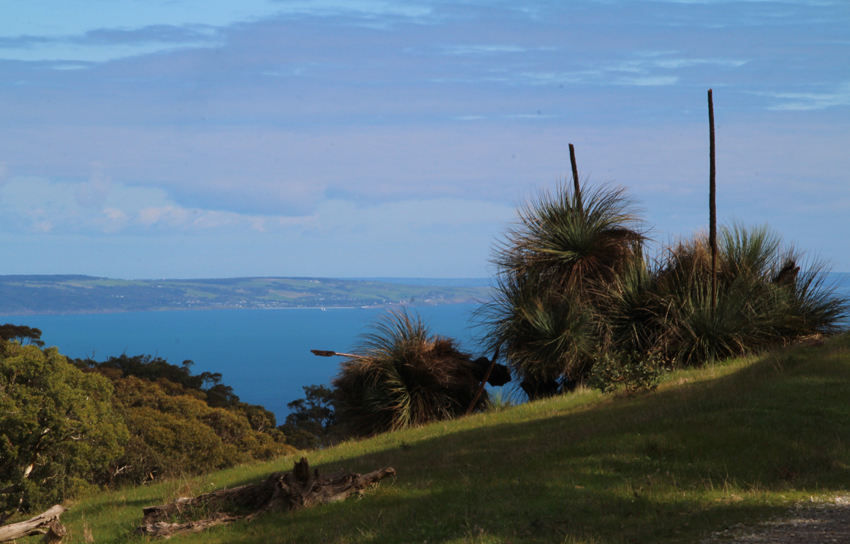
The view from the top of the hill is spectacular. Soft winter pasture still covers the ground in sharp contrast to the spiky Xantheria or grass plants that characterize the harsh coastal scrub and the blue of Baxter’s Passage and hazy profile of Kangaroo Island beckon on the horizon.


Backstair's passage and Kangaroo Island

Backstair’s passage and Kangaroo Island (double click to enlarge all images on this page)


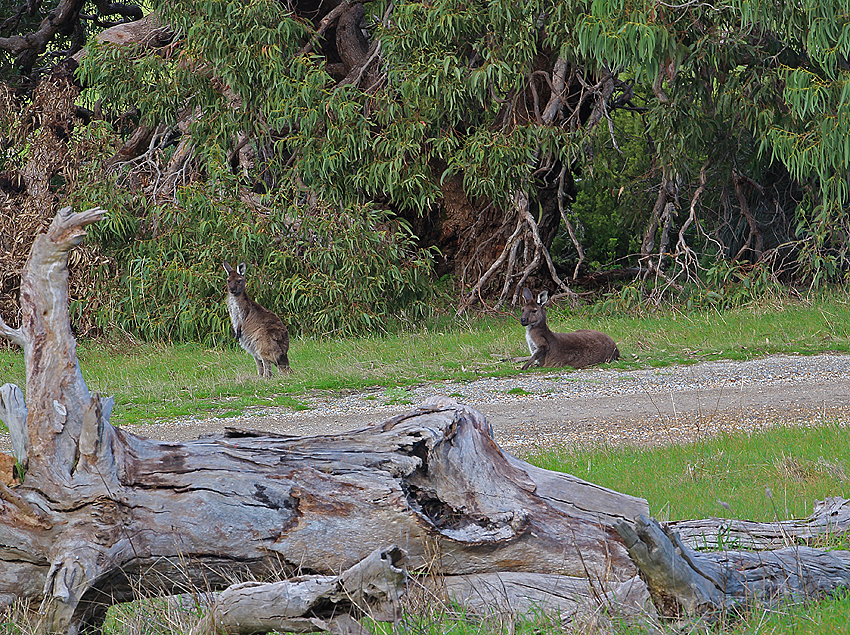
As I get out of the 4WD to capture this image I notice a pair of western grey kangaroos on the edge of the scrub no more than 20 meters from the vehicle. They are wary, ears twitching and sniffing the air. One is considerably larger than the other. They are probably a mother with a joey at heel and her pouch looks a little enlarged suggesting that she may have another little one tucked away. There could even be two in the pouch; one permanently attached to the nipple while the other simply enjoys the ride. In good times kangaroos can multiply quickly.

Western greys by the track

Western greys by the track


I am in the Talisker National Park about an hour and a half journey from the city and 10 kms from Cape Jervis at the toe of the Fleurieu Peninsula. The park centres around a series of bush trails that surround an abandoned silver and lead mine dating from the 1860s. Old machinery, buildings and shafts add an historic dimension to an area rich in scenery and wildlife.

Crushing house and old boiler

Crushing house and old boiler


From my cliff top lookout I backtrack along the dirt roads to the entrance of the old Talisker mine site. The walking trail to the mine is not too steep but the scrub on both sides is dense and full of life. In both the treetops and bushes I can hear the calls of wrens and honeyeaters. Eventually one of the delicate little birds pauses on a branch to announce its territory.

Crescent honeyeater

Crescent honeyeater


The track ends in a small clearing where the rusted remains of crushers, boilers and old buildings mark the main site. They are all that is left of a mine that once was the workplace of dozens of miners and supported a community of 300 souls at nearby Silverton; now also long gone.

Pied currawong

Grey currawong


The buildings are surrounded by a forest of eucalypts and I can hear the more distinctive movements of a larger animal in the branches on the far side of the crushing plant. I focus my long lens on the area and start to search for the perpetrator, expecting another roo or even a possum disturbed from its daytime sno0ze. But it is a large crow-like bird that I spot amongst the leaves and branches, a pied currawong, a relative of the white backed magpies that are so common on the plains where I live. Currawongs are a group that I have rarely photographed successfully as they tend to be a little more wary than their magpie cousins.

Bush track surrounded by eucalypt forest near the park entrance

Leaving the park along a bush track


It has been quite a long day walking, driving and stalking wildlife and the ruins are a great place to sit and unpack a well anticipated lunch picked up at the local Yankalilla bakery; nothing flash, just a steak and mushroom pie and an indulgent apricot tart to round off the meal. Good South Aussie ‘tucker’ to fuel up for the walk up the hill and drive home.


Cheers

Baz                  
Wildlife and Pub Food at the Port

25 Oct

Dear Reader;

It is a mild spring afternoon and there is barely a breath of wind to ruffle the waters of the inner harbour. A pair of sooty oyster catchers are foraging between the exposed rocks on the southern embankment. They are using their powerful blade-like beaks to prise shellfish from the rocks and dig in the sand for worms and crabs. The bright red beaks and eyes look like they have been painted by an artist with an exaggerated disposition for contrast.

IMG_4312

Sooty oyster catchers foraging at low tide (click on all images to enlarge)

IMG_4326

Soon to be lunch


I am walking around the wharves and shoreline of Port Adelaide. Originally nicknamed Port Misery by the early settlers who came ashore amongst the mangroves, mud and mosquitoes that once dominated the area; the Port has undergone many changes. Once a lively harbour that berthed dozens of ships delivering the provisions to establish a new colony; it is now a quieter, quayside community. People now come to the Port from the city, just 15 minutes away, to visit the maritime museum, shop at the weekend markets or go for a cruise along the Port River to catch sight of the world’s only urban dolphin pod.

IMG_4337

Dolphin cruise ship moored at the wharf


From the foreshore I walk past the pub and on to the old Birkenhead Bridge, the first bascule or lifting bridge in Australia. Glancing down at the old jarrah poles, driven hard into the river bed where they once stood as moorings, I notice that several silver gulls have chosen the iron clad posts as nesting sites. Every so often one of the birds lifts off its scruffy nest and checks the eggs, sometimes giving one a little push with its beak, perhaps to keep the distribution of heat even.

P1060700

Nesting silver gull

P1060692

Silver gull adjusting egg position


I watch the birds for half an hour. While one sits on the nest the other flies off in search of food further along the shoreline amongst the same rocks the oystercatchers were exploring just a little while ago. The foraging gull tugs on the end of a tube worm protruding from the fine sand and mud. It is about to extract the hapless invertebrate when a mudlark, usually a woodland species, emerges from a clump of nearby bushes and relieves the seabird of its prize.

IMG_4342

Mudlark feeding along the shoreline


Like the gull and mudlark I figure it’s about time for lunch and head for the Birkenhead Tavern and one of the best chicken schnitzels the Port has to offer.

the pub

Birkenhead tavern

Sorry, only one post this month!!!!!

Have been travelling overseas

Until next time

Cheers

Baz
A Bite at Grange

19 Sep

Dear Reader:

A lone silver gull is flying parallel to the shore just above the Norfolk pines that grow along the Grange beach front. Suddenly it veers off course, dipping towards one of the trees and letting out a loud, raucous shriek. This unusual behaviour encourages me to stop and take a closer look through the telephoto lens. And there, perched serenely on the topmost branch is a beautiful nankeen kestrel surveying its stretch of prime coastal real estate.

Nankeen kestrel looking for prey

Nankeen kestrel looking for prey (click all images to enlarge)


Nankeen kestrels are small falcons that are widely distributed across the country. They usually live in rural or outback regions where they hover over fields and open bushland preying on small mammals, reptiles and occasionally taking birds in the air; which explains the gull’s nervous disposition. Seeing one in an urban area is a really quite unusual. For the next half an hour I follow the raptor as it patrols the shoreline and dunes moving from tree tops to fence posts to survey its territory.

The Marines, beachside heritage homes

The Marines, beachside heritage homes


Grange Beach is just 15 minutes from the centre of Adelaide. An old wooden jetty, classic golden sands and heritage buildings make it an ideal place to go for a walk and grab a bite to eat summer or winter! A walking &cycling trail passes through the area winding between the seafront properties and coastal revegetation zones providing a unique blend natural and urban habitats that encourages a wide variety of wildlife.

Spotted dove

Spotted dove

Singing honeyeater in coastal scrub

Singing honeyeater in coastal scrub

The unfortunately named pigface

The unfortunately named pigface


After watching the kestrels I follow the track south. The delicate shrubs and grasses that stabilise the dunes are home to many different bird species from common house sparrows to spotted doves and singing honeyeaters. Although it is a coolish day and the insect life is in short supply a few bees and butterflies are congregating around some early blooming pigface, a common succulent in the dunes.

Grange jetty at low tide showing worm casing encrustaceans

Grange jetty at low tide showing worm casing encrustaceans


For a little variety I walk back along the beach. The tide is out exposing concrete-like encrustations of tube worms cemented to the jetty piles. A track leads from the beach to the old kiosk which is now a fashionable restaurant. My day ends with a glass of white, salt and pepper squid with sautéed scallops in the shell accompanied by a generous serve of crusty bread.

Grange Kiosk

Grange Kiosk


Until our next adventure

Baz          

Kestrels at the Cape

25 Jul

Dear Reader:

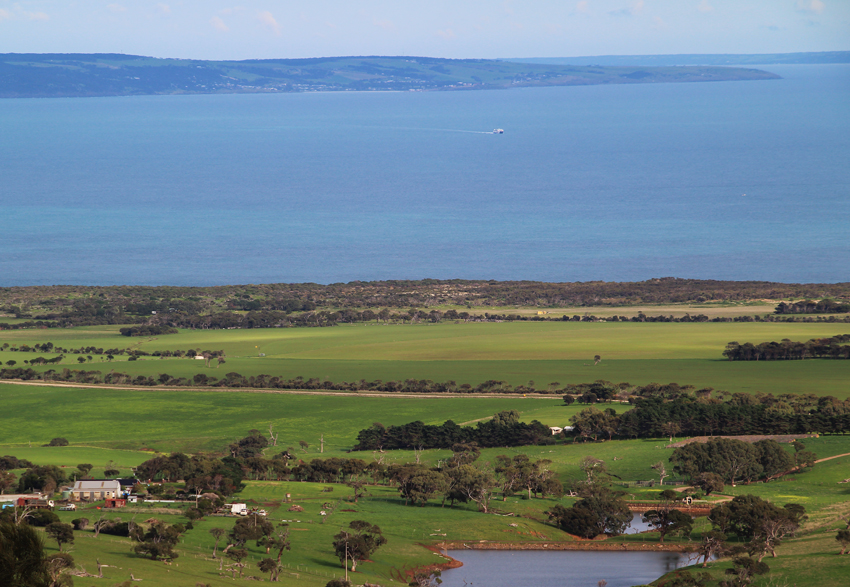
It is late morning on a fine winter’s day and I am leaving the dirt road from Victor Harbor to join the main route back to Adelaide. As I round the curve the descent towards the coast is quite spectacular. From the top of the hill the road drops away sharply providing a panoramic view of open pastures dotted with small dams and patches of native vegetation. A corridor of lazy blue ocean separates the mainland from the island, which appears as a hazy outline on the horizon.

View from the top

View from the top (click to enlarge)

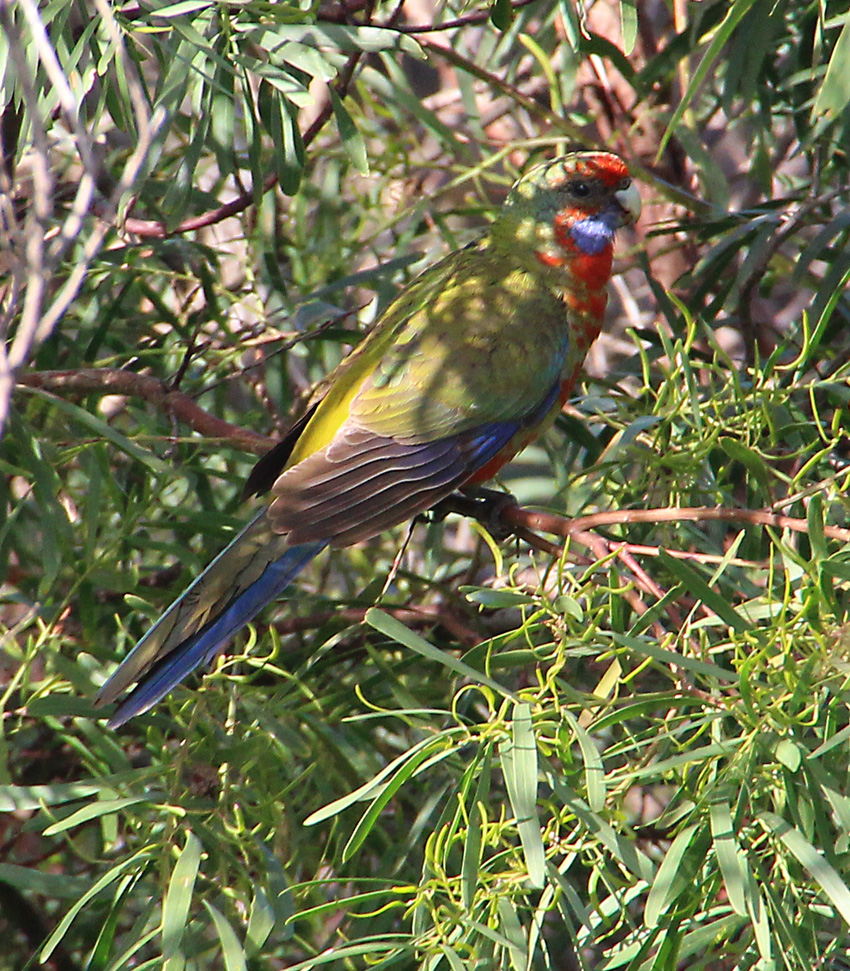
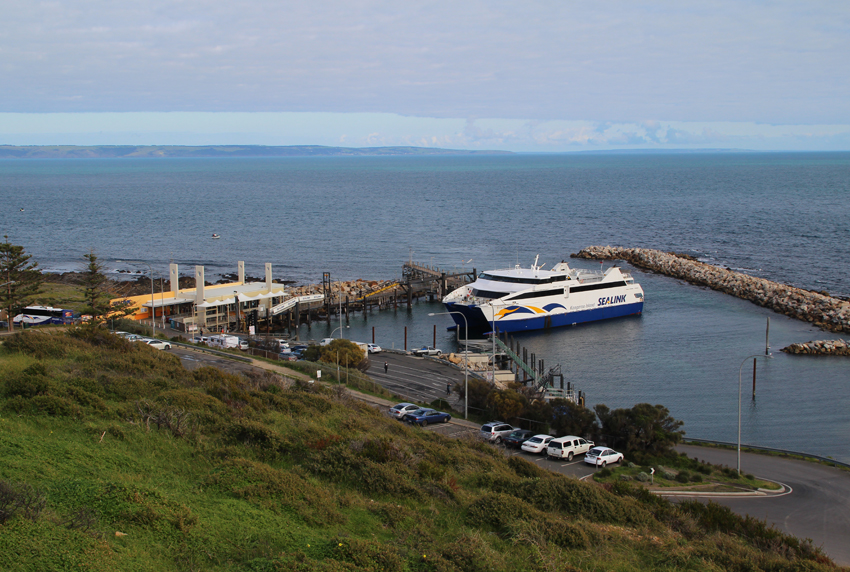
Closer to the coast a dirt track leads to a viewing point alongside a small stand of low trees and bushes. From the elevated position I watch the Sealink ferry crossing Backstairs Passage and stop to take a shot as it docks at the terminal below. While I focus on the ship I can hear the twittering of finches in the nearby scrub and catch a fleeting glimpse of two brightly coloured rosellas gliding into one of the taller bushes.

Rosella feeding in accacia tree

Rosella feeding in acacia tree (click to enlarge)

Sealink ferry docking at Cape Jervis with Kangaroo Island in background

Sealink ferry docking at Cape Jervis with Kangaroo Island in background (click to enlarge)

The ferry from Kangaroo Island docks at Cape Jervis on the southern tip of the Fleurieu Peninsula. It is one of my favourite places in the South Australia; from the little coastal hamlet you can visit local beaches and dive spots, access the Deep Creek Conservation Park, organise a charter fishing expedition or take a day trip to Kangaroo Island.

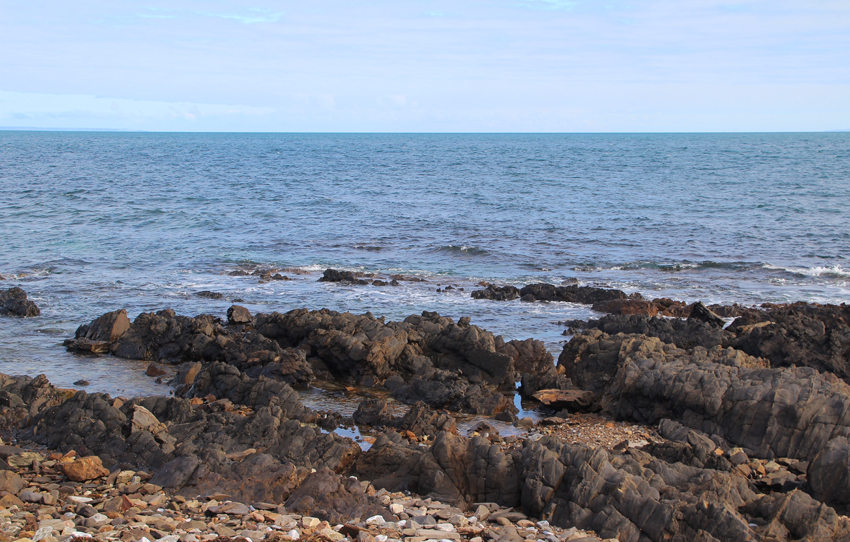
Rocky outcrops extending into the sea

Rocky outcrops extending into the sea (click to enlarge)

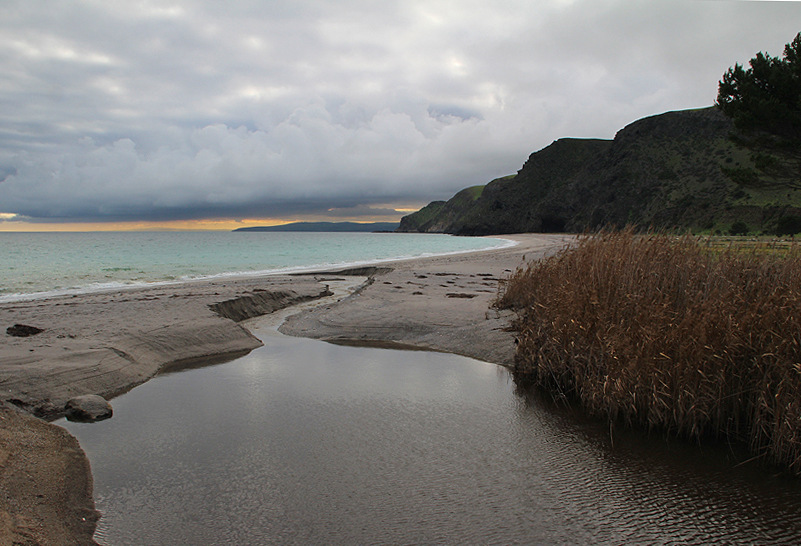
From the lookout I follow the road down to the lighthouse and park on a track a hundred metres back from the sea. The shoreline is a geology lesson in itself, with weathered ridges of dark rock ‘criss-crossed’ by veins of quartz, jutting into the ocean and patches of coarse sand and fractured rocks abutting the low earthen cliffs. In the distance I can see a line of giant wind turbines silhouetted on a faraway hilltop and the smell of salt air combined with the sound of waves breaking amongst the rocks fills my senses.

Nankeen kestral hovering above beach

Nankeen kestrel hovering above beach (click to enlarge)

As I move up the foreshore, picking my way between the boulders, I can see two  kestrels hovering over the beach. They seem to be systematically working together; one hovers for  a few minutes over the rocks then moves on while the other works the grassy slopes a little further inland. By pure chance they are slowly coming towards me so I lift the camera skyward and try to remain as still as humanly possible until the birds are almost directly above. I fire off a dozen shots and smile at my good fortune.

Monarch butterfly

Monarch butterfly (click to enlarge)

Pied crmorant by rockpool

Pied cormorant by rock pool (click to enlarge)

Raven with nesting material

Raven with nesting material (click to enlarge)

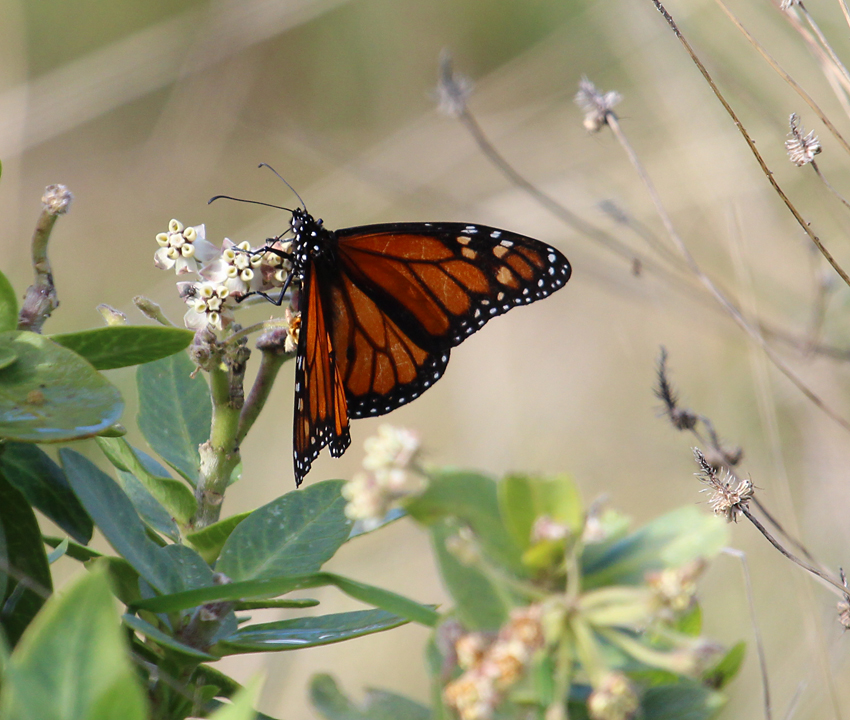
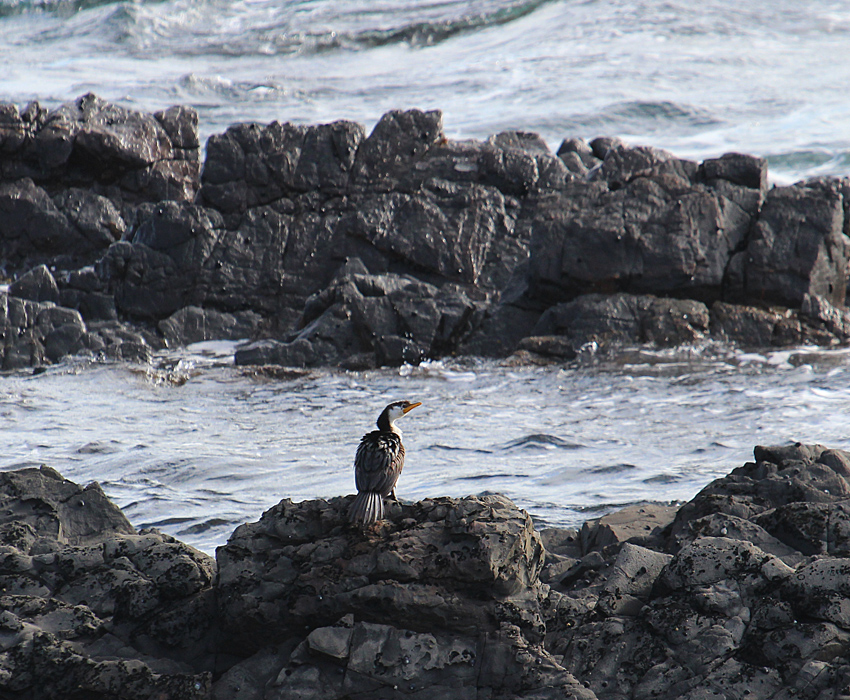
My walk provides a few more interesting moments: a cluster of monarch butterflies in a shrub that looks like milkweed, a lone pied cormorant sunning itself on one of the rocky outcrops that reach into the sea and a raven that is tearing up seaweed on the breakwater for nesting material. However, while I sit in the ferry terminal sipping a coffee, watching passengers returning from KI and reviewing my images I realise that it is the kestrels that have really made my day.

Cheers

Baz

Rapid Bay’s Misty Morning Predators

5 Jul

Dear Reader:

The road drops sharply from a cloud enveloped ridge top to the beach then emerges from the mist alongside a small creek. The sky is clearer close to the ocean and I can see the familiar outline of the steep cliffs and the twin jetties that jut out into the gulf. It is a chilly winter’s morning and my hands are cold as I organise my back pack and cameras ready for a stroll along the seafront.

IMG_3732

The creek at Rapid Bay (click to enlarge)

Two large birds are flying slowly along the beach front; in the early morning light they seem to resemble pacific gulls, a fairly common species along this part of the coast. I track the seabirds with my long lens and fire off a series of shots and quickly review them. Although the light mist obscured the birds’ features to the naked eye the captured images reveal a pleasant surprise. The wing feathers, tail shape and characteristically curved beak indicate a far more interesting and less common bird….the white breasted sea eagle. A little further down the coast I can see the eagles rise up on a thermal alongside the cliffs as they soar in tight spirals before resuming their beach patrol.

IMG_3771 edit1

White breasted sea eagle (click to enlarge)

The beach with its high cliffs, creek and mining jetty define one of the Fleurieu Peninsula’s most interesting and historic locations; Rapid Bay.  It was here that Adelaide’s original surveyor Colonel Light anchored his brig ‘The Rapid’ in the sheltered bay uttering the words “I have hardly seen a place I like better”.  Only 100 kms south of Adelaide, Rapid Bay is a prime location for divers and anglers. It is also  holds a significant place in the lore of several local Aboriginal peoples; a feature of the area that I will explore in more depth at a later date.

IMG_3761

Anglers on the jetty (click to enlarge)

IMG_3755

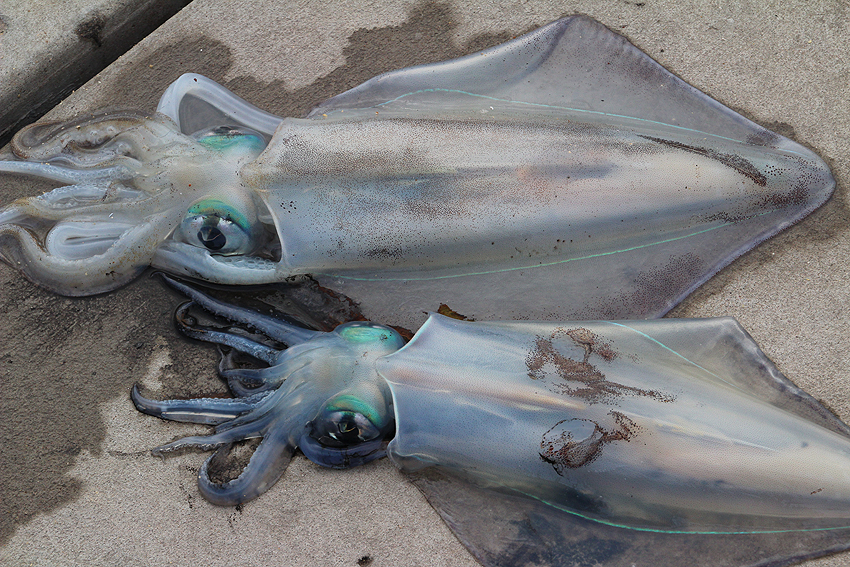
Southern calamari (click to enlarge)

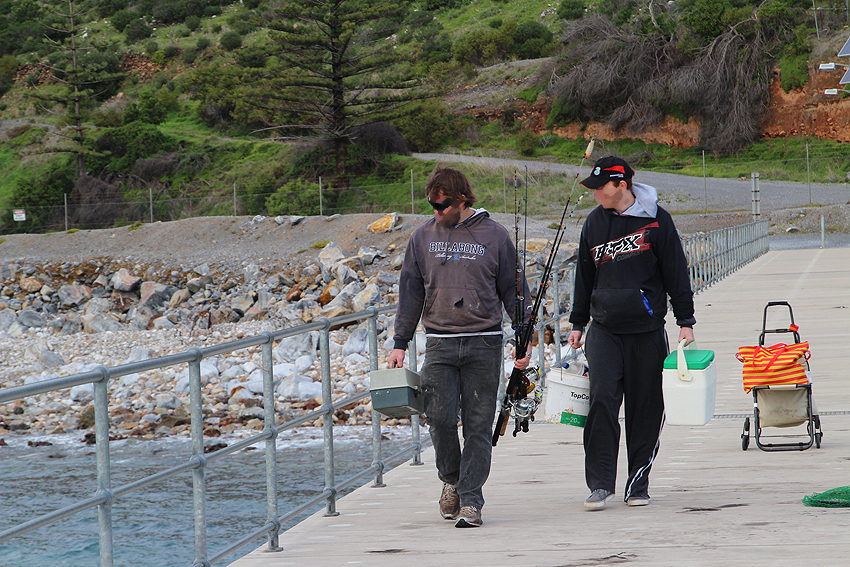
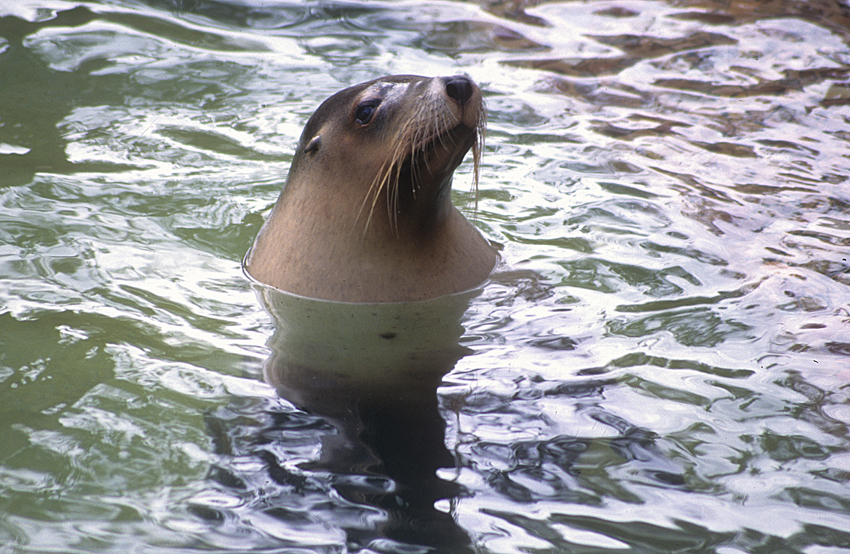
From the beach front I walk along a short dirt road to the jetty. A couple of fishers tell me that a sea lion has been hunting in the shallows between the new and old jetty. After a few minutes a sleek grey shape twists and turns in the water only a dozen metres away and a whiskery face pops up, surveys the surface and is gone as suddenly as it appeared. The anglers tell me that they have tossed a couple of squid to it and that the sealion has been around the jetties for the last couple of days.

sealion 1

Australian sealion (click to enlarge)

I watch the men jigging for squid for a few more minutes before returning to the car which is parked near the creek. As I pack up my gear I can hear the sound of finches in the bushes and reeds but it is difficult to focus on the tiny birds especially in these low light conditions. While I am concentrating on the tiny birds a large raven appears on the nearby embankment with a piece of squid in its beak and proceeds to tear the rubbery flesh apart while keeping a wary eye on me and croaking out a few warning calls to any other would be scavengers that might fancy a calamari entree.

IMG_3741

Little raven (click to enlarge)

Eagles, sealions, squid and even a dolphin that cruises past as I leave the jetty; it has been a morning of predators and scavengers both aquatic and aerial. And now it is my turn to grab a bite to eat. Leonard’s Mill, a renovated flour mill, is one of my favourite dining spots and on the main highway to town a mere 15 kms from the Rapid Bay turn off. Their calamari is on the menu as salt and pepper squid and best enjoyed with a fine white wine from the local vineyards.

Cheers

Baz

Port Willunga’s Natural Charms

24 May

There is a pair of pigeons nesting along the limestone cliffs. They are billing and cooing and puffing up their feathers if rival birds come anywhere near their territory. Unbeknown to the loving pair a far greater menace, in the form of kestrel, is circling high above, scanning the cliff face for a tasty pigeon treat. Luckily for the nesting pair, the hunter overlooks them or perhaps the angle of attack is too steep and the cliffs too perilous.

Lucky pigeons

Lucky pigeons……click to enlarge


I am walking along Port Willunga beach just 40 minutes from Adelaide; a glorious little stretch of white sand that lies below ochre limestone cliffs and bounded by the Aldinga reef to the south and Gull Rock to the north. The reef is a marine sanctuary that showcases a wide variety of the state’s diverse aquatic life. And the beach is a rich repository of the South Australia’s pastoral history where the sea scoured remnants of an old wheat jetty, built in 1853, protrudes from the shallow water. Despite its idyllic setting, Port Willunga also harbours a darker history with no less than five ships being wrecked in the vicinity. The most famous of these was the Star of Greece whose skeleton can still be explored just 500m offshore.

The view from the beach

The view from the beach…..click to enlarge


Leaving the fortuitous pigeons to their parental duties I kick off my shoes and walk through the water amongst the old jetty piles. The wood is bleached white and worn by wind, sand and rain. Tenacious little limpets cling to the timber and a shore crab scuttles past my feet. Looking back across the beach I can see the rough hewn caves that were dug into the cliffs to house fishing dingies and give shelter to the hardy men who made a living from these waters.

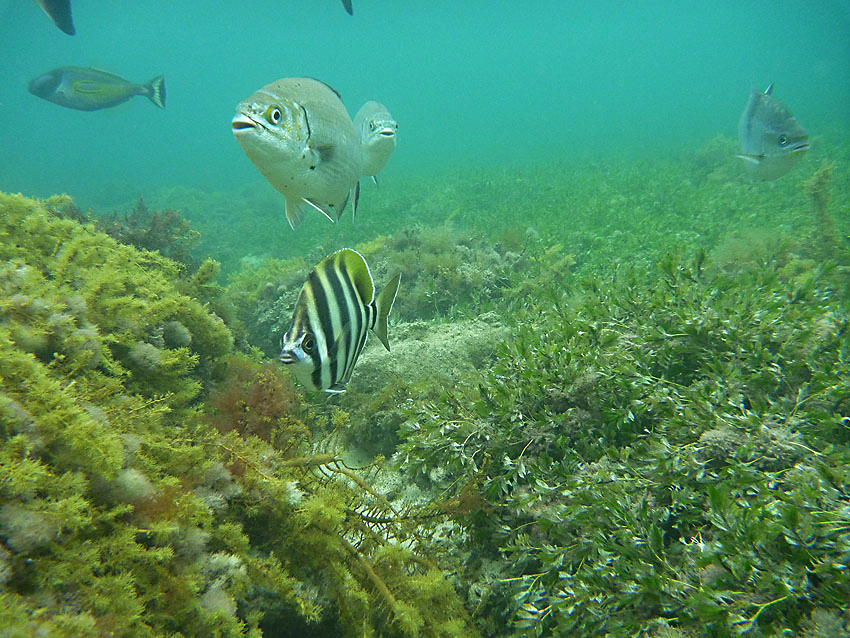
Drummer, leatherjackets, sweep and a moonlighter on the edge of the reef....click to enlarge

Drummer, leatherjackets, sweep and a moonlighter on the edge of the reef….click to enlarge


Warm clear water, a fine day and good light….thinks….twenty minutes later I am snorkeling along the edge of the reef. The water is fairly shallow and the marine life prolific. A school of zebra fish swims close to me and large dusky morwong and magpie perch feed along the undercut shelves that define the reef’s edge. At the end of one rocky outcrop a number of different species are congregating where the reef and the adjacent seagrass meadow intersect. I dive to the bottom and hold onto the rocks to steady myself and fire off a couple of shots. Later when I review the images they seem to reflect both the environment and the moment. An hour in the water and I’m getting a little chilly and its time to go back, this time I walk across the shallow rocky platform exploring the many tidal pools.

A casual lunch outside or fine dining inside....click to enlarge

A casual lunch outside or fine dining inside….click to enlarge


The change rooms at the end of the car park make getting out of the wet suit easy and the short walk up the slope to the restaurant, named after the hapless Star of Greece, gives me a good view north and south along the coast. Often I have caught sight of a pod of dolphins cruising the calm gulf waters but not today; just a few fishers and an optimistic body surfer are enjoying the water. However, after a strenuous swim and a walk along the beach my priorities have changed from natural history to lunch and the boutique restaurant, once a fish and chip shop that I frequented as a lad, beckons. Fresh seafood, quality local produce and wines; a typically South Aussie way to finish my day.


Cheers

Baz