Archive | Murray River RSS feed for this section

Just Cruising 2 King’s Billabong to Mildura

6 Jul

Dear Reader:

As we back the houseboat into the current and point it downstream a Snakebird or Anhinga perches gracefully on an overhanging branch, the perfect farewell to King’s Billabong.

Snake-bird or Anhinga

In the next hour, I photograph numerous scenes and animals from my vantage point on the upper deck. None of the images are quite as clear as the initial shot as the boat is moving, the engines vibrating, and the riverbanks are a between 50-100 metres away.

Classic red earth riverbank scenery

Because birds fly, it is a challenging task to capture images of them in flight. Dainty swallows hunt insects in the boat’s wake and Whistling Kites circle high in the air using their extraordinary vision to locate prey.

Welcome Swallows resting on the river bank
Welcome Swallows hunting in the houseboat wake
Whistling Kite hunting above the river

Because of their size, shape and slow flight pattern, Australian Pelicans are one of my favourite waterbirds to photograph. Whether hunting, flying, landing or taking off, they are both endearing and elegant.

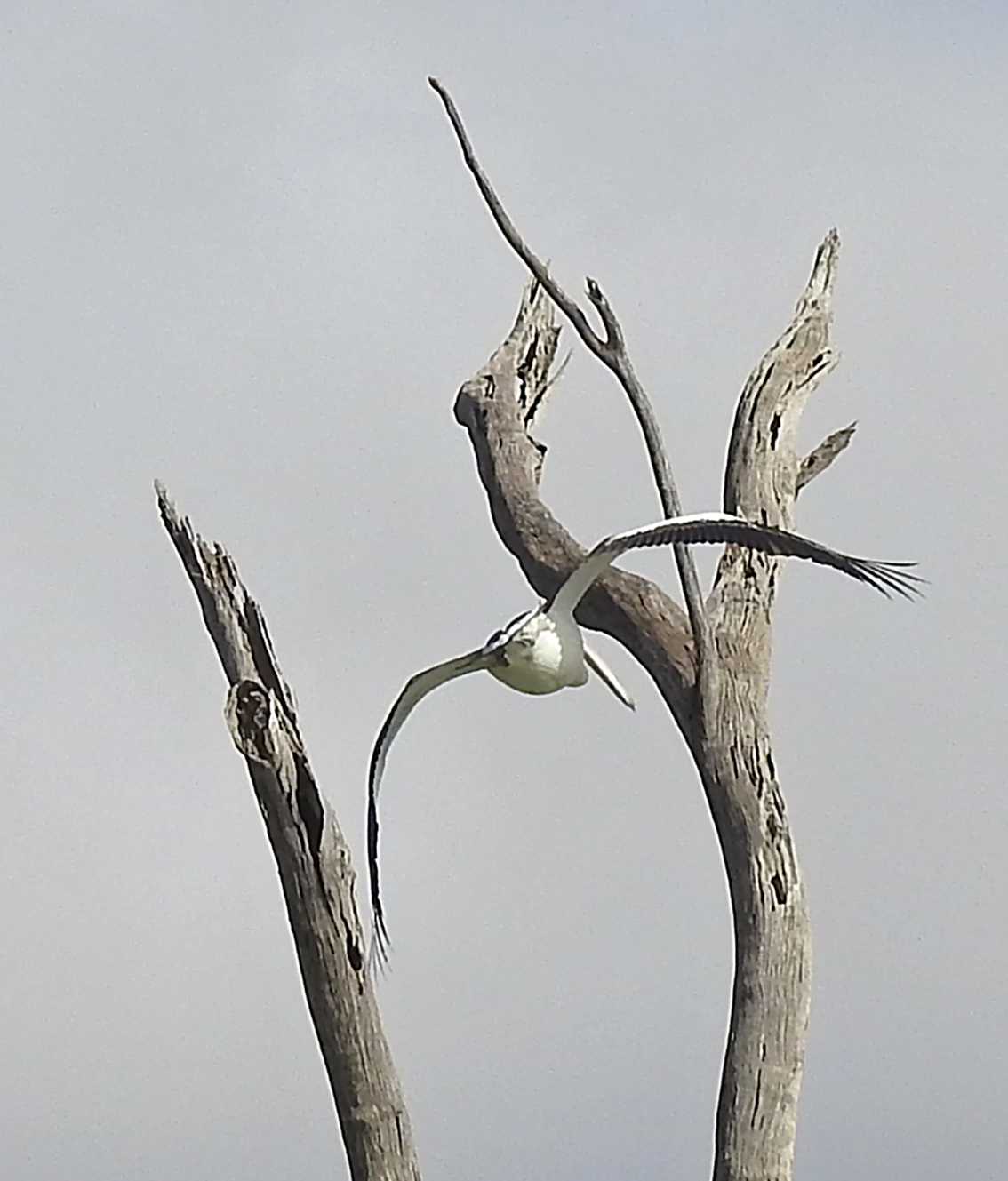
Australian Pelican in flight
Ancient tree and Pelican composition

The river is used by numerous types of craft which tell a variety of stories. There are old barges from the time when the river was a major transport route. Paddle-teamers, both new and old, rekindle the more romantic days of river travel. Tour boats, houseboats , ski and fishing boats are the most common vessels of the modern era.  

Classic paddle-steamer still in use
Derelict barge

It is a relatively short trip back. As we bring the houseboat into the wharf at Mildura, I notice a Great Cormorant watching us from the bank as a flotilla of Maned Ducks slide past on the port side. Settled snuggly into our mooring I watch a Rakali or Australian Water Rat foraging amongst lily pads: a nice way to finish the week.

Rakali foraging amongst lily pads

Cheers

Baz

Additional notes

The camera used for this post is a Nikon P900

This is an easy excursion which is quite suitable for families and seniors with public toilets, barbecues, parking and other facilities nearby. River bank areas that are not part of national park are dog friendly.

Please pass on this blog title and or contact information (URL) to any person or organisation with an interest in taking walks and enjoying wildlife in SA.

Click on these links and see more South Australian stories and pictures in my Weekend Notes articles as well as locating similar blogs on Feedspot’s top 20 Australian wildlife blogs

https://www.weekendnotes.com/adelaide/writer/452/

https://blog.feedspot.com/australian_wildlife_blogs/

Murray River Cruising part 1

28 May

Dear Reader:

As we release the mooring ropes and pull away from the dock, I notice an Australasian Darter or Anhinga, stretching its neck out to mimic the branch it is perched on.

Anhinga or Australian Darter or Snake Bird

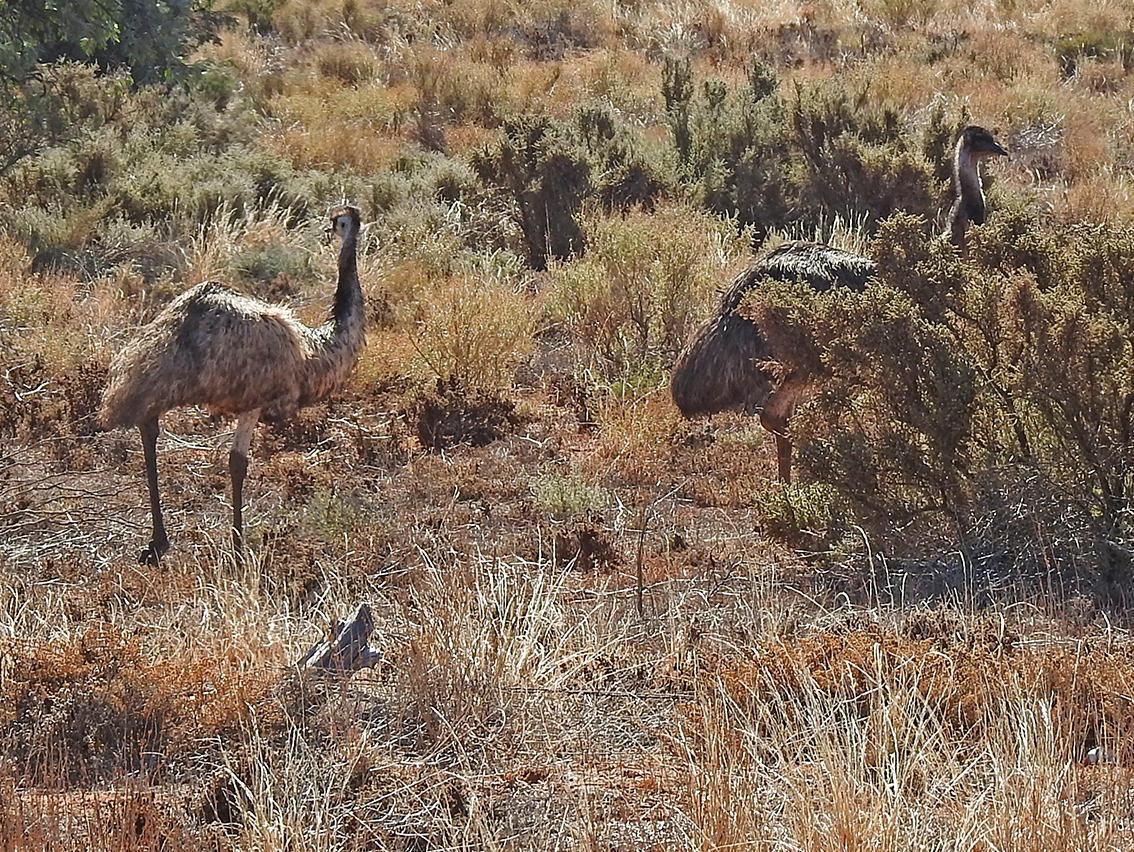
I am taking my annual houseboat trip on the Murray River from Mildura which is just over the South Australian border in Victoria. The trip from Adelaide takes around four hours and on this occasion I was lucky enough to sight emus on several occasions.

A wheat field of Emus

While we are cruising at a leisurely 6 kph I am scanning the banks for interesting images that capture different aspects the river.

Entrance to a billabong

A wide variety of boats use the river, ranging from rebuilt paddle steamers to ski-boats, fishing craft, canoes and houseboats. Most of the ‘boaties’ give a casual wave as we pass them.

Reproduction of a classic Murray Paddlesteamer design
Fisher working the snags near the bank

Numerous bird species inhabit the Murray’s banks, billabongs, reed beds and open water. I spot a Pied Cormorant perched in a long dead tree and quickly focus before the moment is lost.

Pied Cormorant

We search for a place to tie up and carefully manoeuvre the boat into the shallows then secure the ropes to large trees on the bank. There is little current near the bank and I watch dragonflies and damselflies trace their erratic flight paths over the water.

Red and Blue Damsel (Xanthagrion erythroneurm)

After disembarking, I walk quietly through the scrub then sit on a fallen log to search the leaf litter and fallen branches for the small creatures inhabiting this understory environment.

Fence or Snake-eyed Skink found under bark and in leaf litter and fallen branches

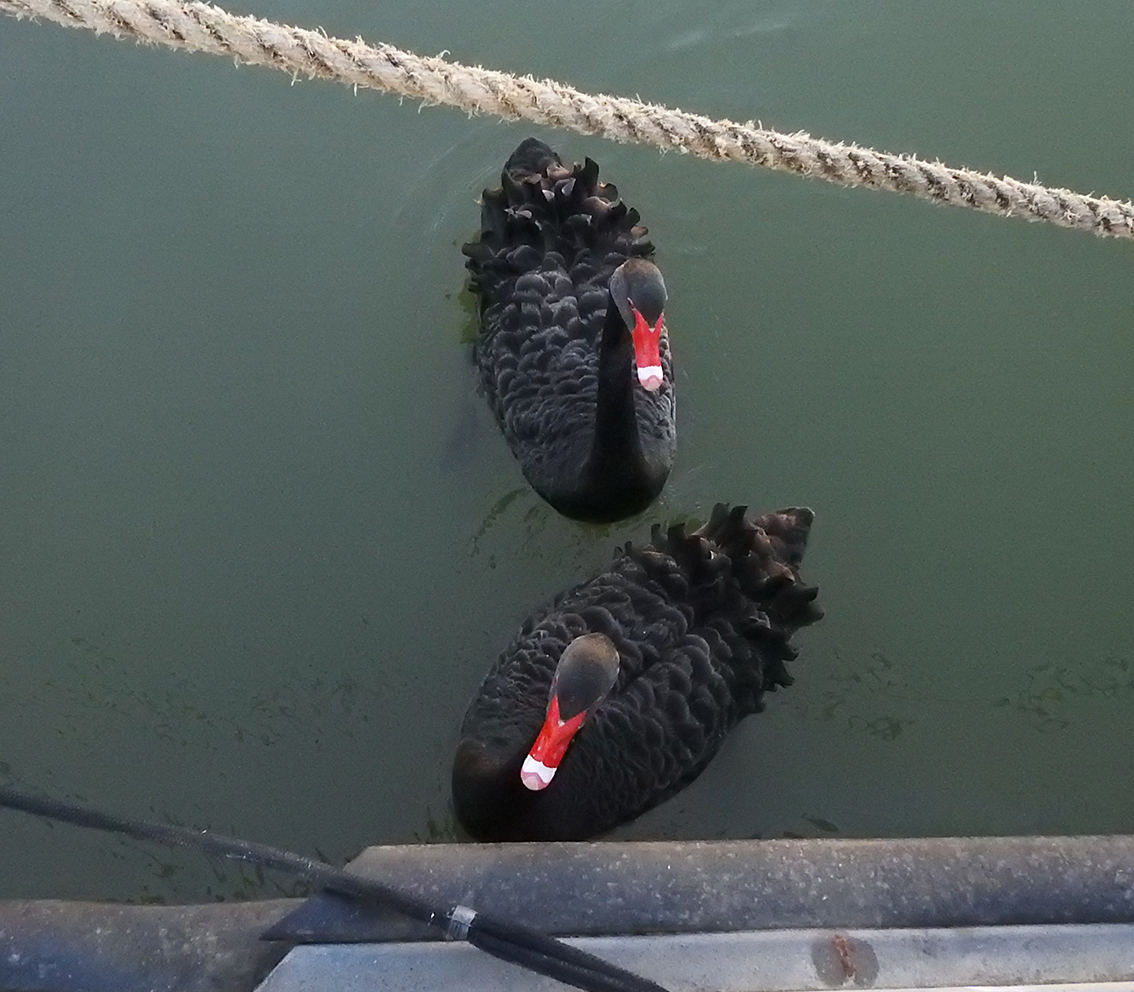
As evening approaches I make my way back to the boat photographing a pair of Black Swans under the mooring ropes as I climb aboard. They are probably looking for scraps from houseboaters. However attractive, feeding native birds is not a good idea as many processed foods can be damaging to their health.

Black Swans by the houseboat

My day cruising the river is done and I am rewarded with the most appropriate of endings; a spectacular sunset over the river.  

Murray River sunset

Cheers

Baz

Additional notes

The camera used for this post is a Nikon Coolpix P900

This is challenging but wonderful experience which is quite suitable for families.

Please pass on this blog title and or contact information (URL) to any person or organisation with an interest in taking walks and enjoying wildlife in SA.

Click on these links and see more South Australian stories and pictures in my Weekend Notes articles as well as locating similar blogs on Feedspot’s top 20 Australian wildlife blogs

https://www.weekendnotes.com/adelaide/writer/452/

https://blog.feedspot.com/australian_wildlife_blogs/

Murray River: Murtho Forest Reserve

21 Jan

Dear Reader:

As I walk across the top of the cliffs from the reserve’s entrance, I notice a Rainbow Bee Eater perched on a dead tree branch. The first one I have seen in Australia.

Rainbow Bee Eater

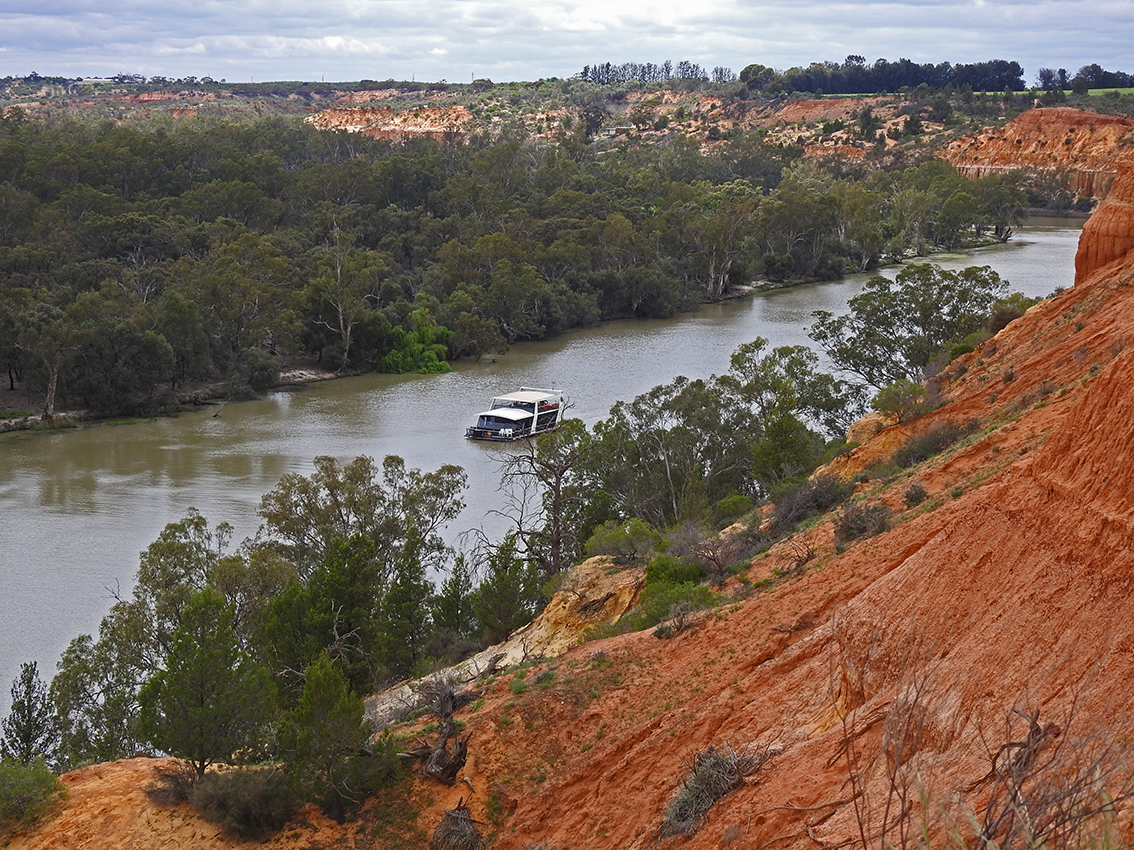
My next stop is an observation tower which provides splendid up and downstream views of the Murray River.

The observation tower is flanked by cliffs, river and scrub

Murtho forest reserve is part of the greater Riverland Biosphere Reserve. It lies 20 kms northeast of Renmark. There are several walks through the park as well as a camping area, boat launching facilities and the observation tower.

A houseboat makes its way down the river

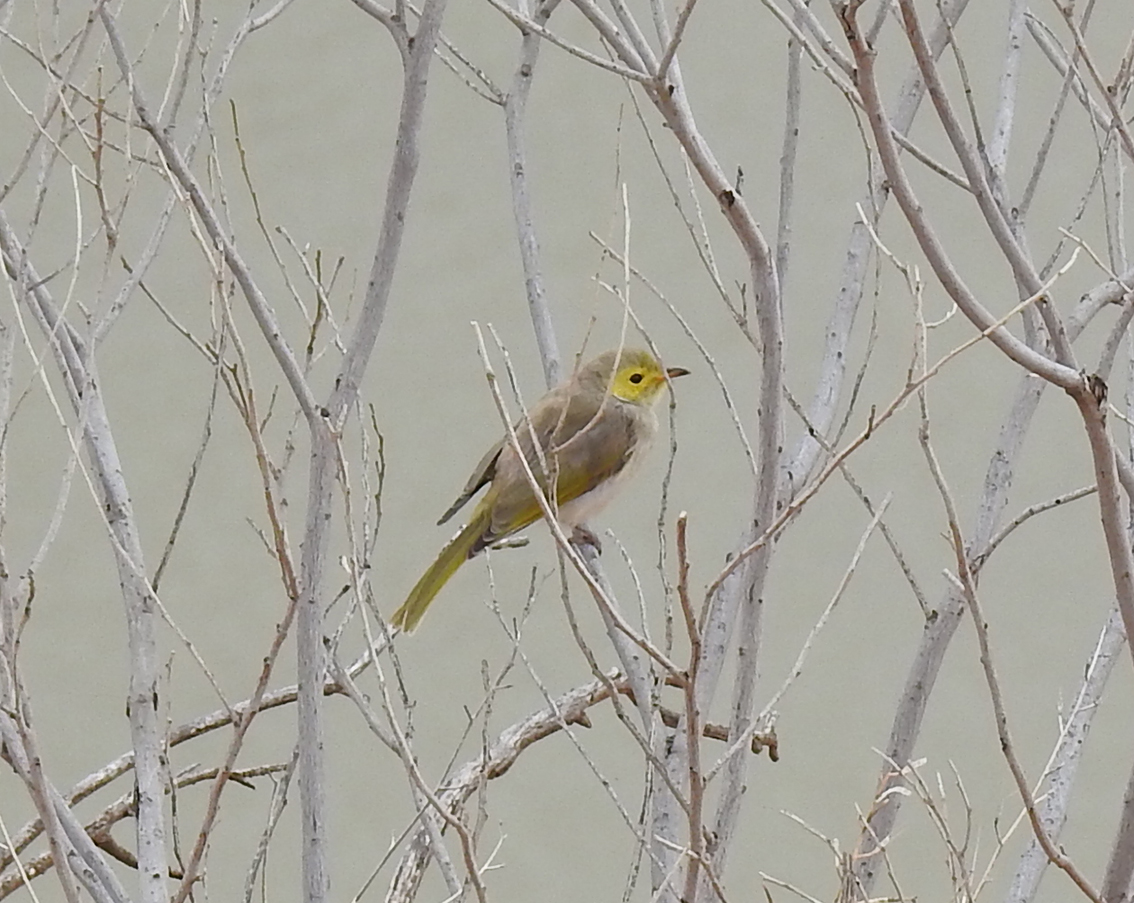
Honeyeaters are common throughout the forest and I am lucky enough to photograph three different species in the area around the tower; White-plumed Honeyeaters, Singing Honeyeaters and the less common Spiny-cheeked Honeyeater. The latter species is perching on a protruding, dead branch above the river and it takes several shots to identify it.

White-plumed Honeyeater

It is hard to shift your gaze from the wonderful scenery; red cliffs, a slow meandering giant of a river as well as billabongs and wetlands on the far bank.

Wetlands opposite the forest

Leaving the viewing platform, I drive to the camping and boat launch area. There are quite a few flowering shrubs and ground covers in this location including an Eremophila species and Pigface, a common coastal succulent. I notice several different types of butterflies and a Hoverfly feeding on the blossoms.

Eremophila species

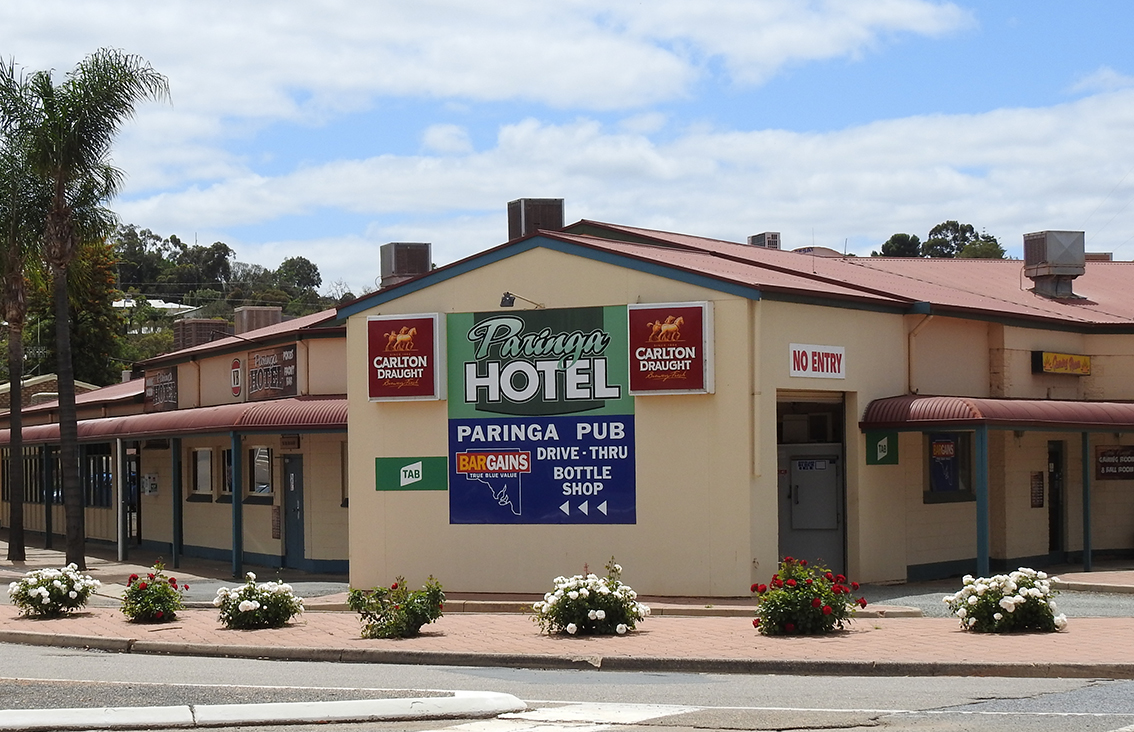
As the cloud cover thickens I decide it is time to drive back to Renmark with a short stop on the way at the Paringa Hotel for a drink and lunch.

Local watering hole

Cheers

Baz

Additional notes

The camera used for this post is a Nikon Coolpix P900

This is an easy drive and walk which is quite suitable for families and seniors. It is dog friendly.

Please pass on this blog title and or contact information (URL) to any person or organisation with an interest in taking walks and enjoying wildlife in SA.

Click on these links and see more South Australian stories and pictures in my Weekend Notes articles as well as locating similar blogs on Feedspot’s top 20 Australian wildlife blogs

Pangarinda Botanic Garden, Wellington SA, part 2

1 Dec

Dear Reader:

As we walk around the waterhole, I notice a large spider clinging to the corner of a fallen branch. Closer examination reveals it to be the shed carapace of a large Huntsman Spider.

Spider carapace

We are continuing (see previous post) our walk around the Pangarinda Botanic Park in Wellington East. We have reached a waterhole which is currently dry but surrounded by flowering Grass Trees and Kangaroo Paws. Nearby there are many other native bushes, many of which have ID markers. 

Grass Trees and scrub

Kangaroo Paws

Hundreds of insects are feeding on the tiny flowers which coat the Grass Trees. Most are introduced Honey Bees. However, there are some larger bees that might be natives as well as ants and a butterfly species which I do not recognise.

Flowering Grass Tree and butterfly

The next section of our walk is dominated by numerous Eremophila species. These beautiful flowering bushes have delicate curved, tubular flowers in a wide range of colours. Many varieties are well adapted to dryland conditions. Eremophilas are often used in gardens as they attract honeyeaters and other small, nectar feeding birds.

Eremophila polyclada

New Holland Honeyeater in yellow Eremophila

It is getting late in the day and with an hour and a half drive in front of us there is time for one last stop. We are only a couple of minutes’ from the Wellington ferry and it would be remiss not to spend a few minutes by the river.

Wellington ferry

Wetland pool near the ferry with old mechanical windmill

There are a couple of small  reedy, pools alongside the ferry ramp and we can hear Australian Reed Warblers calling. Tiny fish swim in small schools near the surface of the water.  In the distance Black-tailed Native hens are feeding in a paddock. 

Australian Reed Warbler, near Wellington ferry, credit David Morris


Black-tailed Native Hens at distance

Our day complete, we turn for home and enjoy the wide variety of dryland landscapes this part of South Australia has to offer.

Rural landscape near Wellington

Cheers

Baz

Additional notes

The camera used for this post is a Nikon Coolpix P900

This is an easy walk and drive which is quite suitable for families and seniors with public toilets, picnic area, information maps, tags and placards and parking. It is dog friendly.

Please pass on this blog title and or contact information (URL) to any person or organisation with an interest in taking walks and enjoying wildlife in SA.

Click on these links and see more South Australian stories and pictures in my Weekend Notes articles as well as locating similar blogs on Feedspot’s top 20 Australian wildlife blogs
Pangarinda Botanic Garden, Wellington SA….part 1

18 Nov

Dear Reader:

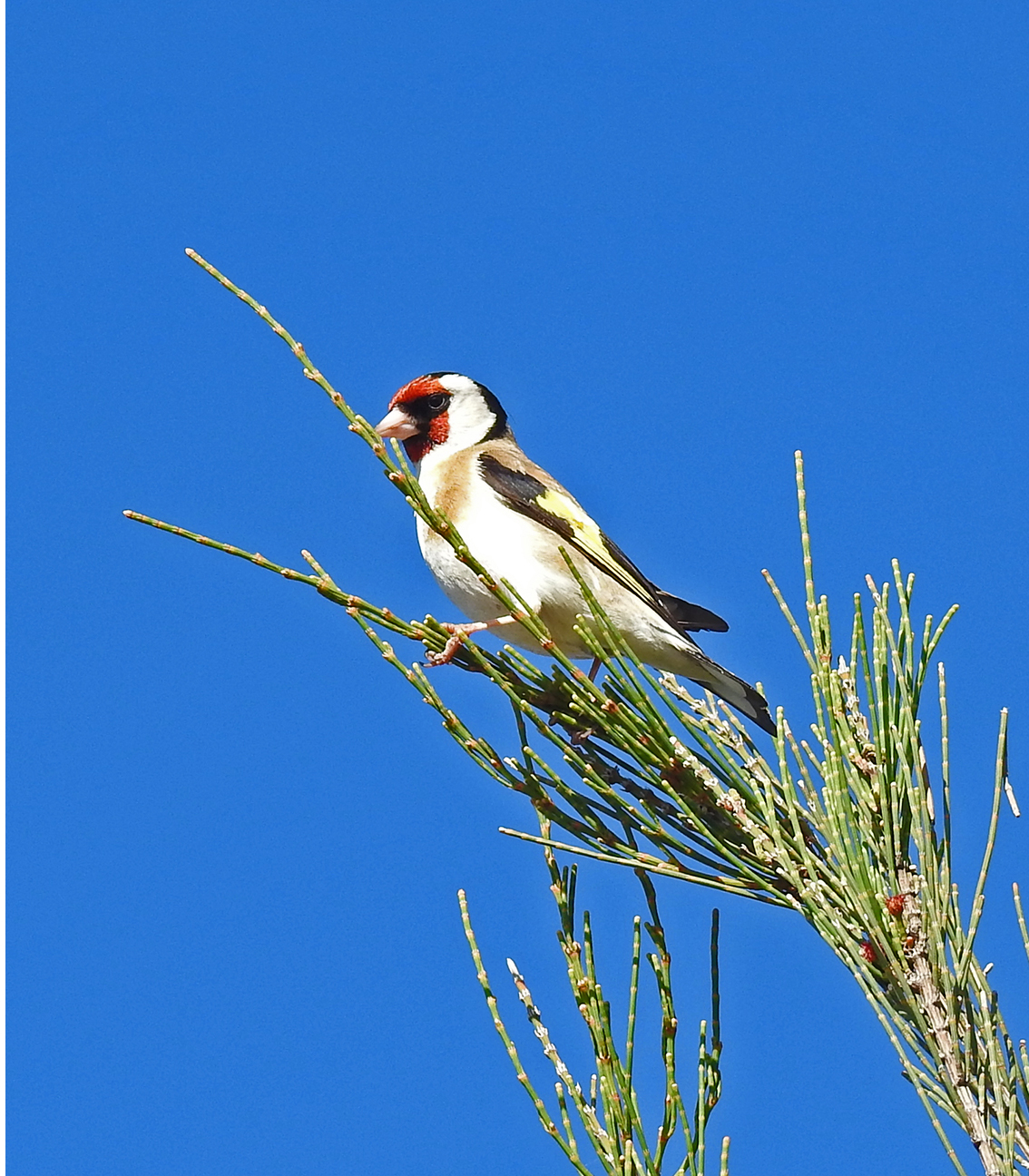
There is a beautiful European Goldfinch perched in the top of a Casuarina. Though I came to look at native plants and fauna, this introduced bird is far to pretty to ignore.

European Goldfinch

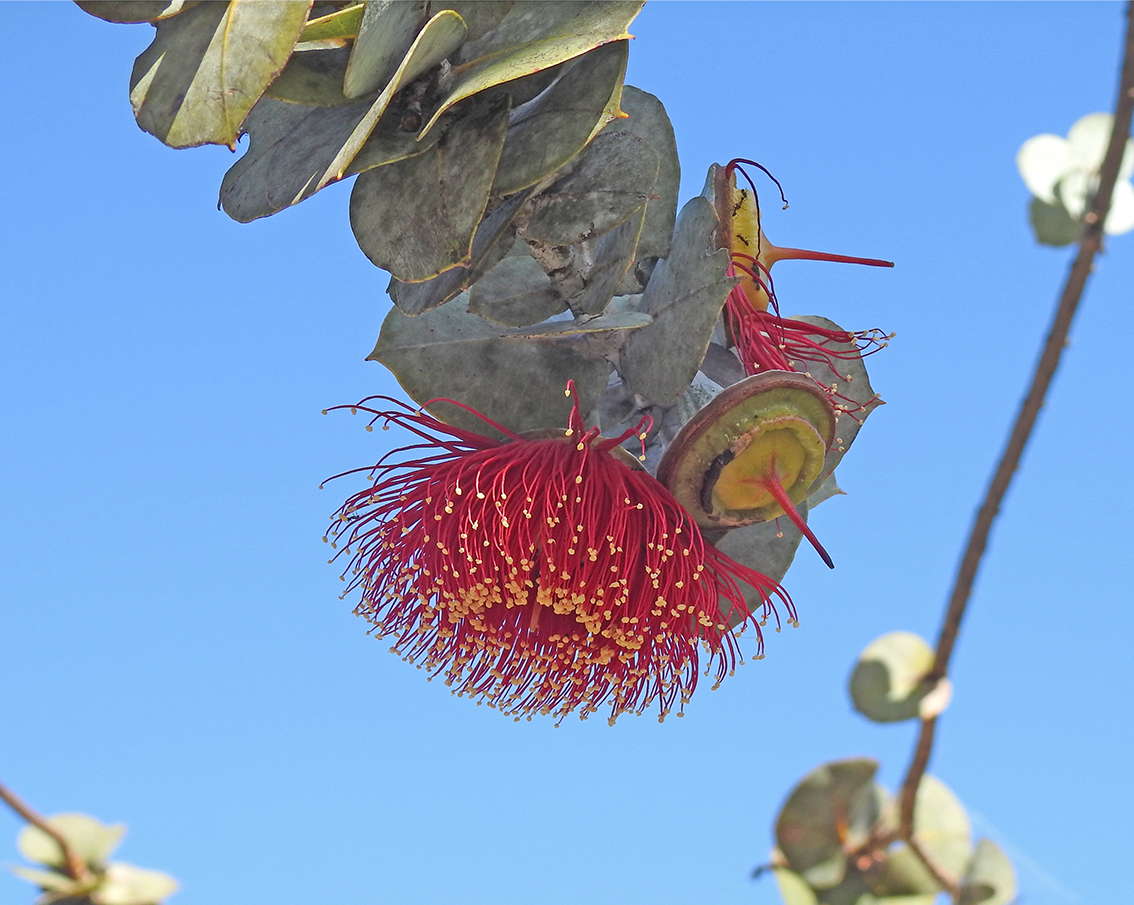
A little further along the pathway, I notice a low spreading gum with pale roundish leaves and brilliant red flowers. The tag beneath the tree shows it is a Eucalyptus rhodantha or the Rose Mallee.

Eucalyptus Rhodantha

Eucalyptus Rhodantha cap coming off to reveal blossom

Eucalyptus Rhodantha blossom

I am wandering around the Pangarinda Botanic Garden in Wellington East near Murray River. This wonderful community project, started in 1993, transformed 25 HA of weedy, eroded land into a brilliant dryland botanic garden primarily featuring plants of Western and South Australia.

Garden entrance

My first native bird sighting  is a Red Wattlebird picking insect larvae off the branches and leaves of a gum tree. They might be Lerps but it is difficult to tell at this range.

Red Wattlebird with larvae

Further along the trail, I notice a brilliant, yellow flowering bush (Calothamnus quadrifimus) sometimes called the One-side Bottlebrush. It appears to be a feeding station for a hoard of New Holland Honeyeaters. I set my camera to high speed mode and fire a few quick shots at the feeding birds.

New Holland Honeyeater feeding on Calothamnus sp blossoms

The nature of the trail changes throughout the park and I find myself looking across a small grove of Native or Cyprus Pine (Callitris sp). In the distance, I can just make out some blackbird sized birds hopping around a small pile of branches. Steadying myself on a the back of a conveniently placed bench, I use the full extent of my zoom. On review, I think they are Grey Shrike Thrushes.

Grove of Native Pine

Grey Shrike Thrush

The next section of the walk takes me along the eastern flank of the garden where there is a variety of eucalypts, native pine and other trees. The bird calls are both overwhelming and distinct along this part of the trail.  They indicate significant numbers of Superb Fairy Wrens, White-browed Babblers, various honeyeater species as well as tiny canopy living birds such as pardalotes and Silvereyes.

Male Superb Fairy Wren

White-browed Babbler foraging

White-browed Babbler close up shot from nearby Monarto CP

Where this taller stretch of trees peters out there is a bench by a waterhole surrounded by Grass Trees and Kangaroo Paws. An excellent place to stop and rest before tackling the rest of the circuit………..to be continued

Cheers

Baz

Additional notes

The camera used for this post is a Nikon P900

This is an easy walk and drive which is quite suitable for families and seniors with public toilets,  with parking and other facilities nearby. It is dog friendly but they must be on a lead.

Please pass on this blog title and or contact information (URL) to any person or organisation with an interest in taking walks and enjoying wildlife in SA.

Click on these links and see more South Australian stories and pictures in my Weekend Notes articles as well as locating similar blogs on Feedspot’s top 20 Australian wildlife blogs

https://www.weekendnotes.com/adelaide/writer/452/

https://blog.feedspot.com/australian_wildlife_blogs/

Houseboat stories…..After the Floods

28 Jun

Houseboat stories continued (May 2023)…..After the Floods

Dear Reader:

As I walk across the flood plain, which was inundated in last year’s winter rains, there is a definite lack of wildlife. Bushes, grasses and other ground covers have been decimated. Last time I visited this area there were: Butcherbirds, Mudlarks, parrots, honeyeaters, Western Grey Kangaroos as well as an abundance of insects. Eventually I spot a single white butterfly settling on the cracked earth.

Cabbage White Butterfly

I am exploring Kings Billabong near Mildura, just over the SA border. We have travelled to this location by houseboat but the area is also accessible by unsealed roads. Each year I holiday here from Adelaide and observing the changes along the river, especially after major climatic changes,  is always interesting.

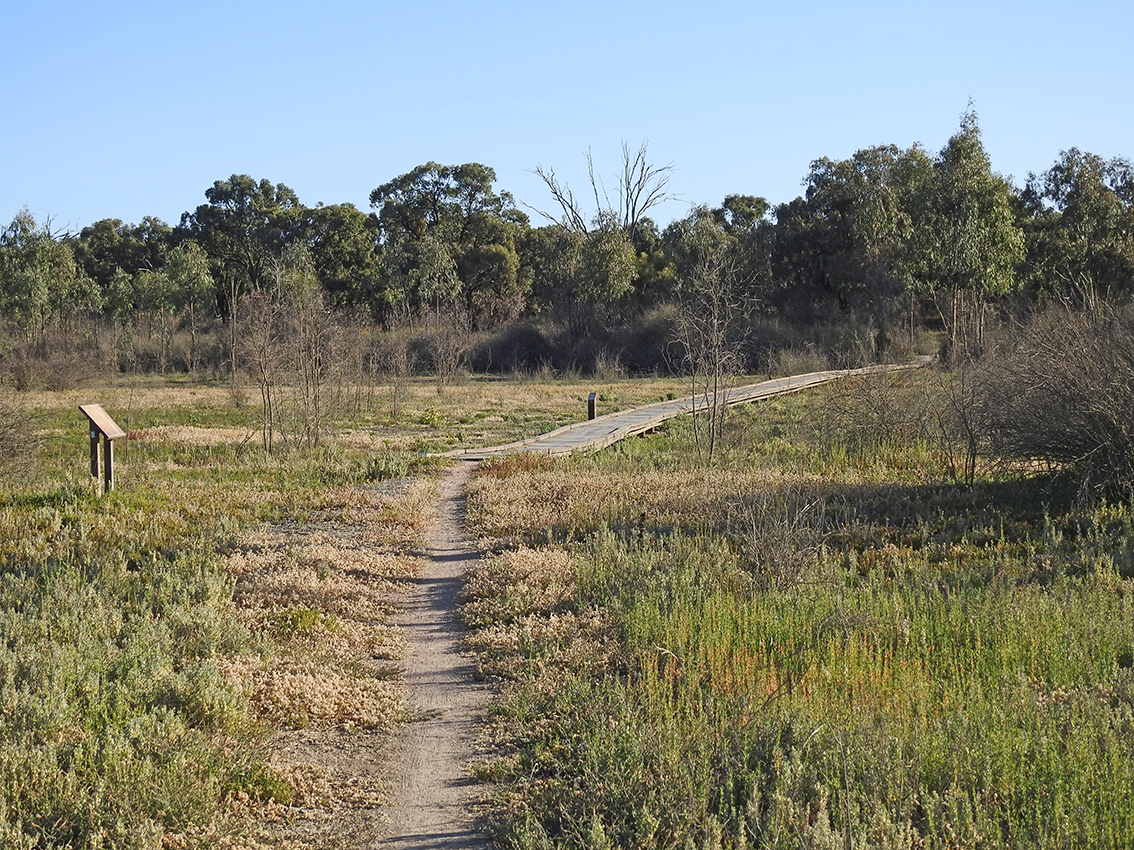
Track to the billabong

First lagoon

Following a pathway carved by a 4WD vehicle, probably a local ranger, I reach a boardwalk leading to a junction of trails accessing various parts of the billabong. From this location I get my first look at one of the many lagoons which make up this fascinating wetland.

Pink-eared Ducks

There are numerous birds congregating around a small island in the middle of the lagoon. They are about one hundred and fifty metres from my nearest vantage point and the light is starting to fade. Challenging conditions for my Nikon P900. I brace myself against a tree trunk, take a breath and fire off a couple of frames as I exhale. Later examination on the laptop reveals some Australian Ibises, a lone White-necked Heron and a flock of Pink-eared Ducks. The latter two species are birds I have never previously photographed.

Whistling Kite

With around half an hour’s light remaining I quickly skirt the first lagoon and sit quietly while scanning a second lagoon. High in a tall, dead tree overlooking the water, I can just make out the distinctive outline of a raptor. Zooming in, I recognise it as a Whistling Kite.

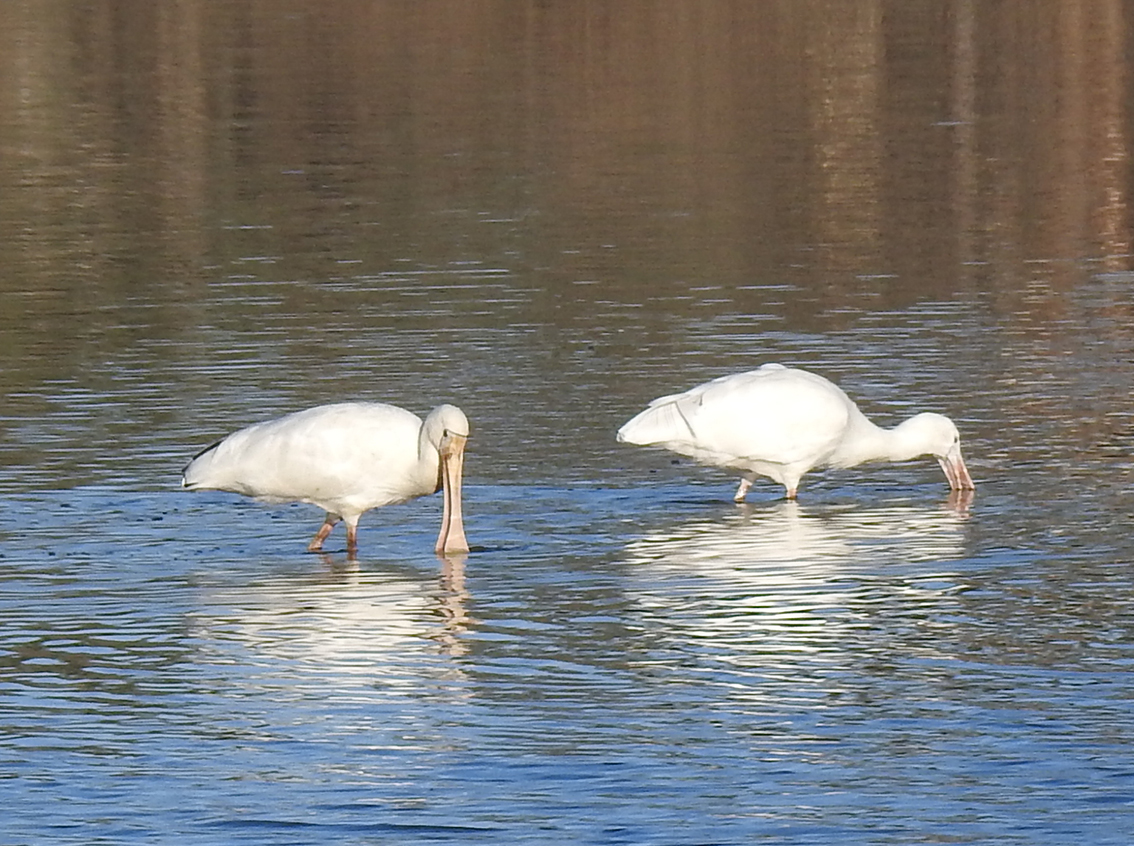
Spoonbills foraging


Fish in beak

There are a few Pacific Black Ducks, herons and a pair of Laughing Kookaburras around the edge of this second pool but it is a small group of Yellow-billed Spoonbills that are most interesting as they swing their bills through the water in search of small prey. However, I am quite surprised when I see one of the birds capture a small fish in its bill; something I have never witnessed before.

Back at the boat

I feel the vibration of my Apple Watch indicating an incoming phone call. The watch, with its emergency capabilities, is a useful tool when you work alone in the bush. The call is just a safety check and a reminder that dinner is being prepared on the houseboat and it’s time to make my way back. Tomorrow I will venture further into the park to explore some other parts of this complex wetland.

For more wildlife stories and pictures go to:

Weekend Notes

Feedspots best wildlife blogs


Title:Goolwa Barrage(2)…..Hunters and Hitchhikers or ‘Bluey Takes a Rest’

4 Feb

Dear Reader:

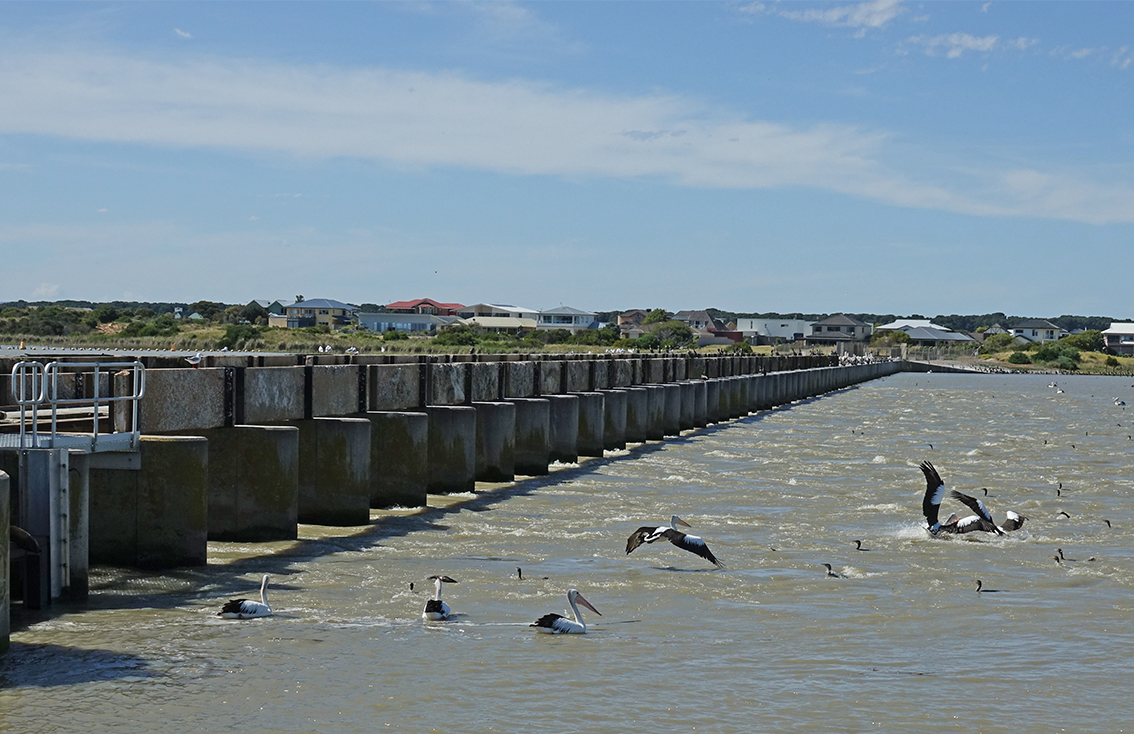
In my previous post I took you from the car park to the beginning of the Goolwa barrage. Now we will explore the main part of the barrage where the water is streaming through the gates at an unprecedented rate due to severe flooding upstream.

View along the barrage

With the floodgates open there is an overabundance of food being washed out into the Coorong. The freshwater is laden with silt and leaves a brown stain across the seaward side of the barrage which actually extends to Goolwa Beach and Victor Harbor.

Enlargement of first image showing interspecies rivalry

Long-nosed Fur Seals, Australian Pelicans and Great Cormorants are positioned to ambush fish and any other food as the water cascades through the gates. On every level this is quite a spectacular natural event and onlookers, armed with phones and cameras, are making the most of the situation.

Too much of a good thing

I spend some time taking shots that I hope will capture the essence of this event as well as a few close-ups of the different species. When animals are engaged in feeding behaviour they often ignore people which creates the perfect opportunity for more intimate images.

Sub-adult Pacific Gull (still has darker markings)

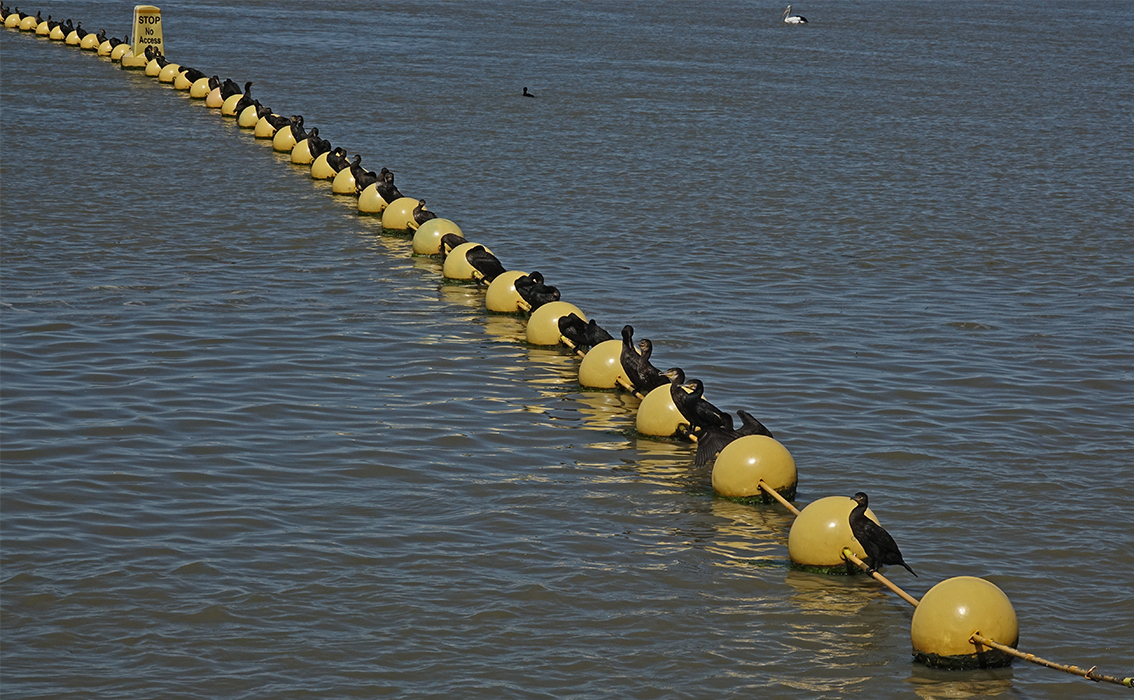
Floats with Great Cormorants

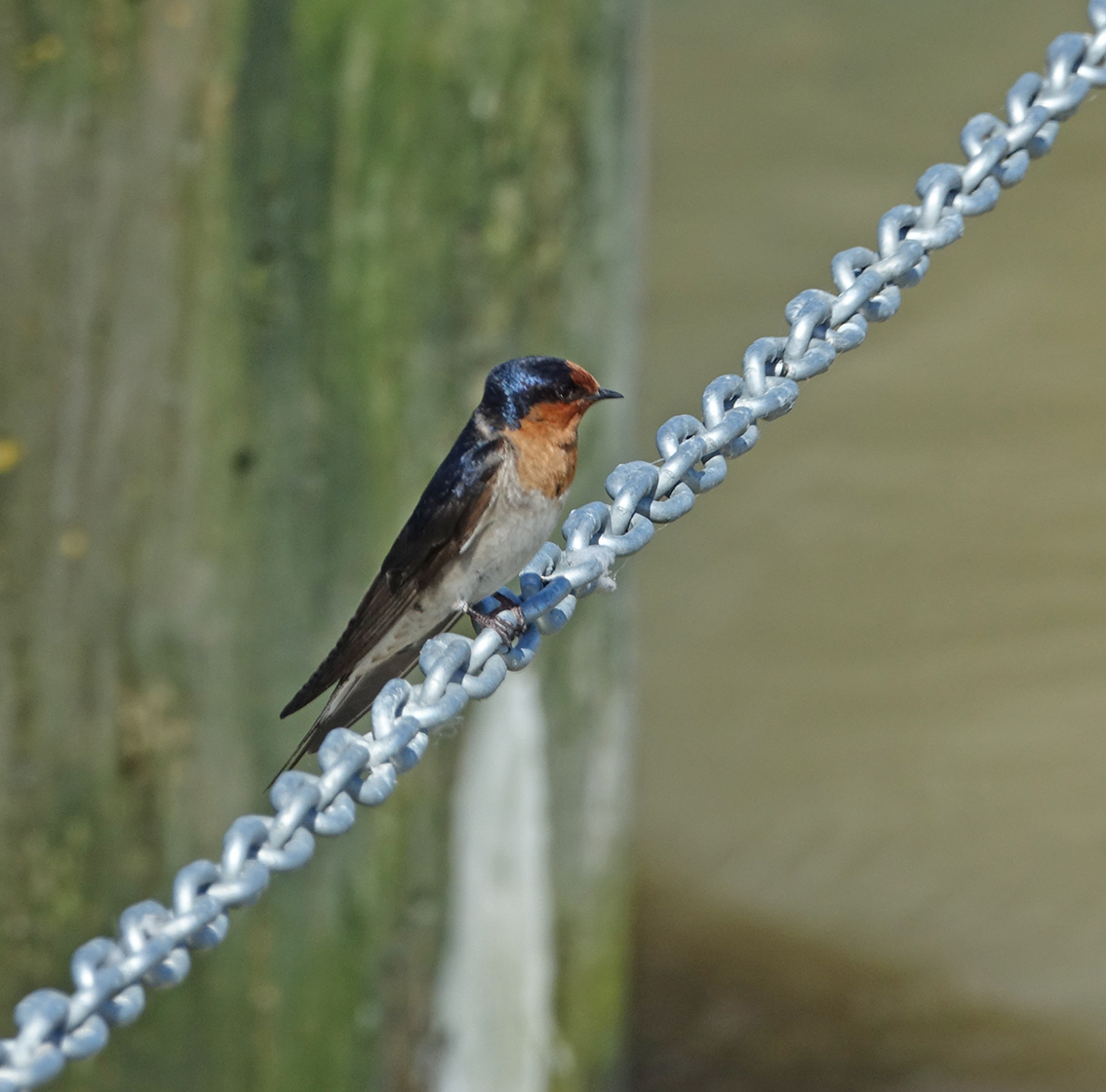
Swallow at rest

It is time to leave. I stroll back along the walkway watching swallows, cormorants and occasional Pacific gull perching on bollards, chain link and floats. I am halfway back to the bank when I notice an elderly couple pointing excitedly at the area where I was just watching the seals.

Catching a ride

Close up of previous image

Time to go

Intrigued, I walk back to the viewing platform and to my surprise they have spotted one of the most unusual examples of animal behaviour I have ever witnessed. A few metres below us, a seal is resting in the water, catching the sunlight on a raised flipper with a Blue-tongue Lizard lying across its body. I can only assume the reptile is taking a break from the swiftly flowing water. The lizard stays for a few minutes before ‘disembarking’ and continuing its journey towards the far bank. Extraordinary!!!!

Historic Goolwa Hotel

On that note, I ‘call it a day’ and walk back to the car. My next stop will be the historic township of Goolwa. There is a wonderful gallery called ‘Art Worx’ where I love to browse and sometimes pick up something special for the house or garden. Finally, the Goolwa Bakery, for a chicken and vegetable pie and perhaps a vanilla slice to follow. Always a pleasant way to wind up any trip to this fascinating waterside location.

Cheers

Baz

Additional notes

This is an easy walk/drive which is quite suitable for families and seniors with public toilets, barbecues, parking and other facilities nearby.

Please pass on this blog title and or contact information (URL) to any person or organisation with an interest in taking walks and enjoying wildlife in SA.

Click on these links and see more South Australian stories and pictures in my Weekend Notes articles as well as locating similar blogs on Feedspot’s top 20 Australian wildlife blogs

https://www.weekendnotes.com/profile/651267/

https://blog.feedspot.com/australian_wildlife_blogs/

Mildura to Trentham Estate Winery….part 2…..Around the Winery

18 Jun

Moored at the winery


Dear Reader:

We arrived at Trentham Estate Winery around 1.00 pm. After tying up and sprucing up, as we are eating at the winery, we wander ashore to indulge in a little pre-lunch wine tasting. Our meal is served under a large marquis with wonderful views of the river and surrounding countryside.


Coffee by the river


A sipbefore lunch


The Duck Breast in a Hoisin sauce is moist and cooked to perfection and coffee, dessert and good company make the afternoon fly. However, before the light disappears I take a walk upstream to explore the properties and bushland alongside the winery.


Peaceful Dove by the water

As I edge along the bank I notice Anhingas, Black Ducks (not the source of lunch) and some unusual doves. I wait behind a large river gum and manage to snag a shot of these smallish, striped birds which turn out to be Peaceful Doves.


Grey Butcherbird


Laughing Kookaburra


Further along the pathway I hear the first few notes of a Kookaburra’s call. The bird is perched on a dead tree branch and the Nikon P900’s telephoto is stretched close to maximum extension. In a thorny bush below the tree, I can just make out the outline of a Grey Butcherbird. Despite waiting for the bird to emerge I settle for an image taken through the branches; not a portrait shot but certainly a realistic one.


Yellow Rosella


Male and female Red-rumped Parrots


Parrots are feeding high in the trees which makes focussing difficult. There seems to be two distinct groups. Scanning the branches, I recognise Yellow Rosellas and Red-rumped Parrots. Both are beautiful birds which I rarely see in SA. 


Boatel coming in to dock

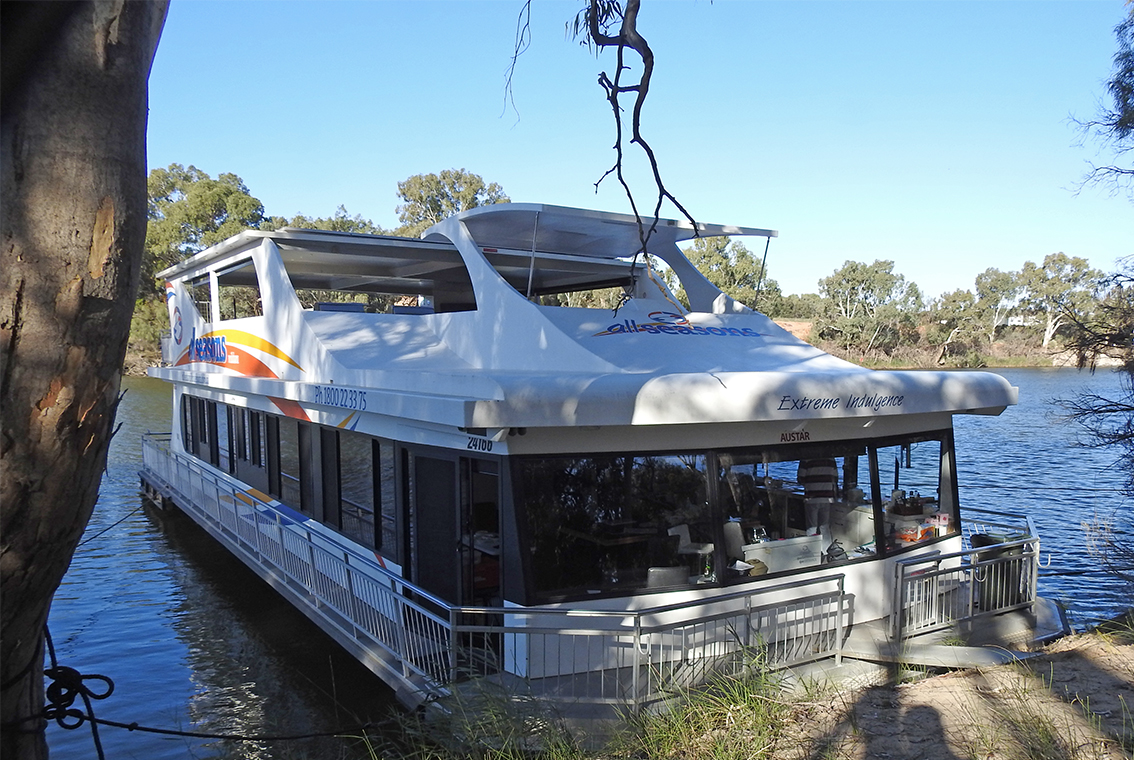
The light is beginning to fade and it’s time to get back to the boat. When I reach the mooring I can hardly miss the opulent vessel parked a little further on. It is called ‘Boatel’ for obvious reasons and is a luxury version of our houseboat constructed by the same company ‘All Seasons’.

However, our craft has luxury enough for this photographer and I am about to sit back and relax with a cup of coffee and a piece of cake.

Until my next blog, enjoy our wonderful wildlife and countryside.

Cheers

Baz

Please pass on this blog title and or contact information (URL) to any person or organisation with an interest in taking walks and enjoying wildlife in SA.

Click on this link and see more South Australian stories and pictures in my Weekend Notes articles

https://www.weekendnotes.com/profile/651267/

Trentham winery

https://www.tripadvisor.com.au/Restaurant_Review-g255355-d1752428-Reviews-Trentham_Estate_Winery_Restaurant-Mildura_Victoria.html


Houseboat 2022 Mildura to Trentham Winery….part 1

4 Jun

Houseboat sunset

For any regular followers:

(I am stepping outside my usual SA destinations posts to recount part of my latest houseboat adventure from Mildura. The town is on the Murray River just over the border from the SA Riverland towns of Renmark, Berri and Barmera). The terrain and wildlife are much the same as the Riverland

Dear Reader:

It has been a long drive from Adelaide to Mildura and with the unpacking finished and the boat moved to its new mooring on the Mildura Quay it is time to enjoy a glass of wine, sit back on a comfy couch and admire a glorious river sunset.

Pond by the quay

Purple Swap Hen

Coffee time

The next morning is all business. Sandra checks the maps, two couples take a quick walk up to the local shops to purchase a few extras and Pete stows the fishing gear and coolers on the rear deck. The weather is fine so I wander over to the recreation area opposite which has a lovely pond used to rear protected, native fish species. The pond is a perfect place to take some close-up shots of the aquatic birds I will encounter along the river. In addition, the little coffee shop alongside the pond is ideal for an early morning ‘cuppa’ and a calorie laden treat for breakfast.

Swallows on outboard by Peter Zab using iPhone

Back on the houseboat we’re waiting for everyone to come aboard. I watch the swallows hawking for insects alongside the boat. They are incredibly fast and acrobatic and never seem to slow down. Pete notices a pair resting on the small outboard motor of our attached dinghy and zeroes in on them with his iPhone.

Sandra at the helm

Ropes are untied, Sandra opens the throttles and blasts the reversing horn…we are off; cruising around 7km/hr. I climb the stairs to the top deck and take up a position near the front, ready to brace my camera against a fibreglass side panel. From this position I am able to sight a target coming towards me from the riverbanks on either side of the boat. It is tricky photography and stretches the Nikon P900’s capabilities to the limit.

View of Whistling Kite from the boat

Whistling Kite through the telephoto

Our destination is Trentham winery about 10 kms away by river. The scenery along the way is classic Murray River scrub with Mallee trees, a few errant Willows and billabongs dotted with massive dead River Gums protruding like bony, grey fingers. At the top of one fading gum, I spot a Whistling Kite and further along the river there is an Australian Pelican perched on an old tree stump. My final shot for the morning, as the winery is just around the bend, an Anhinga or Snake-bird drying its wings after hunting in the river………….to be continued…. 

Anhinga drying wings

Australian Pelican and rosella

Please comment on this story if you find Houseboat posts interesting.

Cheers

Baz

Additional notes

This is an easy holiday which is quite suitable for families and active seniors as tying up the boat requires some mobility and strength. Only a driver’s license is required to operate a houseboat and instruction is given prior to use.

Please pass on this blog title and/or contact information (URL) to any person or organisation with an interest in taking walks and enjoying wildlife in SA.

Click on this link and see more South Australian stories and pictures in my Weekend Notes articles:

https://www.weekendnotes.com/profile/651267/

For more information about Trentham Winery go to:

https://www.visitvictoria.com/regions/The-Murray/eat-and-drink/Wineries/Trentham-Estate-Winery

Hindmarsh Island ……Part 1

29 Mar


Hindmarsh Island ……Part 1

Dear Reader:

The bridge over the Murray River to the island is sleek and modern. Where it terminates there is a small layby and a short track going back under the concrete stanchions. A line of posts edges into the river. Probably part of the old ferry structures. Every few minutes, Australian Pelicans land on the old wooden posts and rails resting or watching for prey in the water.


Hindmarsh Island Bridge

After a while, the pelicans move off and land in the water near a reed patch. Another bird joins them and they start to swim in a roughly circular formation. They seem to be hunting; possibly herding small fish. My thoughts are confirmed when the birds tighten the circle and simultaneously dip their heads and long beaks into the water. The manoeuvre is repeated several times. Their movements are very graceful, almost like watching synchronised swimming or ballerinas with fluffed up tutus.


Pelicans up

Pelicans down

I am on Hindmarsh Island; Kumerangk in the language of the First Nations People who live in this area, the Ngarrindjeri. The island is an hour and a half drive SE of Adelaide near the town of Goolwa. It is flat and low with extensive areas of pasture, some scrub and a modern housing development with associated marina. There are numerous roads both paved and dirt criss-crossing the island. Hindmarsh Island is significant both in South Australia’s settler history and Ngarrindjeri history and culture and the creation of the bridge was the subject of friction between First Nations People and the SA government.


Fishing the channel

I continue driving for another ten minutes, past the marina turnoff on my right then the take one of several unsealed roads to my left which brings me to a shoreline where there is a small group of houses. Two fishermen are working the channel and I stop and chat with them for a few minutes about the marine and terrestrial wildlife in the area.


Orb weaver at work

Lovely, golden grass and patches of coastal scrub carpet this area and offer shelter to a range of animals. I spot some wrens and other small birds and catch a fleeting glimpse of a reptile near the muddy shore. Lizard or snake? Not sure. However, it is an Orb Weaver spider constructing its complex web that intrigues me. I watch the industrious little animal for some time and capture some reasonable close-up images.


Lapwing, Ibis, swans

My next stop is a couple of kilometres down the sealed road at a small group of shacks. There are short jetties poking out into the channel and most of them seem to be favourite roosting areas for both Black and Pied cormorants. Where the muddy shoreline and Samphire swamp meet, I can see numerous wading birds including: Spoonbills, Pied Stilts, Sandpipers and Masked Lapwings. In the slightly deeper water, a large flock of Black Swans are feeding.


Fascinating ecosytem


The morning’s drive and my initial exploration of the island have been quite productive and after I find a place to sit and have a bite to eat, provisioned from one of Goolwa’s many fine bakeries, I will head over to the Murray Mouth and Mundoo Channel to continue my day at Hindmarsh Island…………to be continued.

Cheers

Baz


Additional notes

This is an easy drive and walk which is quite suitable for families and seniors. Hindmarsh Island is dog friendly except for the Conservation Parks.

Please pass on this blog title and or contact information (URL) to any person or organisation with an interest in taking walks and enjoying wildlife in SA.

Click on this link and see more South Australian stories and pictures in my Weekend Notes articles

https://www.weekendnotes.com/profile/651267/