Archive | Reptiles RSS feed for this section

Dragons

26 Mar

The diminutive dragon lifts its body and head in a territorial display.

Painted Dragon….one of our smaller species

I am walking along Tennyson beach in the early morning in search of two of our South Australian dragon species.

Tennyson Dunes and beach

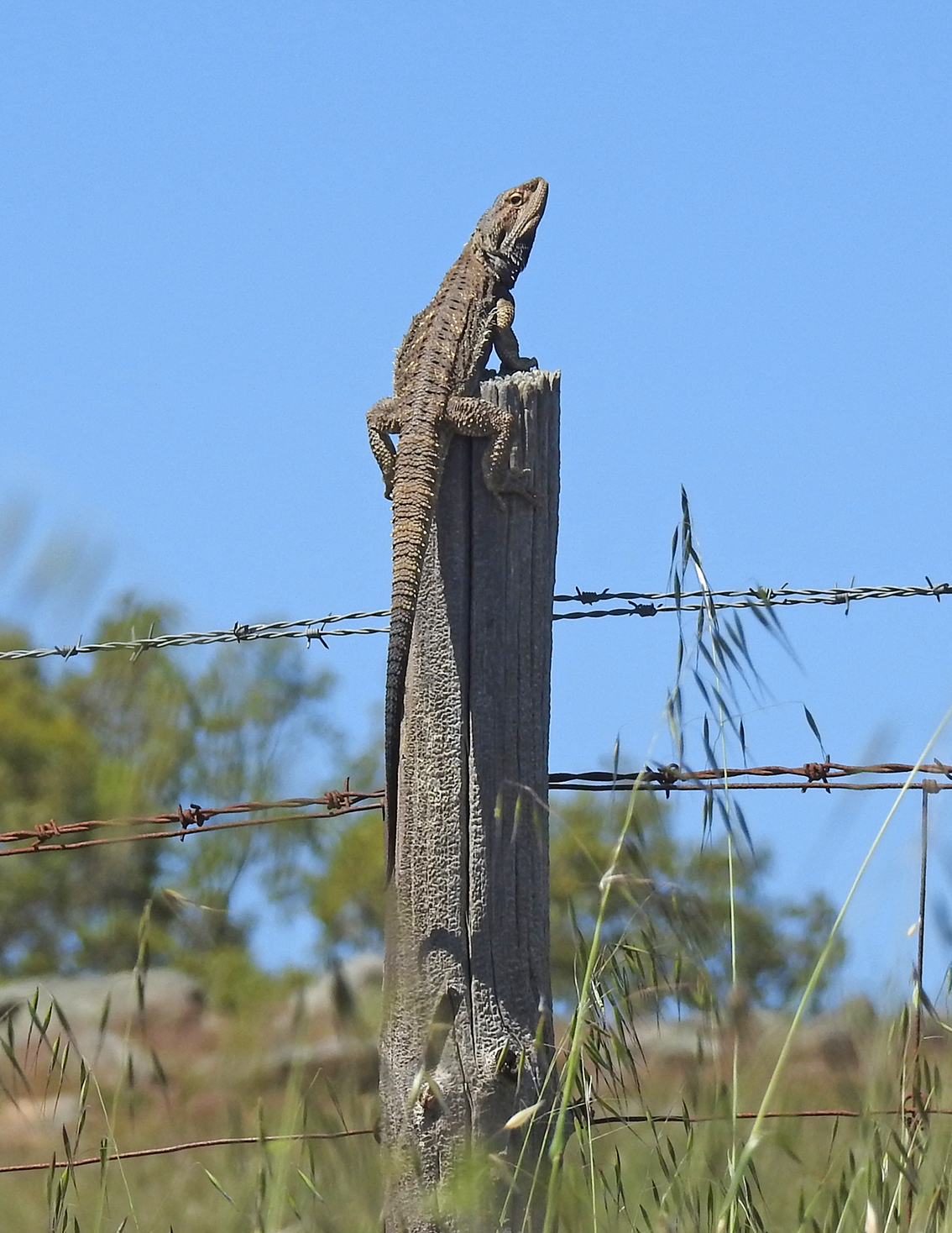
By pure chance, in a scrubby clearing I spot a Bearded Dragon poised on a dead branch waiting for prey.

Bearded Dragon

My job is done and it is time for breakfast at the Grange Caffe.

A short post

Cheers

Baz

Other animals see, heard but not photographed: (Heron, Brown Snake)

The camera used for this post is a (Nikon P900)

This is an easy walk and drive which is quite suitable for families and seniors with public toilets, barbecues, parking and other facilities nearby. It is dog friendly.

Please pass on this blog title and or contact information (URL) to any person or organisation with an interest in taking walks and enjoying wildlife in SA.

Click on these links and see more South Australian stories and pictures in my Weekend Notes articles as well as locating similar blogs on Feedspot’s top 20 Australian wildlife blogs

South Para Reservoir’s Water, Wine and Wildlife

13 Feb

Dear Reader:

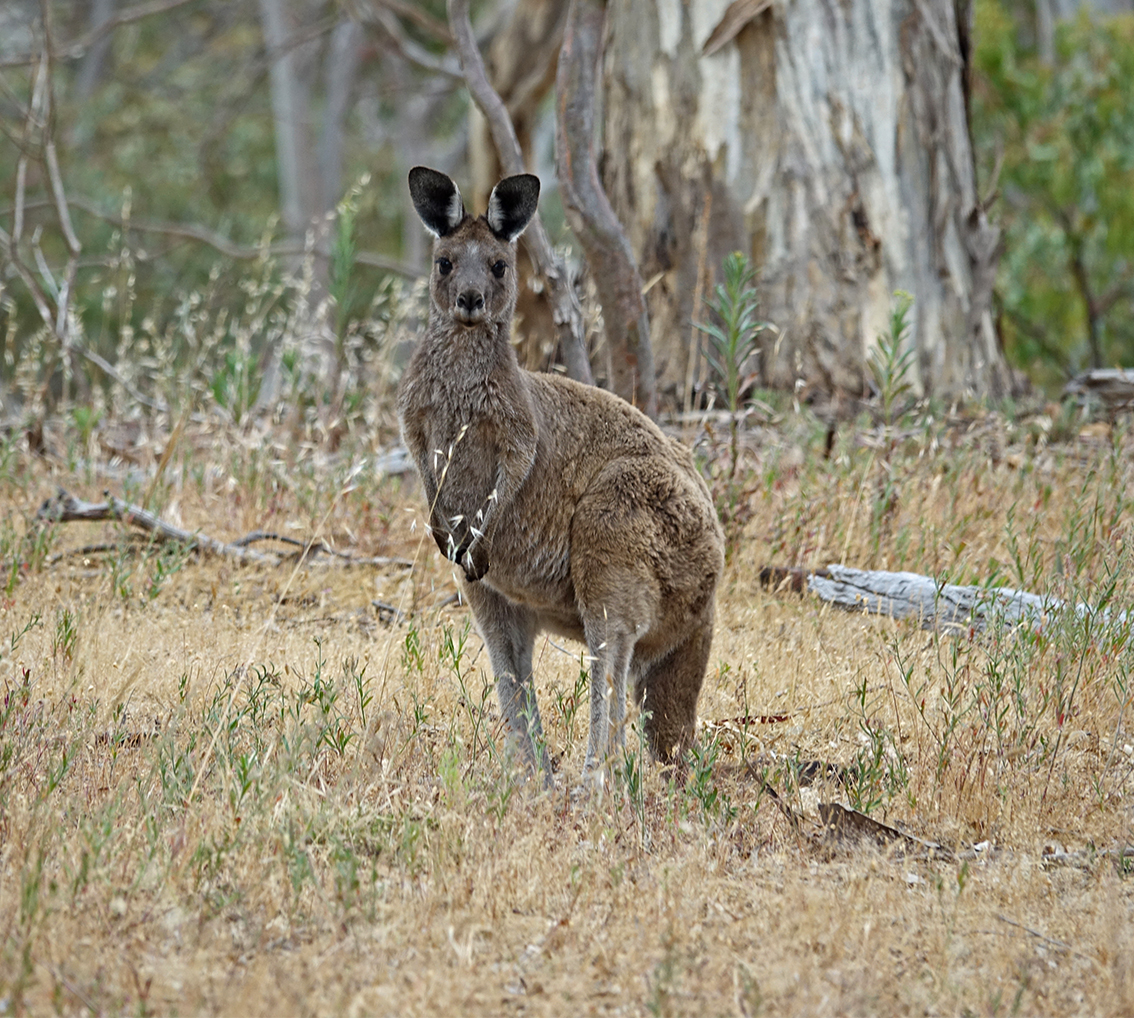
There’s a small mob of Western Grey Kangaroos feeding close to the path where I am starting my walk. Leaning against a tree, I steady the camera. The roos detect either sound or scent and bound away into the thicker scrub.

Up Up and Away

I am taking a walk around the South Para Reservoir near Williamstown about an hour’s drive from Adelaide’s CBD. The road winds through the Adelaide hills and encompasses a range of environments from rural to wilderness. Unfortunately, it is a bit of a grey day. Not brilliant for photography.  

South Para Reservoir

The track leads down to the water where a kayaker is bringing the craft back to dry land. This reservoir is open for fishing, kayaking, cycling and walking unlike many of our other reservoirs.

A recreational paddle

There are numerous butterflies in the area but it is hard to spot them until they take flight. Eventually I get a reasonably clear shot and identify the species as a Common Brown.

Common Brown

On the water’s edge I can just make out some large birds. I suspect they are either Cormorants or Snake Birds (Anhingas). I approach warily, lie down in the grass and focus. There are two distinct species; a Pied Cormorant and a Great Cormorant.

Pied Cormorant

Working my way around the water’s edge I discover a dry creek bed and another track heading back towards the main road. I follow the creek bed up a gentle slope towards a rocky outcrop. A large male kangaroo watches me from the scrub as I walk. He seems relaxed and stays still enough for a long-range shot.

Just watching

Continuing along the cross track I suddenly freeze and hold my breath. Three adult Emus are walking towards me and have, either not registered my presence, or are not unduly phased by humans. I raise the camera slowly and wait as they approach to within thirty metres. I take a series of shots before they veer away pecking for seeds, insects and whatever else they might find in the dry scrub.

The Emus gang

Emus close by me

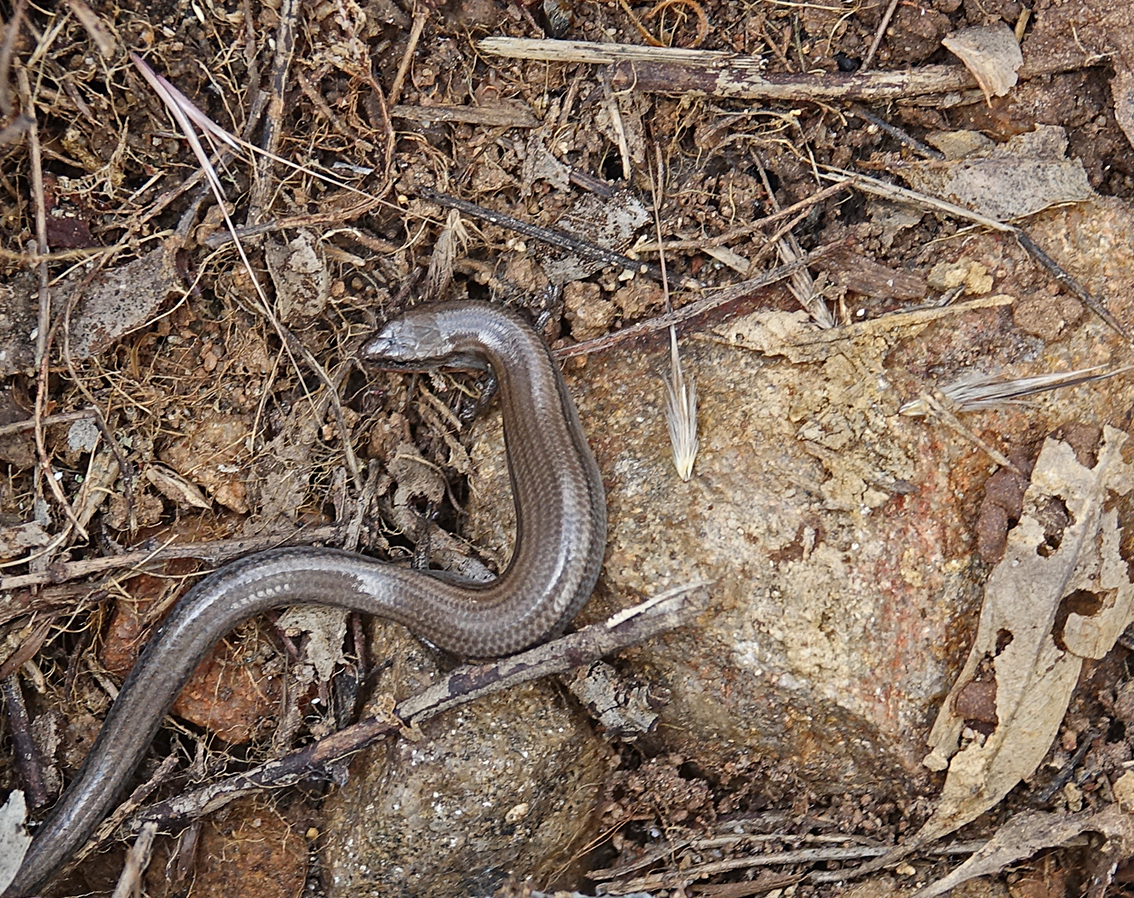
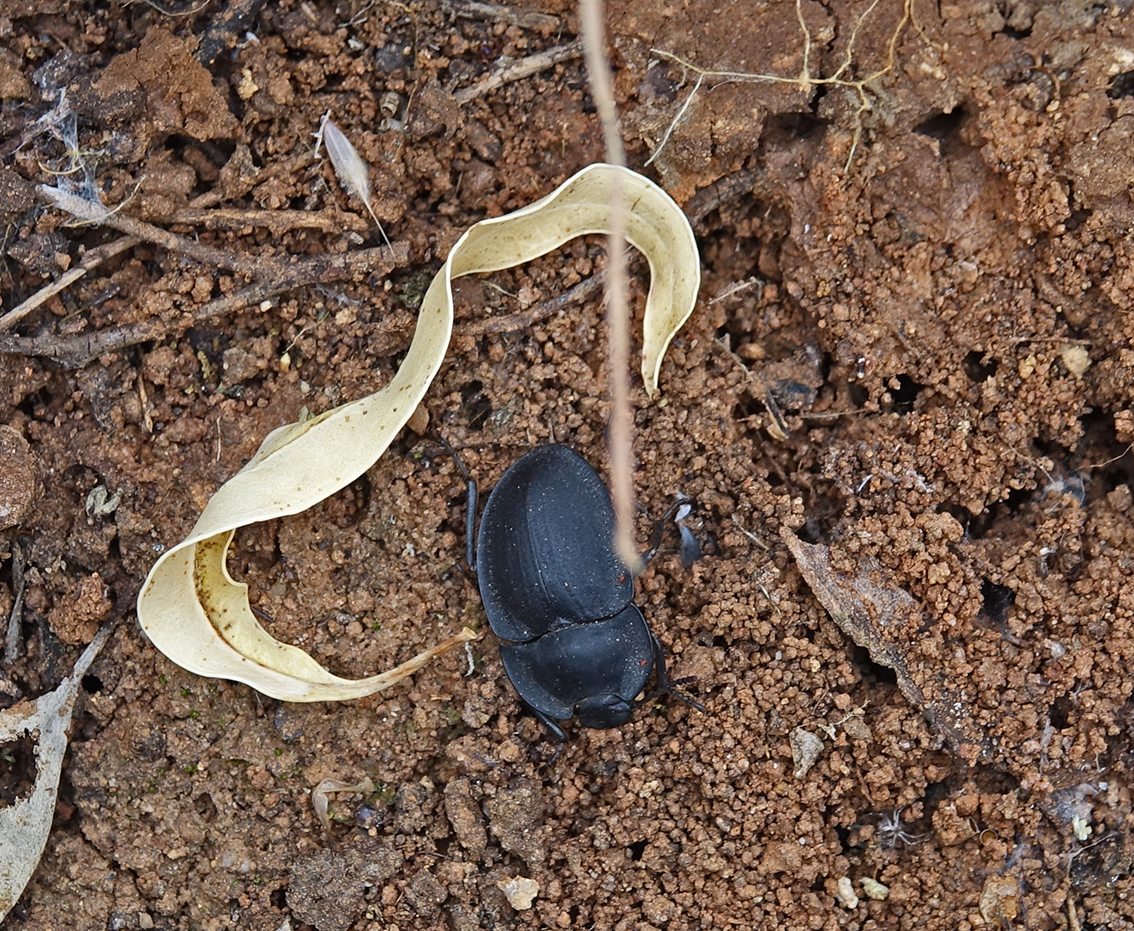
As I traverse move up the trail, I notice a variety of wildlife including; musk Lorikeets Sulphur Crested and Rose Breasted Cockatoos, more butterflies, a few native bees as well as ant nests and termite mounds. I turn over a couple of rocks and dead branches (replacing them carefully afterwards), uncovering a snakelike Three-toed Earless Skink and Pie-dish Beetle.

Three-toed Earless Skink

Pie-dish Beetle

With my walk at an end, I drive on towards Williamstown for lunch at the little bakery across from the creek. However, I do make one more stop on the way at Linfield Road Winery which has a charming bed and breakfast attached. An ideal place to stay when I make my next foray into the wonderful north-eastern region of the Adelaide Hills.

B&B for next time

Linfield Road Winery vines

Cheers

Baz

Additional notes

This is an easy walk/drive which is quite suitable for families and seniors with public toilets, barbecues, parking and other facilities nearby.

Please pass on this blog title and or contact information (URL) to any person or organisation with an interest in taking walks and enjoying wildlife in SA.

Click on these links and see more South Australian stories and pictures in my Weekend Notes articles as well as locating similar blogs on Feedspot’s top 20 Australian wildlife blogs

https://www.weekendnotes.com/adelaide/writer/452 https://blog.feedspot.com/australian_wildlife_blogs

Aldgate to Stirling…a short walk

24 Sep

Dear Reader:

It is still early Spring and the sun is out and I have often spotted a small copper headed skinks basking in the sun at this time of year. There are several logs on the northern facing aspect of the path and with a little patience and perseverance I manage to find one of the little lizards. Their correct name is the Common Garden Skink or Sun Skink.

Common Garden Skink

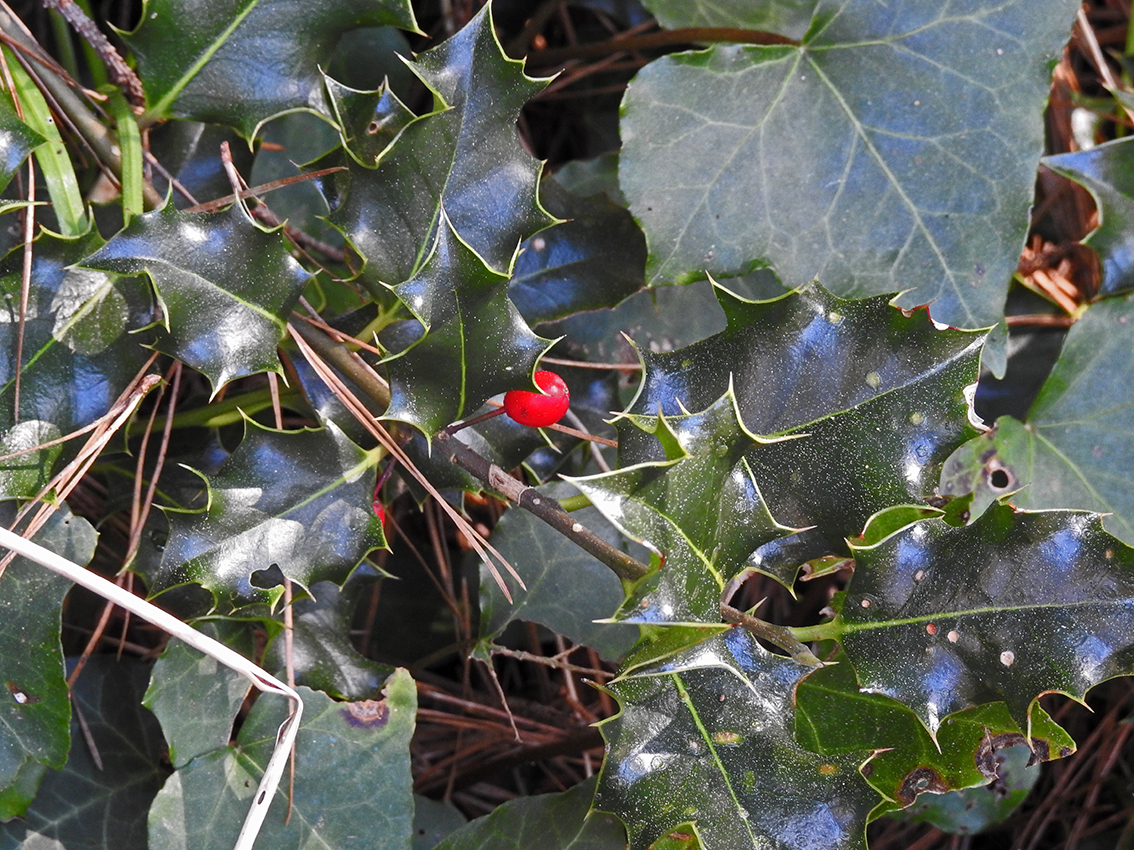
Following up on my previous post, which covered the area around the RSL Hall, on the edge of Aldgate, I am now walking the short path to Stirling. The trail follows the road and creek on one side and is heavily wooded on the other. There are numerous plants both native and introduced along the pathway including: Holly, tall pines, grevilleas, a few eucalyptus and acacia species as well as ferns and bracken.

Holly in the Hills

Grevillea species

After a fifteen-minute stroll along the pathway I reach the outskirts of Stirling. The town has an English country village feel about it with some lovely old homes and many small shops and businesses. Whenever I visit Stirling there always seems to be a welcoming committee of Little Ravens (often mistaken for Crows) in the area. Today is no exception as a group of the shiny black corvids trumpet their characteristic calls from a nearby garden.

Little Raven Stirling

I do not venture far into Stirling as it will be the subject of a later blog. I head back down the path to Aldgate. The dense vegetation, now to my right, is full of movement and the sounds of small birds in the undergrowth; probably wrens and finches. I scan the other side of the road and spot a Koala high in the branches. I take a couple of shots to demonstrate how difficult locating wildlife can be and how training your eyes to notice subtle changes and movement takes continual practice.

Koala at 100 metres

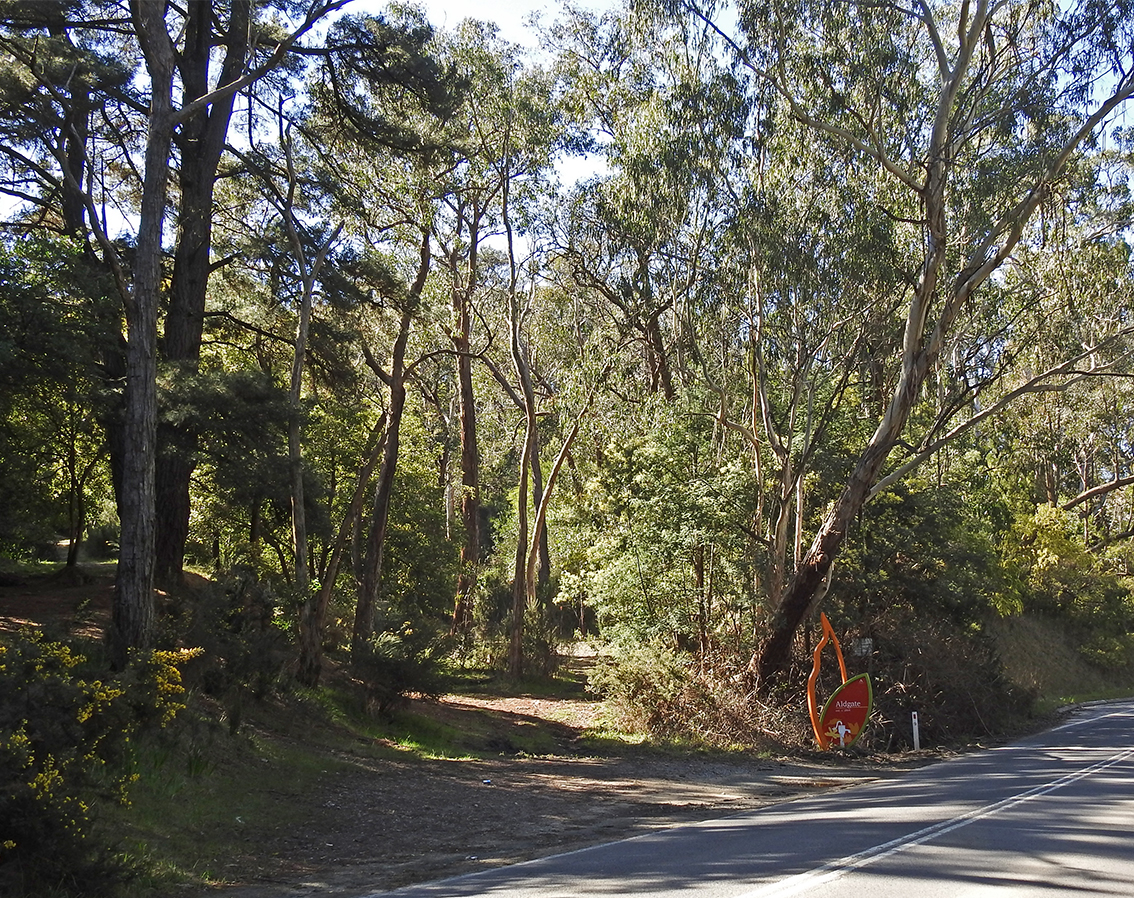
As I approach the outskirts of Aldgate I notice a track on the other side of the road near the township sign. Crossing over, I follow it a short way as it cuts along the hillside and into the scrub. This area is dominated by tall eucalypts and is a more typical hills bushland setting than the pathway.

The track near the entrance to Aldgate

Adelaide Rosella

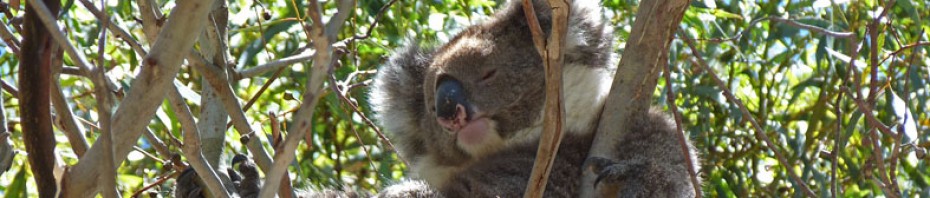
Koala Aldgate

My detour is well worth the effort. Within a few minutes I have managed to photograph an Adelaide Rosella perched on an old, gnarled branch and a Koala at far closer range than before.

FRED……..Barista at work

FRED….Cosy place to dine

With the walk concluded I drive into Aldgate for lunch at Fred, a wonderful local eatery and another compelling reason to visit Aldgate. Over the years, I have had some wonderful meals in this iconic hills café and I’m sure today will be no exception. The only problem is one of choice with so many interesting dishes to choose from. After some serious deliberating, I end my day in Aldgate with a Croque Monsieur and a Chai Latte, selected from the ‘All Day Breakfast Menu’.    

Cheers Baz

Additional notes

This is an easy walk and drive which is quite suitable for families and seniors with public toilets, parking and other facilities nearby. It is dog friendly.

Please pass on this blog title and or contact information (URL) to any person or organisation with an interest in taking walks and enjoying wildlife in SA.

Click on these links and see more South Australian stories and pictures in my Weekend Notes articles as well as locating similar blogs on Feedspot’s top 20 Australian wildlife blogs

https://www.weekendnotes.com/adelaide/writer/452/

https://blog.feedspot.com/australian_wildlife_blogs/

Megafauna… a few thoughts and examples

31 May

Dear Reader

A man hides in the scrub and watches an animal feeding near the river; it is huge and very wary, taller than the man. Despite its massive size the creature is not a threat and only eats plants. However, its size must be respected and the hunter would need help to kill or trap it. Time to move on and look for smaller prey. Such thoughts might have passed through the mind of an Aboriginal hunter thousands of years ago when far larger animals, called Megafauna, roamed the Australian continent.

Lifesize sculpture of a Diprotodon at Naracoorte Caves SA. Diprotodon was the largest of the Australian Megafauna.

Today, only traces of these animals remain. It is generally thought that they perished from a combination of hunting pressure and environmental changes. Some of their remains have been found in caves on the Nullarbor Plain and at Naracoorte in the south east of SA, as well as a few other locations.

Inside the Naracoorte Caves

The term Megafauna usually refers to animals weighing over 100 Kg but as the Australian Megafauna were smaller than those in other parts of the world it is generally accepted that Australian animals over 40 Kg can be classed as Megafauna. Hence, Kangaroo species and wombats can still be called Marsupial Megafauna. In other classifications: Emus, Cassowaries, Saltwater Crocodiles and some large pythons, also fall into this category.

Australian Saltwater Crocodile, an example of existing Reptile Megafauna.

Southern Cassowary, an example of Australian Avian Megafauna similar to the African Ostrich.

African Ostrich, an example of African Avian Megafauna and similar to the Australian Southern Cassowary.

On some continents the Megafauna are still a significant part of the biosphere. To really get a sense of the current Megafauna we must shift our focus to Africa. Here, there are many examples of large animals still surviving in the wild including: African Lions, Hippos, rhinoceros species, giraffe species, African Elephants, Cape Buffalo, Nile Crocodiles and Ostriches. The latter two species have Australian counterparts in Saltwater Crocodiles, Emus and Cassowaries. There was even a marsupial lion-like predator called Thylacoleo which roamed the Australian bush and only disappeared around 30,000 years ago.

African giraffe, an example of existing African Mammal Megafauna.

African rhinoceros, an example of existing African Mammal Megafauna.

Other continents also have their own remaining Megafauna. Bears, Horses and Bison are classic examples. It is interesting to consider that around ten thousand years ago many more large animals roamed our planet. Some of them are related to species I have just mentioned. A  good example is the Elephant’s close relative, the Woolly Mammoth.

African Elephants the largest of the world’s existing terrestrial Megafauna and a close relatives of the Woolly Mammoth.

The extinction of the Megafauna, environmental changes, human intervention and predation are themes so familiar to us at the moment and perhaps by glancing into the past we can learn lessons for the future.

I hope you have enjoyed this diversion from my usual posts. It has given me the chance to use images and experiences from my travels and other nature-based interests. Any comments about this work would be greatly appreciated.

Cheers

BAZ

Additional notes

Please pass on this blog title and or contact information (URL) to any person or organisation with an interest in taking walks and enjoying wildlife in SA.

Click on the links below for more information about this topic and to see more South Australian stories and pictures in my Weekend Notes articles as well as locating similar blogs on Feedspot’s top 20 Australian wildlife blogs

https://www.weekendnotes.com/profile/651267/

https://blog.feedspot.com/australian_wildlife_blogs/

Article Information

 https://australian.museum/learn/australia-over-time/extinct-animals/diprotodon-optatum/

 https://en.wikipedia.org/wiki/Australian_megafauna

Title:Goolwa Barrage(2)…..Hunters and Hitchhikers or ‘Bluey Takes a Rest’

4 Feb

Dear Reader:

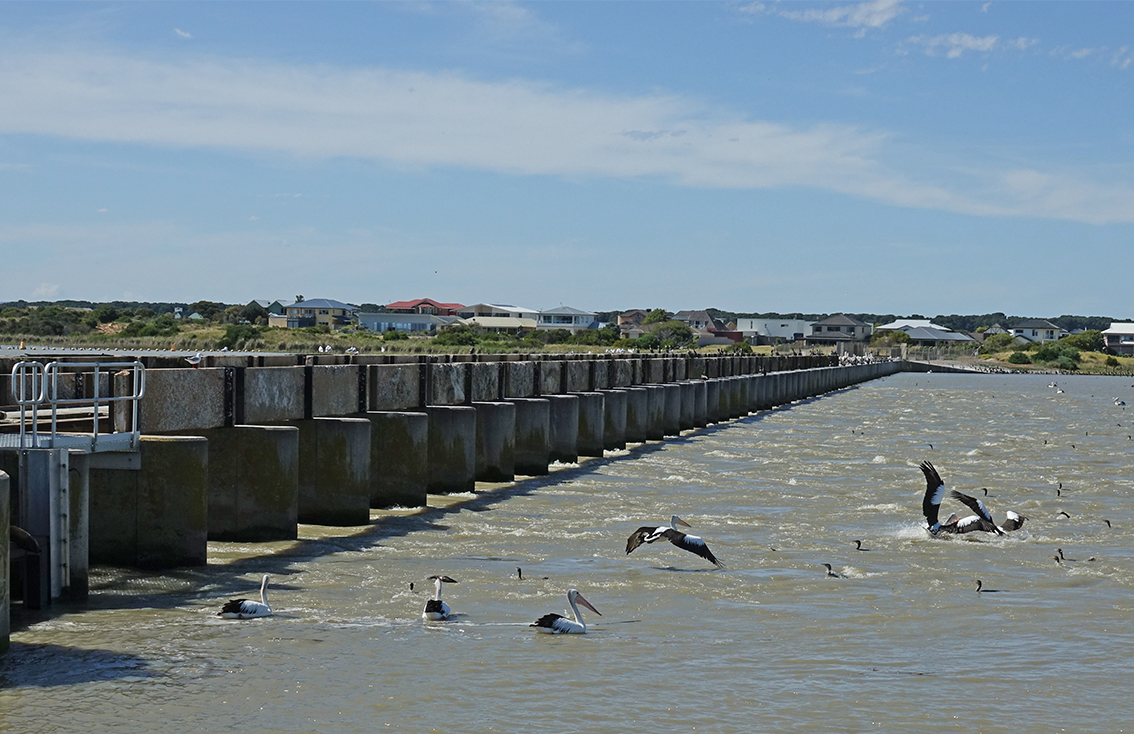
In my previous post I took you from the car park to the beginning of the Goolwa barrage. Now we will explore the main part of the barrage where the water is streaming through the gates at an unprecedented rate due to severe flooding upstream.

View along the barrage

With the floodgates open there is an overabundance of food being washed out into the Coorong. The freshwater is laden with silt and leaves a brown stain across the seaward side of the barrage which actually extends to Goolwa Beach and Victor Harbor.

Enlargement of first image showing interspecies rivalry

Long-nosed Fur Seals, Australian Pelicans and Great Cormorants are positioned to ambush fish and any other food as the water cascades through the gates. On every level this is quite a spectacular natural event and onlookers, armed with phones and cameras, are making the most of the situation.

Too much of a good thing

I spend some time taking shots that I hope will capture the essence of this event as well as a few close-ups of the different species. When animals are engaged in feeding behaviour they often ignore people which creates the perfect opportunity for more intimate images.

Sub-adult Pacific Gull (still has darker markings)

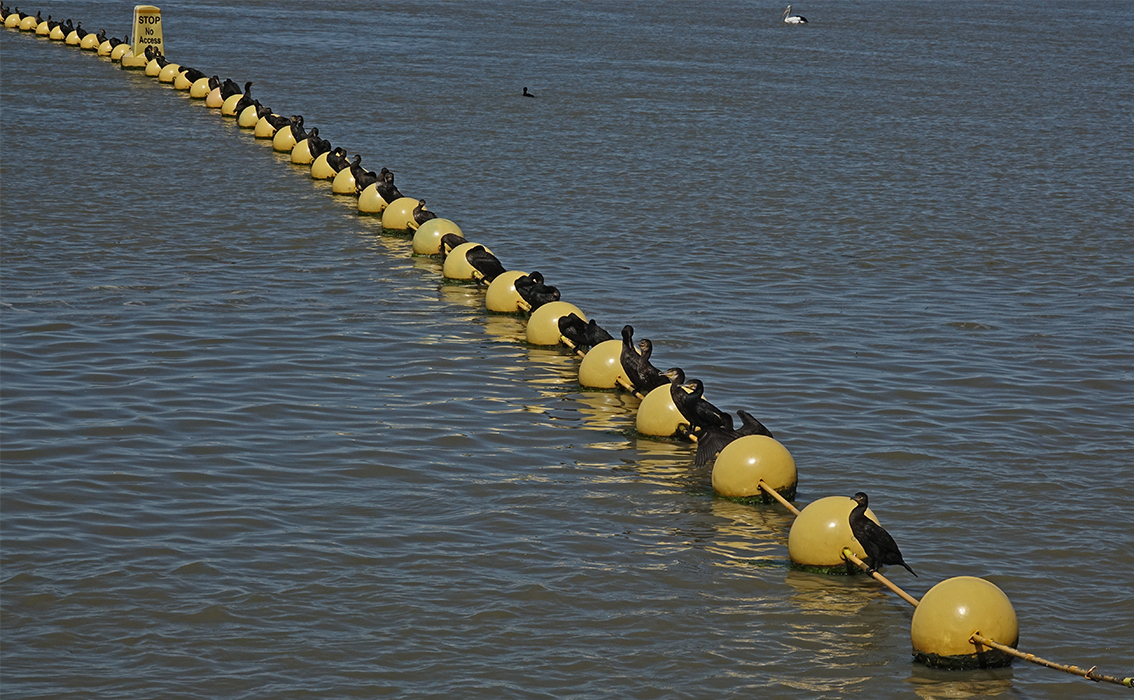
Floats with Great Cormorants

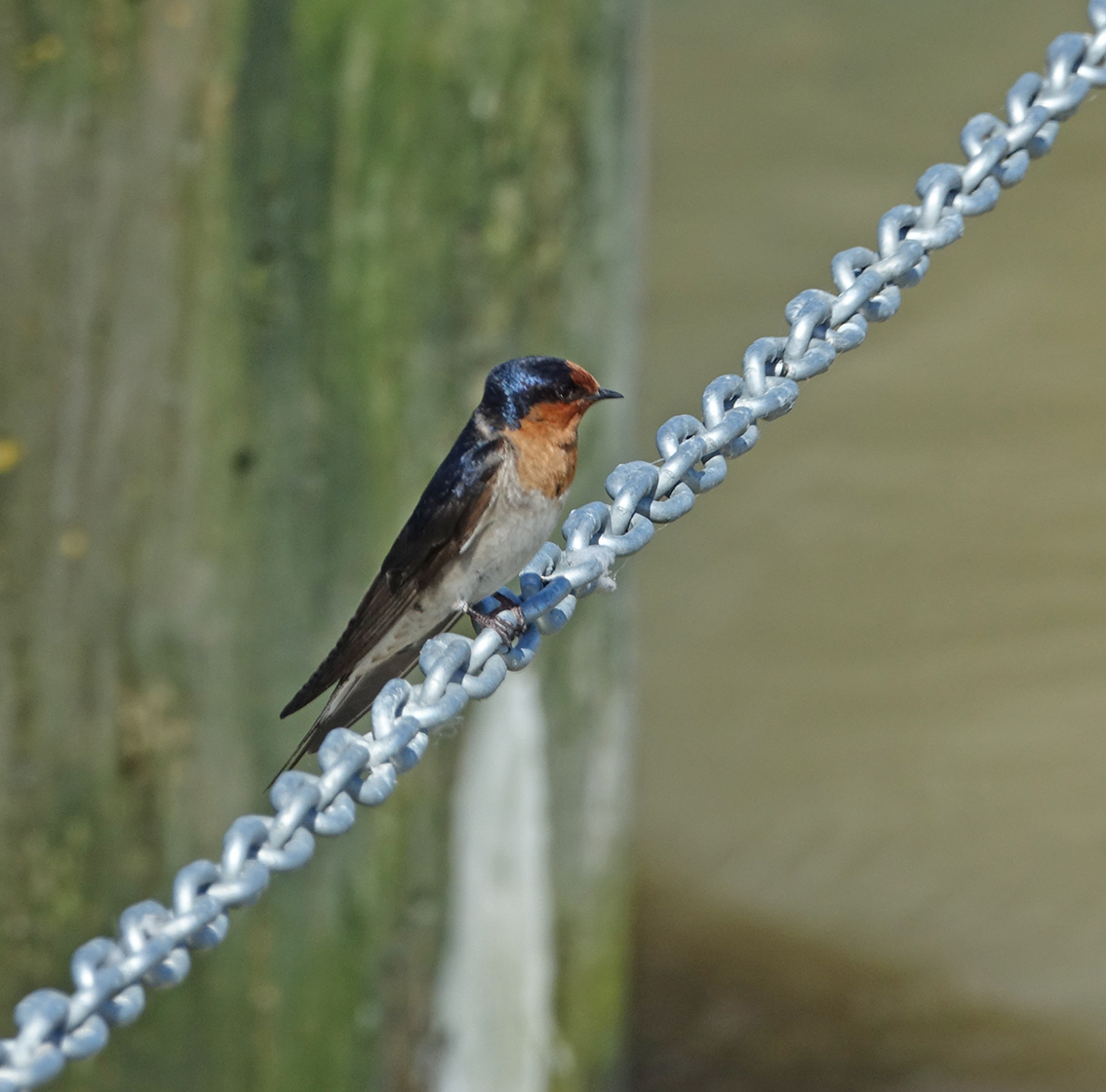
Swallow at rest

It is time to leave. I stroll back along the walkway watching swallows, cormorants and occasional Pacific gull perching on bollards, chain link and floats. I am halfway back to the bank when I notice an elderly couple pointing excitedly at the area where I was just watching the seals.

Catching a ride

Close up of previous image

Time to go

Intrigued, I walk back to the viewing platform and to my surprise they have spotted one of the most unusual examples of animal behaviour I have ever witnessed. A few metres below us, a seal is resting in the water, catching the sunlight on a raised flipper with a Blue-tongue Lizard lying across its body. I can only assume the reptile is taking a break from the swiftly flowing water. The lizard stays for a few minutes before ‘disembarking’ and continuing its journey towards the far bank. Extraordinary!!!!

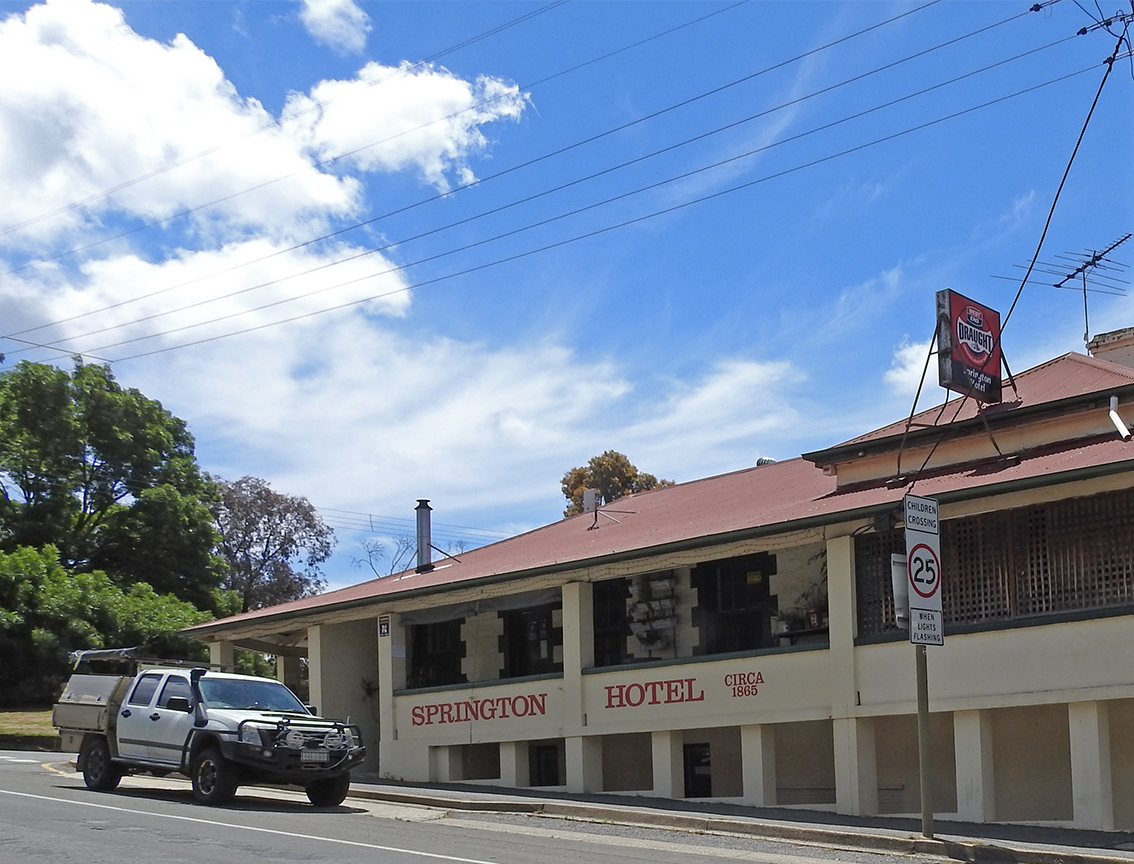
Historic Goolwa Hotel

On that note, I ‘call it a day’ and walk back to the car. My next stop will be the historic township of Goolwa. There is a wonderful gallery called ‘Art Worx’ where I love to browse and sometimes pick up something special for the house or garden. Finally, the Goolwa Bakery, for a chicken and vegetable pie and perhaps a vanilla slice to follow. Always a pleasant way to wind up any trip to this fascinating waterside location.

Cheers

Baz

Additional notes

This is an easy walk/drive which is quite suitable for families and seniors with public toilets, barbecues, parking and other facilities nearby.

Please pass on this blog title and or contact information (URL) to any person or organisation with an interest in taking walks and enjoying wildlife in SA.

Click on these links and see more South Australian stories and pictures in my Weekend Notes articles as well as locating similar blogs on Feedspot’s top 20 Australian wildlife blogs

https://www.weekendnotes.com/profile/651267/

https://blog.feedspot.com/australian_wildlife_blogs/

Commissariat Point’s Beachside Wildlife
25 Oct

Dear Reader:

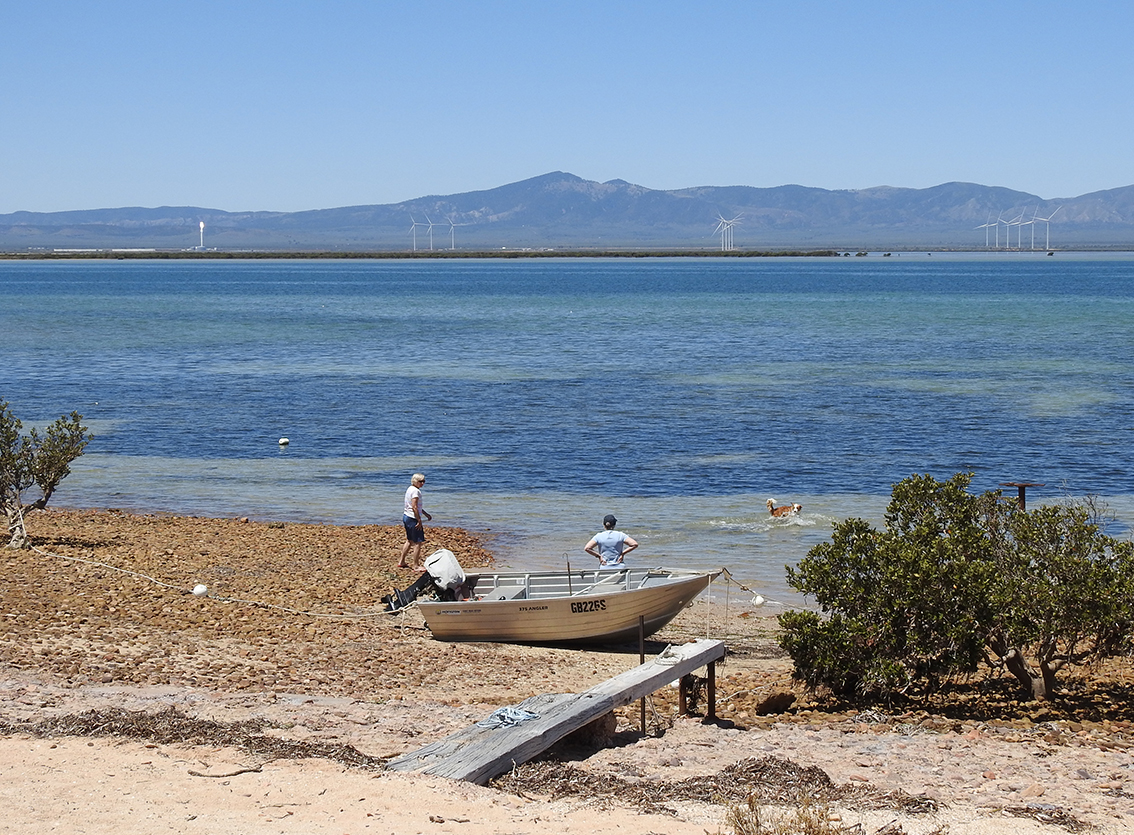
The boat is high and dry on the turning tide. Time for a stroll along the shoreline. A little exploration of the intertidal zone.

Tide is Out

Commissariat Point is a ten-minute drive south of Port Augusta near the army testing and training grounds. It is a community of shacks, some quite opulent, where a few owners live permanently while others visit or rent on weekends and holidays.

Shacks, scrub and windfarm in the evening light

These upper reaches of the Spencer Gulf are also lined with one of the State’s truly wonderful trees, the Grey Mangrove. Mangroves live between high and low water and have many adaptations to help them survive this challenging environment. They produce aerial roots called pneumatophores which help the plant to breathe in the sticky mud that is common along the shoreline. Their leaves are shiny on one side and secrete salt particles on the other.

Grey Mangroves

Mangrove leaves

There is quite a lot of seaweed around the high tide mark. It has been deposited on the beach during winter storms and is home to a variety of animals. There are worms, crabs, insects and even small lizards in this unusual habitat which retains moisture below the sun-dried outer layers.

Gecko species in seaweed

Just above the high tide mark lies a thin line of vegetation which is tolerant to the windy and salty conditions. I am quite surprised to discover some Flax Lilies growing here. The delicate flowers are attracting a few buzz-pollinating native Blue Bees. The term buzz pollinating refers to their ability to spread pollen through the high frequency beat of their wings.

Blue-banded Bee on Flax Lily

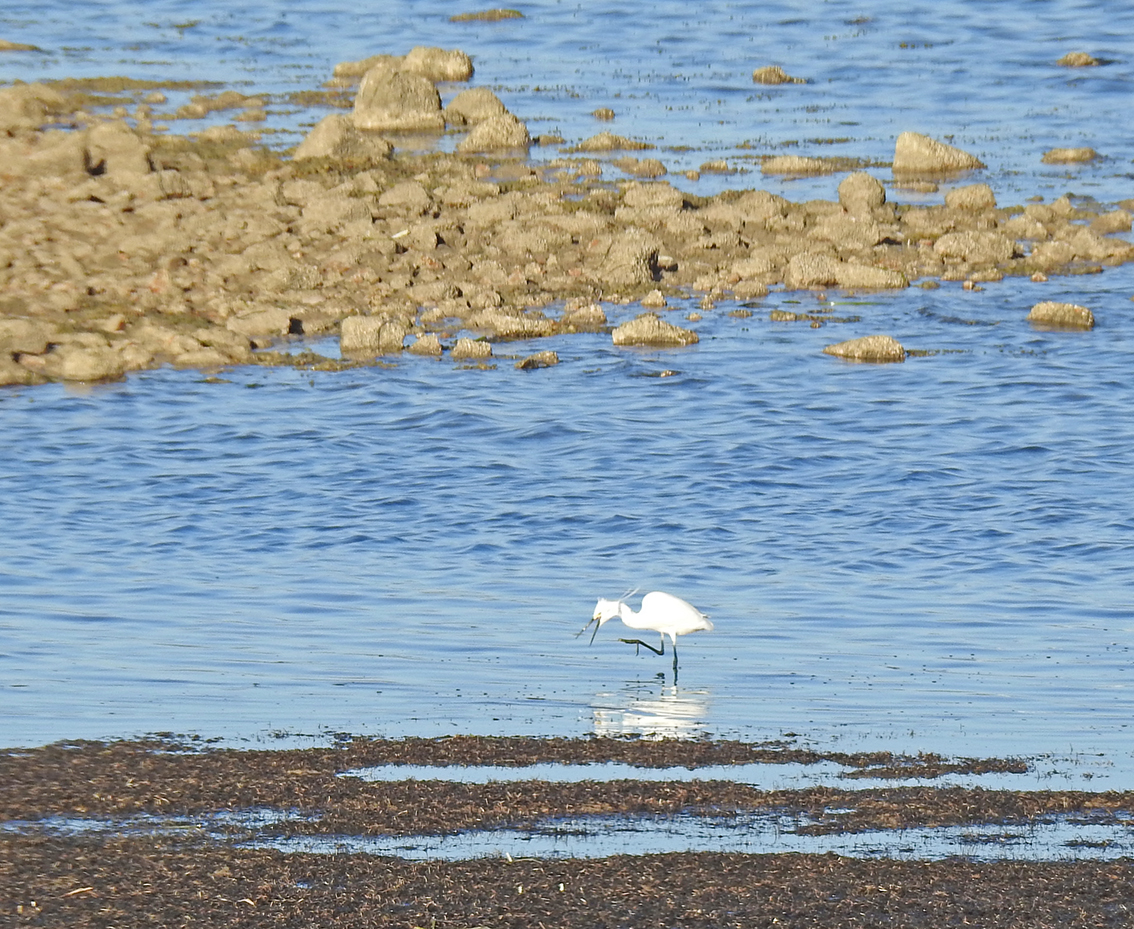
The light is starting to fade and the tide is coming in as my walk draws to an end. A few wading birds are coming closer to the shore with the incoming water and I try my luck at photographing them in the soft light. A nice way to finish my initial exploration of this tiny settlement at the head of Spencer Gulf.

Heron using feet to help scare out fish and other small animals

Cheers

Baz

Additional notes

This is an easy walk which is quite suitable for families and seniors with parking but no other facilities. It is dog friendly.

Please pass on this blog title and or contact information (URL) to any person or organisation with an interest in taking walks and enjoying wildlife in SA.

Click on this link and see more South Australian stories and pictures in my Weekend Notes articles

https://www.weekendnotes.com/profile/651267/

Title Kangaroo Island….Day 2 Lesueur Conservation Park

30 Jul

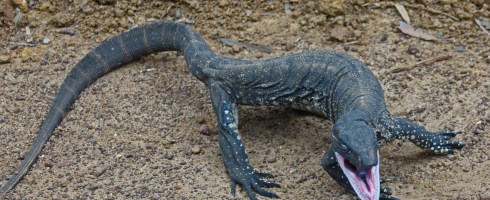
Rosenberg’s Monitor a little upset

Dear Reader:

Grey clouds are shrouding the sky this morning and a cool wind is sweeping in from the sea. I check the weather app and there doesn’t seem to be any rain forecast for the day though the light will be poor.  My Sony RX10 has the larger sensor of my two cameras and seems the obvious choice for today’s jaunt through the nearby Lesueur Conservation Park.


Wildlife and Farm life

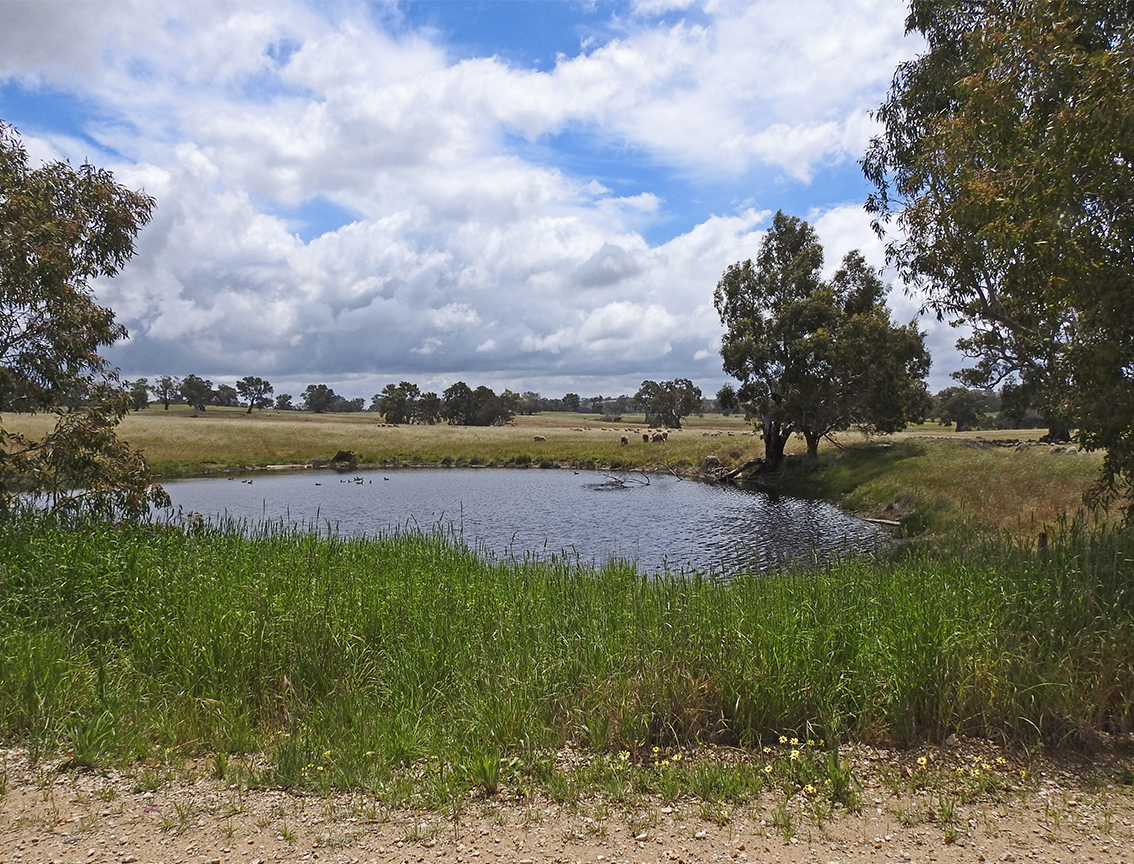
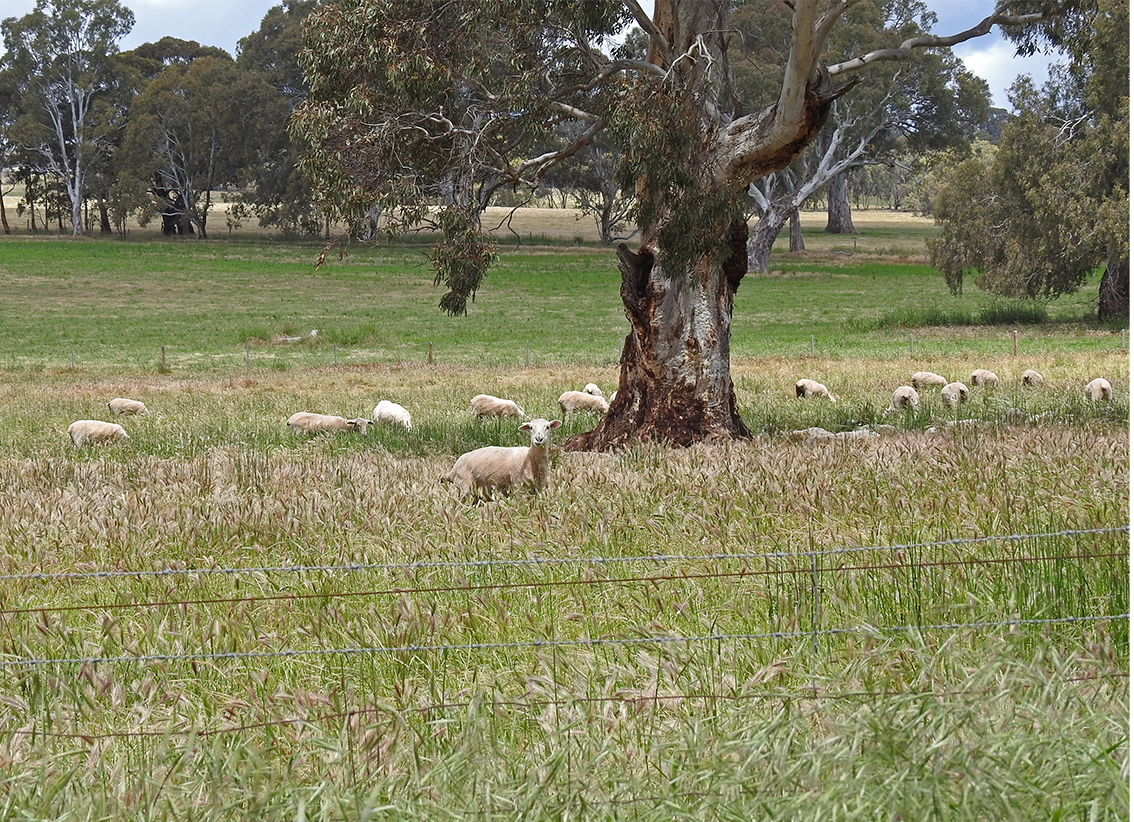
The unsealed road from the lodge towards Lesueur has been recently graded which makes travelling a little easier and I reach the turn off to the park in a few minutes. There is low scrubby forest to my left and verdant grazing land on the right. To my surprise, a flock of sheep near a small water hole are sharing their territory with Black Swans. A sweep with the telephoto also reveals a few Masked Lapwings and Grey Currawongs in the paddock.
 

Pea flower species

Blue Cockatoo Orchid

I make the signposted turn to Lesueur CP and a little way down the road I notice a cage trap set under a grass tree; I assume it is for feral cats which are a threat to all Australian wildlife from reptiles to birds. Today there are very few animals around which is fairly typical in cool overcast conditions and I decide to fossick around in the scrub adjacent to the road. The first thing I notice is the proliferation of flowering plants including native pea flower species and delicate blue orchids.


Grey Fantail and Silvereye

Red-browed Finch

There are small birds high in the trees but they are hard to identify. I come across a deep rut in the road which is partially filled with water. The vehicle scares several small birds away which are using the pool as a bathing area. After driving a several hundred metres down the track I leave the car and approach the ‘bird bath’ stealthily through the scrub. Taking up a position about fifty metres away I wait and within ten minutes they return. Long shots on a cloudy day do not make for award winning images but they do help me identify these small birds as; Silvereyes, Grey Fantails and Red-browed Finches. Meanwhile a large centipede is burrowing through the leaf litter next to the log I am sitting on. Telephoto to macro in a split second supports my use of bridging cameras in some circumstances.


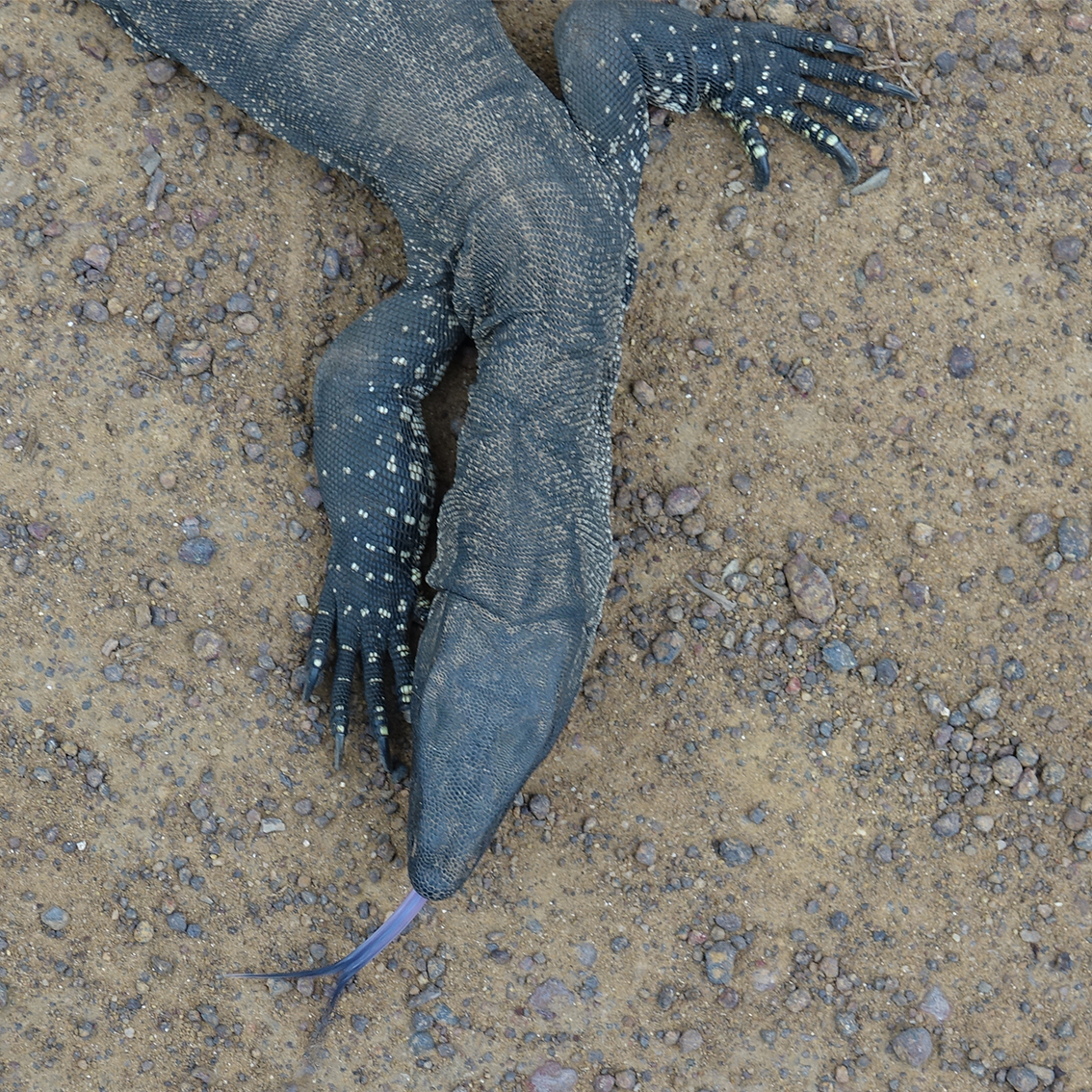
Rosenberg’s Monitor (like all monitor lizards it has a forked tongue similar to that of a snake)

Centipede species

The wildflowers, centipede and small bird species have made the excursion into the park interesting and I am sure it is worth another visit on a more amenable day. I leave the park and take another randomly chosen track which takes me away from the coastal fringe. Five minutes along this route I see the flattened shape of a large lizard by the side of the road. I stop and take a closer look hoping it has not been injured or killed by a car. As I approach the goanna/monitor which instantly informs me of my error with a hiss and quick, aggressive lunge. I take a couple of shots and usher the animal away from the road.


Creek scene


View from the lodge

A little further on, the road passes over a small creek which is picturesque even on a dull day. It then intersects with another road, which my GPS informs me, leads back towards ‘Seadragon Lodge’( see link below for more information) where I started my day’s adventure. By now the clouds have shifted and patches of blue sky are brightening up the day. Time to relax, put a log in the combustion heater and sort through my images while enjoying the view across the gully to the ocean.

Cheers

Baz

Additional notes

Seadragon Lodge……  https://seadragonlodge.com.au/

This is an easy drive which is quite suitable for families and seniors and the lodge is wonderful with magnificent views and abundant wildlife.

Please pass on this blog title and or contact information (URL) to any person or organisation with an interest in taking walks and enjoying wildlife in SA.

Click on this link and see more South Australian stories and pictures in my Weekend Notes articles

https://www.weekendnotes.com/profile/651267/


Birdwood’s Cromer Conservation Park…….Part 2

11 Mar

Classic Cromer scrub

Dear Reader:

This is my second visit to the Cromer CP. Unlike my first wander around this unique patch of South Aussie scrub the immediate weather is not treating me in a kindly fashion with low clouds and mist forecast for the morning then clearing as the day progresses. Not great for detailed photography but it might add a different atmosphere to my images.

Roos in the fields

Close up shot from car

As I drive along the road from Birdwood I am forced to a stop to avoid a small group of Western Grey Kangaroos bounding in front of the car. They settle in a field and start to graze only looking up as I power down the window for a shot.

Thornbill species?

Treecreeper sp or Sitella sp

I enter the park from an unmarked gate on the far corner of the park about 1 km from the main entrance. A barely visible track runs into scrub which is dominated by two distinct types of eucalypts. The taller trees have smooth bark while the other’s is rougher and darker. There are small noisy birds flitting about in the canopy and despite the poor light I get a couple of shots at distance thanks to the extreme range of my Nikon P900. A bit of Photoshopping later suggests one is a variety of thornbill and the other a sitella or treecreeper species (any ID feedback would be welcome).

Cockies Galahs) in the mist

The track disappears after a few hundred metres and just where it peters out there is a small mound surrounded by old, rusted fencing. I take a closer look and discover, what appears to be,  a well or perhaps mine digging. There are several smaller unfenced depressions in the area and in one I catch a glimpse of a Blue Tongue Lizard just before it quickly disappears into the undergrowth. The sudden movement startles a pair of Galahs perched high above me. Despite the poor light I manage to capture a rather atmospheric image of the parrots.

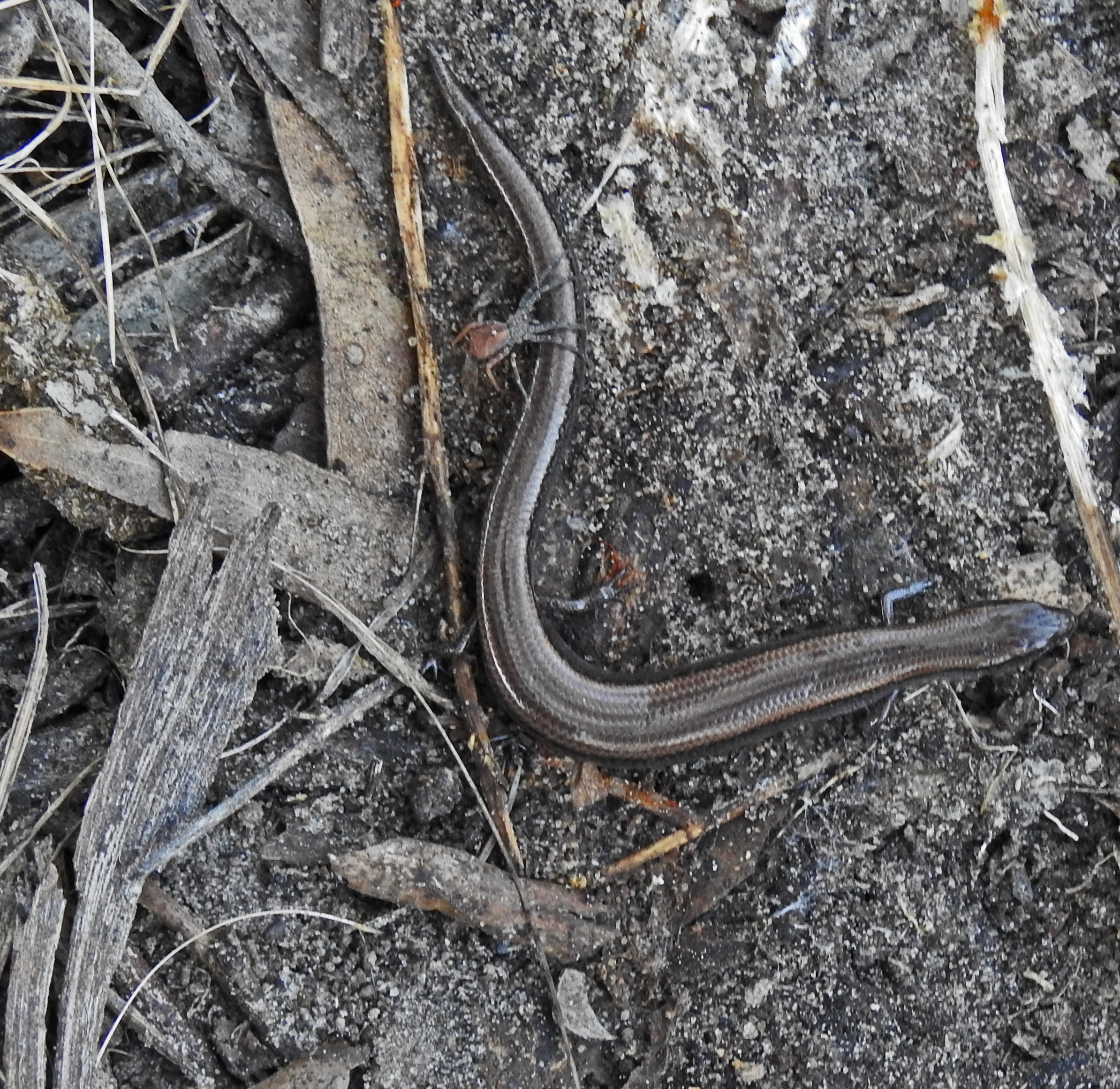
Unknown skink species possibly a slider

To my delight the sun is starting to burn off the low cloud and blue skies allow for faster shutter speeds and more depth of field. I decide to turn my attention to the smaller animals inhabiting the park. Under a fallen log, I discover a plethora of life; roaches, a centipede plus a lovely striped skink, possibly a slider species. It has tiny legs and a long slender body for living in the leaf litter and under rocks and fallen branches. Further examination of the shot reveals a small spider by its tail.

Bakery delights at Birdwood

It is time to leave the park on this, my second visit, but I shall return in spring to witness the emergence of delicate wildflowers, birds building nests and roos breeding. Now it is time to obey the urges of my stomach clock and enjoy the calorific delights of the local bakery. So much to choose from but my walk in Cromer Conservation Park might justify my indulgence.     

Cheers

Baz

Additional notes

This is an easy walk which is quite suitable for families and seniors but care must be taken because of the pristine nature of the scrub and the possibility of snakes in the warmer months.

Please pass on this blog title and or contact information (URL) to any person or organisation with an interest in taking walks and enjoying wildlife in SA.

Click on this link and see more South Australian stories and pictures in my Weekend Notes articles

https://www.weekendnotes.com/profile/651267/

Murray Bridge’s Rocky Gully Wetlands (Part 1)

4 Jan

Eastern Water Skink

Dear Reader:

We are standing on a culvert above a long, narrow canal which is used to channel water from one part of the swampy wetland to another. Despite the coolness of the day an Eastern Water Skink is lying on the concrete edge soaking up what little warmth it harbours.

David taking a panoramic shot

Today, David and I are exploring the Rocky River Wetlands; a series of shallow pools fed by urban run-off and the nearby Preamimma Creek. This low-lying area has been developed by local volunteers into a significant wetland supporting a wide diversity of native flora and fauna. Sanders Walk is a 1.8 Km loop around the wetland. Named in honour of the man who instigated this reclamation project and turned a salty wasteland into a wonderful, local biosphere. It is both wheelchair accessible and dog friendly.

Pelican Colony

Pelican flyby with silos

From the culvert we follow a levy which provides views across the wetland with both the town and the Murray River in the distance. A colony of Australian Pelicans occupies a small island while a lone bird flies past the massive wheat silos. They provide me with a couple of nice photo ops featuring wildlife in an urban setting.

Western Grey Kangaroos feeding on floodplain

The clouds are starting to roll in and there is a sniff of rain in the air. We decide it’s time to head back to the car. However, one last scene begs my attention. In the distance, on the low scrubby plains closer to the river, there is a small mob of Western Grey Kangaroos grazing. They are just in range of my P900 on full extension.

A pair of Pacific Black Ducks hunker down as the rain comes in

Then the rain belt hits us. Waterproofs zipped up and cameras protected we beat a hasty retreat. I will return in a few days when the sun is out as there is so much more to see. Now its Murray Bridge for lunch or that lovely little bakery in Hahndorf? Spoilt for choice!

Cheers

Baz

Please pass on this blog title and or contact information (URL) to any person or organisation with an interest in taking walks and enjoying wildlife in SA.

Click on this link and see more South Australian stories and pictures in my Weekend Notes articles

https://www.weekendnotes.com/profile/651267/

Charleston Conservation Park……Coming Back from a Burn

1 May

Dear Reader:

Despite the blackened and scarred bush there are glimmers of hope in the landscape. Grass trees can survive the worst of the worst bushfires and some Banksias and other native species need fire to regenerate successfully. And, where there are plants the animals follow. Sitting atop the burnt spire of a grass tree (Xanthoria sp) I notice a female Superb Fairy Wren and my companion David points out a Male in full breeding plumage. Wildlife amongst the devastation.

Superb Fairy Wren male….photo by David Morris
Superb Fairy Wren female

I am exploring the Charleston Conservation Park, on Bell Springs Road in the Adelaide Hills about 7 Kms north of Lobethal and near the little town of Charleston. This small park of 54 hectares and bounded by open farmland on all sides, was devastated by recent bushfires but it is starting to show signs of re-vegetation. It is both sad and fascinating to walk around the park and look at the new life that is emerging amongst the burnt trees and undergrowth. However, the open, burnt bushland makes it easy to see animals though they are scarce, wary and hard to photograph. If you visit take a camera with a good telephoto.

Track along the park perimeter

We follow the track which runs around the edge of the park. It is separated from the surrounding farmland by a fence with a few surviving trees and bushes along the perimeter. In the distance I spot a mob of kangaroos feeding alongside cattle. These animals would have inhabited the park before the bushfires and will again as the understory and scrub develops, providing them with food and shelter.

Mob on the fenceline

A few hundred meters along the primary track that circumnavigates the park we take a smaller trail leading to a rocky outcrop. David stops abruptly and points, “Snake and it’s a big one, just a few metres in front of me.“ I can just make out the shape as it slides into a gap between the rocks; a sizeable Red Bellied Black Snake. Time to be a little more cautious in our movements. Later, we encounter another large Red-bellied Black on the gravel path. This snake is remarkably relaxed and we are to get some decent close-up images.

Snake ahead….enlarge and look at centre below and left of large rock
Red-bellied Black Snake

Further along the main track I notice numerous Monarch Butterflies landing on plants growing near the fence line. I focus on one of the insects while David point out a pair of Yellow-faced Honeyeaters feeding in a native pine.

Yellow -faced Honeyeater……photo David Morris
Monarch or Wanderer buterfly

Quite unexpectedly we hear the strident sound of Laughing Koookaburras. A pair has landed in a badly burnt eucalypt. They look surreal against the devastated background. Getting close enough to photograph them in this open environment is difficult; finally I settle for a long distance shot stretching my Nikon P900 to its limits.    

Laughing Kookaburras

Nodding Vanilla Lily

There are many signs of life emerging in the blackened landscape including: mosses, lily flowers, and patches of, what appear to be, acacia plants. Only time will tell how much the new environment will reflect the past as many non-native species will quickly colonise the vacant spaces; most notably grasses and windblown weeds. However, with some help from park rangers and volunteers this small area of remnant bushland may be able to regain much of its former beauty.   

Cheers

Baz

Additional notes

This is an easy walk and drive which is quite suitable for families and seniors. It is not dog friendly due to its status as a a conservation park.

Please pass on this blog title and or contact information (URL) to any person or organisation with an interest in taking walks and enjoying wildlife in SA.

Click on this link and see more South Australian stories and pictures in my Weekend Notes articles

https://www.weekendnotes.com/profile/651267/