Archive | wildlife photography RSS feed for this section

Lockdown day 1……… Ratty Steps Out

19 Nov

It’s ‘bloody’ hot for November and to make matters worse we are locked down for the next 6 days due to a Coronavirus cluster. A sensible response by our state government however inconvenient it might seem. For me that means no roaming the city and bush camera in hand. Consequently, I shall focus on my own back yard for the next few days and share my observations with you.

Rainbow Lorikeets tucking in

Each morning I spike an apple and two orange halves to the top of the trellis down by the washing line then scatter bird seed and some small cat biscuits across the lawn and flower beds. In addition, a bell-shaped commercial seed mass sits in an unused hanging basket. This little avian feast plus two bird baths usually attracts a variety of diners from blackbirds to mudlarks and parrots.


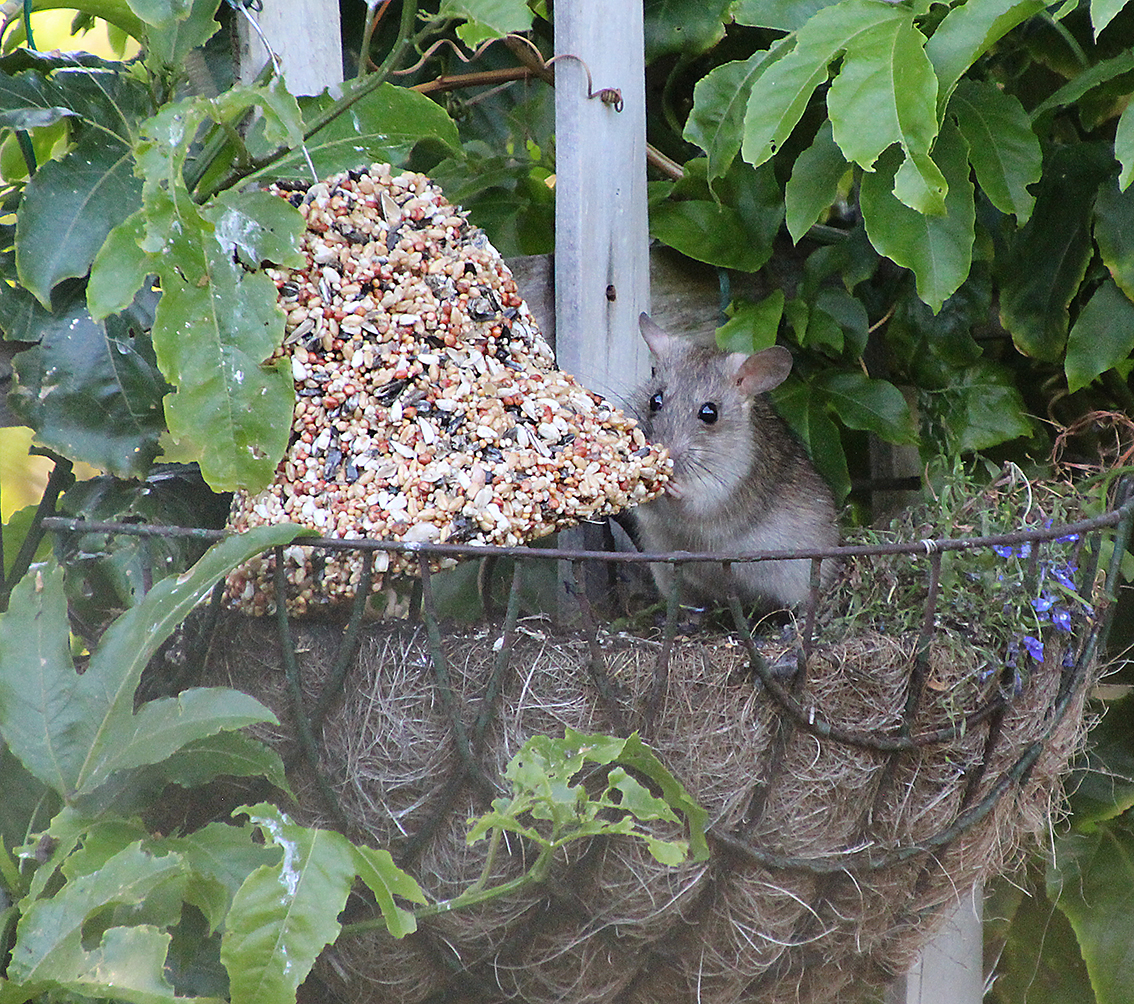
Ratty and seed bell

Today the birds have a rival. A Grey Rat shoots out from underneath a tangled growth of ivy and chases them. It climbs to the top of the trellis and starts to nibble on the seed bell. Over the next couple of hours this rat/bird pantomime continues and I get the distinct impression that the rat is playing a game as it frequently avoids the food only to hide then rush out again.

My observation are at an end as dinner time approaches.

I will write again tomorrow.

Enjoy your garden and take care in these difficult times.

Cheers

Baz

All of these images were shot on a Canon EOS1300D and Tamron 18-400

Please pass on this blog title and or contact information (URL) to any person or organisation with an interest in taking walks and enjoying wildlife in SA.

Click on this link and see more South Australian stories and pictures in my Weekend Notes articles

https://www.weekendnotes.com/profile/651267/

Spring Garden Moments

3 Nov

Dear Reader:

There is a Mudlark foraging in the garden bed. At first I think it is searching for food. The garden has just been watered which makes it easy for birds to probe the soft soil for grubs. Besides, there may be a few seeds left over from those that I scatter each morning for the doves. I peer through the telephoto lens and realise that the little bird is collecting small twigs and leaves from the mulch around the flowers. It is also adding mud from the soft soil around the sprinkler head. Ahh; realisation dawns. Nest building time.


Magpie Lark with nesting material in beak


Spring has arrived in my Prospect garden and all about there are signs of the changing seasons. Flowers are blooming and insects are hatching. Tiny Lynx Spiders are hunting amongst the blossoms and leaves, and a variety of colourful bugs are crawling across the foliage.

Lynx Spider with prey


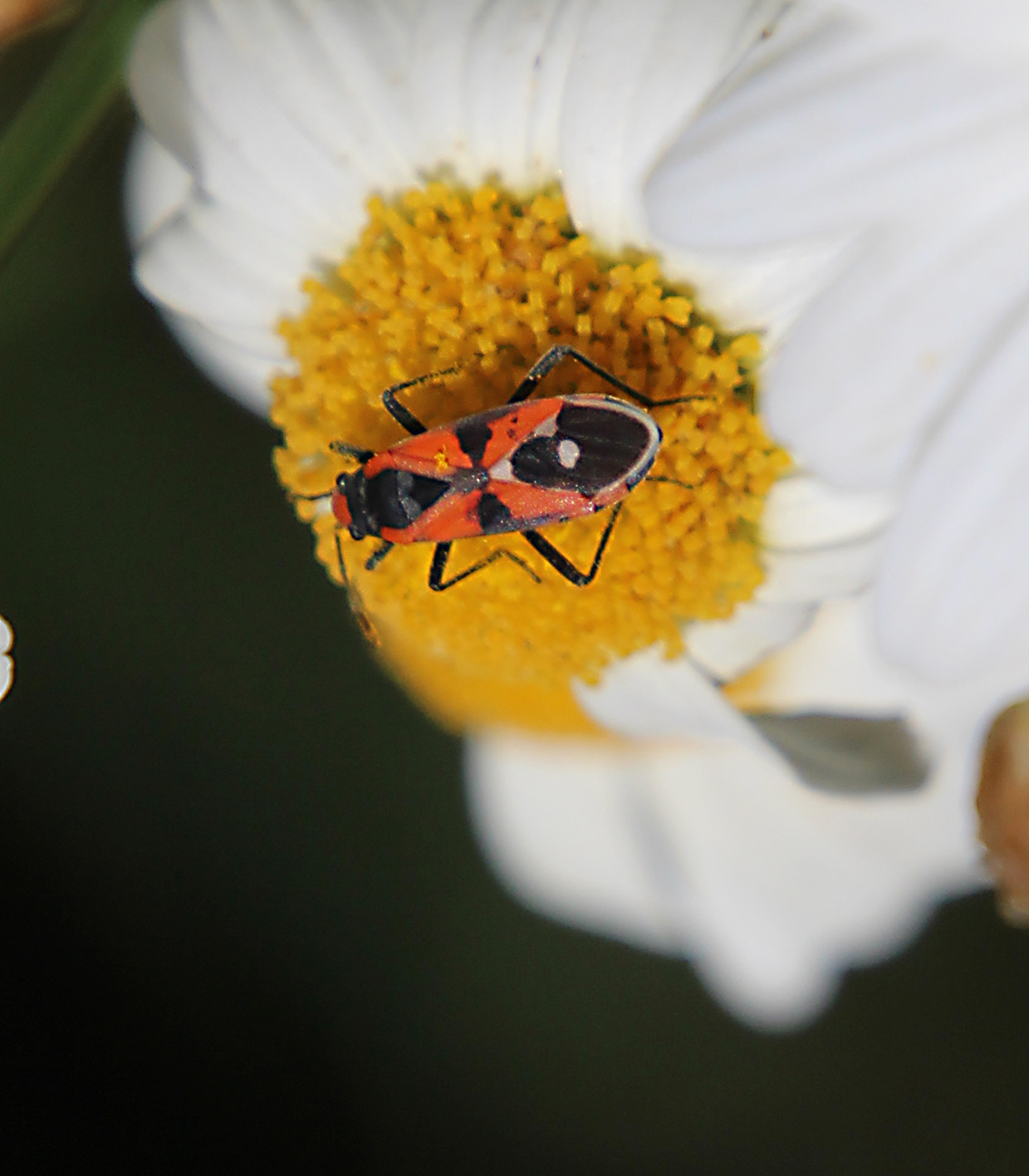
The Mudlarks have flown off and I can walk around the garden without scaring the nervous little birds away. I take stock of the different flowers that are emerging; bright yellow and white daisies, tangerine Abutilons, and pink Rock Roses. They attract a wide range of small creatures and I get close enough to a yellow daisy bush to capture images of a Hoverfly, Shield Bug and Woolly Bear caterpillar all feeding on the same plant.


Jewell Bug
Woolly Bear Caterpillar feeding on emerging blossom


Spring also heralds a time of intense gardening with plants to trim and weeds to pull. And it is while I am cutting back a patch of Lantana that I disturb a lovely, slender lizard about 15 cms in length. I take note of its hiding place and get the camera. Luckily the lizard hasn’t moved too far and I manage a couple of nice shots. It is probably a Four-toed Earless Skink.


Skink digging into soil


I sit back at my garden table, rest the camera on my lap and watch the honeyeaters flying between the blossoms and hawking for insects. They appear to be feeding young ones that are roaming around in the undergrowth. There is also a pair of blackbirds hunting for worms and grubs where I have extracted weeds from the lawn. They get a mouthful of the wriggling creatures then fly off; obviously feeding chicks too.


Blackbird with beak full of goodies for chicks


All of these events are occurring in the back garden but I know there are different interactions in the front yard. Armed with a camera and cup of tea I sit on the front porch and wait for something to happen….I do not have to ‘sit and sip’ for long. A pair of Rainbow Lorikeets fly into a nesting hole in one of the White Cedars that line my street. A nice way to end a spring garden experience.


Rainbow Lorikeet perching
Rainbow Lorikeet entering nesting hole

Check out what is happening in your garden and share some observations in the comments section of my blog.   

Cheers

Baz

For this [project I used a Canon Eos camera and a Tamron 16-400 lens which helped me work in lower light conditions and for close up macro images….very versatile set up.

Please pass on my blog title and or contact information (URL) to any person or organisation with an interest in taking walks and enjoying wildlife in SA.

Click on this link and see more South Australian stories and pictures in my Weekend Notes articles

https://www.weekendnotes.com/profile/651267/

Kangaroo

7 Oct

Kangaroo 

Dear Reader:

This post differs from my usual offerings which tell stories with images about a specific area in South Australia and the wildlife I encountered. This time I am focussing on one group of animals and providing some information about each image and what it tells us about our most iconic group of animals….the Kangaroos.

A mob of Western Grey Kangaroos in Belair National Park


Red Kangaroo joey being fed on special formula at Adelaide Zoo

The name kangaroo comes from the *Guugu Yimithirr word for Grey Kangaroo and was first reported by Cook in 1770. Kangaroos are confined to Australasia. There are six different species of kangaroo; Antilopine Kangaroo, Black Wallaroo, Eastern Grey Kangaroo, Western Grey Kangaroo, Red Kangaroo and the Common Wallaroo or Euro. The latter three are abundant in South Australia.

Young Grey Kangaroo males boxing

Adult male Red Kangaroo portrait……Cleland Wildlife Park


Red Kangaroos are the largest of all the ‘Macropods’; a term that refers to all kangaroos and wallabies and means big footed. A large male can stands taller than a man and weigh up to 85 Kg. Females are smaller, blue, grey in colour and do not have such distinct facial markings. The above image was taken at the Cleland Conservation Park which specialises in indigenous wildlife.

Adult female Red Kangaroo and joey at heel in flight


Western Grey Kangaroos moving off slowly

One of the most interesting features of kangaroos is their bounding or hopping gait. As a kangaroo hops the tendons in its legs compress and elongate like springs storing and releasing energy more efficiently than the muscle movements that most mammals use. These remarkable marsupials also use their tails to balance at speed or as a third limb to help them move slowly.

Adult female Western Grey Kangaroo with joey in pouch


Reproduction in kangaroos is also remarkable. Like all marsupials, the young, called joeys, are born in an extremely immature state. They move from the birth canal to suckle in the pouch where they develop in the same way other mammals would develop inside their mother. Female kangaroos can be pregnant, have a tiny joey suckling while another one is ‘at heel’ clambering into the pouch to feed when necessary.

Feeding an adult male Red Kangaroo at Cleland Wildlife Park


 In the wild, kangaroos are wary animals. Their ears are multi-directional and they have a good sense of smell and sight. In addition, their speed, up to 60 kph, and jumping ability allows them to successfully evade most threats. However, in captivity they are relatively docile creatures which makes them ideal animals in wildlife parks. For a photographer this means it is relatively easy to get good portrait shots and photograph some of their more subtle characteristics such as: split grooming claws, facial patterns, dentition and even mating behaviours.

Western Grey Kangaroos in coastal environment


Euro…Flinders Ranges

Kangaroos are found throughout the South Australian landscape. The more robust Euros like the hill country of the Flinders Ranges where their thick fur protects them from falls and extremes in temperature. Red kangaroos prefer the more arid zones and extract moisture from plants and can survive over multiple dry seasons without drinking. Grey Kangaroos are ubiquitous and seem to inhabit the widest range of habitats from coastal heath to dense scrub.

Adult male Red Kangaroo near Whyalla, Eyre Peninsula


Over the millions of years and isolated from the rest of the world by continental drift Australia’s macropods have evolved perfectly to suit our harsh and rather unforgiving environment. Therefore, the next time you catch sight of a ‘roo’ take some time to ponder what a wonderful and unique animal it really is.


Cheers

Baz

 Additional notes

The majority of these images were captured using Canon EOS equipment and lenses.

*Guugu Yimithirr is the language of the indigenous people encountered by Cook while his ship was grounded and being repaired on the banks of the now Endeavour River after running aground on the Barrier Reef

 Please pass on this blog title and or contact information (URL) to any person or organisation with an interest in taking walks and enjoying wildlife in SA.

 See more South Australian stories and pictures in Weekend Notes

https://www.weekendnotes.com/profile/651267/


Thompson Beach Safari

5 Aug

Thompson Beach Safari

 Dear Reader:

I leave the Port Wakefield Road at the Dublin Hotel and head towards the little coastal settlement of Thompson Beach travelling along a well graded unsealed road. Although the International Bird Sanctuary is my final destination, the rural track which passes through wheat-fields, grazing land with remnant scrub and trees on its edges, provides numerous wildlife viewing opportunities. There are parrots, magpies and many smaller bird species in the trees. In the distance, I catch a glimpse of several different kinds of raptors hovering above the plains. I suspect they are Nankeen Kestrels and Black-Shouldered Kites.


Enjoyable contrasting colours and textures on the drive in


I liked the look of magpies against the grey sky

I am exploring the International Bird Sanctuary at Thompson Beach, a small township around a forty-five-minute drive north of Adelaide. Established in the 1980’s and named after a family who farmed the area in the late 1800s, it is a well-known fishing, crabbing and bird watching destination on the Samphire Coast. Samphire is a low growing coastal plant that is often found in close proximity to mangroves and shallow, saltwater wetlands.


Parked on the beach front


On reaching the coast I notice a sign that indicates two different walking and sanctuary zones. I will explore both but start with the Baker Creek area to the north. After parking the 4WD at the end of the trail I walk along the beach front and explore the intertidal zone. There are many different shells including; cockles, predatory snails and even cowries. Diminutive Sanderlings are feeding among the drifts of seaweed and further out to sea I can see both egrets and herons wading in the shallows. Small fish are schooling in the mouth of the creek and I find numerous kangaroo droppings in the scrub adjacent to the beach.


Sanderling feeding


Random collection of shells

The coastal vegetation is almost as interesting as the wildlife. There are some fascinating ground covers close to the beach. I find a late-season Painted Lady butterfly settled amongst an unusual succulent ground cover that I am yet to identify. In a nearby acacia bush, a Singing Honeyeater perches high in the foliage as the bird surveys its territory.


Painted Lady on succulent


Singing Honeyeater

I have spent a good hour enjoying the Bakers Creek part of the sanctuary and it is time to backtrack and walk along the more developed Third Creek Trail. It has more defined trails with numerous interpretive signs explaining the characteristics of both botanical and animal species.


Well interpreted walks


Black Kite

 My first animal encounter on this trail is a beautiful Black Kite walking along the beach foraging in the seaweed. As I approach, the bird takes flight and hovers above the beach for a while then moves across the scrub to hunt in a different environment. For the next half an hour the kite alternates between scrub, beach and sea gliding, hovering and occasionally diving as it hunts for prey.


Wasp species

It has been an interesting walk and although the wildlife has not been prolific it has certainly been unique and capturing images both challenging and rewarding. Before heading back to the city, by way of the local hotel for a counter lunch, I make one last foray into the scrub. I am determined to get at least one picture of an insect or spider to add a little variation to my story. After a few minutes carefully scanning the foliage, I am rewarded, A small wasp is foraging amongst the leaves of a coastal acacia shrub. Seems that lunch is on the mind of all creatures, great or small.

 Cheers

Baz

Additional notes

This is an easy walk and drive which is quite suitable for families and seniors.

On this excursion I used my Nikon Coolpix P900 exclusively as it allowed me to smoothly transition from extreme zoom to macro quickly

 Please pass on this blog title and or contact information (URL) to any person or organisation with an interest in taking walks and enjoying wildlife in SA.

 See more of my South Australian stories and pictures in Weekend Notes

https://www.weekendnotes.com/profile/651267/

Middle Beach Wildlife

2 Jun

Dear Reader:

The road is paved to start with then turns into a well graded, dirt track which leads into a small beachside settlement. There is both pasture, coastal wetland and a roadside corridor of scrub and gum trees along this approach road. These distinct environments provide fertile hunting grounds for raptors and I am lucky enough to spot two species before I get to the mangrove and beach environment I have come to explore. A Brown Falcon perched on an old fencepost and a Black Shouldered Kite precariously balanced on a power line.


Black-shouldered Kite

Brown Falcon

I am exploring Middle Beach, a coastal township set amongst mangrove stands and shallow beaches; about a forty-five-minute drive from the centre of Adelaide. There is a small boat launching ramp, numerous channels that wind through the mangroves and even a public toilet in this unique setting. Middle beach is renowned for crabbing and fishing and is well worth a visit if canoeing, birdwatching or angling are your thing.


Singing Honeyeater

Grebe species

 The mangroves are home to a wide variety of animals including dozens of local and migratory birds, but they are hard to spot and even harder to photograph. However, their varied calls are a familiar soundtrack every time I visit these coastal reaches. Today I am lucky enough to see a Singing Honeyeater and Grebe as I walk up the shallow channel towards the sea.


Samphire and Mangrove

  I spend another hour combing the beach and taking a few landscape shots of the receding tide and reddish growths of Samphire. I use the extreme magnification of the camera to watch Great Egrets, White Faced Herons and Ibises in the distance as they forage in the seagrasses. Unfortunately, they are all just out of range for a good shot, even with the extraordinary telephoto capabilities of my Nikon P900.


Bovine Family Portrait

Around the water tank

On the drive back to the main freeway I decide to concentrate on photographing the rural landscape and I am rewarded by some interesting images of cows and Ibises near an old water tank and a group of cows seemingly posing for a family portrait. A great way to finish my Middle Beach excursion.

Take a drive there and let me know what you think.

Cheers

Baz

 Additional notes

This is an easy walk/drive which is quite suitable for families and seniors with public toilets, parking and other facilities nearby. It is dog friendly.

See more South Australian stories and pictures in Weekend Notes

https://www.weekendnotes.com/profile/651267/

 I have recently spent time in Africa and the link below will allow you to enjoy images and field notes describing some of my encounters with the wonderful wildlife of Botswana and Zambia. I will try to attach a new image and notes each month.

https://wildlifemomentssa.blogspot.com

Robe, a South Eastern Wonder

11 Apr

Dear Reader:

It is early evening and I am walking along the beach looking for traces of animals washed up on the high tide. An old 4WD is slowly making its way towards the far end of the bay; probably some fishers preparing for an evening’s angling. 


Four wheel sunset

I am exploring some of the terrain in the state’s south east around Robe. I have been here on several occasions; as a marine science student examining the difference between marine life in this cooler thermocline and later as a snorkeler catching crayfish. The region is significantly different to Adelaide’s coastal environment. Not only is the water cooler and deeper close to the shore but also the limestone nature of the coast makes for quite different seascapes. 


Sea Sweep love the rough oxygenated water

The charming coastal township of Robe is a lovely destination. The centre of the cray-fishing industry in South Australia; it is built around a sheltered marina. The town is a mixture of heritage buildings converted into small businesses such as cafes, craft shops and accommodation and some later modern residences and shops. There is an excellent caravan and camping area and the town is close to wineries, coastal conservation areas and farmland. All of which make it an ideal tourist destination. 


Sheltered marina

Nearby Nora Creina Bay is a perfect example of the rugged limestone coast which the region is named after. The rocks are sharp and pitted with hardy coastal plants clinging to any area which is sheltered or can trap water. Below the surface of the bay lies a myriad of small caves and crevices that support an abundance of marine life. There are holiday shacks in the area and a sheltered bay where cray boats often anchor.


Limestone coastal environment


Even the drive down to Robe was a wonderful experience as I was able to enjoy the wonders of the Coorong National Park which flanks the highway for around 100 kms. There are numerous trails that wind into the area which is characterised by shallow lagoons, steep sand hills and low scrub. These iconic environments host a wide variety of wildlife and I was lucky enough to see numerous birds of prey and several different reptile species as well as a diverse selection of wading bird species that migrate here to feed during the harsh northern hemisphere winters. 


Brown falcon


Bearded Dragon

The sun has almost disappeared and the beach is empty and to be perfectly honest it is getting just a little chilly. It is definitely time to head back into town and try some of that fresh caught cray washed down with a local wine. 


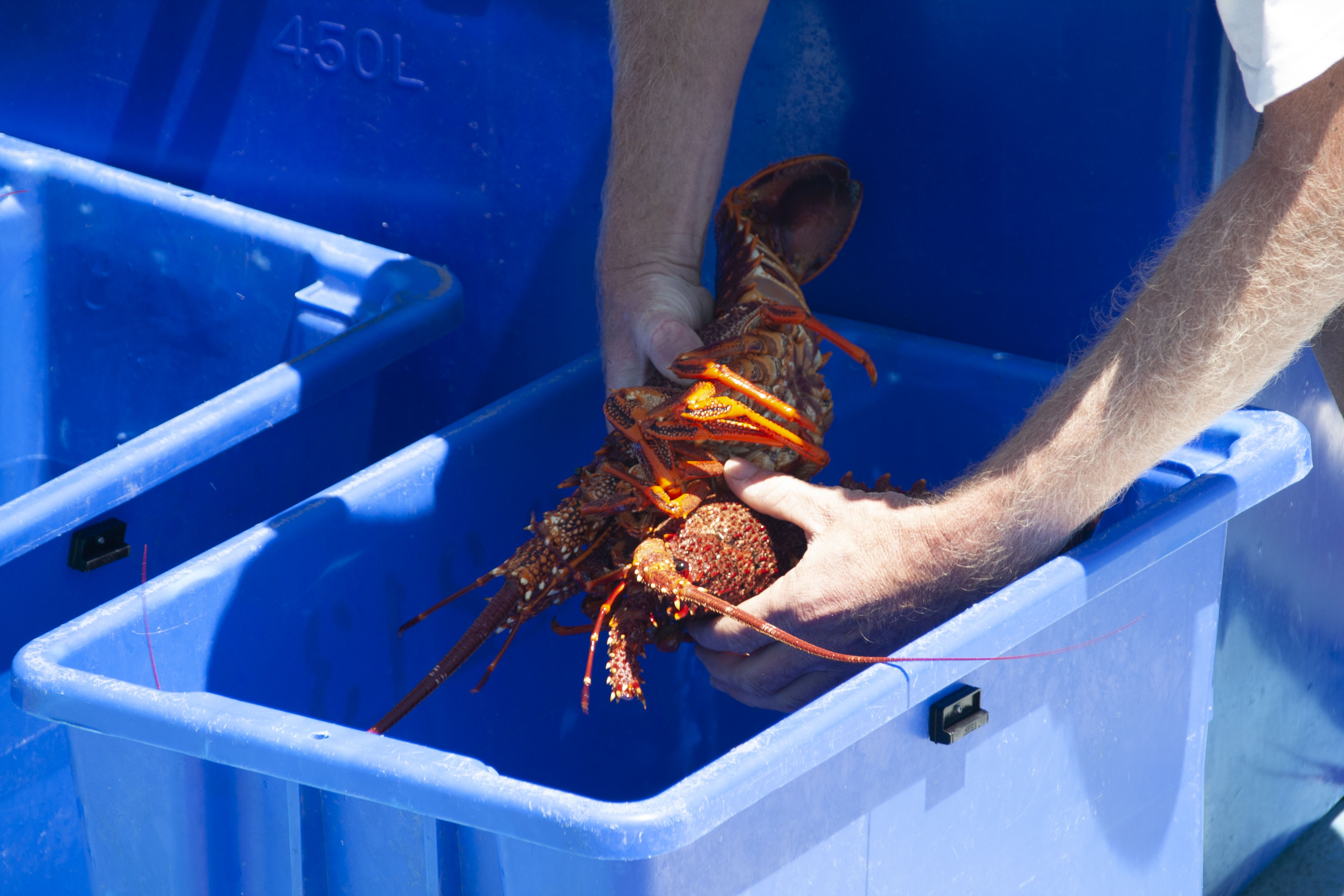
Local Rock Lobster locally called Crayfish

Cheers and stay safe in these unpredictable days

Baz

Equipment

The land images were taken with a Canon Eos system

The underwater shot was taken with a Canon Powershot G7 and U/W housing

See more South Australian stories and pictures in Weekend Notes

https://www.weekendnotes.com/profile/651267/

 I have recently spent time in Africa and the link below will allow you to enjoy images and field notes describing some of my encounters with the wonderful wildlife of Botswana and Zambia. I will try to attach a new image and notes each month.

https://wildlifemomentssa.blogspot.com

Backyard Safari With My New Tamron Lens

5 Mar

Dear Reader:

There is little doubt that the South Australia has some fascinating and inspiring countryside from the rugged coastline of the south east to the wild expanses of outback in the north. However, it is often what is right under our noses that can prove most interesting. With that in mind I decided to try out my new Tamron 18-400 lens in the back yard.


Wattle Bird enjoys the trellis


Backyard


Spotted Doves are quite common in our suburb and each morning I spread out a handfuls of seed to encourage them. It is wonderful to watch their antics especially around mating time with the males bobbing and cooing to get the females’ attention. Over the years they have built their simple twig nests in our gum tree and raised several broods of young.


Spotted Doves


The Tamron lens is reputed to have quite good macro capabilities and with that in mind I spent some time fossicking for insects in the foliage and flowers of Daisy and Correa bushes. There were crickets, ladybugs and hoverflies in some numbers and I settled on an image of a hoverfly that had landed on a blossom to feed.


Hoverfly


Even though cats are generally a menace to wildlife I have a soft spot for them if controlled in urban areas. I have two and the Abyssinian is well past being a menace to anything as he is 16 years old an it is quite amusing to see the proverbial ‘cat amongst the pigeons/doves’.


Too old to worry about


Each day I leave an apple and two orange halves spiked to my trellis which attract a wide variety of birds from noisy Rainbow Lorikeets to delicate New Holland Honeyeaters. It is a pleasant enough task to sit quietly in the garden and photograph them feeding and squabbling over my offerings.


Apples for Lorikeet lunch


Even the humble lawn has its role once I have spread a little seed about for the Doves, Pigeons and occasional Mudlarks. And, after the sprinklers come on in the summer or there is good rain, the local Blackbirds forage for worms.


Just a glimpse


There a very few mammals in our suburb bar cats and dogs. We are too far from the hills for Koalas and possums are rare. But one late afternoon as I was sitting reading the paper (camera as always on the table) I watched a little Fruit Rat bound across the path. Not the most welcome of guests but for me it is always a treat to see something new in the garden.


Cheers

Baz


See more South Australian stories and pictures in Weekend Notes

https://www.weekendnotes.com/profile/651267/

Wiliamstown to Springton a Wildlife Drive

1 Jan

Dear Reader:

The paddock beyond the fence-line is characterised by open grassland still bearing a tinge of green from recent rains. There are gum trees punctuating the open expanse of pasture and a large mob of kangaroos are spread across this classic Australian landscape. Some are resting while others graze; a few have joeys in pouches or at heel.


Grazing roos


I am driving between Williamstown and Springton and despite most of the land being fenced off  each time I stop by the roadside there are many faunal and floral delights to discover. In addition, lunch at the end of the drive in the Springton Pub or morning tea at the start of my drive at the Williamstown Bakery, are wonderful refueling stopovers.


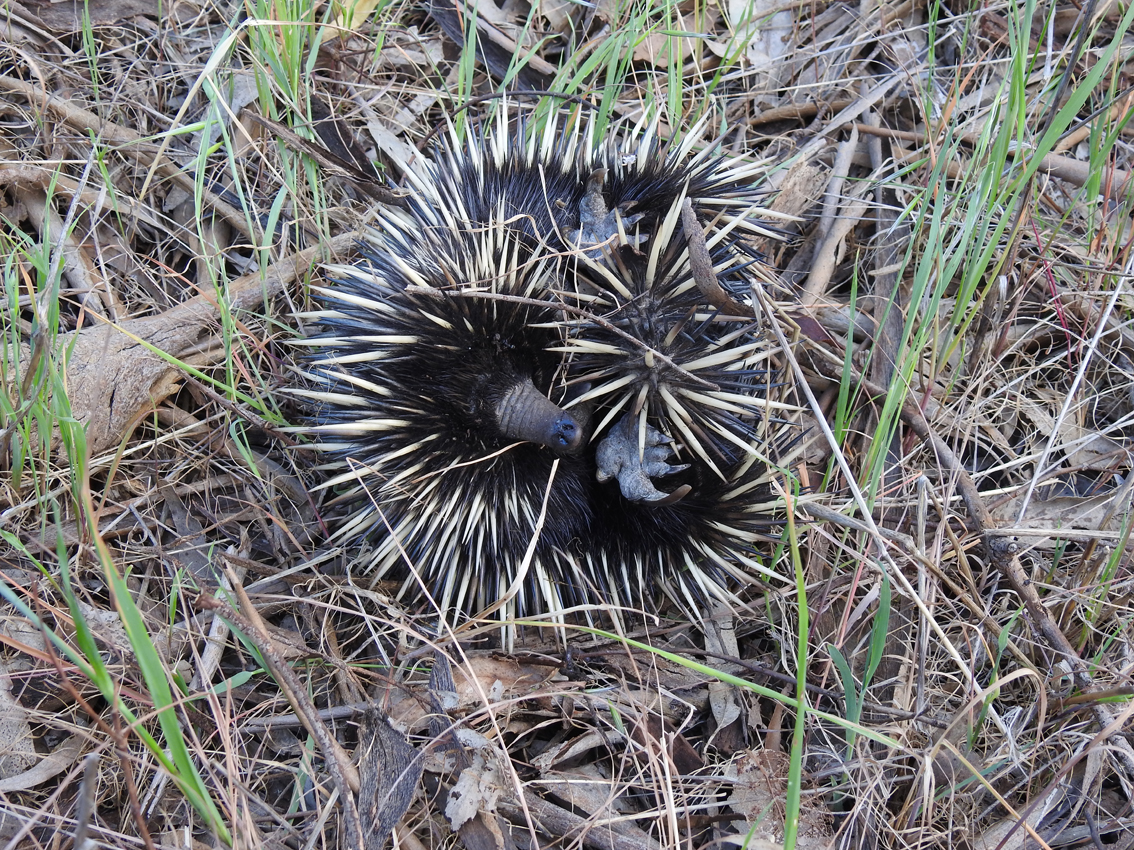
Echidna on the move


Echidna rolled and momentarily turned before righting itself

As I drive on I can see a variety of parrots in the roadside trees; rosellas, lorikeets and galahs are the dominant species. But in one very large eucalypt a group of Yellow Tailed Black Cockatoos have settled. Unfortunately they take to the air as I leave the vehicle. However, as luck would have it, I hear some rustling in the grass alongside the road and an Echidna appears trundling along in its everlasting search for termites. The fascinating animal rolls itself up and burrows down as I kneel to take a shot using the macro capability of my Nikon P900 to zoom in on its features.


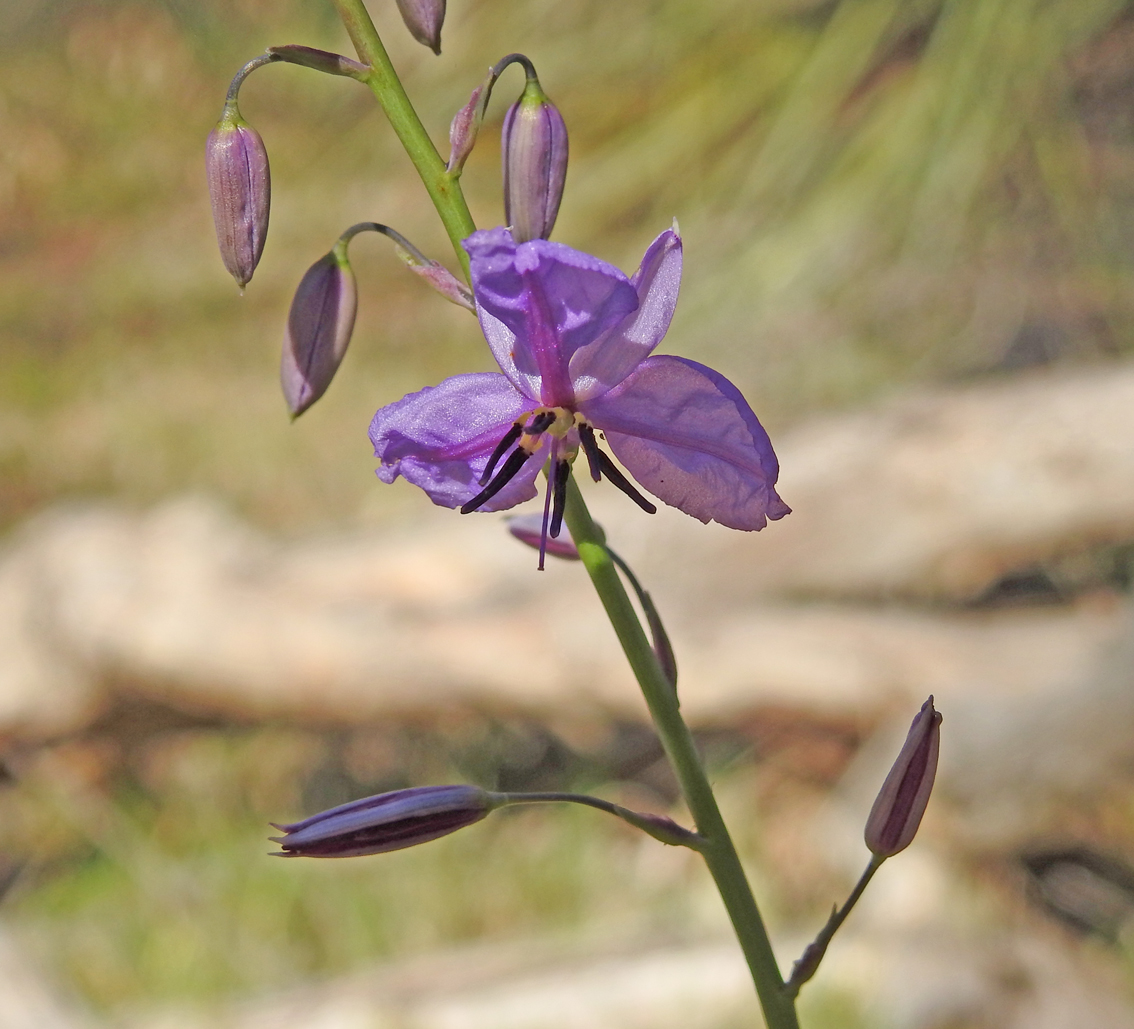
Flax Lily species


After making several more quick stops to photograph birds in the scrub, pasture and trees along the road I find a lay-by with quite a lot of vegetation. Amongst the bushes and grass I notice a small collection of lovely Purple Flax plants, just one of the many flowering natives that can be seen through this area.


Painted Lady


Cuckoo Shrike species feeding


My final stop before the return drive back through Gawler is in a patch of scrub near a farm gate where there is quite a lot of undergrowth. The area is dominated by a single massive gum that appears to attract numerous birds. Scouring the leaf litter and broken branches reveals a lovely Painted Lady Butterfly while a Cuckoo Shrike sits in a barren branch above. A wonderful way to finish my little expedition.

Cheers 

Baz

Additional notes

This is an easy drive which is quite suitable for families and seniors with facilities at both towns.  

 See more South Australian stories and pictures in Weekend Notes

https://www.weekendnotes.com/profile/651267/

By the Barrage

17 Dec

By the Barrage

Dear Reader:

A stately Australian Pelican glides across the water between the barrage and the reed beds.  This stretch of water is home to a wide variety water birds, fish and insects and even the occasional water rat.


Barrage and Pelican


Goolwa’s barrages are an intricate set of barriers between the freshwater expanses of Lake Alexandrina and the ocean. They are used to control the saline ocean water that once extended far up river under certain conditions. Locks in the barrage allows boats to pass through them giving fishers and other ‘boaties’ access to the Coorong; a long shallow waterway that runs parallel to the open ocean.


View from the track

Returning after collecting cockles

A paved road accesses the area with numerous interpretive signs explaining the history and purpose of this barrage which about five minutes from the Goolwa wharves taking Admiral Terrace which leads into Riverside Drive and then Barrage Road. Where vehicle access stops there is a small car park and a sign-posted track that leads over the sand-hills to Goolwa Beach; well known for its surf fishing and proliferation of cockles that are gathered for both food and bait.  


Pied Oystercatchers


I take the sand hill track over to the beach. There are several species of birds on the beach including; Plovers, Silver Gulls and the occasional Pacific Gulls and Common Terns patrolling the shallow waters looking for food. But it is a pair of Pied Oystercatchers that catch my eye as they delicately balance on one in the wet sand near the waterline.


Singing Honeyeater

Dune beetle


On my walk back across the dunes I focus on the numerous species of bushes, grasses and spreading ground covers that hold the dune ecosystem together. The wildlife is sparse in these harsh conditions but I do manage to find a large ‘weevil-like’ beetle foraging in some grasses and there are quite a few Singing Honeyeaters calling from the tops of bushes. There are also numerous tracks and droppings from kangaroos, rabbits and reptiles. I suspect that there is more action in the nocturnal hours.


Little Raven

Trudging through the dunes has been quite tiring; it is approaching lunch time and the wonderful bakeries of Goolwa beckon; or perhaps a pub lunch at the hotel.  As I climb into the car and head back along the lake one last animal  draws my attention. A raven is sitting on some weathered branches fluffing up its feathers and the light seems just right. Normally the all black birds are hard to photograph and the colours and reflections off their feathers seem incorrect. Down with the window, engine off to reduce vibration, rest the camera on the door frame and gently press the button. Voila… and now for lunch!!

 Cheers

Baz

 Additional notes

This is an easy drive which is quite suitable for families and seniors with parking and other facilities nearby. The walk across the sand hill track is quite strenuous though relatively short


See more South Australian stories and pictures in Weekend Notes

https://www.weekendnotes.com/profile/651267/

Barossa’s Whispering Wall

1 Nov

. Barossa’s Whispering Wall

 Dear Reader:

At the end of the long curved concrete wall there is a little patch of broken reeds and other water plants that form a kind of mat on the surface; an ideal place for a variety of aquatic animals. Public access to this area is prohibited so I have to scan the mish-mash of vegetation with my long lens. To my surprise, there are both male and female Blue Wrens feeding on the numerous insects living around the plant material.


Male Blue Wren


Female Blue Wren


I am at the Whispering Wall which is the main dam containing the Barossa Valley reservoir. Built in 1903 it was considered quite an engineering feat at the time. The wall of the dam is named for its acoustic properties and you can stand at one end and be heard at the other even when speaking quietly. Most of the property around the dam is fenced-off but by simply waking around the grassed areas and across the dam it is possible to encounter quite a wide range of wildlife.


Curve of the dam wall


“I’m whispering.”


“Yep, I heard you.”


In another patch of reeds I catch sight of freshwater turtle peering through the broken stems and there are numerous small fish or tadpoles in the more open patches of water. Walking back across the dam I see a small group of Eurasian Coots feeding. And in the distance a lone Greater Crested Grebe is making its way across the reservoir; a bird that I have never seen in the wild. I take a long shot with the camera but the result is hardly award-winning.


Freshwater turtle probably a Macquarie Sort Neck

Eurasian Coot

Long distance shot of a Great Crested Grebe


Back at the car park I take a stroll around the grassy lawns which are dominated by massive red gums. Both Galahs and Sulphur Crested Cockatoos are perched high in the branches while smaller Lorikeet species are feeding on blossoms and gum nuts. Along the edge of this area several cormorants are resting in the trees; silhouetted by the dazzling blue of the sky.


My walk has been short but rewarding and a stop at the Williamstown Bakery on the way back will almost certainly make this a memorable day out.  

 Cheers

Baz

Additional notes

This is an easy walk and drive which is quite suitable for families and seniors with public toilets, picnic area and parking on site. It is dog friendly

See more South Australian stories on Weekend Notes

https://www.weekendnotes.com/profile/651267/

 I have recently spent time in Africa and the link below will allow you to enjoy images and text describing some of my encounters with the wonderful wildlife of Botswana and Zambia. I will attach a new image and notes to accompany each post.

https://wildlifemomentssa.blogspot.com