Tag Archives: South Australian tourism

Cox Scrub Conservation Park’s Wildlife…..Part 2 From Ridge and Bull Creek Roads

7 Feb


Track near Ridge Road entrance to Cox Scrub

Dear Reader:

After my initial foray into Cox Scrub from Coles crossing, today, I am entering the park from Ridge and Bull Creek roads. The Ridge Road entrance leads me to a long straight track which separates nearby farmland from the park. The scrub here is thick and quite difficult to penetrate. I can hear the chirping of wrens and other small birds but they are hard to spot and constantly moving.


Classic Cox Scrub vegetation

I employ a sit and wait strategy. The trick is to find a comfortable place with a good view of the surrounding area and not too many bushes and trees in line of sight. A tough ask as the sun must be in the right direction; silhouettes and side lit animals do not make great pictures.


Heliotrope Moth on melaleuca blossom

Having chosen a spot alongside a flowering Melaleuca tree I make sure my Nikon P900 is on a moderate telephoto setting. I might only get a split   second to make a shot with no time to zoom in closer. I am trying for bird images however I also stay tuned to the close undergrowth and bushes listening for a tell-tale rustle of leaves or the hum of an insect. For the first ten minutes the only animals I encounter are invertebrates; a moth on the Melaleuca flowers and a dragonfly resting on the sandy soil. Eventually a scubwren lands in a nearby tree and a pair of Crested pigeons start foraging on in the understory. Sighting that make my wait worthwhile.


Scrubwren species

There are clouds moving in from the south west and I decide to drive to my next destination before I lose the light or it begins to rain. Several walking trails start at the Bull Creek entrance. The tracks are wide and easy to walk but the scrub is still quite dense with less large trees than the last track. A kilometre along the trail I find a clearing where there seems to be quite a lot of bird activity. It’s time for stop, sit and wait, again.


Golden Whistler

This time I am rewarded within a few minutes. A beautiful Golden Whistler perches in stubby eucalypt about twenty metres away. Its characteristic call (loud sharp whistles ending in a whip-crack note) echoes through the bush. The bird is quite active and I set the camera to shutter priority firing at 1/2000 th of a second. The clearing seems to attract a number of different bird species and I watch a pair of Grey Fantails hawking for insects before returning to a perch on a fallen branch. There are also kangaroo droppings and several termite nests have been ravaged by Echidnas.


Grey Fantail

Though I would like to stay for a few more minutes, the first drops of rain start to spatter on my jacket. I tuck my camera into its waterproof case and head back to the car. It is time for lunch, and the Mount Compass Bakery beckons. A chicken and vegetable pie with a custard tart to follow. A fitting end to my morning’s work.

Cheers

Baz

Additional notes

This is an easy walk/drive which is quite suitable for families and seniors.

Please pass on this blog title and or contact information (URL) to any person or organisation with an interest in taking walks and enjoying wildlife in SA.

Click on this link and see more South Australian stories and pictures in my Weekend Notes articles

https://www.weekendnotes.com/profile/651267/

Cox Scrub Conservation Park’s Wildlife…..Part 1. Entering from Coles Crossing

23 Jan

Old dairy building

Dear Reader:

It is a glorious day for a drive and some wildlife photography. The bitumen road winds past lush farmland and every so often I come across an old building that reminds me of the rich heritage this region of South Australia boasts. I keep a watchful eye out for kangaroos which are often seen grazing near stock and have been known to hop across the road even in the daylight hours. Rosellas and cockatoos fly between the eucalyptus trees fringing the road. I stop to capture an unusual image of two Galahs feeding on an embankment behind a barbed wire fence.


Galahs on embankment

I am exploring the Cox Scrub Conservation Park which is around an hour’s drive south of Adelaide’s CBD near Mt Compass and Ashbourne. It is one of the largest parks on the Fleurieu Peninsula. The park has numerous walking trails cutting through stands of Stringy Barks and a dense understory of Banksias and many other native shrubs. There are several entrances to the park and today I am starting at Cole’s Crossing where the Finniss River cuts through the north western perimeter of the conservation park.


Coles Crossing

He Coles Crossing track ends at a ford which is too deep to cross in the SUV but a great place to stop and eat lunch. There are small fish in the river and quite a lot of macroinvertebrates (tiny aquatic invertebrates like water boatmen and pond skaters) in the shallow water by the reeds. Several butterfly species are settling amongst exposed sand and pebbles to drink and I can see a Kookaburra perched on a dead tree branch about a hundred metres downstream.


Painted Lady

I follow a fence-line which skirts the river. There are numerous small birds twittering in the reeds and high in the canopy of the massive River Gums which tower over the water. I use the extreme telephoto on my Nikon P900 as a bird spotting tool then manage to get a half decent shot of a small honeyeater-like bird which I later identify as a Brown-headed Honeyeater (note to readers…please correct me if I am wrong with this ID).


Brown-headed Honeyeater

It has been interesting just pottering around the crossing but I want to enter the park from a different direction and see if there is any variation in the terrain and wildlife. However, that will be my next blog ‘Cox Scrub CP from Ridge and Bull Creek Roads’

Cheers

Baz

Additional notes

This is an easy walk and drive which is quite suitable for families.

Please pass on this blog title and or contact information (URL) to any person or organisation with an interest in taking walks and enjoying wildlife in SA.

Click on this link and see more South Australian stories and pictures in my Weekend Notes articles

https://www.weekendnotes.com/profile/651267/

Murray Bridge’s Rocky Gully Wetlands (Part 1)

4 Jan

Eastern Water Skink

Dear Reader:

We are standing on a culvert above a long, narrow canal which is used to channel water from one part of the swampy wetland to another. Despite the coolness of the day an Eastern Water Skink is lying on the concrete edge soaking up what little warmth it harbours.

David taking a panoramic shot

Today, David and I are exploring the Rocky River Wetlands; a series of shallow pools fed by urban run-off and the nearby Preamimma Creek. This low-lying area has been developed by local volunteers into a significant wetland supporting a wide diversity of native flora and fauna. Sanders Walk is a 1.8 Km loop around the wetland. Named in honour of the man who instigated this reclamation project and turned a salty wasteland into a wonderful, local biosphere. It is both wheelchair accessible and dog friendly.

Pelican Colony

Pelican flyby with silos

From the culvert we follow a levy which provides views across the wetland with both the town and the Murray River in the distance. A colony of Australian Pelicans occupies a small island while a lone bird flies past the massive wheat silos. They provide me with a couple of nice photo ops featuring wildlife in an urban setting.

Western Grey Kangaroos feeding on floodplain

The clouds are starting to roll in and there is a sniff of rain in the air. We decide it’s time to head back to the car. However, one last scene begs my attention. In the distance, on the low scrubby plains closer to the river, there is a small mob of Western Grey Kangaroos grazing. They are just in range of my P900 on full extension.

A pair of Pacific Black Ducks hunker down as the rain comes in

Then the rain belt hits us. Waterproofs zipped up and cameras protected we beat a hasty retreat. I will return in a few days when the sun is out as there is so much more to see. Now its Murray Bridge for lunch or that lovely little bakery in Hahndorf? Spoilt for choice!

Cheers

Baz

Please pass on this blog title and or contact information (URL) to any person or organisation with an interest in taking walks and enjoying wildlife in SA.

Click on this link and see more South Australian stories and pictures in my Weekend Notes articles

https://www.weekendnotes.com/profile/651267/

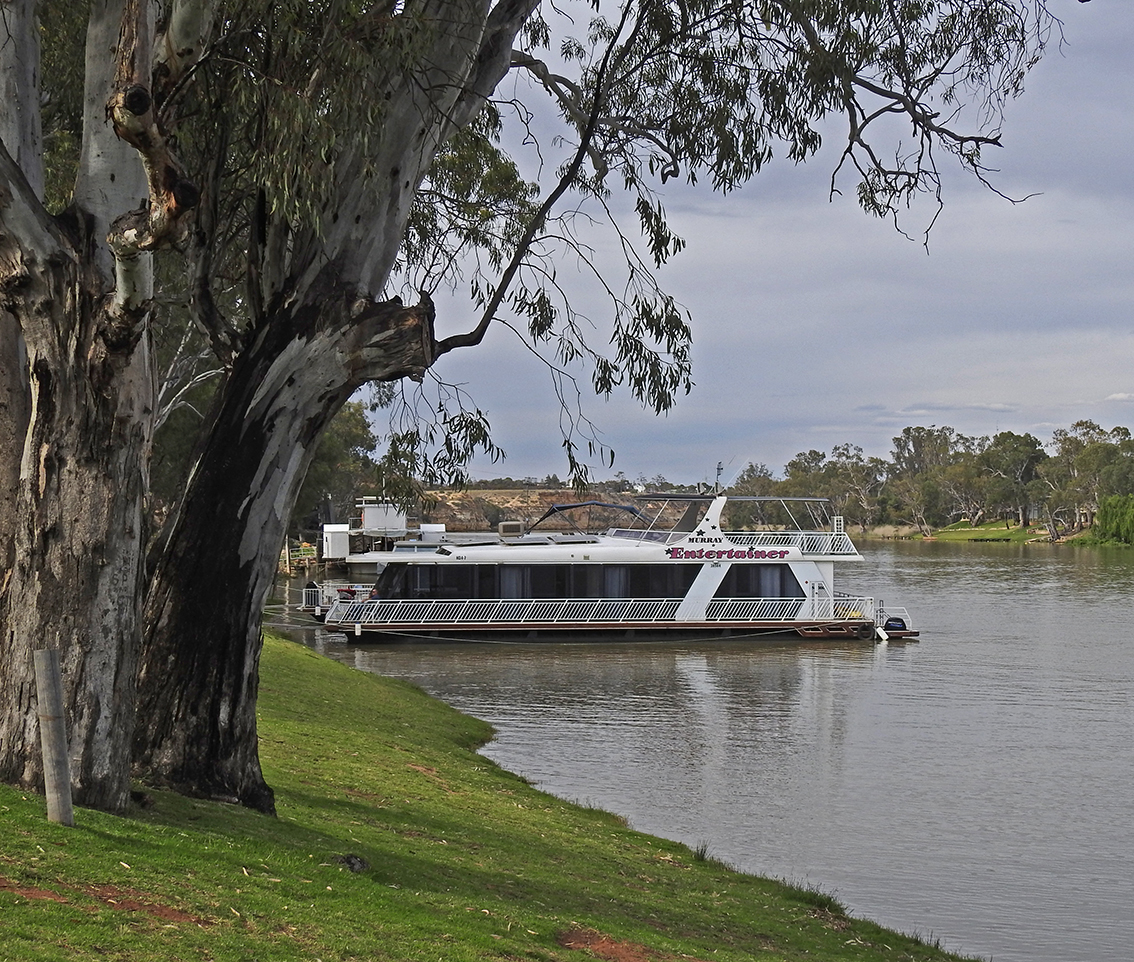
Morgan Houseboat Cruise…continued…….Day 5 Taylor Flat

14 Dec

Tight against the bank

Morgan Houseboat Cruise…continued…….

Dear Reader

,,,,,,,,Continued from last post…………… Having photographed a frolicking group of goats I head down to the main deck for lunch.


Classic dry-land scrub

We have pulled up alongside a fallen tree where there is a short stretch of sandy beach. The bank downstream rises quite sharply and there is dryland scrub all around us. This is difficult country for spotting wildlife as food is scarce and the animals extremely wary.


Watchful Sulphur Crests high in the tress…tricky low light situation and the Nikon P900 did well

I take my leave of the group telling them that I’ll be back in a couple of hours. Recently I have taken to wearing an Apple Watch that automatically signals emergency services and selected people if I should fall or need help. A great device for anyone who spends a lot of time alone, or in my case, in remote areas working on my own in the outdoors. Though, to be honest,  I am not totally alone as a pair of Sulphur Crested Cockatoos watch me from the safety of a tall red gum on the river’s edge.


Vines amongst the scrub

Machinery from another era

Walking directly east from the boat I notice a well-worn, dirt track that cuts inland then breaks to the right along the river. Several hundred metres along the trail the land is fenced off protecting rows of grapevines and not far away I find the remains of some heavy machinery lying rusted above the riverbank. Perhaps they are the remnants of a pumping station or a hoist for loading cargo on the old paddle steamers which plied these waters in the early part of the last century.


Antlion trap

Predator (Antlion) and prey

All around me there are cone shaped depressions in the sandy soil. They are the traps dug by Antlions. Unwary ants or other small, non-flying invertebrates fall down the sides and are unable to climb back out as the soil particles are rounded and slip back down to the centre where the ferocious little predator waits partially buried in the trap itself.


Tangle web

Web builder

There are also numerous spider webs in the branches of the low shrubs. They are quite extensive and designed to snare anything that falls into them. It takes me some time to find one of the eight-legged constructors as they are very small compared to their webs. Perhaps it is a colonial effort or a web that is built on each day…..a little more research is needed on this one!

My walk is over and its time to return to the boat for a meal and some good company. Tomorrow is our last day and I’m sure this beautiful river will yield a few more natural surprises as we motor on back to Morgan.  

Cheers

Baz

Please pass on this blog title and or contact information (URL) to any person or organisation with an interest in taking walks and enjoying wildlife in SA.

Click on this link and see more South Australian stories and pictures in my Weekend Notes articles

https://www.weekendnotes.com/profile/651267/

Houseboat Cruise from Morgan SA…Day 5 Taylor Flat

5 Dec

Dear Reader:

It is early morning. The rest of the boat crew are asleep and I’m catching the first of the sun’s rays. There are fish breaking the water and a few swallows hawking for insects. We are still moored near Caudo Winery and I am reviewing some shots of last night’s sunset. A wonderful end to any day on the river. Today we will be making a short jump along the river to Taylor Flat, tie up for a leisurely lunch before embarking on the final leg back to Morgan.


I climb the stairs to the top deck which houses the spa, barbecue and another set of boat controls. Comfortably ensconced on a chair, my feet up and camera at the ready I scan the passing riverbank for wildlife. During our houseboat journey I have spent many hours doing this and it has become a form of meditation, broken by the occasional exciting moment of discovery.


Today is no exception. A small group of wild goats are running parallel to us along a riverside track. They look like young animals; leaping, butting each other and generally cavorting. A truly unexpected moment. Tricky to catch from a moving boat but I use a pre-set 1/4000 TV option and the result is passable. The shot made and a morning well spent it is time for lunch, a chat with friends then……… to be continued in my next post.

Torrens Island

1 Oct

Torrens Island and its causeway entrance are situated over the Torrens Island Bridge at the end of The Grand Trunkway in Port Adelaide; about a 30 minute drive from Adelaide’s CBD. The island is closed to the public but the small breakwater and causeway are open. Most of the island is a conservation park with the remaining area housing the power stations and some historic sites.

Road across breakwater looking back at hills

The island if flat and covered with mangroves, samphire and saltbush. The causeway has no vegetation. The mangroves that are accessible from the causeway and road are actually situated on Garden Island. The causeway forms a barrier between the Angas inlet on the left and the warm water outlet from the power station on the right as you face the power station.

Black-shouldered Kite perched on light pole

Numerous fish species including bream, mullet, whiting and Mulloway are attracted to the warm water. In turn, predatory birds such as: herons, pelicans, terns, gulls, cormorants and egrets are found in this area. Small mangrove crabs are found under the rocks in the intertidal region. Dolphins are not uncommon and best spotted from the bridge.  A population of common rats live among the rocks feeding on discarded bait but they are rarely seen during daylight hours.

Little Egret hunting near mangroves

The dominant vegetation seen from the causeway is the Grey Mangrove with small amounts of samphire. At low tide there are seagrass meadows visible through the fencing on the mudflats to the left facing the power station.

Mangrove leaves and fruit….note the waxy top and rough, paler underside where salt crystals accumulate.

Prior to European settlement the mangrove and samphire swamp areas were a rich hunting and gathering region for the local Kaurna people. They would have caught crabs and speared or netted fish as well as collecting shellfish.

Torrens Island power station

Torrens Island was named after Robert Torrens senior who was chairman of the SA Colonisation Commission. Between 1870 and 1980 it was a quarantine station for both animals and people entering the state. During World War 1 the island was used as an internment camp for citizens of German and Austrian backgrounds. Since 1963 much of the island and surrounding water have been protected areas and part of different marine reserves. Three power stations are operating on the island: Torrens Island PS since 1963, Quarrantine PS since 2002 and finally Barker Inlet PS since 2009. All are gas powered.

Fishing as the sun goes down

Fishing from the rocky causeway in the warm water outlet is popular. There are fine views of the ships’ graveyard and its wrecks from the bridge. Tours of the old quarantine facilities can be arranged through the maritime museum in Port Adelaide. In short, quite an interesting place to visit and combine with a day at Port Adelaide.

Cheers

Baz

Additional notes

This is an easy destination to visit and is quite suitable for families and seniors.

Please pass on this blog title and or contact information (URL) to any person or organisation with an interest in taking walks and enjoying wildlife in SA.

 Click on this link and see more South Australian stories and pictures in my Weekend Notes articles

https://www.weekendnotes.com/profile/651267/

Houseboat Day 2 Lizards and Falcons

30 Jan

Dear Reader:

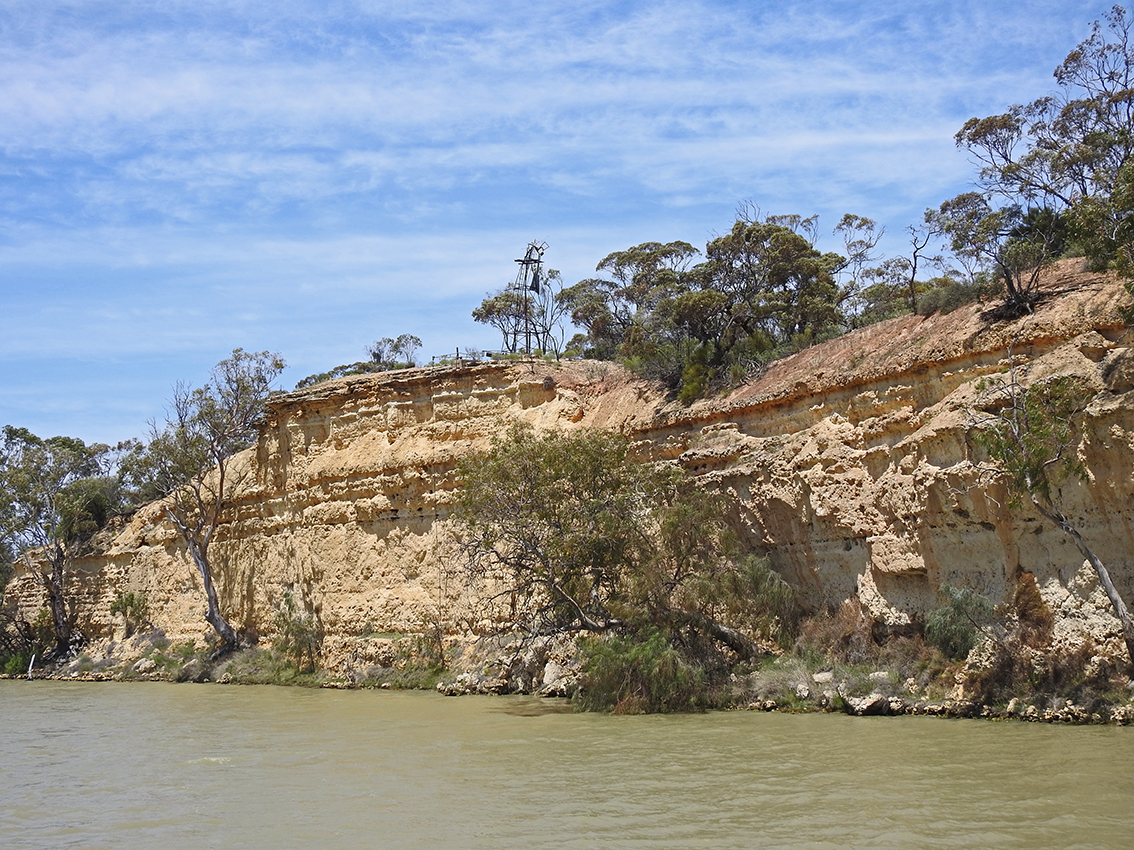
The cliffs rise steeply from the river’s surface. There are definite divisions in the strata indicating various periods in geological time. Tree roots, wind, water and the sun have weathered the rocky surface creating shallow caves, overhangs and depressions providing shelter for a variety of wildlife.


Typical limestone cliff scenery

We are travelling upstream from Morgan in our rented houseboat towards the little township of Cadell. Named after Francis Cadell, an early steamship navigator and explorer, the town sits in the Cadell Valley which is a Citrus and grape growing region. There is accommodation, a general store, second-hand shops, heritage centre and a ferry crossing.


Murray River Ferry at Cadell

The ochre coloured cliffs are home to numerous bird species but photographing them from a moving boat is challenging. I pick out what appears to be a family of raptors huddled in a narrow space near the cliff top and train the powerful lens of my Nikon P900 on the group. It is difficult to get a clear image. Nevertheless, I fire off half a dozen frames to work on later.


Fleeting glimpse of a raptor family on the cliff……shot from a moving boat at about 120 metres

Further down the river I notice some larger birds of prey. One is perched near a nest and the other sits on a eucalyptus branch overhanging the water. *They are either young White Breasted Sea Eagles or a juvenile kite species, possibly Whistling Kites.  


Eagle or Kite…..let me know please

The reeds and branches that line the edge of the river are home to a variety of waterbirds including: Black Ducks, Dusky Moorhens, Purple Swamp Hens, Pied Cormorants and Anhingas often called Snake birds. I focus on an Anhinga resting on a fallen branch.


Anhinga perching….note the webbed feet and spear-like beak

We moor the boat near a wide bend in the river and set up for an evening barbecue. I take a walk along the river bank and find a quiet place to sit and wait for the wildlife to appear; an approach that often pays dividends. I can hear the twittering of wrens and finches the rustling of other small animals in the undergrowth. Several small skinks appear on a log but they are too quick and timid for me to get a clear image. Moments later a Shingleback lizard emerges from leaf litter. Unaware of my presence the lizard comes quite close to me. When I lift the camera to get a shot it turns to face me, opens its mouth wide extending it bright blue tongue in a defensive display.


Shingleback or Sleepy lizard

Leaving the lizard to its meanderings in search of food and with a similar thought in mind I return to the boat for our evening barbecue. Full of steak, sausage and salad I go back through the days images and to my delight and surprise the raptors I photographed turn out to be Peregrine Falcons.


Peregrine Falcon at distance on the cliff face

Two days out and I have encountered quite a lot of wildlife. Who knows what the next day will bring.

Cheers

Baz

*If anyone can identify these birds please contact me and I will change the text accordingly

Additional notes

This is an easy boat trip which is quite suitable for families and seniors and only a current driving licence is required to operate a houseboat.

Please pass on this blog title and or contact information (URL) to any person or organisation with an interest in taking walks and enjoying wildlife in SA.

Click on this link and see more South Australian stories and pictures in my Weekend Notes articles

https://www.weekendnotes.com/profile/651267/

Houseboat Adventures Morgan Day 1

2 Jan

Dear Reader:

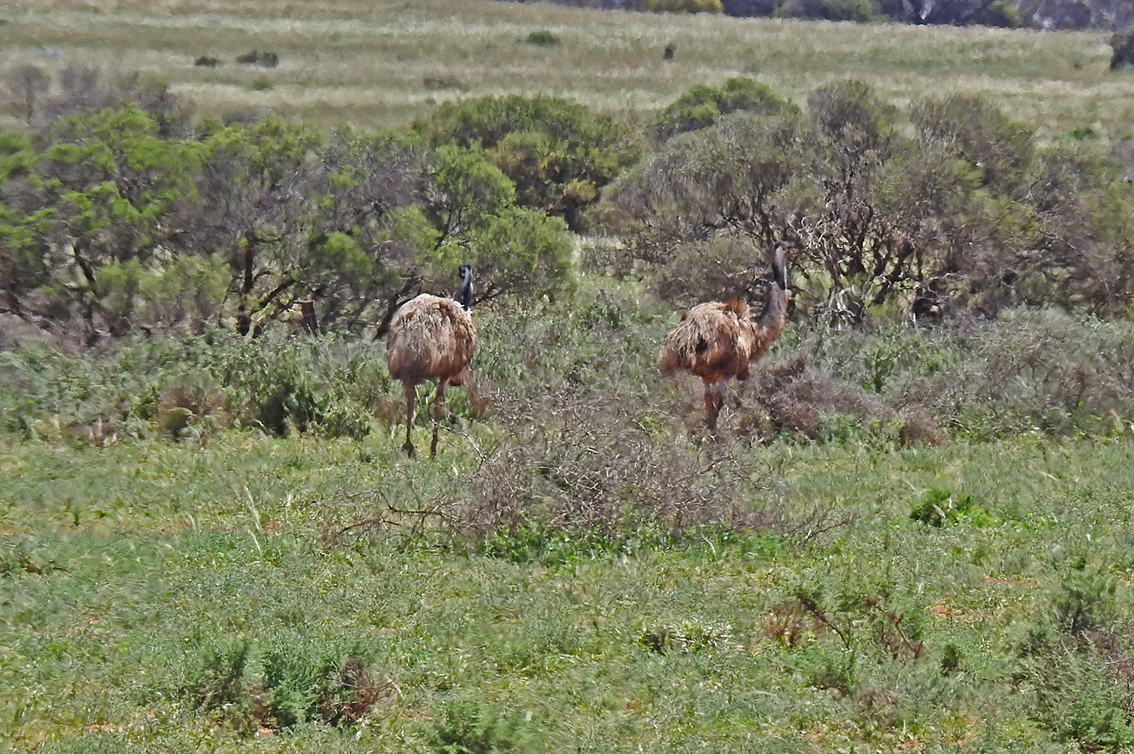
The road is ‘dead set’ straight for kilometre after kilometre. Expanses of saltbush and mallee scrub border the highway. While driving I scan the bush for wildlife. Crows perch on branches, an occasional parrot flies in front of the vehicle and there is the inevitable road-kill. I ease my foot onto the brake and pull over. Hundreds of meters across the saltbush, on the woodland fringe, I can see a pair of emus. My Nikon P900 is an excellent tool for locating an image at this range but even the 83X zoom is challenged when it comes to getting a good clear shot.


Emus at distance

I am driving to Morgan, an historic town on the River Murray about 160 kms from Adelaide. Morgan was a busy river port during the 1800s with hundreds of paddle steamers delivering goods prior to the advent of railways and more recently motor vehicle transport. However, this colourful history has given rise to Morgan’s current attractions; heritage docks, museum, renovated paddle steamer, historic trails and two wonderful, old pubs.


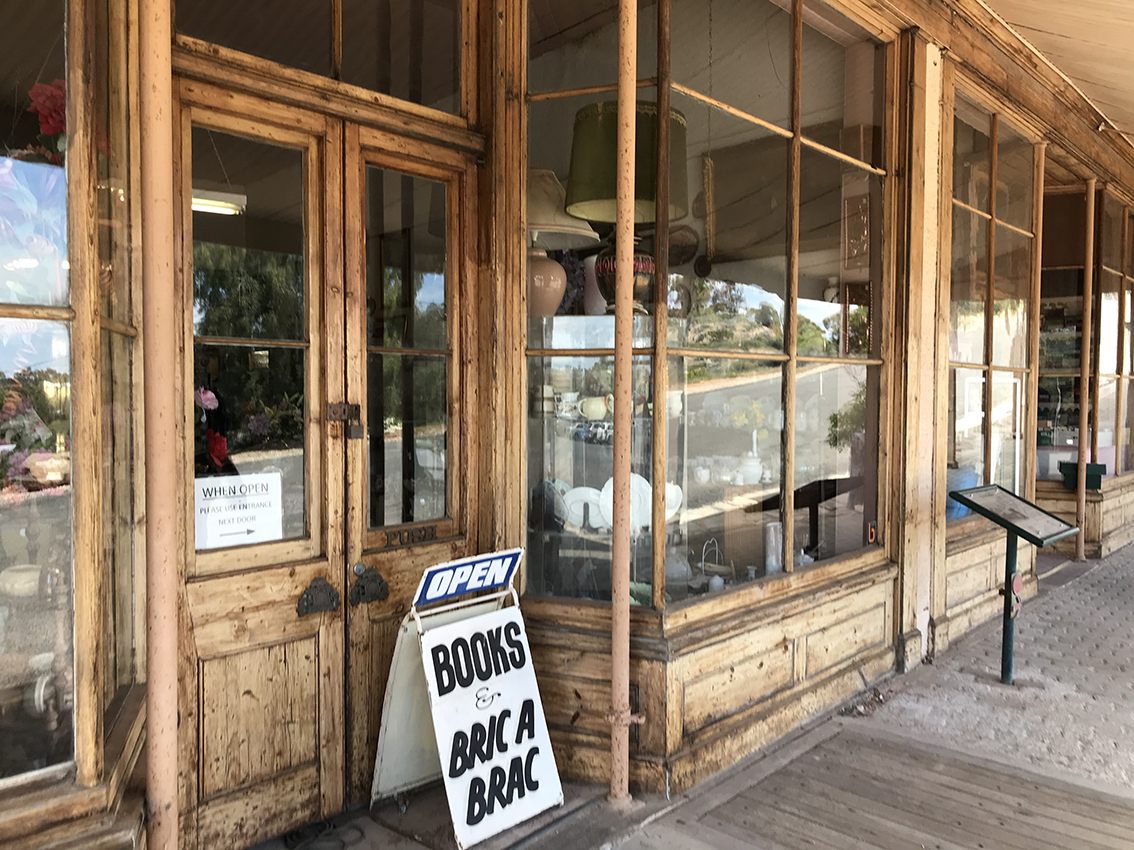
Books and bric a brac

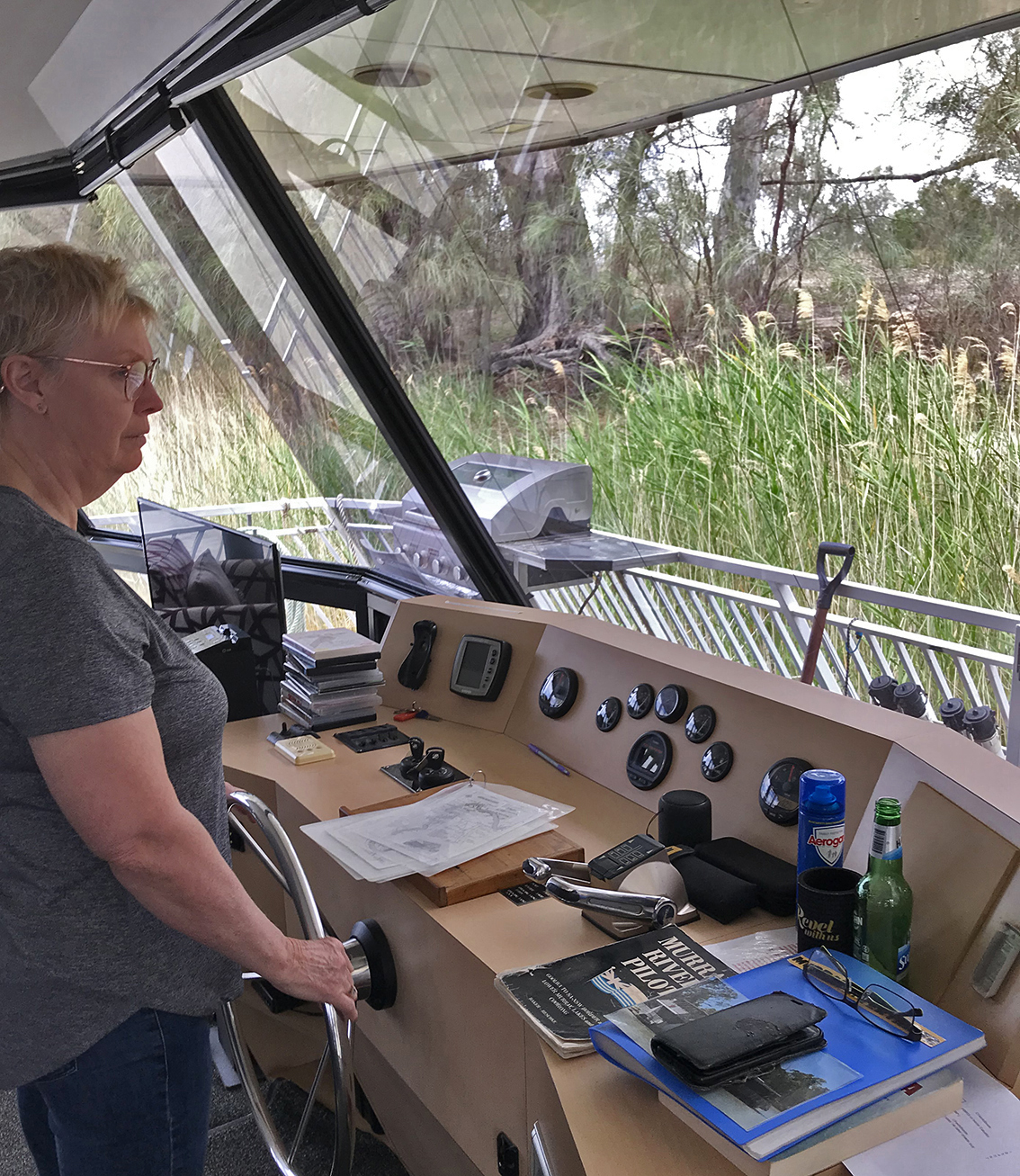
Sandra at the helm


I am meeting friends for a week-long houseboat trip exploring this stretch of the river. Each afternoon we will pull into the bank at a different location, stay there overnight then head off again in the morning. For my companions it is an ideal way to spend some down time away from their busy lives. For me, it means long walks to explore and photograph each location, editing images and writing up notes as well as capturing images from the boat as it cruises along.


Whale vertebrate fossils


Our boat docked

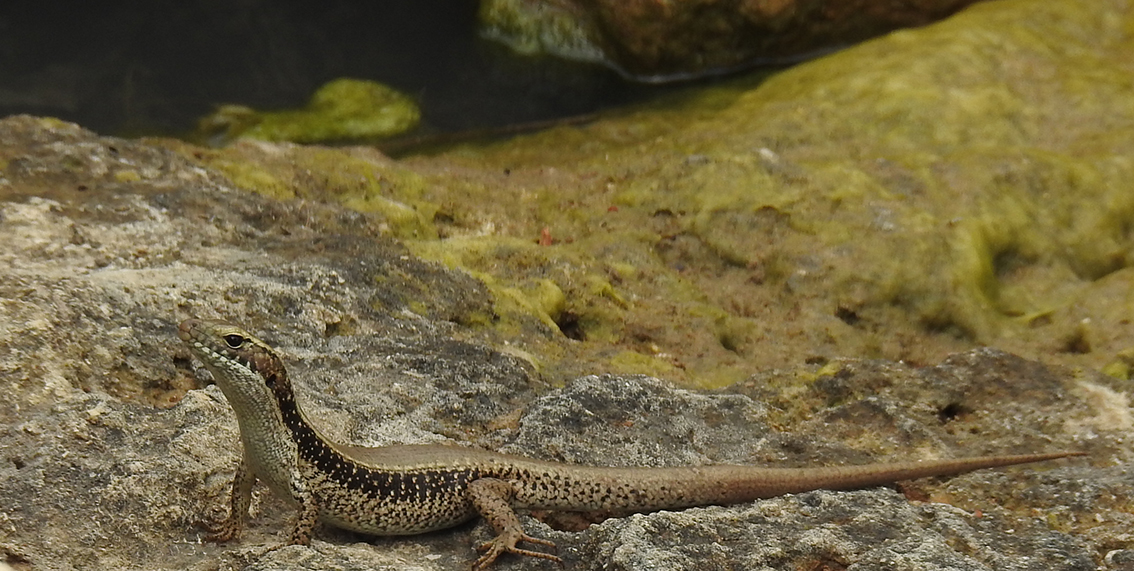
Before we leave Morgan I take a stroll along the river bank towards the old wharf. It seems like a good place to look for animals that thrive close to human habitation. I can see swallows hawking across the water and picking off insects in the air but they rarely settle and photographing them in flight takes a better photographer than me. However, I do manage to spot a beautiful Eastern Water Skink catching the late afternoon sun.


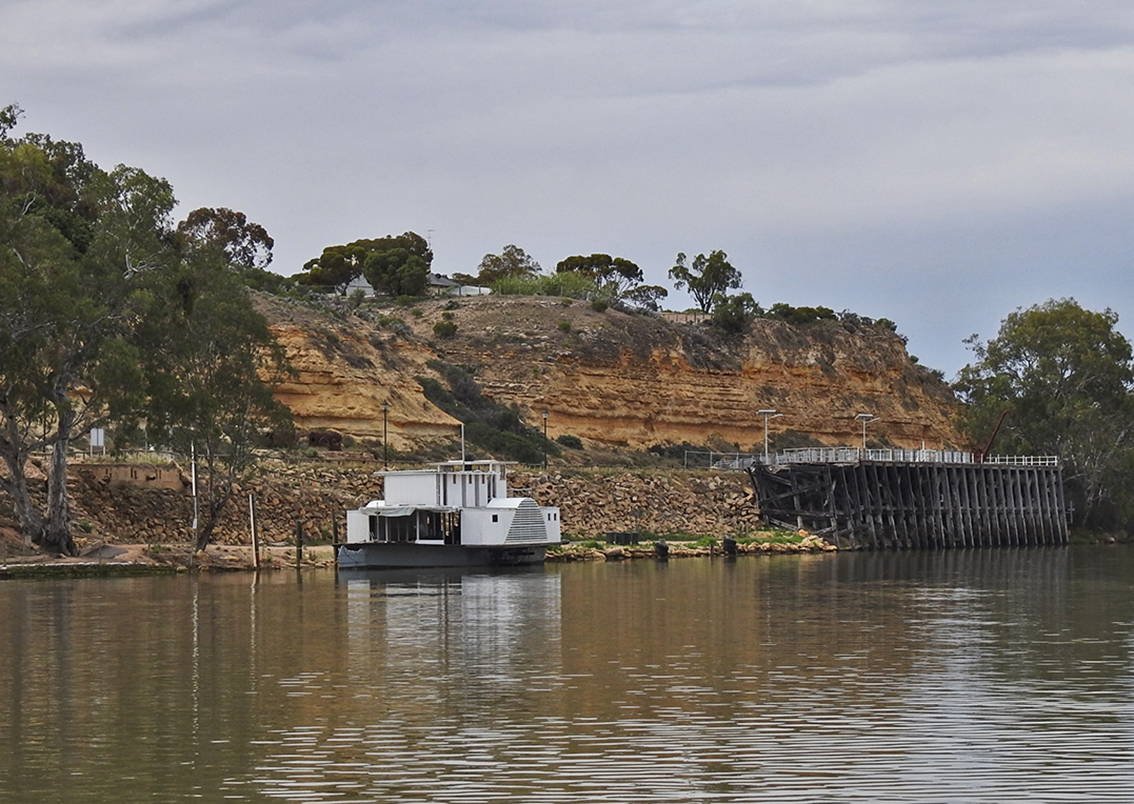
Wharf, cliffs and old paddle-steamer being restored


Eastern Water Skink

Pleased with my final image, I head back to the boat for dinner and a pleasant evening socialising with friends before we set off up-stream in the morning to another location and a fresh adventure.

Cheers

Baz

Additional notes

Only a driving license is required to operate a houseboat. We used Foxtail Houseboats and were more than pleased with their level of service.

Please pass on this blog title/contact information (URL) to any person or organisation with an interest in taking walks and enjoying wildlife in SA.

Click on this link and see more South Australian stories and pictures in my Weekend Notes articles

https://www.weekendnotes.com/profile/651267/

Hannaford Hump Drive

2 Dec

Dear Reader:

I leave the bitumen and continue along a well graded, unsealed road. A landscape of rural pasture and scrub borders the dirt road overhung by tall eucalypts. I stop on the verge and scan the trees with my long lens. While I search for wildlife visually, I hear the faint thumping call of a Common Bronzewing. It takes a few minutes to locate the bird but I eventually find it perched on a branch just in camera range.


Common Bronzewing

I am taking a late afternoon drive along the quirkily named Hannaford Hump Road which branches off One Tree Hill Road north east of the roundabout junction with Golden Grove Road in the suburb of Greenwith. Hannaford Hump then becomes Airstrip Road which leads to the sealed Mt Gawler Road. Both Hannaford Hump and Airstrip Roads are surrounded by large areas of accessible scrub and rural countryside dotted with small properties and farms.


Roadside bush

A little further along Hannaford Hump Road I park the car and walk along one of several fire tracks that lead into the Mount Crawford Forest Reserve. The well maintained track is skirted by dense scrub dominated by low growing gums, acacias and a variety of native bushes, grasses and ground covers….a botanist’s dream.


Fire track entrance

Flax-Leafed Logania

I walk a kilometre along the track stopping frequently to listen for bird calls. In this bushland setting it is best to let the wildlife come to you as animals are wary of anything that appears to be stalking them. I catch sight of numerous wrens, finches and other small birds darting between bushes but photographing them is nigh on impossible. Eventually a pair of Adelaide Rosellas perch on a dead branch at extreme camera range and I take the shot steadying the camera against a tree trunk. The vibration reduction in my Nikon P900 works well and I get a passable result considering the distance and fading light. 


Adelaide Rosellas

Further along the road I stop at another fire track. This one is flanked by even denser bush and some taller shrubs and gums as well as a smattering of grass trees. I find a narrow opening in the scrub and walk in about twenty metres then sit quietly. Small birds are flitting between branches but they are hard to line up. Eventually one settles close enough to get a clear shot. Later I determine it to be a thornbill species; probably a Red Striated Thornbill.


Striated Red Thornbill…probably

Evening is closing in and the light is making photography more challenging so I turn for home and watch the other, more rural side of the road as I drive. Unexpectedly, I notice some kangaroos feeding in the long grass. When I stop to take a shot I catch sight of a crow perched on a branch; perfectly silhouetted against the wheat coloured background.


Australian Raven

Western Grey Kangaroos in grassland

Small group (mob) of Western Grey Kangaroos feeding at dusk

It has been a really wonderful drive along this unusually named road so close to the suburbs yet rarely explored by the nearby residents. In fact there are many trails, tracks and roads throughout this part of the foothills that are worth exploring when you have a few hours to spare.

Cheers

Baz

Additional notes

This is an easy drive and simple walks, which are quite suitable for families and seniors.

Please pass on this blog title and or contact information (URL) to any person or organisation with an interest in taking walks and enjoying wildlife in SA.

See more South Australian stories and pictures in Weekend Notes

https://www.weekendnotes.com/profile/651267/

Spring Garden Moments

3 Nov

Dear Reader:

There is a Mudlark foraging in the garden bed. At first I think it is searching for food. The garden has just been watered which makes it easy for birds to probe the soft soil for grubs. Besides, there may be a few seeds left over from those that I scatter each morning for the doves. I peer through the telephoto lens and realise that the little bird is collecting small twigs and leaves from the mulch around the flowers. It is also adding mud from the soft soil around the sprinkler head. Ahh; realisation dawns. Nest building time.


Magpie Lark with nesting material in beak


Spring has arrived in my Prospect garden and all about there are signs of the changing seasons. Flowers are blooming and insects are hatching. Tiny Lynx Spiders are hunting amongst the blossoms and leaves, and a variety of colourful bugs are crawling across the foliage.

Lynx Spider with prey


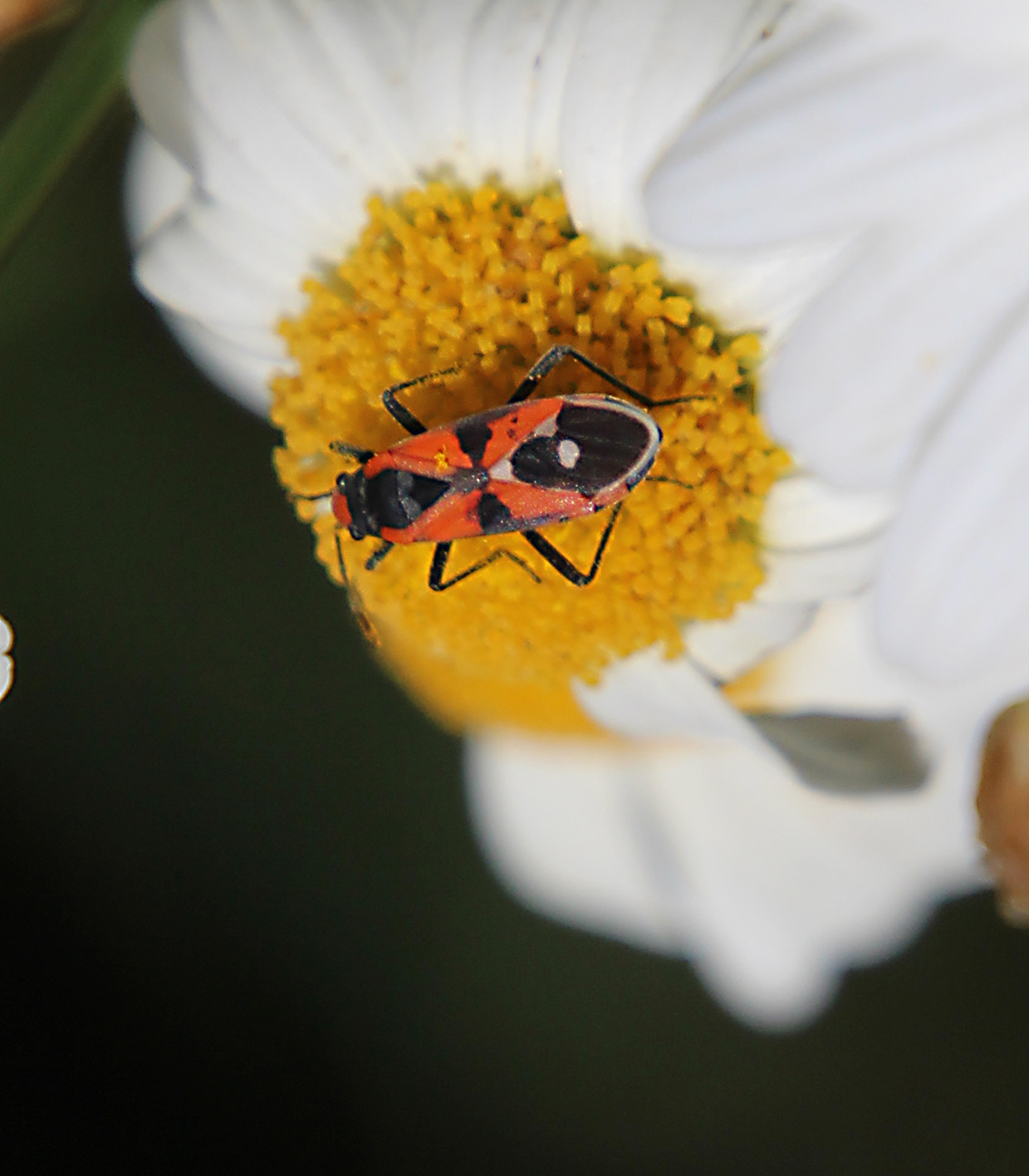
The Mudlarks have flown off and I can walk around the garden without scaring the nervous little birds away. I take stock of the different flowers that are emerging; bright yellow and white daisies, tangerine Abutilons, and pink Rock Roses. They attract a wide range of small creatures and I get close enough to a yellow daisy bush to capture images of a Hoverfly, Shield Bug and Woolly Bear caterpillar all feeding on the same plant.


Jewell Bug
Woolly Bear Caterpillar feeding on emerging blossom


Spring also heralds a time of intense gardening with plants to trim and weeds to pull. And it is while I am cutting back a patch of Lantana that I disturb a lovely, slender lizard about 15 cms in length. I take note of its hiding place and get the camera. Luckily the lizard hasn’t moved too far and I manage a couple of nice shots. It is probably a Four-toed Earless Skink.


Skink digging into soil


I sit back at my garden table, rest the camera on my lap and watch the honeyeaters flying between the blossoms and hawking for insects. They appear to be feeding young ones that are roaming around in the undergrowth. There is also a pair of blackbirds hunting for worms and grubs where I have extracted weeds from the lawn. They get a mouthful of the wriggling creatures then fly off; obviously feeding chicks too.


Blackbird with beak full of goodies for chicks


All of these events are occurring in the back garden but I know there are different interactions in the front yard. Armed with a camera and cup of tea I sit on the front porch and wait for something to happen….I do not have to ‘sit and sip’ for long. A pair of Rainbow Lorikeets fly into a nesting hole in one of the White Cedars that line my street. A nice way to end a spring garden experience.


Rainbow Lorikeet perching
Rainbow Lorikeet entering nesting hole

Check out what is happening in your garden and share some observations in the comments section of my blog.   

Cheers

Baz

For this [project I used a Canon Eos camera and a Tamron 16-400 lens which helped me work in lower light conditions and for close up macro images….very versatile set up.

Please pass on my blog title and or contact information (URL) to any person or organisation with an interest in taking walks and enjoying wildlife in SA.

Click on this link and see more South Australian stories and pictures in my Weekend Notes articles

https://www.weekendnotes.com/profile/651267/