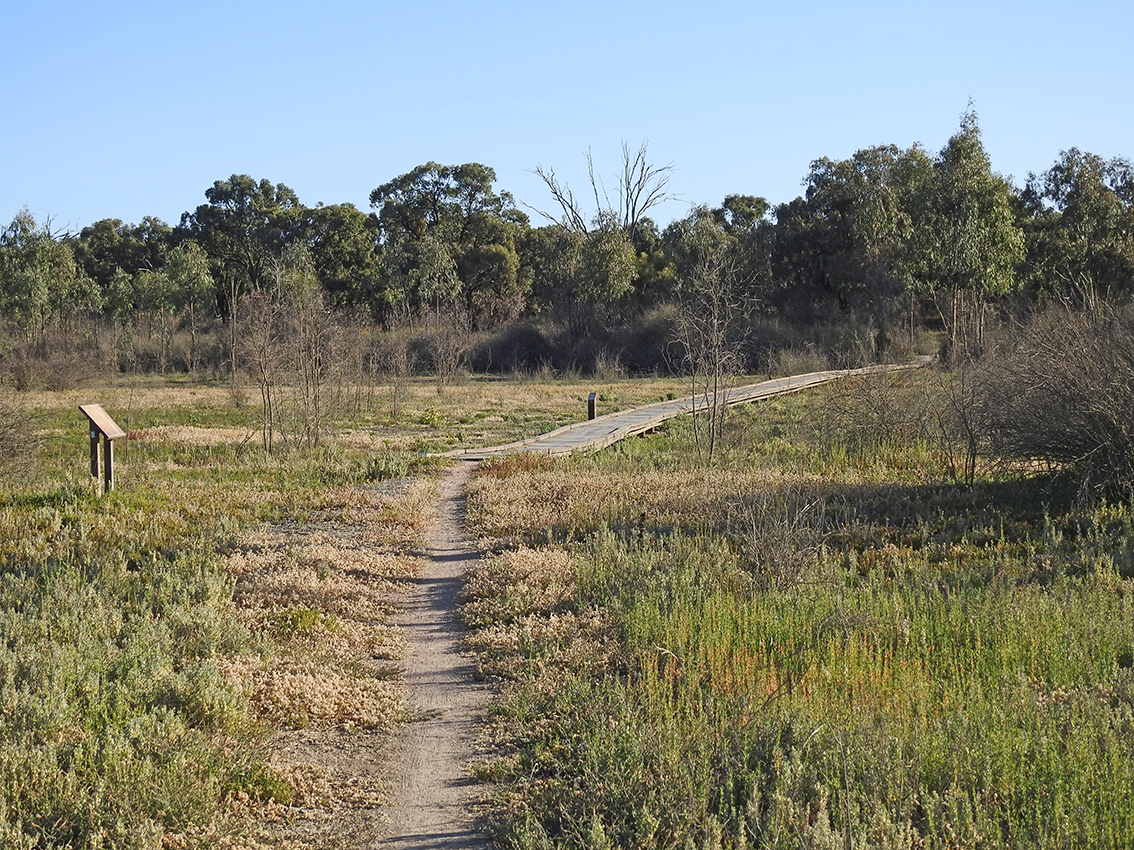
Tag Archives: water birds

South Para Reservoir’s Water, Wine and Wildlife

13 Feb

Dear Reader:

There’s a small mob of Western Grey Kangaroos feeding close to the path where I am starting my walk. Leaning against a tree, I steady the camera. The roos detect either sound or scent and bound away into the thicker scrub.

Up Up and Away

I am taking a walk around the South Para Reservoir near Williamstown about an hour’s drive from Adelaide’s CBD. The road winds through the Adelaide hills and encompasses a range of environments from rural to wilderness. Unfortunately, it is a bit of a grey day. Not brilliant for photography.  

South Para Reservoir

The track leads down to the water where a kayaker is bringing the craft back to dry land. This reservoir is open for fishing, kayaking, cycling and walking unlike many of our other reservoirs.

A recreational paddle

There are numerous butterflies in the area but it is hard to spot them until they take flight. Eventually I get a reasonably clear shot and identify the species as a Common Brown.

Common Brown

On the water’s edge I can just make out some large birds. I suspect they are either Cormorants or Snake Birds (Anhingas). I approach warily, lie down in the grass and focus. There are two distinct species; a Pied Cormorant and a Great Cormorant.

Pied Cormorant

Working my way around the water’s edge I discover a dry creek bed and another track heading back towards the main road. I follow the creek bed up a gentle slope towards a rocky outcrop. A large male kangaroo watches me from the scrub as I walk. He seems relaxed and stays still enough for a long-range shot.
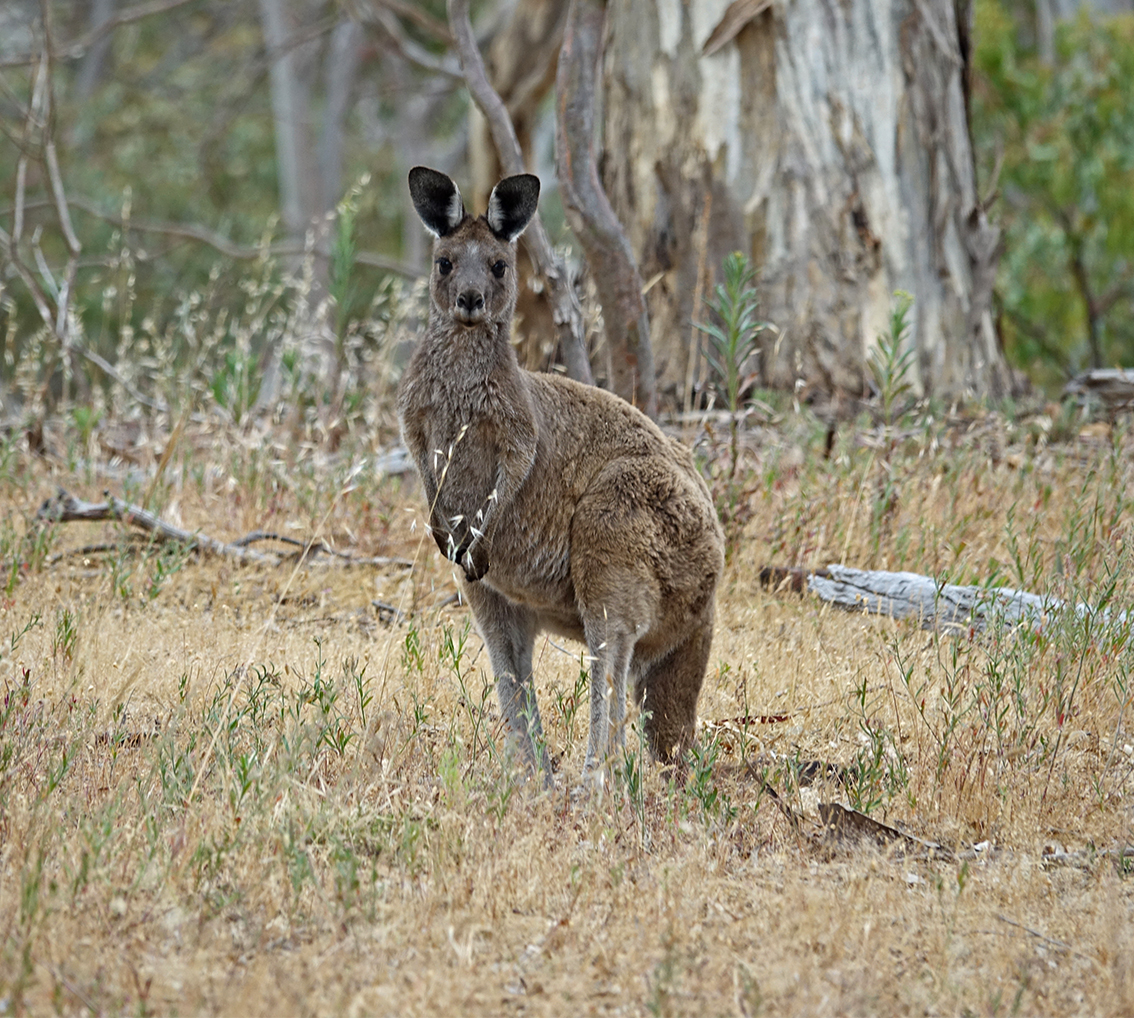
Just watching

Continuing along the cross track I suddenly freeze and hold my breath. Three adult Emus are walking towards me and have, either not registered my presence, or are not unduly phased by humans. I raise the camera slowly and wait as they approach to within thirty metres. I take a series of shots before they veer away pecking for seeds, insects and whatever else they might find in the dry scrub.

The Emus gang

Emus close by me

As I traverse move up the trail, I notice a variety of wildlife including; musk Lorikeets Sulphur Crested and Rose Breasted Cockatoos, more butterflies, a few native bees as well as ant nests and termite mounds. I turn over a couple of rocks and dead branches (replacing them carefully afterwards), uncovering a snakelike Three-toed Earless Skink and Pie-dish Beetle.
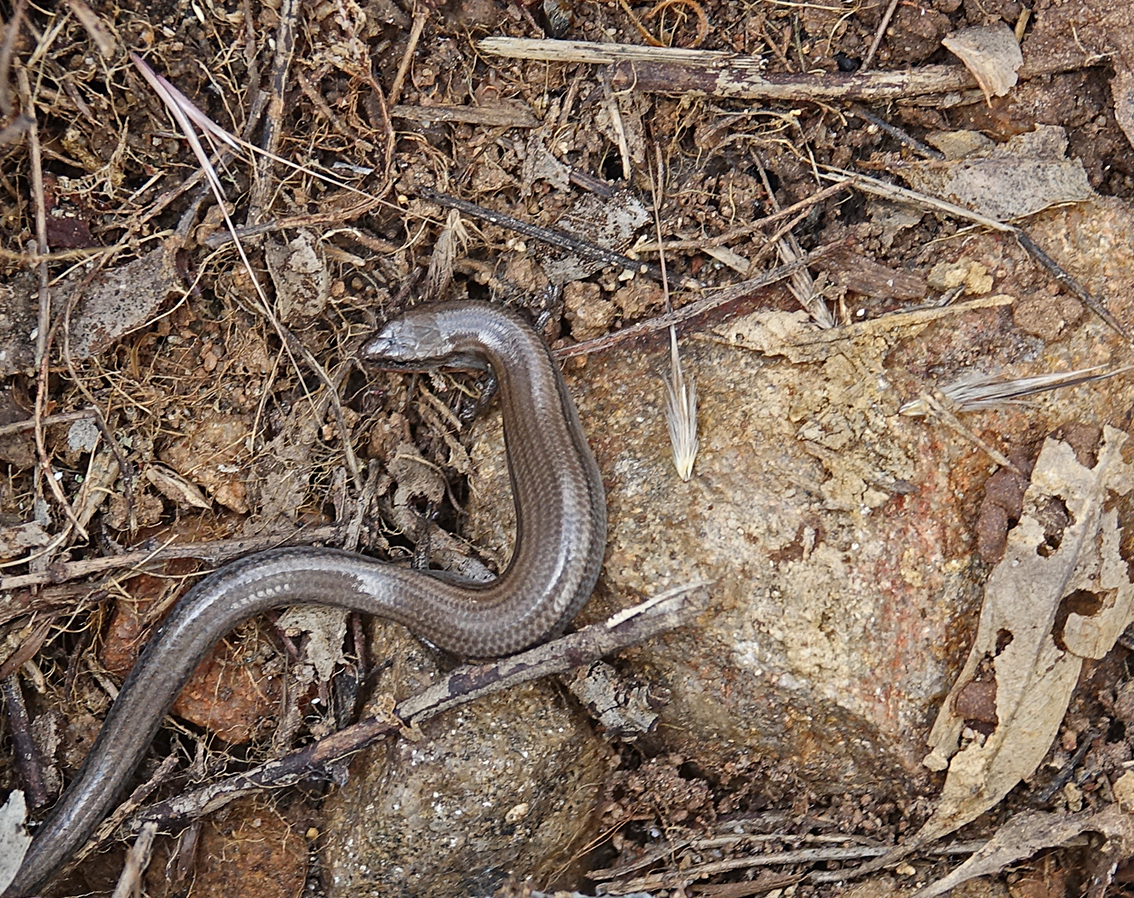
Three-toed Earless Skink
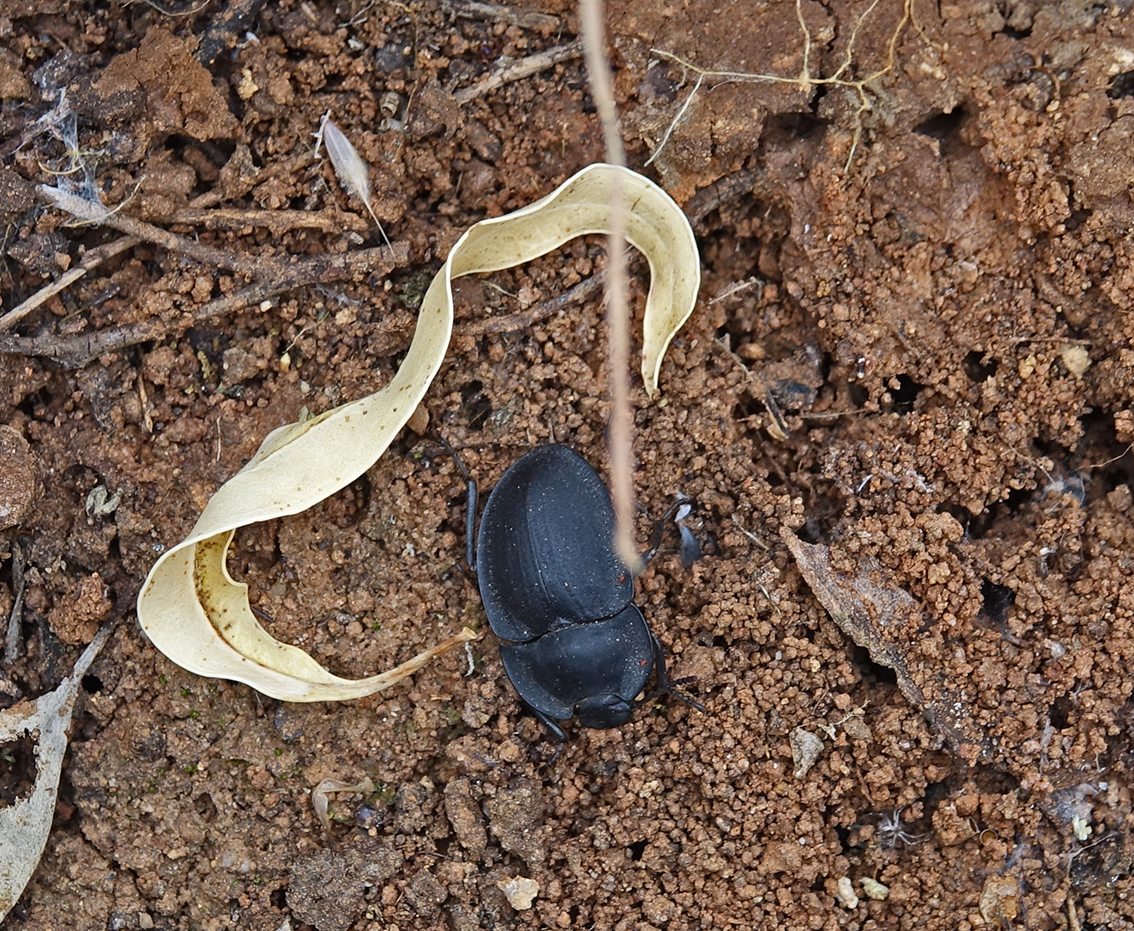
Pie-dish Beetle

With my walk at an end, I drive on towards Williamstown for lunch at the little bakery across from the creek. However, I do make one more stop on the way at Linfield Road Winery which has a charming bed and breakfast attached. An ideal place to stay when I make my next foray into the wonderful north-eastern region of the Adelaide Hills.

B&B for next time

Linfield Road Winery vines

Cheers

Baz

Additional notes

This is an easy walk/drive which is quite suitable for families and seniors with public toilets, barbecues, parking and other facilities nearby.

Please pass on this blog title and or contact information (URL) to any person or organisation with an interest in taking walks and enjoying wildlife in SA.

Click on these links and see more South Australian stories and pictures in my Weekend Notes articles as well as locating similar blogs on Feedspot’s top 20 Australian wildlife blogs

https://www.weekendnotes.com/adelaide/writer/452 https://blog.feedspot.com/australian_wildlife_blogs

Mount Barker’s Laratinga Wetland………Crakes and Warblers

16 Jan

Dear Reader:

A small bird with vivid spots and dashes paddles out from the reed bed. A Spotted Crake, the first one I have ever seen.

Spotted Crake feeding


For the next ten minutes I watch several of the striking birds as they dip into the water in search of aquatic plants and animals such as worms, crustaceans, molluscs, spiders and even small fish and tadpoles.

Spotted Crake habitat

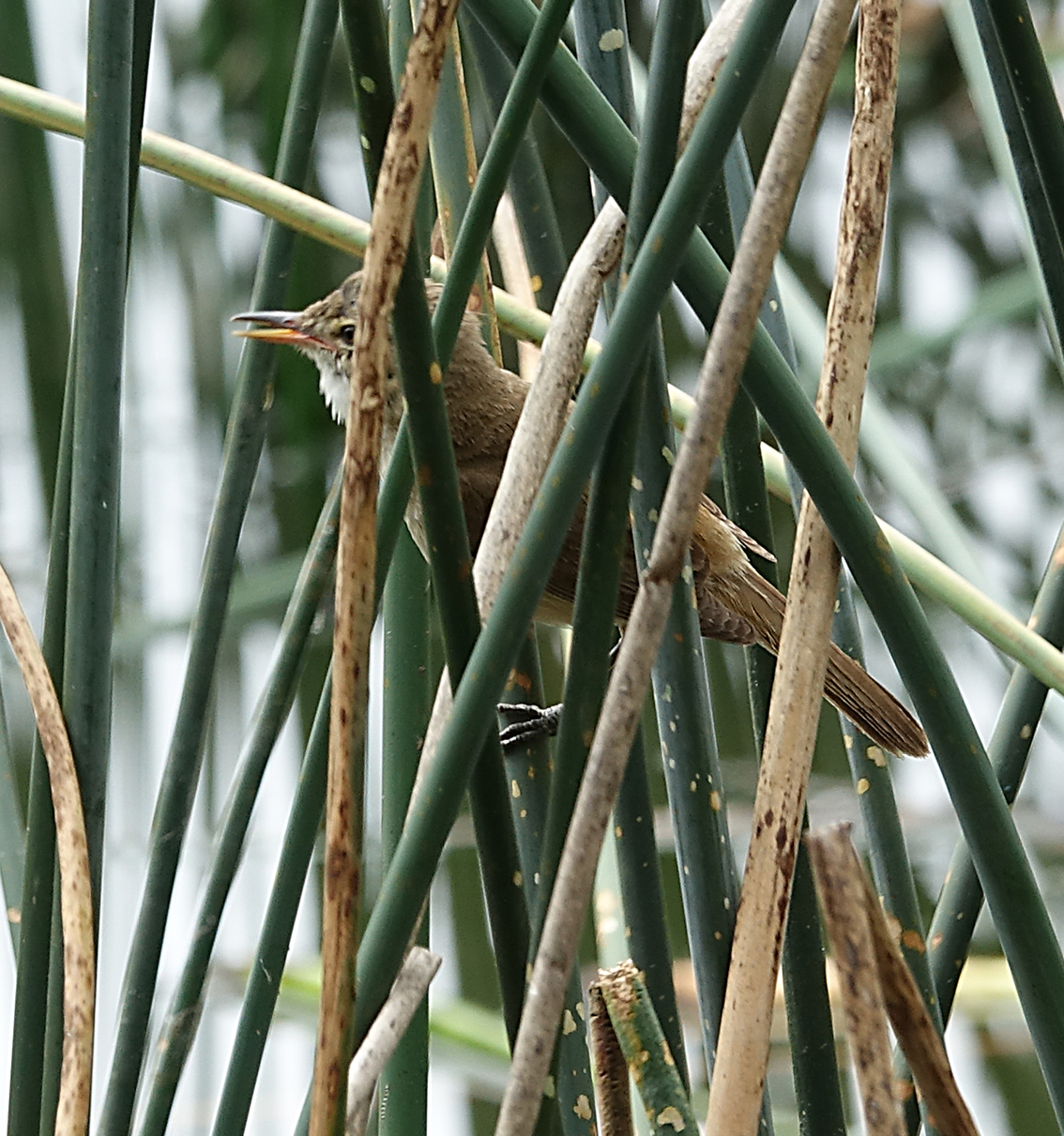
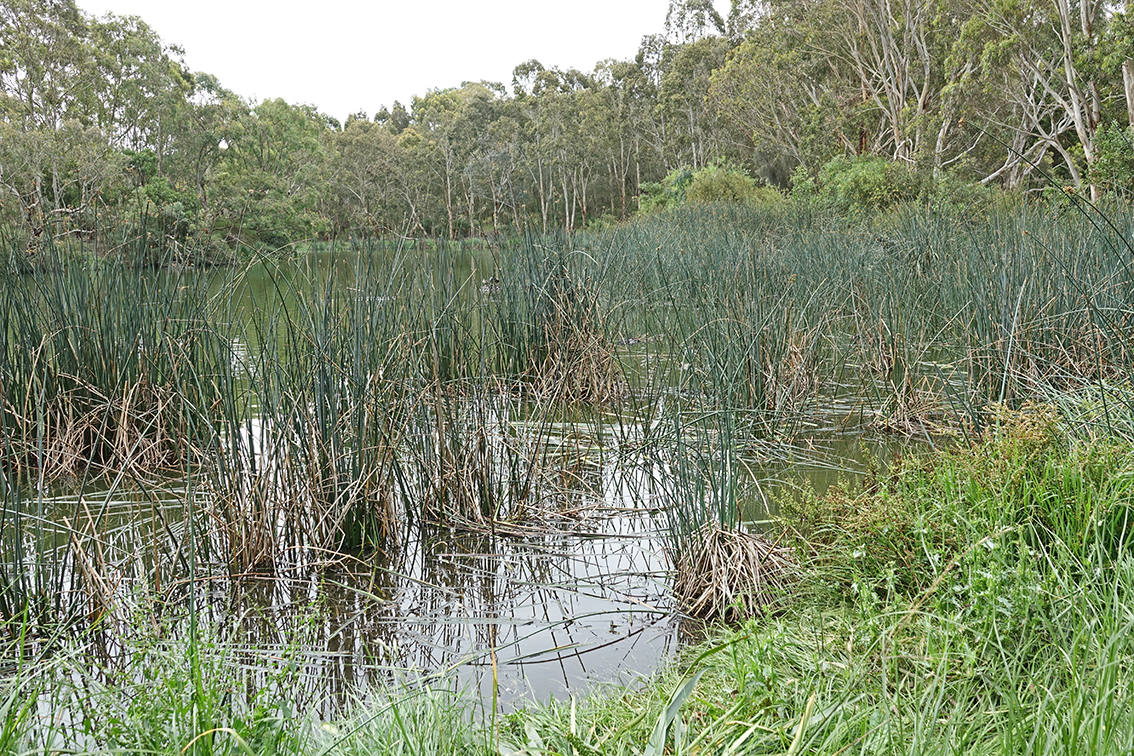
Leaving the crakes I walk a further hundred metres to another pool before I hear the melodic call of a reed warbler. There are reeds, small bushes and a variety of grasses bordering the water. I can still hear a bird calling and scan the reeds for movement. Deep in the tangle of stems I locate the source of the call; an Australian Reed-warbler.

Australian Reed-warbler calling

Reed warbler habitat

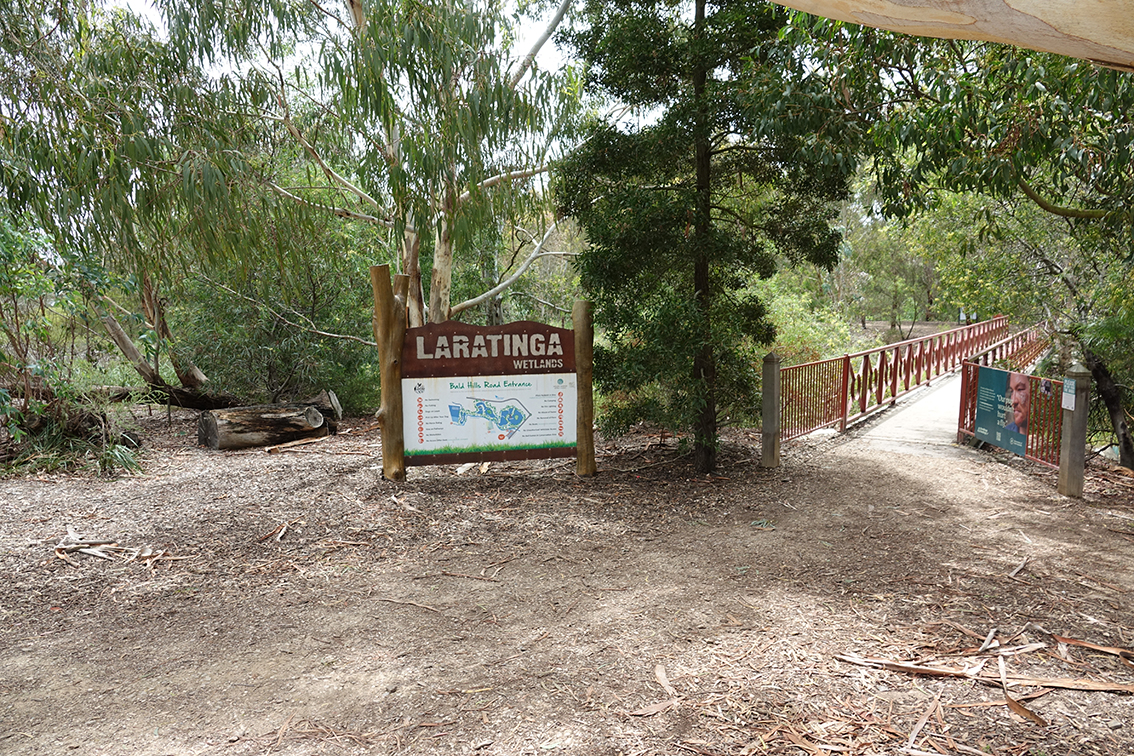
My hunting ground is the Laratinga Wetlands near Mount Barker about a Forty five minute drive from the city. In the local ‘Peramangk’ language it approximates to “Flooding Land Creek.” This wetland serves numerous purposes including filtering waste water, providing habitats for a range of animals and the establishment of walking, running, and cycling trails.

Wetland entrance

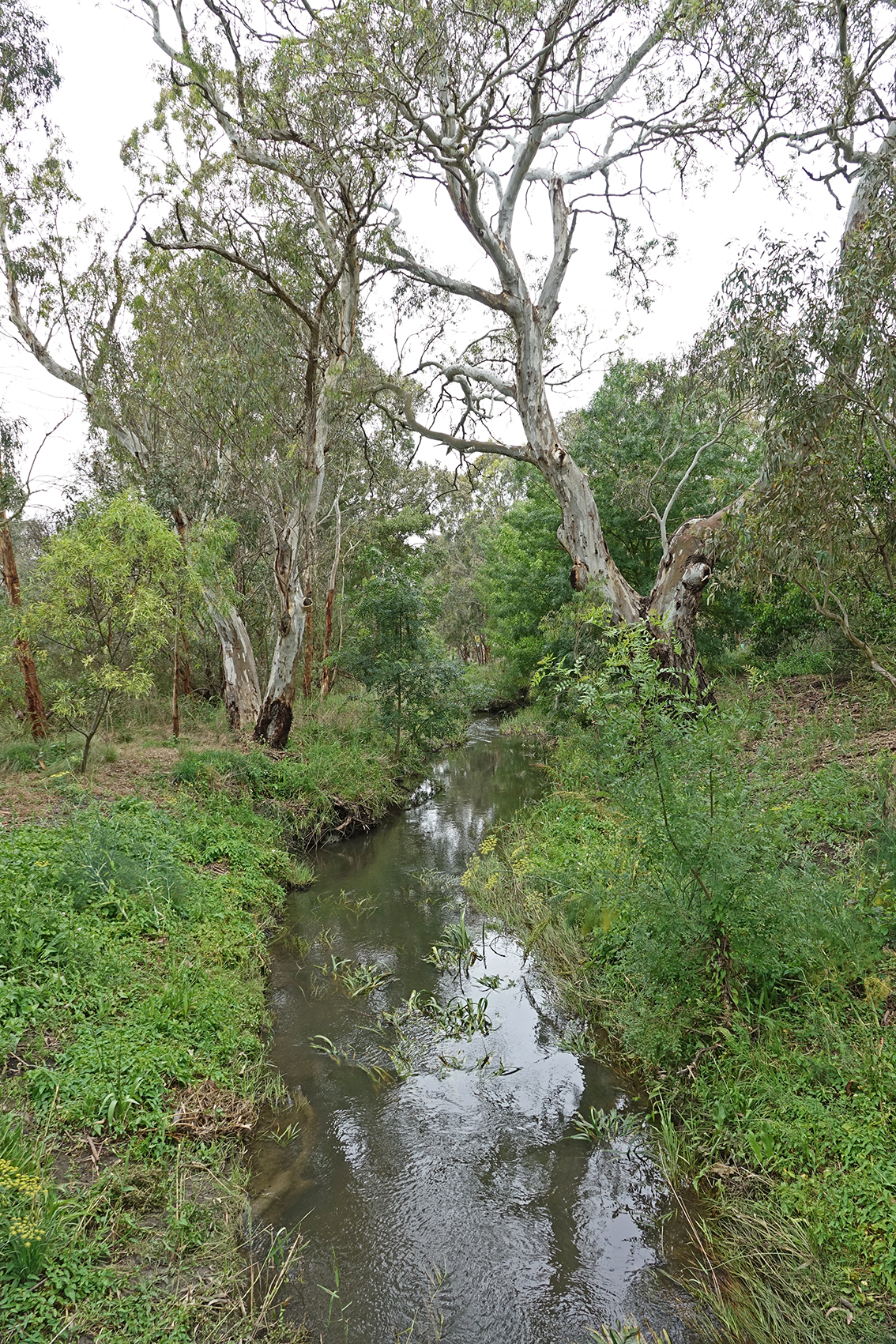
Having achieved my primary goal of photographing Spotted Crakes and Australian Reed-warblers, I continue my stroll around these fascinating wetlands keeping an eye open for more interesting plant and animal life.

Channel between larger pools

Because my Nikon P900 with its 83X magnification doubles as a spotting scope, I am able to search the opposite bank of a broad pool. I notice several Grey Teal perched on a branch overhanging the water. But it is the Short-necked or Macquarie Turtle in the background that is my main focus.

Grey Teal, Eurasian Coot and Short-necked Turtle

The day has been overcast and the light is fading. I have encountered numerous bird species in addition to the crakes and reed warblers as well as two reptiles; the turtle and a gecko. Another animal group would complete my day’s excursion. I turn my attention to invertebrates searching the foliage and leaf litter.

Marbled Gecko……showing camouflage

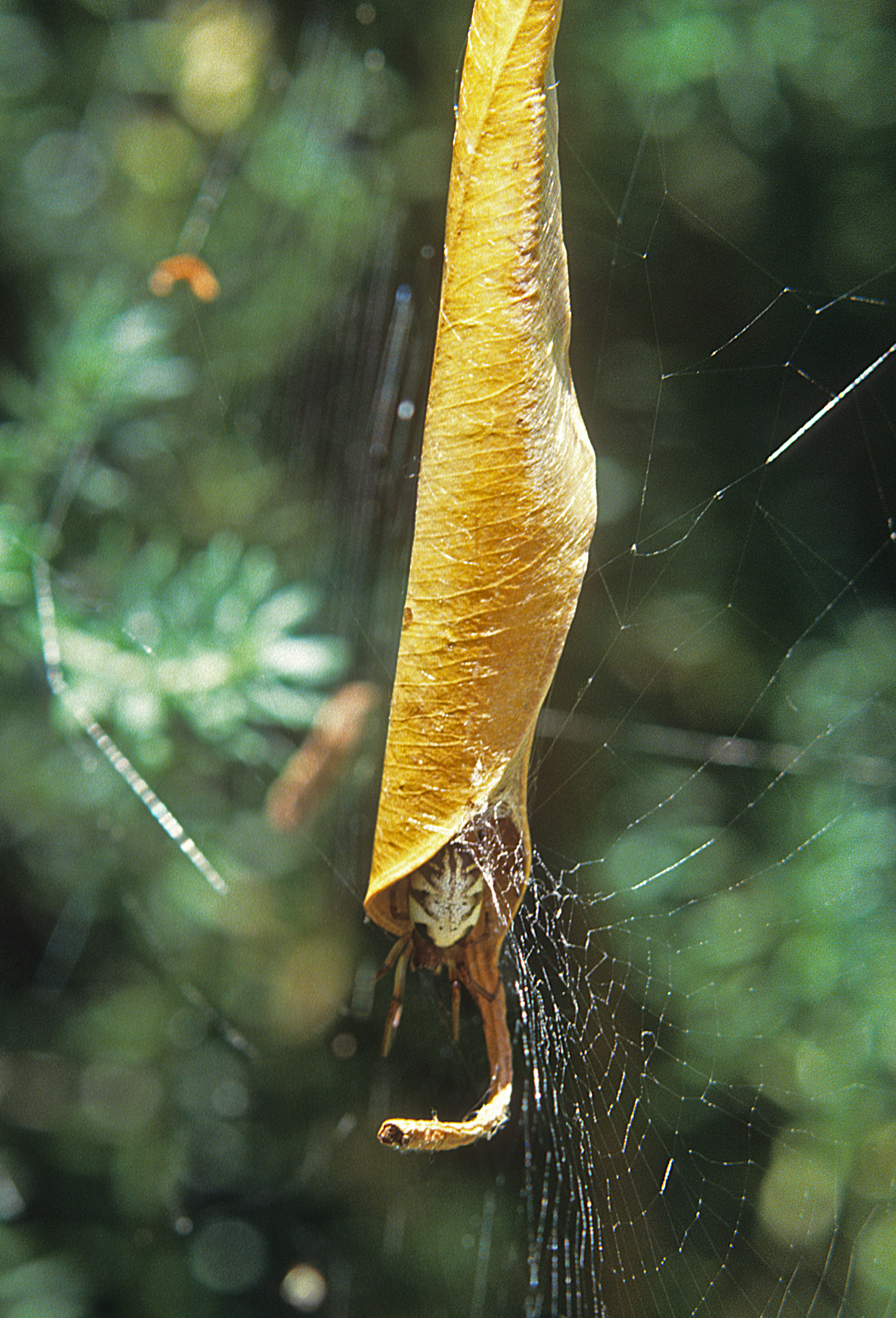
I am in luck. Perfectly suspended in the branches of a Christmas Bush is a Leaf-curling spider. These little arachnids create a home by spinning their silk around a dead leaf slowly curving it until they form a cylindrical shelter to hide in.

Leaf-curling Spider in Christmas Bush

Leaf-curling spider…Image shot at another location to show the spider

Now it is time to leave this amazing wetland but I will return in the near future to search for more wildlife in its maze of waterways, reed beds and bushland.

Cheers

Baz

Additional notes

This is an easy walk and drive which is quite suitable for families and seniors with public toilets, parking and other facilities nearby. It is dog friendly.

Please pass on this blog title and or contact information (URL) to any person or organisation with an interest in taking walks and enjoying SA wildlife.

Click on these links and see more South Australian stories and pictures in my Weekend Notes articles as well as locating similar blogs on Feedspot’s top 20 Australian wildlife blogs
https://www.weekendnotes.com/adelaide/writer/452/

https://blog.feedspot.com/australian_wildlife_blogs/

Port Vincent….. an afternoon walk

30 Oct

Australian Pelican and Silver Gulls

Dear Reader:

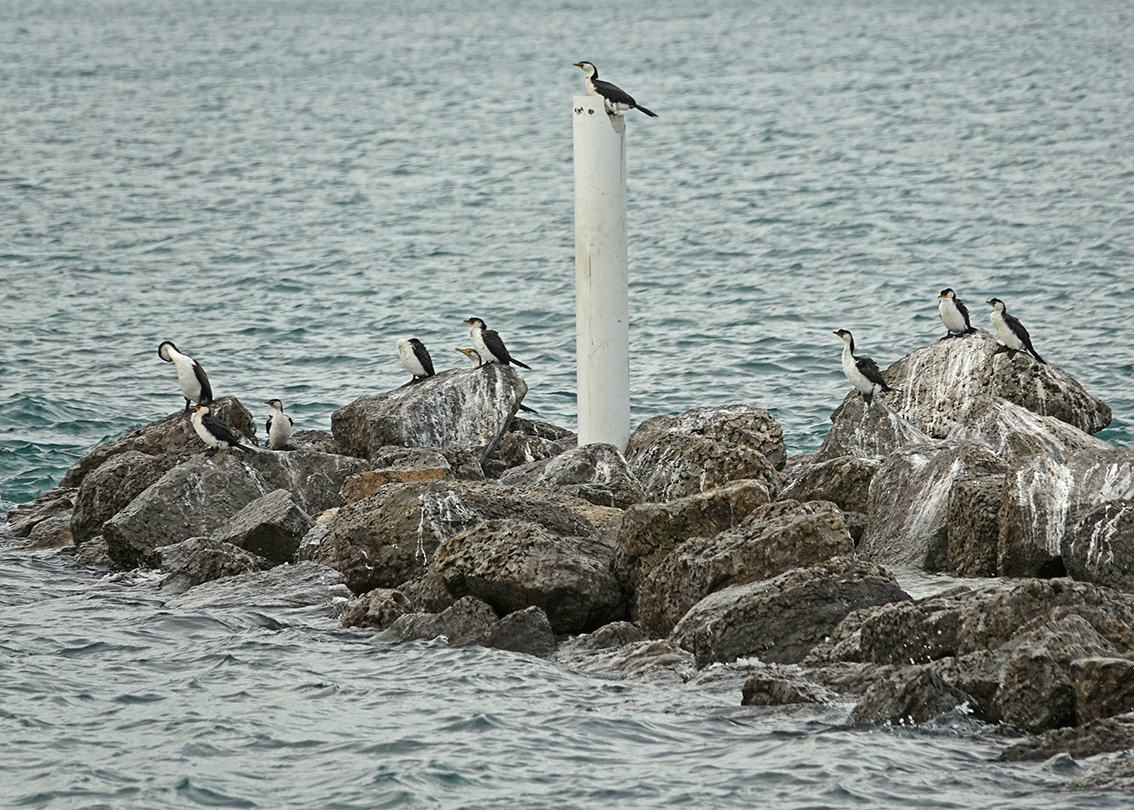
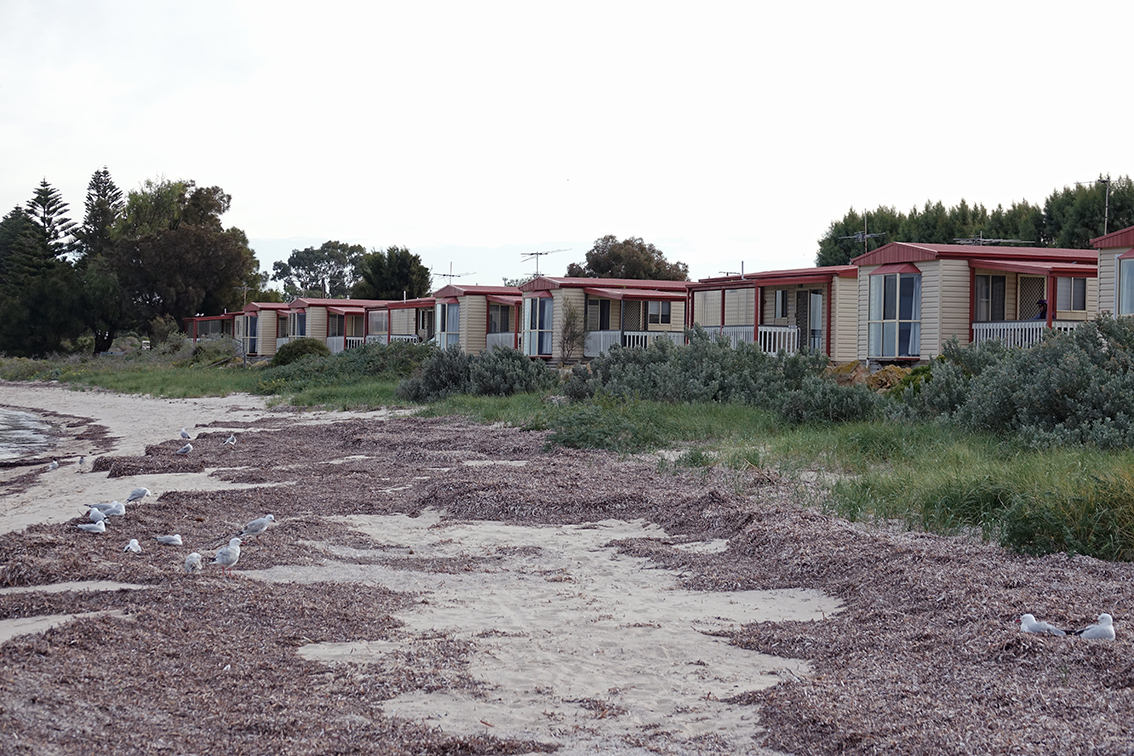
It has been a comfortable two and a half hour drive from Adelaide to Port Vincent. Although, with low cloud cover, I am not anticipating any worthwhile photography until tomorrow. How wrong can I be? As I pull up in the car park, an Australian Pelican lands on the grass verge near the cabins. And, no more than a hundred metres away, I can see a group of Pied Cormorants on the nearby breakwater.

Pied Cormorants

Cabins along the beach front

Apologetically leaving the others to unpack, I grab my Sony RX10 and wander down to the beach. To my surprise, two Bottlenose Dolphins are hunting in the shallows along with another Pelican; much to the consternation of a pair of fishermen who are trying to catch an evening meal themselves.

Pelican hunting solo

Dolphin taking a vertical dive

The dolphins are fascinating; turning, accelerating and diving constantly as they herd the school of fish they are feeding on. Not an easy animal to photograph from the beach as all you see are half a back and the occasional fin. Nevertheless, I continue to track them with the camera. Suddenly, one dives vertically with its tail held high. A nice moment.

Red-necked Stints

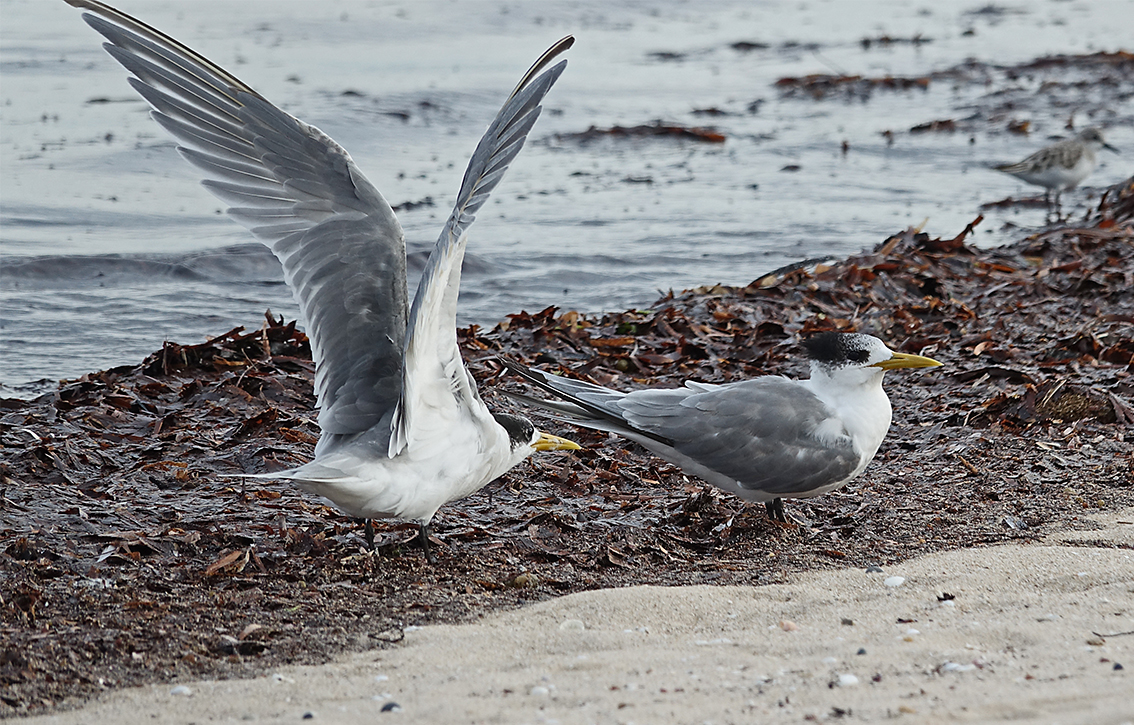
Crested Terns

Along the shoreline, where the waves lap against piled up seaweed, a mixed group of tiny waders; Red-capped Plovers and Red-necked stints, are foraging for tiny worms and crustaceans. Nearby, a Crested Tern is resting on the beach when a second bird flies down to join it, possibly a nesting pair.

Red-capped Plover with eggs

One of the plovers is meandering higher up the beach and doesn’t move far as I approach. I watch it carefully and search the seaweed for a nest. Sure enough, there amongst the brown tangle of weed are two perfectly camouflaged eggs. I back off a dozen metres and wait. After a few minutes the bird returns to its eggs and sits carefully on them eyeing me defiantly. 

Port Jackson Shark egg casing. The spiral shape wedges under rocks.

Remains of a sponge showing silica skeleton

I move away from the little plover and hunt for any other life in the accumulated drifts of weed. My search is fruitful and I turn up a spiral shark egg. Probably from a Port Jackson Shark one of the oviparous (egg laying) species around our coast. Further along the beach I come across the skeletal remains of a sponge. Sponges, unlike nearly all life on earth, have a skeleton made of silica and the fine network of spicules is fascinating and easy to see.

My walk along the shorefront, right in front of our cabin, is coming to an end it is getting cool. Time to head on back and decide on lunch. Probably local seafood at a rather colourful shop on the shore closer to the town. It is easy walking distance and highly recommended by a local I met on my initial Port Vincent walk. 

Cheers

Baz

Additional notes

This is an easy walk and drive which is quite suitable for families and seniors with public toilets, barbecues, parking and other facilities nearby. It is dog friendly.

Please pass on this blog title and or contact information (URL) to any person or organisation with an interest in taking walks and enjoying wildlife in SA.

Click on these links and see more South Australian stories and pictures in my Weekend Notes articles as well as locating similar blogs on Feedspot’s top 20 Australian wildlife blogs
https://www.weekendnotes.com/adelaide/writer/452/

https://blog.feedspot.com/australian_wildlife_blogs/

Warren Reservoir…drained for maintenance

14 Jul

Dear Reader:

From Tea Tree Gully, the road climbs into the foothills then snakes past Chain of Ponds Reservoir before it forks to the left towards Williamstown. Just before the town there are often mobs of Western Grey Kangaroos on the hillside to the right. Today, I spot a small group on the opposite side near a layby where I can safely pull off the road to take a few photographs.

Western Grey Kangaroos near Williamstown

I am exploring the Northern section of the Warren Reservoir which is around 10 kms past Williamstown towards Gumeracha on the Warren Road. The sky is a little overcast with a hint of rain in the air which makes photography challenging but in the winter months one takes any opportunity on offer to venture out into the bush. This is my second visit to the Warren and of particular interest because the reservoir has been emptied for dam wall maintenance and comparing it to my last visit, when it was full, is a rare opportunity.

Reservoir full

Reservoir drained and with some improvements to the public car park area

Usually there are numerous duck species as well as cormorants, Australian Pelicans and Anhingas (Snakebirds) around the edge of the reservoir. Today there is just a solitary Pacific Black Duck paddling along a narrow channel. Way off to the north, I can just make out a pair of kites catching thermals above the surrounding scrub.

Anhinga

Grey Fantail

However, all is not lost. For some reason the number of smaller birds seems to have increased around the periphery of the reservoir. Using the full extension of my Nikon P900 Camera lens, I am able to spot Silvereyes, Superb Fairy Wrens, a thornbill species, Grey Fantails and New Holland honeyeaters. Perhaps a lack of predatory species could account for this or maybe there are insects among the leaves and on the smaller branches.

Adelaide Rosella

I finish my loop walk back at the car parking area where a pair of Adelaide Rosellas are feeding on the ground. They are some distance away and as I approach all but one fly into the canopy. The lone bird perches on a wiry grass stem where it appears to be picking out seeds. I take a shot from distance just before it flies off disturbed by a couple of Little Ravens flying into a nearby eucalypt.

Australian Magpie foraging on reservoir floor

It has been a relatively productive morning’s work and I pack up my gear and head back towards Williamstown and lunch at the local bakery which, by the way, makes one of the best custard tarts I have tasted in a long time.

Snack time

Cheers

Baz

Additional notes

This is an easy walk and drive which is quite suitable for families and seniors with public toilets, barbecues, parking and information boards nearby.

Please pass on this blog title and or contact information (URL) to any person or organisation with an interest in taking walks and enjoying wildlife in SA.

Click on the links below to see more South Australian stories and pictures in my Weekend Notes articles as well as locating similar blogs on Feedspot’s top 20 Australian wildlife blogs

Weekend Notes

Feedspots top 20 Wildlife Blogs


Houseboat stories…..After the Floods

28 Jun

Houseboat stories continued (May 2023)…..After the Floods

Dear Reader:

As I walk across the flood plain, which was inundated in last year’s winter rains, there is a definite lack of wildlife. Bushes, grasses and other ground covers have been decimated. Last time I visited this area there were: Butcherbirds, Mudlarks, parrots, honeyeaters, Western Grey Kangaroos as well as an abundance of insects. Eventually I spot a single white butterfly settling on the cracked earth.

Cabbage White Butterfly

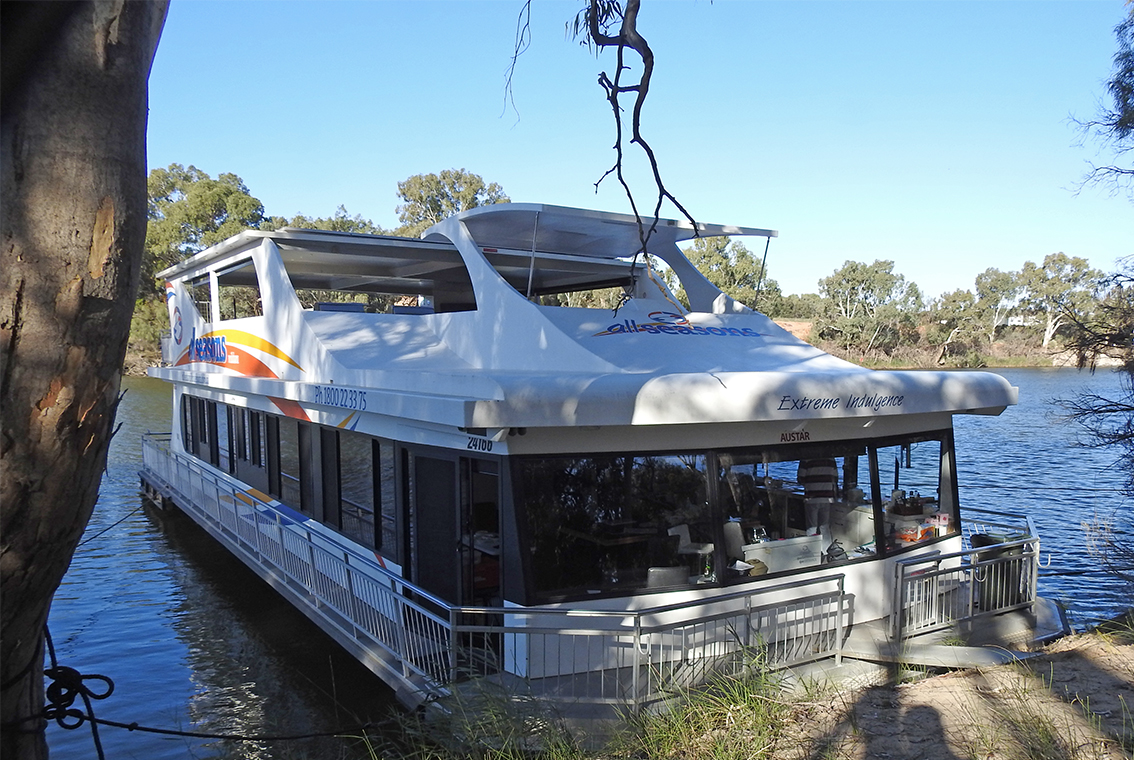
I am exploring Kings Billabong near Mildura, just over the SA border. We have travelled to this location by houseboat but the area is also accessible by unsealed roads. Each year I holiday here from Adelaide and observing the changes along the river, especially after major climatic changes,  is always interesting.

Track to the billabong

First lagoon

Following a pathway carved by a 4WD vehicle, probably a local ranger, I reach a boardwalk leading to a junction of trails accessing various parts of the billabong. From this location I get my first look at one of the many lagoons which make up this fascinating wetland.

Pink-eared Ducks

There are numerous birds congregating around a small island in the middle of the lagoon. They are about one hundred and fifty metres from my nearest vantage point and the light is starting to fade. Challenging conditions for my Nikon P900. I brace myself against a tree trunk, take a breath and fire off a couple of frames as I exhale. Later examination on the laptop reveals some Australian Ibises, a lone White-necked Heron and a flock of Pink-eared Ducks. The latter two species are birds I have never previously photographed.

Whistling Kite

With around half an hour’s light remaining I quickly skirt the first lagoon and sit quietly while scanning a second lagoon. High in a tall, dead tree overlooking the water, I can just make out the distinctive outline of a raptor. Zooming in, I recognise it as a Whistling Kite.

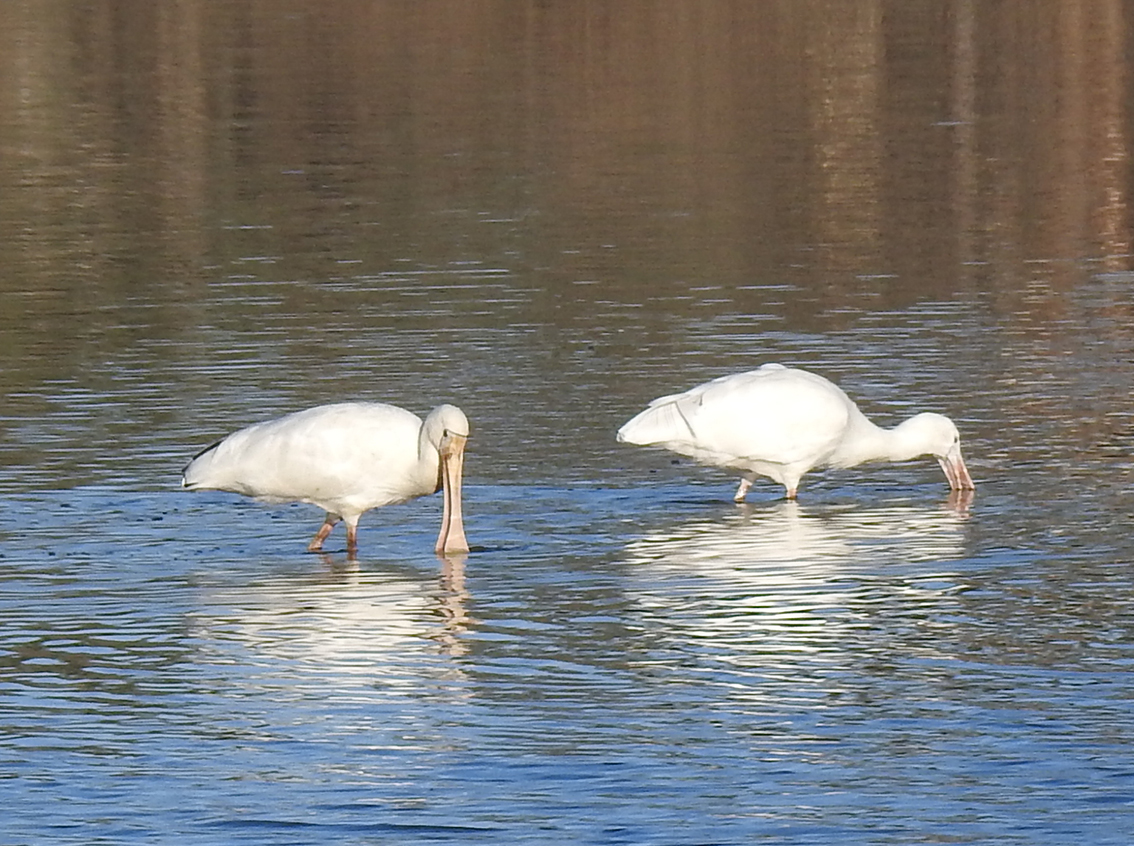
Spoonbills foraging


Fish in beak

There are a few Pacific Black Ducks, herons and a pair of Laughing Kookaburras around the edge of this second pool but it is a small group of Yellow-billed Spoonbills that are most interesting as they swing their bills through the water in search of small prey. However, I am quite surprised when I see one of the birds capture a small fish in its bill; something I have never witnessed before.

Back at the boat

I feel the vibration of my Apple Watch indicating an incoming phone call. The watch, with its emergency capabilities, is a useful tool when you work alone in the bush. The call is just a safety check and a reminder that dinner is being prepared on the houseboat and it’s time to make my way back. Tomorrow I will venture further into the park to explore some other parts of this complex wetland.

For more wildlife stories and pictures go to:

Weekend Notes

Feedspots best wildlife blogs


Maslins and Blanche Point to Port Willunga…a rewarding short walk

12 Mar

Dear Reader:

It is glorious summer’s day, not too hot and a gentle sea breeze. The view from the clifftop is spectacular. The outline of Gull Rock and surrounding shallow reefs are clear cut against an impossibly blue ocean. Inland, the view is quite a contrast with farmland, scrub and distant, low hills reflecting the dry shades of an Australian summer.

Gull Rock from the clifftop

Farmland, Raven and Hills

There are Little Ravens and Red Wattlebirds in the trees alongside the road leading to the carpark. In addition, I can see an adult Singing Honeyeater feeding one of its fledged chicks in the scrubby bushes near the entrance to the downhill trail. As I scan the ocean there is a pair of Bottlenose Dolphins far out to see patrolling the edge of a reef or seagrass meadow.

Reefs and seagrass from the clifftop

Singing Honeyeater

From the Blanche Point/Maslins hilltop carpark there are two ways to reach Port Willunga. The hilltop track is self-explanatory, or you can walk down the steps to the shore and follow the beach. The beach walk has two special features: take a mask and flippers to explore the shallow inshore reefs or examine the rock formations and fossil beds along the route.

Walking along the beach at low tide

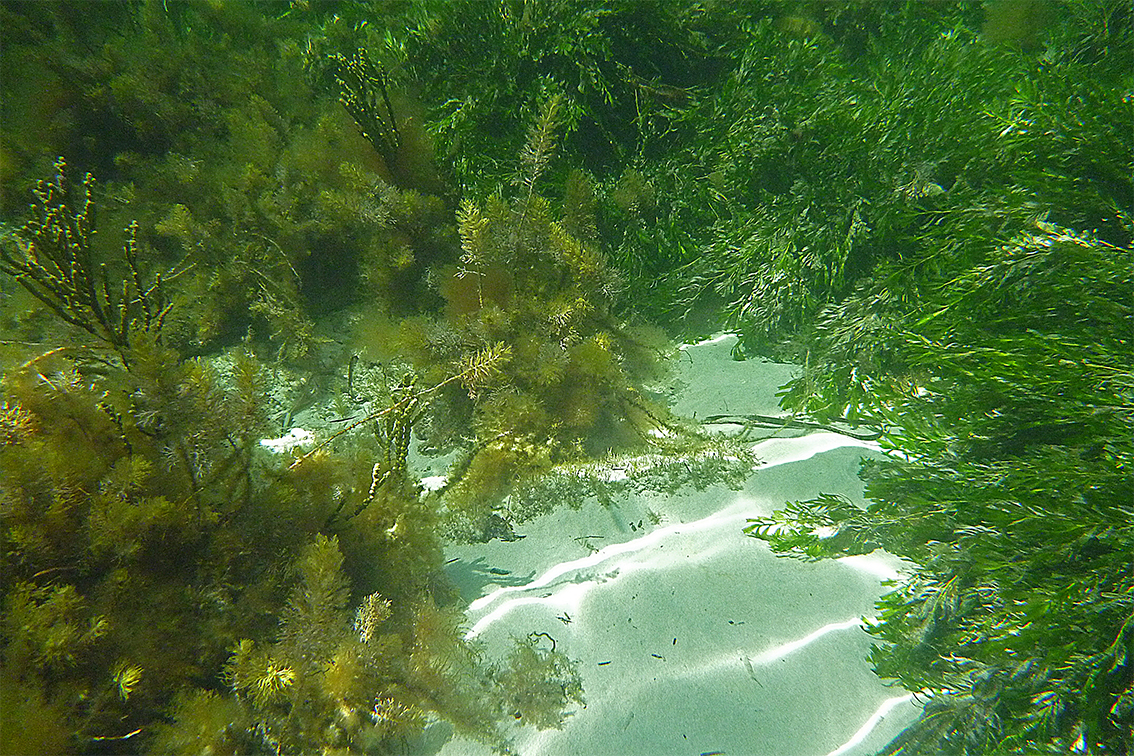
Seagrass and brown algae: an underwater view

Today, I take the path which winds along the top of the cliffs then dips down towards the Willunga Creek outlet where there is a lovely patch of scrub and some old ruins. As I walk along this section of the trail I can hear Singing Honeyeaters and catch sight of a flock of Yellow-tailed Black Cockatoos feeding on pine cone seeds.

Willunga Creek where it meets the sea

Yellow-tailed Black Cockatoos

Suddenly, the birds scatter in apparent panic as a Nankeen Kestrel lands on a power pole. The bird sits for a while and I try to get close enough for a clear shot. Finally I have to settle for a long distance telephoto image. Later, on review, I am quite pleased with the result from my Nikon P900 at this range.

Nankeen Kestrel

Just as I am about to leave the scrub and creek to head up to the restaurant I notice a parenting group of Australian Black Ducks emerging from the reeds. A lovely way to end my walk before indulging in some Calamari and battered fish at the Star of Greece Restaurant. The restaurant and nearby sheltered lookout have lovely views over the Port Willunga Beach, the fringing reef and the old jetty piles.

Remains of the old Port Willunga jetty

Cheers

Baz

Additional notes

This is a moderate fitness walk with parking and other facilities nearby at Port Willunga. It is dog friendly.

Please pass on this blog title and or contact information (URL) to any person or organisation with an interest in taking walks and enjoying wildlife in SA.

Click on these links and see more South Australian stories and pictures in my Weekend Notes articles as well as locating similar blogs on Feedspot’s top 20 Australian wildlife blogs

https://www.weekendnotes.com/profile/651267/

https://blog.feedspot.com/australian_wildlife_blogs/

https://www.onkaparinganow.com/News-listing/Iconic-cliff-top-path-for-Port-Willunga

Goolwa Barrage (1)…Seals, Kites and Pelicans

18 Feb

Seals, Kites and Pelicans

Australian Pelican

Dear Reader:

As I approach the barrage, which separates the fresh water flowing down the Murray from the salt water of the Coorong, I notice quite a lot of bird activity. Pelicans are flying low in the sky and there are both Ravens and Mudlarks scavenging along the rocky banks.


Mudlark or Murray Magpie


Little Raven

The Goolwa barrage is a ten minute drive from the town of Goolwa around 80 kms south of Adelaide. It is the last of a series of locks and barrages that control the flow of the Murray River along its entire length. They were originally intended to make the river more navigable for the elegant paddle steamers that once plied these waters carrying essential goods. Information about them is provided along the path leading from the car park to the  barrage. 


Information

Walkway to barrage

A row of statuesque Norfolk Pines lines the roadway to the barrage and I scan them for more birds. Sometimes I have seen kestrels and hawks perched in the uppermost branches but today I am surprised by an even larger raptor; a Whistling Kite. It seems that food must be plentiful with so many predatory bird species in the area.


Whistling Kite

Pelican and Long-nosed Fur Seal often called New Zealand Fur Seal

When I reach the barrage, I am greeted by a variety of wildlife around the first section which leads out into the river. There are Great Cormorants on the adjacent bank, a Long-nosed Fur Seal basking in the muddy water closer to the main part of the barrage and a seal and Australian Pelican near one of the old wooden gateways. A nice start to my walk out to view the barrage proper………..to be continued in my next post

Cheers

BAZ

Additional notes

This is an easy walk and drive which is quite suitable for families and seniors with public toilets, barbecues, parking and other facilities nearby.

Please pass on this blog title and or contact information (URL) to any person or organisation with an interest in taking walks and enjoying wildlife in SA.

Click on these links and see more South Australian stories and pictures in my Weekend Notes articles as well as locating similar blogs on Feedspot’s top 20 Australian wildlife blogs

https://www.weekendnotes.com/profile/651267/

https://blog.feedspot.com/australian_wildlife_blogs/

Title:Goolwa Barrage(2)…..Hunters and Hitchhikers or ‘Bluey Takes a Rest’

4 Feb

Dear Reader:

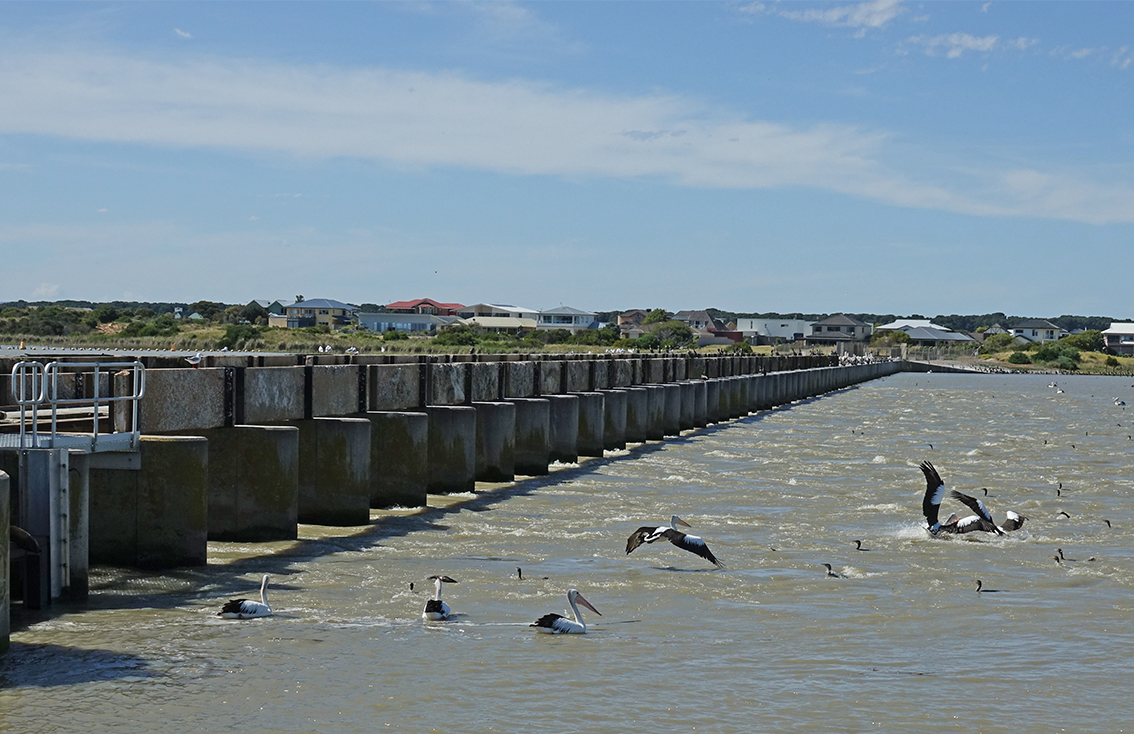
In my previous post I took you from the car park to the beginning of the Goolwa barrage. Now we will explore the main part of the barrage where the water is streaming through the gates at an unprecedented rate due to severe flooding upstream.

View along the barrage

With the floodgates open there is an overabundance of food being washed out into the Coorong. The freshwater is laden with silt and leaves a brown stain across the seaward side of the barrage which actually extends to Goolwa Beach and Victor Harbor.

Enlargement of first image showing interspecies rivalry

Long-nosed Fur Seals, Australian Pelicans and Great Cormorants are positioned to ambush fish and any other food as the water cascades through the gates. On every level this is quite a spectacular natural event and onlookers, armed with phones and cameras, are making the most of the situation.

Too much of a good thing

I spend some time taking shots that I hope will capture the essence of this event as well as a few close-ups of the different species. When animals are engaged in feeding behaviour they often ignore people which creates the perfect opportunity for more intimate images.

Sub-adult Pacific Gull (still has darker markings)

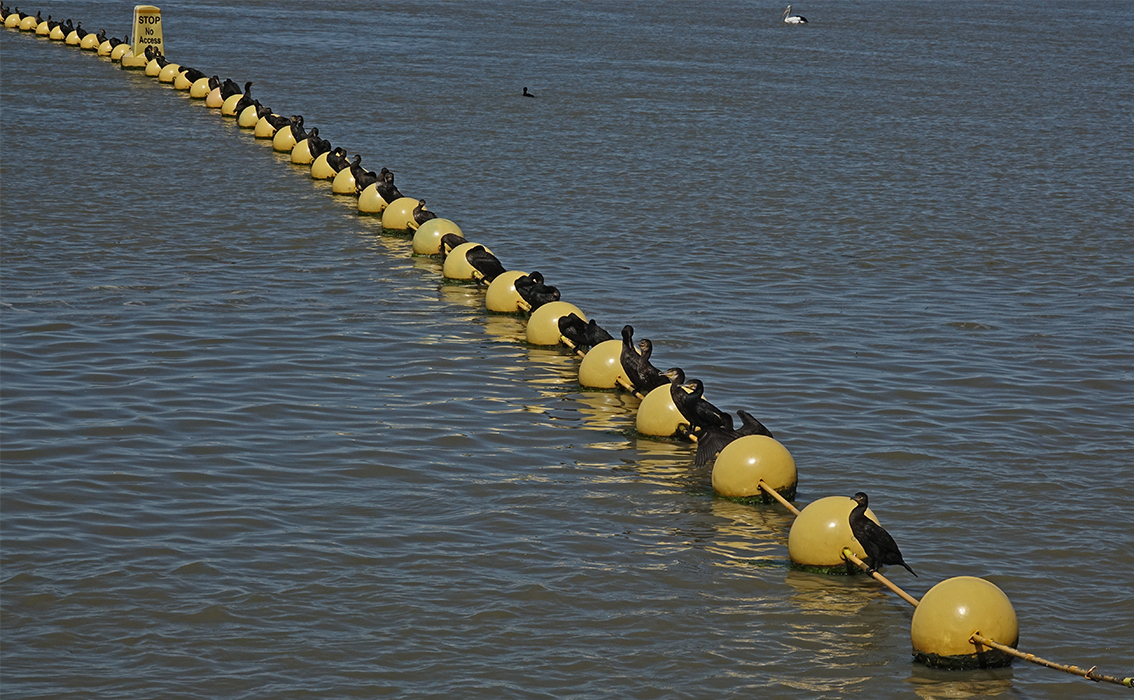
Floats with Great Cormorants

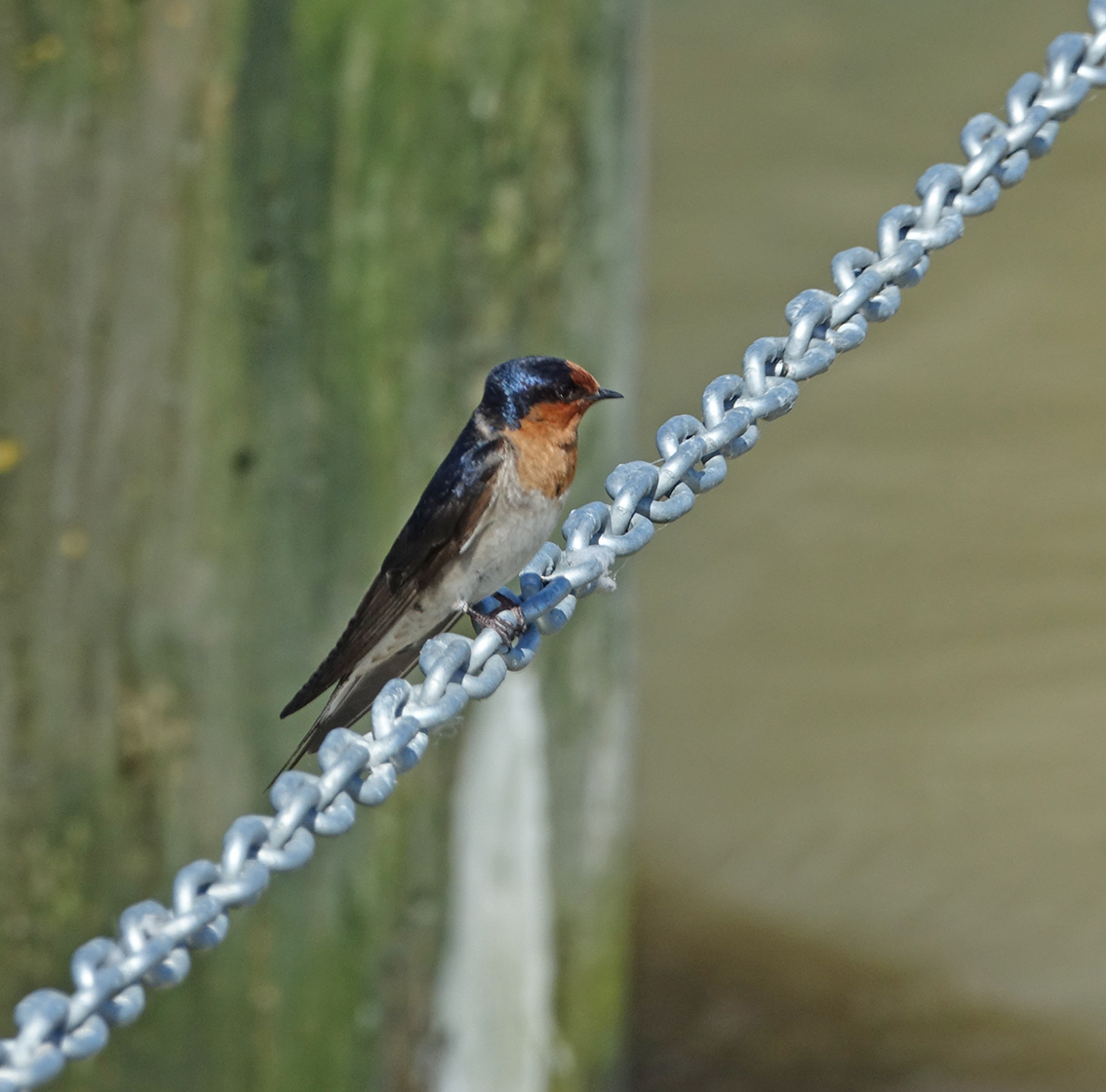
Swallow at rest

It is time to leave. I stroll back along the walkway watching swallows, cormorants and occasional Pacific gull perching on bollards, chain link and floats. I am halfway back to the bank when I notice an elderly couple pointing excitedly at the area where I was just watching the seals.

Catching a ride

Close up of previous image

Time to go

Intrigued, I walk back to the viewing platform and to my surprise they have spotted one of the most unusual examples of animal behaviour I have ever witnessed. A few metres below us, a seal is resting in the water, catching the sunlight on a raised flipper with a Blue-tongue Lizard lying across its body. I can only assume the reptile is taking a break from the swiftly flowing water. The lizard stays for a few minutes before ‘disembarking’ and continuing its journey towards the far bank. Extraordinary!!!!

Historic Goolwa Hotel

On that note, I ‘call it a day’ and walk back to the car. My next stop will be the historic township of Goolwa. There is a wonderful gallery called ‘Art Worx’ where I love to browse and sometimes pick up something special for the house or garden. Finally, the Goolwa Bakery, for a chicken and vegetable pie and perhaps a vanilla slice to follow. Always a pleasant way to wind up any trip to this fascinating waterside location.

Cheers

Baz

Additional notes

This is an easy walk/drive which is quite suitable for families and seniors with public toilets, barbecues, parking and other facilities nearby.

Please pass on this blog title and or contact information (URL) to any person or organisation with an interest in taking walks and enjoying wildlife in SA.

Click on these links and see more South Australian stories and pictures in my Weekend Notes articles as well as locating similar blogs on Feedspot’s top 20 Australian wildlife blogs

https://www.weekendnotes.com/profile/651267/

https://blog.feedspot.com/australian_wildlife_blogs/

Commissariat Point’s Beachside Wildlife

25 Oct

Dear Reader:

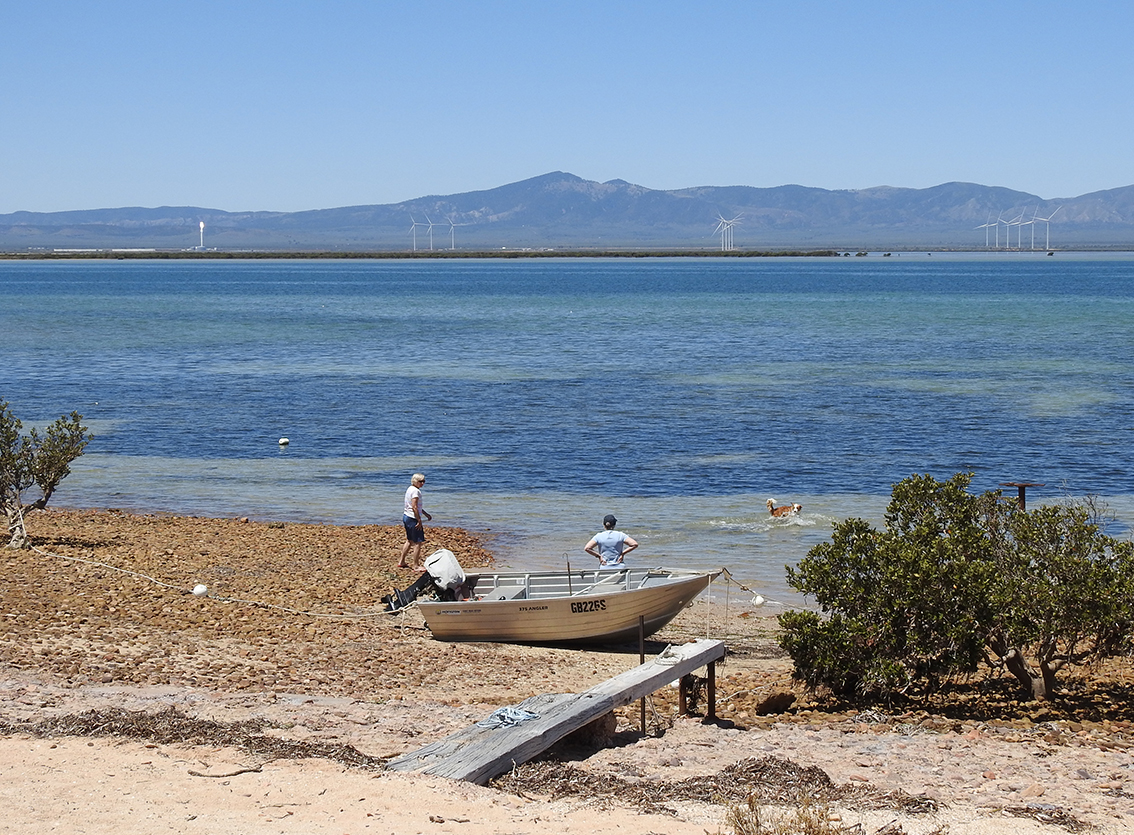
The boat is high and dry on the turning tide. Time for a stroll along the shoreline. A little exploration of the intertidal zone.

Tide is Out

Commissariat Point is a ten-minute drive south of Port Augusta near the army testing and training grounds. It is a community of shacks, some quite opulent, where a few owners live permanently while others visit or rent on weekends and holidays.

Shacks, scrub and windfarm in the evening light

These upper reaches of the Spencer Gulf are also lined with one of the State’s truly wonderful trees, the Grey Mangrove. Mangroves live between high and low water and have many adaptations to help them survive this challenging environment. They produce aerial roots called pneumatophores which help the plant to breathe in the sticky mud that is common along the shoreline. Their leaves are shiny on one side and secrete salt particles on the other.

Grey Mangroves

Mangrove leaves

There is quite a lot of seaweed around the high tide mark. It has been deposited on the beach during winter storms and is home to a variety of animals. There are worms, crabs, insects and even small lizards in this unusual habitat which retains moisture below the sun-dried outer layers.

Gecko species in seaweed

Just above the high tide mark lies a thin line of vegetation which is tolerant to the windy and salty conditions. I am quite surprised to discover some Flax Lilies growing here. The delicate flowers are attracting a few buzz-pollinating native Blue Bees. The term buzz pollinating refers to their ability to spread pollen through the high frequency beat of their wings.

Blue-banded Bee on Flax Lily

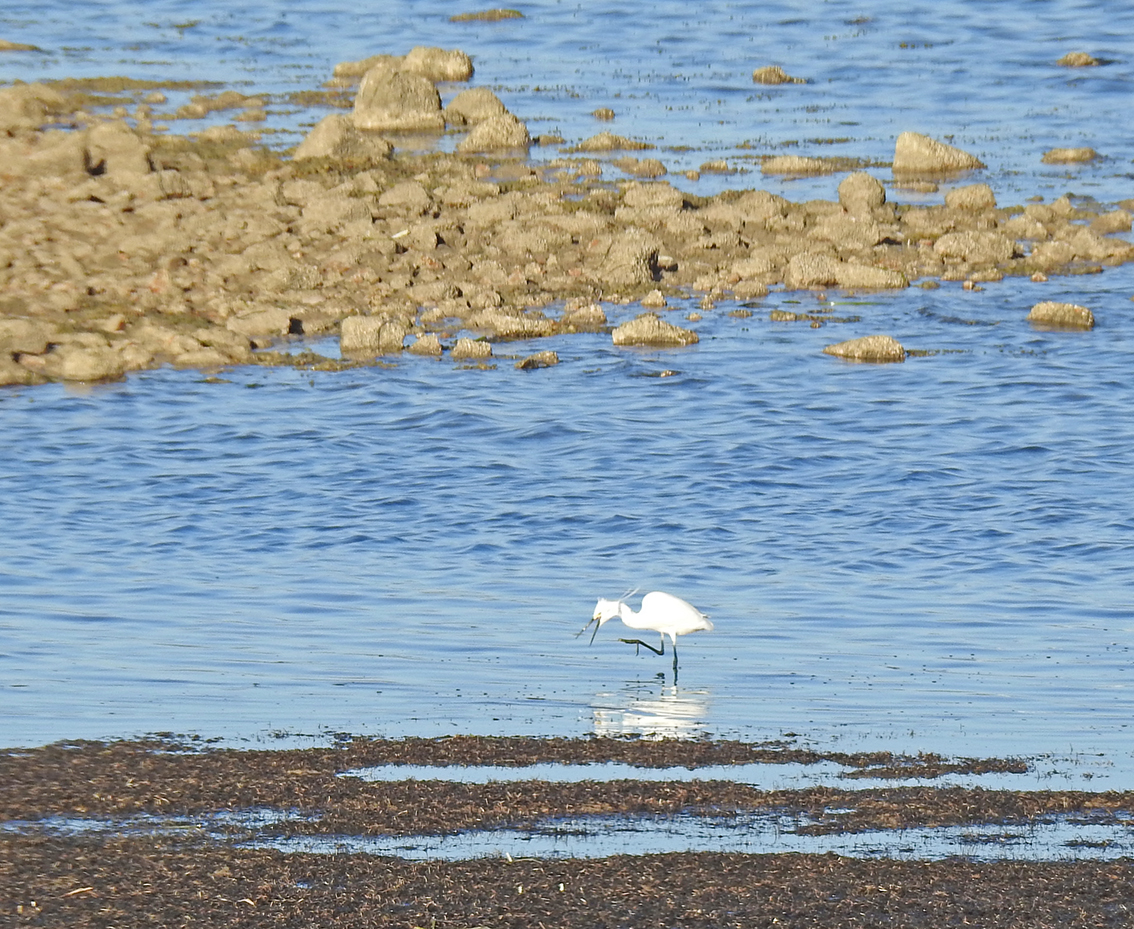
The light is starting to fade and the tide is coming in as my walk draws to an end. A few wading birds are coming closer to the shore with the incoming water and I try my luck at photographing them in the soft light. A nice way to finish my initial exploration of this tiny settlement at the head of Spencer Gulf.

Heron using feet to help scare out fish and other small animals

Cheers

Baz

Additional notes

This is an easy walk which is quite suitable for families and seniors with parking but no other facilities. It is dog friendly.

Please pass on this blog title and or contact information (URL) to any person or organisation with an interest in taking walks and enjoying wildlife in SA.

Click on this link and see more South Australian stories and pictures in my Weekend Notes articles

https://www.weekendnotes.com/profile/651267/

Title Kangaroo Island….Day 2 Lesueur Conservation Park

30 Jul

Rosenberg’s Monitor a little upset

Dear Reader:

Grey clouds are shrouding the sky this morning and a cool wind is sweeping in from the sea. I check the weather app and there doesn’t seem to be any rain forecast for the day though the light will be poor.  My Sony RX10 has the larger sensor of my two cameras and seems the obvious choice for today’s jaunt through the nearby Lesueur Conservation Park.


Wildlife and Farm life

The unsealed road from the lodge towards Lesueur has been recently graded which makes travelling a little easier and I reach the turn off to the park in a few minutes. There is low scrubby forest to my left and verdant grazing land on the right. To my surprise, a flock of sheep near a small water hole are sharing their territory with Black Swans. A sweep with the telephoto also reveals a few Masked Lapwings and Grey Currawongs in the paddock.


Pea flower species

Blue Cockatoo Orchid

I make the signposted turn to Lesueur CP and a little way down the road I notice a cage trap set under a grass tree; I assume it is for feral cats which are a threat to all Australian wildlife from reptiles to birds. Today there are very few animals around which is fairly typical in cool overcast conditions and I decide to fossick around in the scrub adjacent to the road. The first thing I notice is the proliferation of flowering plants including native pea flower species and delicate blue orchids.


Grey Fantail and Silvereye

Red-browed Finch

There are small birds high in the trees but they are hard to identify. I come across a deep rut in the road which is partially filled with water. The vehicle scares several small birds away which are using the pool as a bathing area. After driving a several hundred metres down the track I leave the car and approach the ‘bird bath’ stealthily through the scrub. Taking up a position about fifty metres away I wait and within ten minutes they return. Long shots on a cloudy day do not make for award winning images but they do help me identify these small birds as; Silvereyes, Grey Fantails and Red-browed Finches. Meanwhile a large centipede is burrowing through the leaf litter next to the log I am sitting on. Telephoto to macro in a split second supports my use of bridging cameras in some circumstances.


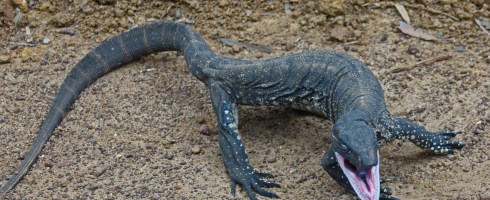
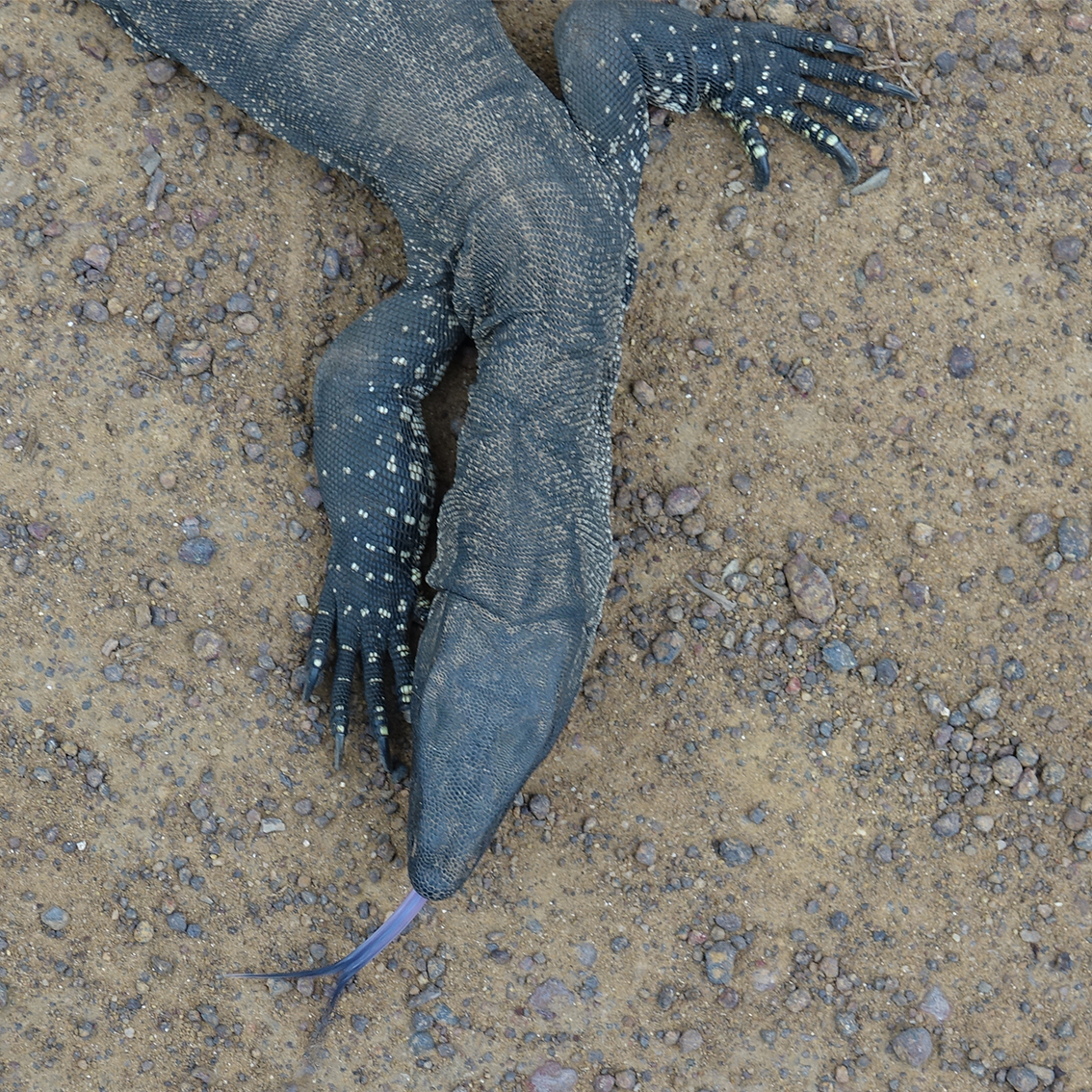
Rosenberg’s Monitor (like all monitor lizards it has a forked tongue similar to that of a snake)

Centipede species

The wildflowers, centipede and small bird species have made the excursion into the park interesting and I am sure it is worth another visit on a more amenable day. I leave the park and take another randomly chosen track which takes me away from the coastal fringe. Five minutes along this route I see the flattened shape of a large lizard by the side of the road. I stop and take a closer look hoping it has not been injured or killed by a car. As I approach the goanna/monitor which instantly informs me of my error with a hiss and quick, aggressive lunge. I take a couple of shots and usher the animal away from the road.


Creek scene


View from the lodge

A little further on, the road passes over a small creek which is picturesque even on a dull day. It then intersects with another road, which my GPS informs me, leads back towards ‘Seadragon Lodge’( see link below for more information) where I started my day’s adventure. By now the clouds have shifted and patches of blue sky are brightening up the day. Time to relax, put a log in the combustion heater and sort through my images while enjoying the view across the gully to the ocean.

Cheers

Baz

Additional notes

Seadragon Lodge……  https://seadragonlodge.com.au/

This is an easy drive which is quite suitable for families and seniors and the lodge is wonderful with magnificent views and abundant wildlife.

Please pass on this blog title and or contact information (URL) to any person or organisation with an interest in taking walks and enjoying wildlife in SA.

Click on this link and see more South Australian stories and pictures in my Weekend Notes articles

https://www.weekendnotes.com/profile/651267/