Archive | Sony RX10 Mk 3 camera RSS feed for this section

Monarto Conservation Park….Wildlife and Wildflowers

24 Oct

Dear Reader:

A small group of medium sized, black, birds are foraging near the track which leads deeper into the Monarto Conservation Park. I zoom in on them using the full range of the Sony lens. Bright red eyes and white flashes on the wings identify them as White-winged Choughs.
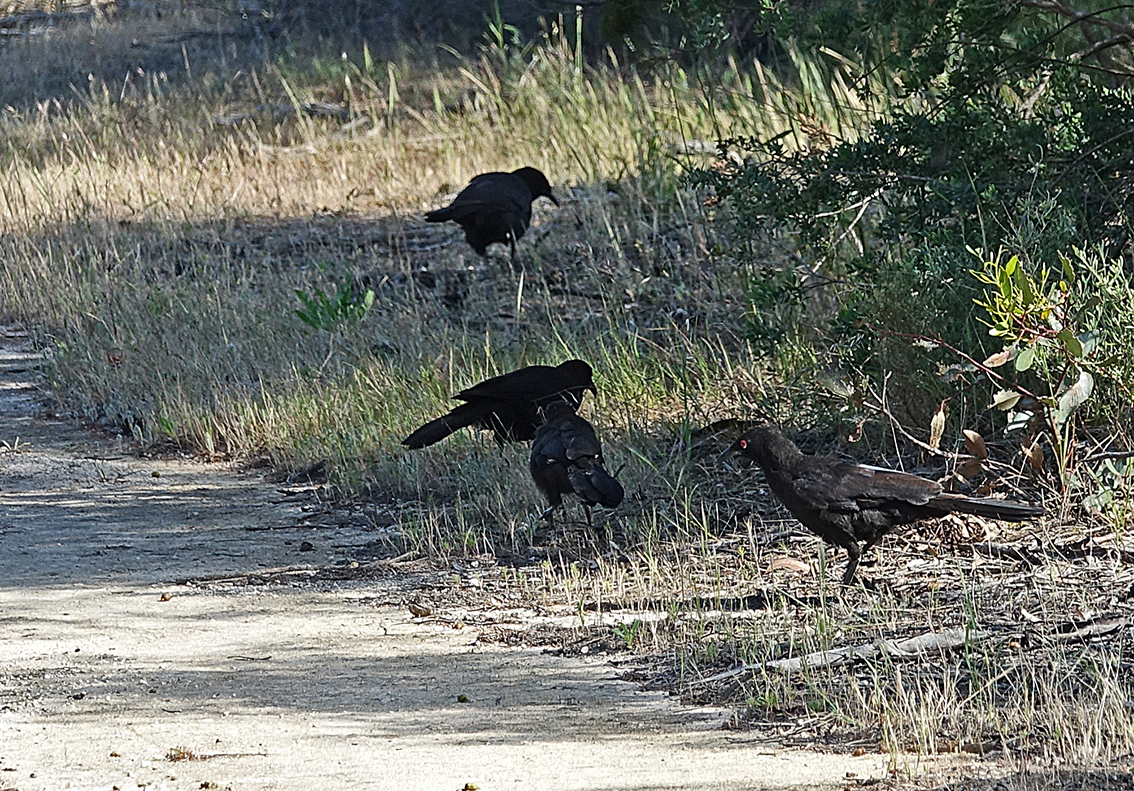
White-winged Choughs
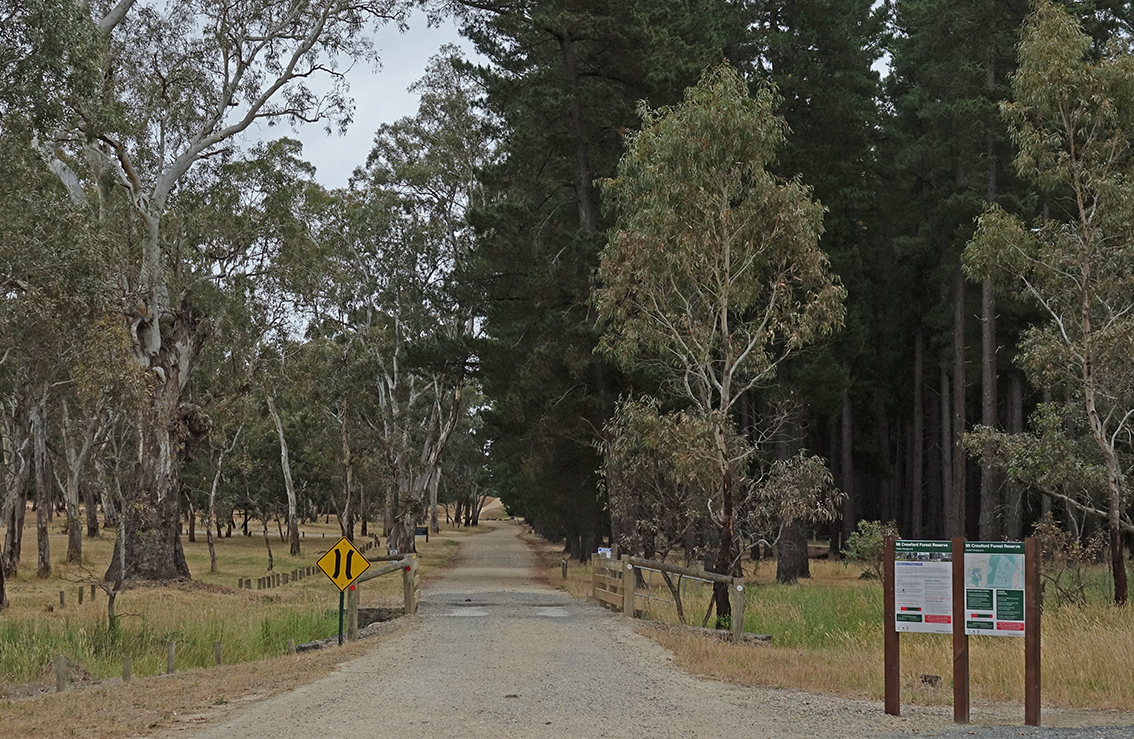
Park entrance

As I walk further into the park, it is hard not to notice the variety of flowering shrubs and wildflowers blooming in the understory. The blossoms are supporting a wide variety of wildlife including: native bees, honeyeaters, lizards and possums.

Erect Guinea-flower
Fringe Myrtle
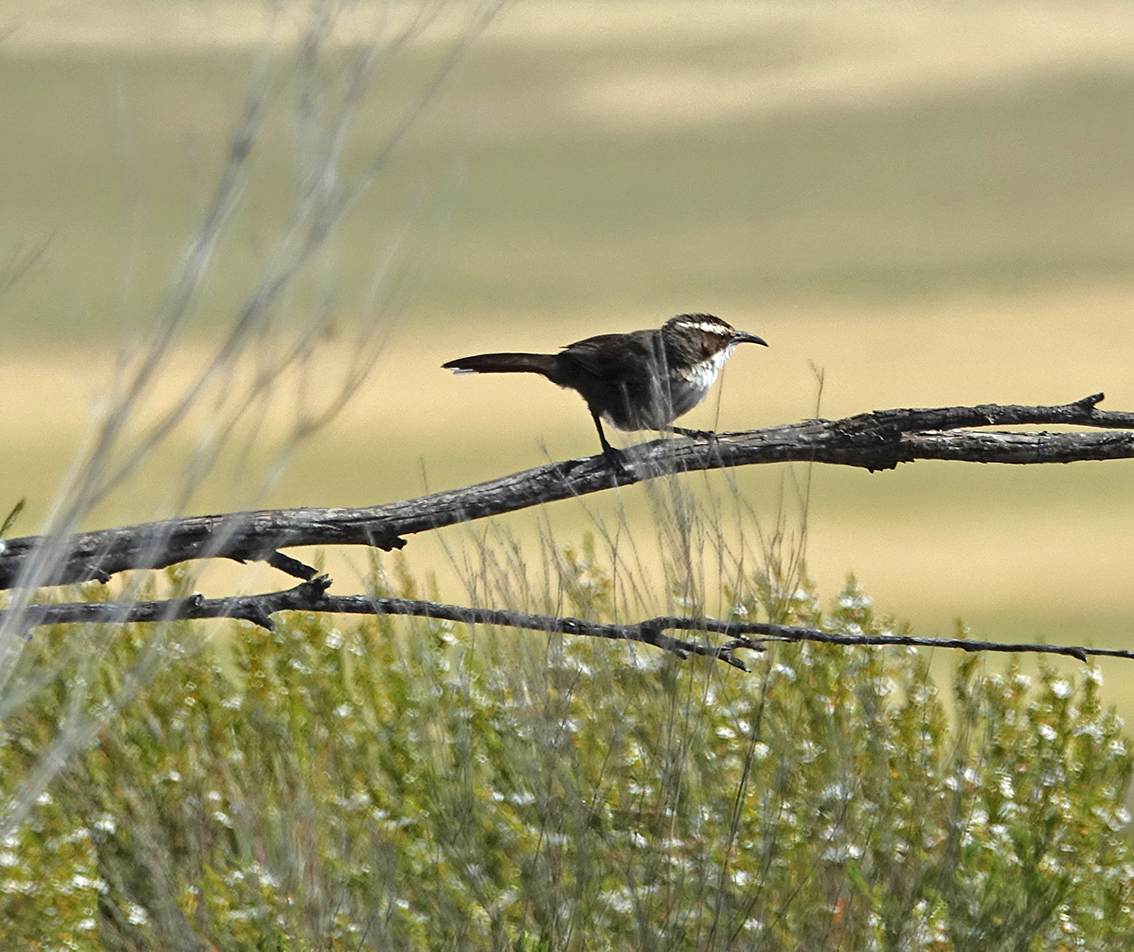
White-browed Babbler

The birds in this area seem to be quite wary. I find myself shooting at long range and having to use a ‘sit quietly and wait’ approach. My first reasonable result is an image of a White-browed Babbler perched on a branch; a species not often seen around the Adelaide area.

Red Wattlebird
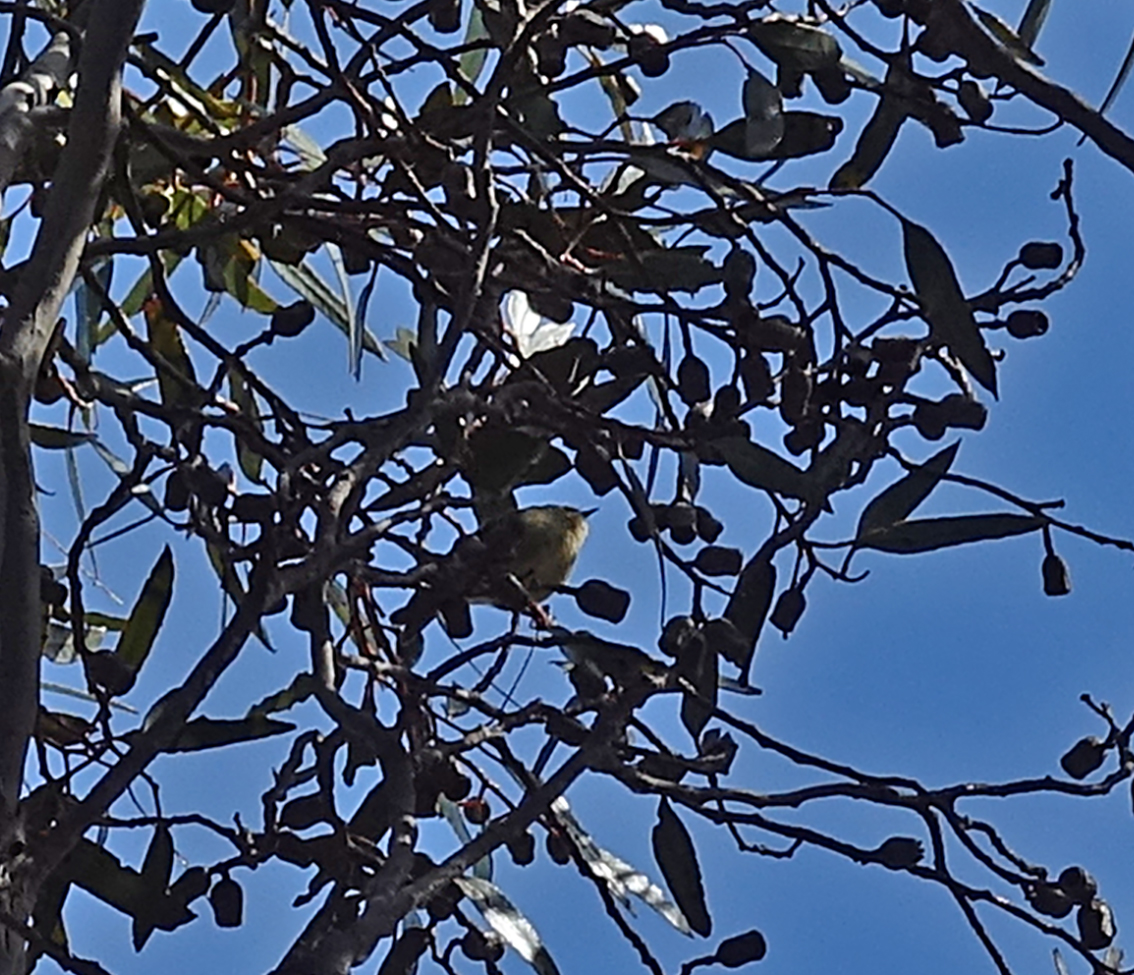
Thornbill species

There are eucalyptus blossoms high in the canopy and with a little careful stalking and patience I photograph a Red Wattlebird as well as the outline and faint detail of a Thornbill; both perched amongst the leaves.

White-tipped Brown Bee Fly

I am unable to spot any reptiles so I try to diversify my day’s captures by searching for some unusual insects. Flies, mosquitoes, hoverflies and some wasps are abundant. However, it is a rather unusual White-tipped Brown Bee Fly that catches my eye as it lands on a sandy clearing amongst the matt of twigs and leaves.

Native Pine and Eucalypt trees
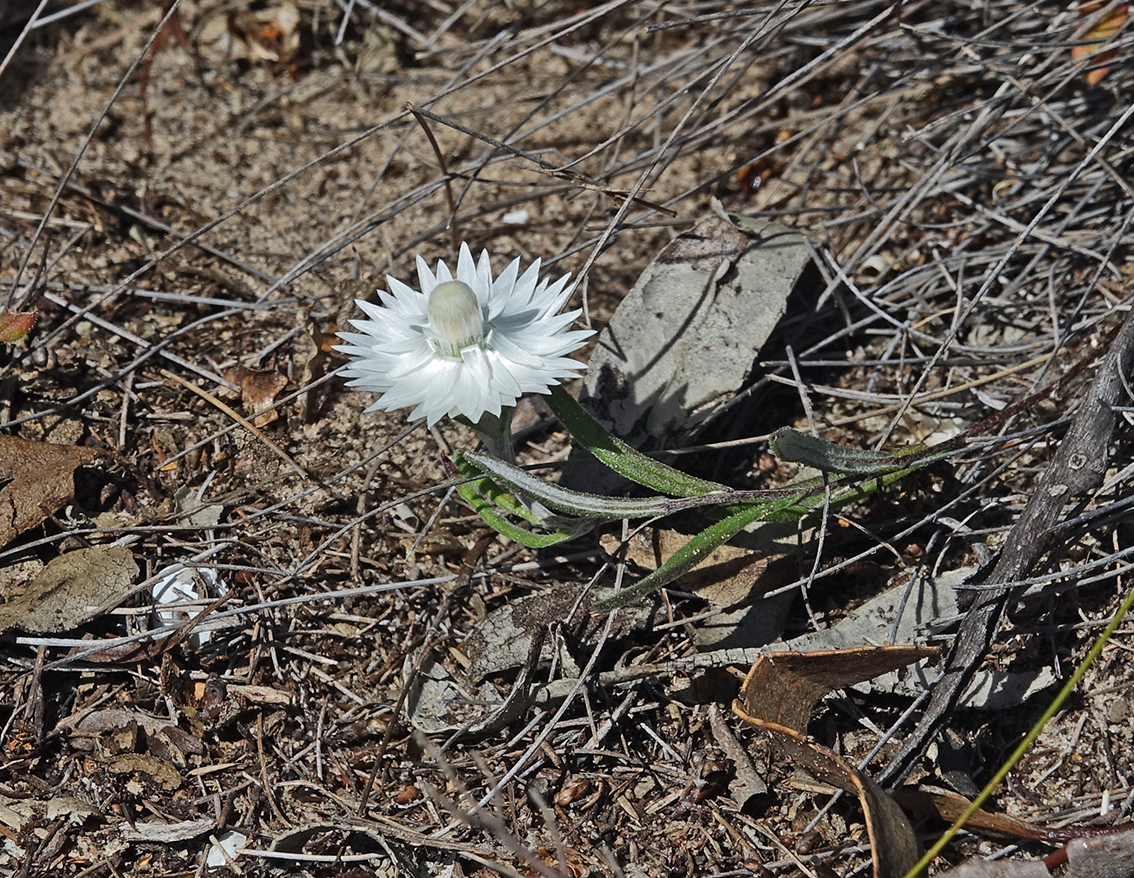
Emerging Everlasting Daisy flower

My walk is almost over. I stroll down a wide track of Mallee and Native Pine searching for one last image. I’m hoping for a roo or some interesting stock in the adjacent paddocks. However, it is a strange domed flower head set amongst a collar of sharp white petals that intrigues me. Later, at home, I identify it as an Everlasting Daisy, with its central yellow mass of disc flowers about to be unravelled.     

Cheers

Baz

Additional notes

Other animals seen, heard but not photographed: Sulphur-crested Cockatoo, Striated Pardalote

The camera used for this post is a Sony RX10 Mark 3

This is an easy walk and drive which is quite suitable for families and seniors.

Please pass on this blog title and or contact information (URL) to any person or organisation with an interest in taking walks and enjoying wildlife in SA.

Click on these links and see more South Australian stories and pictures in my Weekend Notes articles as well as locating similar blogs on Feedspot’s top 20 Australian wildlife blogs

https://www.weekendnotes.com/adelaide/writer/452/

https://blog.feedspot.com/australian_wildlife_blogs/

Tasmania’s Flinders Island….Day 1

18 Apr

Dear Reader:

The Black Tiger Snake is a good two metres long with its head raised towards me. However, I am safely seated in the driver’s seat of the rented SUV.

The reflection in the side mirror suggests a cautious approach to photographing a large Black Tiger Snake

I am spending seven days exploring Tasmania’s Flinders Island in Bass Strait, the largest of the Furneaux Island group. My apologies for straying from my usual South Australian blogs but this fascinating Island is certainly worth a few posts.

Typical Flinders Island coastline

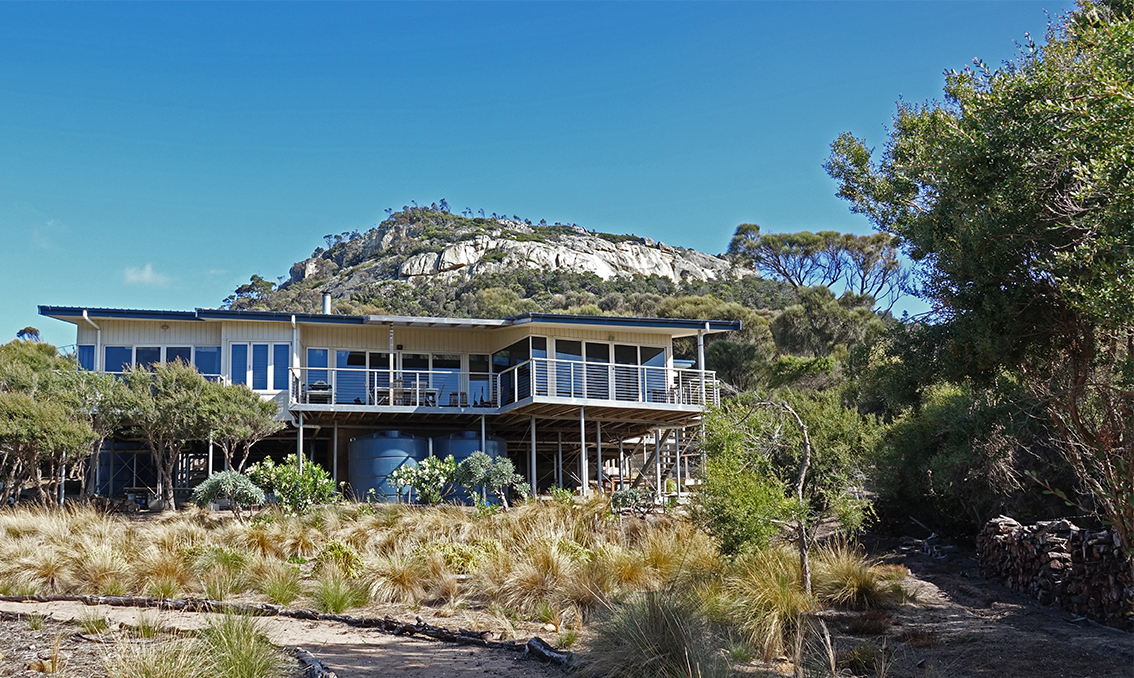
Nautilus, the coastal rental we are staying in, is truly wonderful; beautifully appointed and self-contained it offers panoramic views of the coastline.

View from Nautilus’s main living area

Unpacked and settled in, I take the path through the back garden and a  few metres of scrub emerging onto a granite platform which typifies this section of coast.

A gap in the scrub leads to the coast
Nautilus from the bottom of the garden area

The rugged outcrops and cliffs extend both ways along the shoreline, punctuated on the eastern flank by a bay with and stretch of golden sand. The sand yields Topaz crystals called ‘Killiekrankie Diamonds’. named for the tiny settlement and beach where they are found.

Killiecrankie’s bay and beach

A small bench sits on the border between scrub and granite. It is the perfect place to enjoy the striking scenery and look out for seabirds, dolphins and other coastal wildlife. I do not have to wait too long as a pod of dolphins cruises past several hundred metres out to sea while both Silver Gulls and Pacific Gulls fly along the seashore.

A Pacific Gull flies past

The sun is getting lower in the sky and there is just enough time to explore one of the many rockpools worn into the granite and accessible at low tide. This cursory look reveals periwinkles in the splash zone, limpets along the waterline and an occasional red anemone.

Rockpool in the granite coastline
Three Limpets amongst the Periwinkles….both use their tight sealing processes to retain water and can survive low tide exposure

Evening is closing in and it’s time to get back and start preparing dinner. Approaching the steps leading to the house, I notice a Red-necked or Bennett’s Wallaby in the driveway. It doesn’t seem too perturbed by my presence and hops into the nearby tree-line then stops and looks back at me.

A Red-necked Wallaby bounds across the path behind the house

My first day on Flinders Island has been quite exciting and I hope for more revelations as the week goes by.

Cheers

Baz

Additional notes

Other animals seen, heard but not photographed, Kookaburra, Fairy Wrens, Black Currawong, cormorant species

The camera used for this post is a Sony RX10 111

Please pass on this blog title and or contact information (URL) to any person or organisation with an interest in taking walks and enjoying wildlife in SA.

Click on these links and see more South Australian stories and pictures in my Weekend Notes articles as well as locating similar blogs on Feedspot’s top 20 Australian wildlife blogs

https://www.weekendnotes.com/adelaide/writer/452/

https://blog.feedspot.com/australian_wildlife_blogs/

Driving the James Track to the Myponga Conservation Park

11 Mar

Dear Reader:

A Short-billed Corella perches in the fork of a gum tree. Its raucous call resonating through the still morning air.

Short-billed Corella

I am driving the largely unsealed road between Myponga and the conservation park of the same name. For a summer’s day, it is refreshingly cool but the dryness of the surrounding countryside tells a different story.

James Track

A few minutes after seeing the corella, I catch a glimpse of a group of Straw-necked Ibises strutting through the pale, yellow grass. They turn to watch me then fly off towards the coast.

Straw-necked Ibises

Further down the road there are dozens of Rose-breasted Cockatoos (Galahs) in a stand of trees. All but one takes to the air as I leave the car to take a shot of them. The plucky little bird drops out of the gum tree and hops onto an old, circular concrete well and starts to drink.

Just taking a little drink

The road takes a sweeping bend and starts to climb. I find a good vantage point and scan the broad expanse of dry pasture with my telephoto lens. What I missed from the vehicle soon becomes apparent. There are Western Grey Kangaroos scattered across the landscape in small groups of two to six animals.

Roos in the landscape
Western Grey Kangaroo (through the telephoto lens)

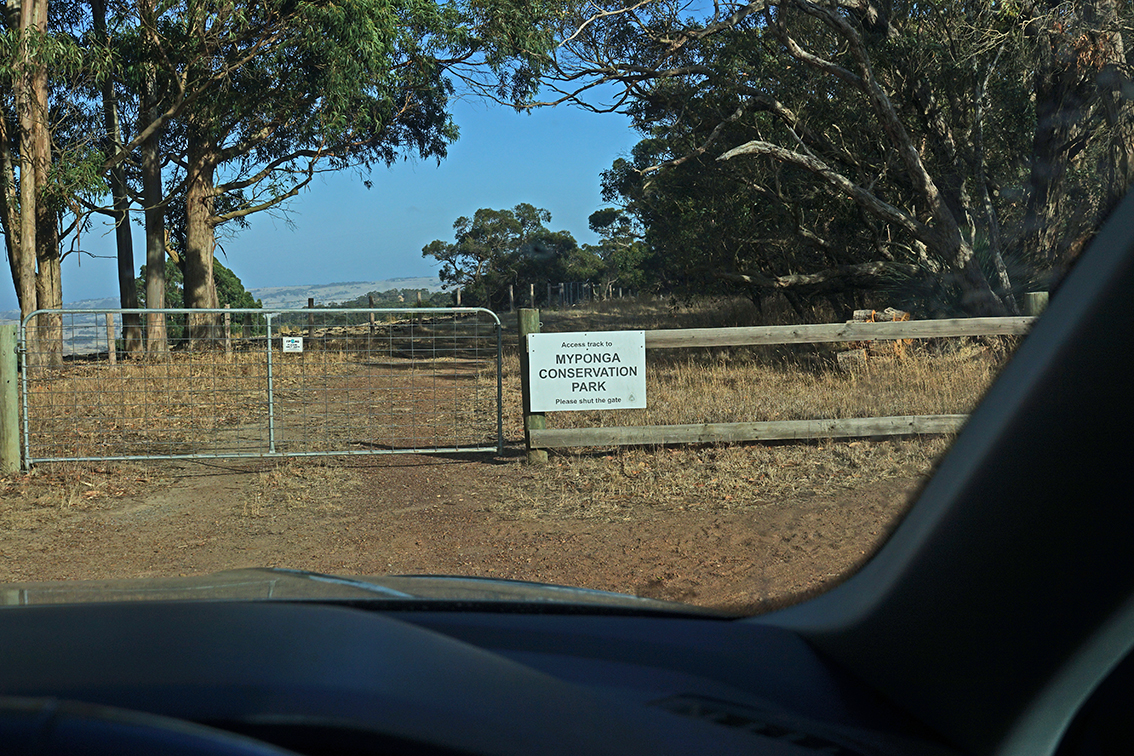
The terrain changes from lightly wooded pasture to scrub with an overstory of smaller eucalypts. Several kilometres on, I reach a gated entrance to the Myponga Conservation Park alongside a local property.  

Change if terrain near the park

Taking care to close the gate behind me I drive through a combination of rolling hills, farmland, and dense scrub. The track is about two kilometres long and ends in an open space wide enough to turn around.

Inside the park

Two trails; The Echidna and Wren, branch off from the end of the road into the park and alongside some farmland. As a bonus, there is a spectacular view across the hills towards the ocean.

Trails at the end of the park

My goal for today achieved, I drive back along the trail. At the gate I meet a local property owners and chat to him about the area. He tells me that the park is best explored in spring when the plants are in flower providing food for a range of animals.

Myponga Conservation Park gate

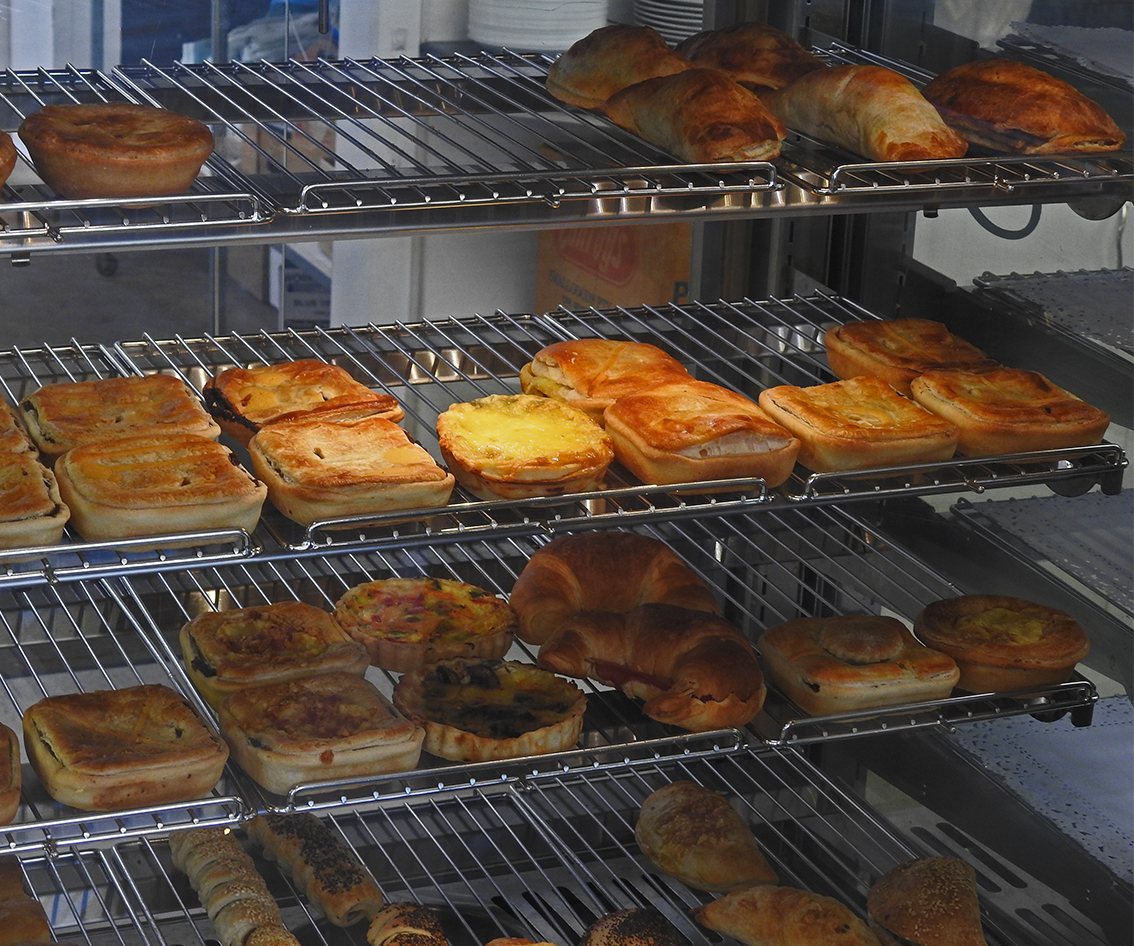
I return to Myponga back along The James Track where I enjoy the delights of the local bakery before heading home to review my images and make a note in the diary to return in the spring. 

Bakery delights

Cheers

Baz

Additional notes

The camera used for this post is a SONY RX10 Mark 3

This is an easy drive which is quite suitable for families and seniors.

Please pass on this blog title and or contact information (URL) to any person or organisation with an interest in taking walks and enjoying wildlife in SA.

Click on these links and see more South Australian stories and pictures in my Weekend Notes articles as well as locating similar blogs on Feedspot’s top 20 Australian wildlife blogs

, , ,
, , ,

The Kapunda Mine Trail…History and Wildlife

17 Jul

Dear Reader:

There is an Adelaide Rosella perched amongst the bare branches of a fruit tree in the garden of the old ‘Mine Manager’s House’.

Adelaide Rosella

I am taking a walk around the Kapunda Mine site situated on the southern edge of the mid north town of the same name. It is an easy, short walk. Despite the rather overcast conditions, I am hoping to get a few good shots of the site and local wildlife.

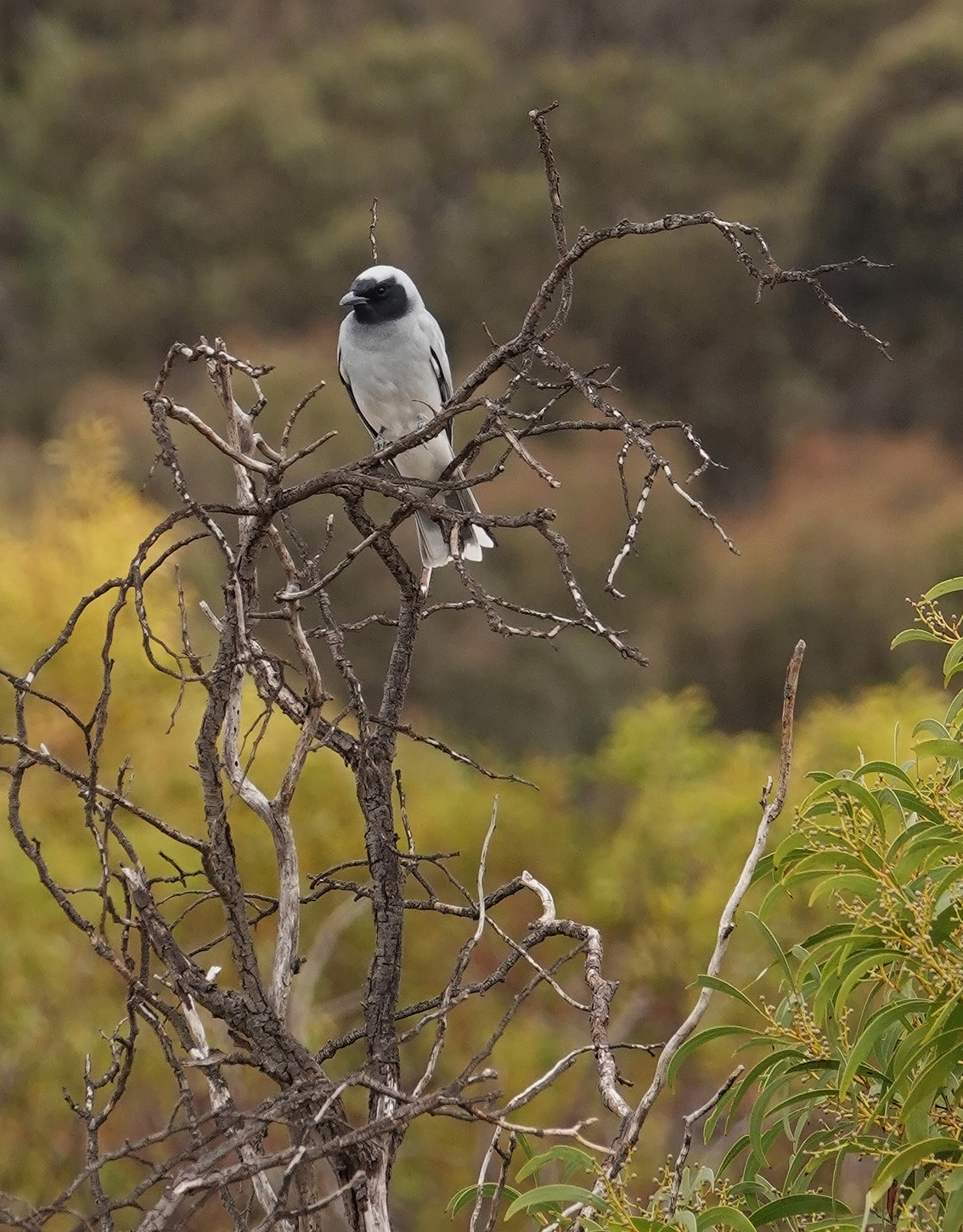
Black-faced Cuckoo Shrike (credit Debbie Simmonds)

Before my walk I spoke to several people at the Visitor Information Centre and the local hotel. They mentioned a mob of Western Grey Kangaroos in the area and the occasional Echidna encounter. Fingers Crossed!

Classic Aussie pub

From the parking bay by the old house, the marked trail leads up to a lookout and tall Chimney which was connected to the boiler house and steam engine.  This system ran different pieces of mining equipment.

Start of the trail

Leaving the chimney site I make my way down to a playground area with fascinating metal sculptures. As I read the information plaque I notice some movement in the bushes to my right. Kangaroo? No! A bunny which skips away into the bushes.

European Rabbit

Rounding one of the bends at the top of the walk I encounter more information plaques which detail a range of stories about mining processes, the life of miners as well as some anecdotes from the mine’s historic past.

One of many stories

I read some information about ‘Wheal Charles’ an early part of the complex catch a  glimpse of some tiny birds feeding on nearby saltbush plants. Focus is tricky in the poor light and with such speedy little birds I have to take a dozen shots before getting one right. They are Silvereyes, one of our smallest local species.

Silvereye

The views across the ‘minescape’ from here are quite fascinating with the streaks of different coloured minerals standing out from the browner soil and background rock strata.

View across part of the open cut section of the mine

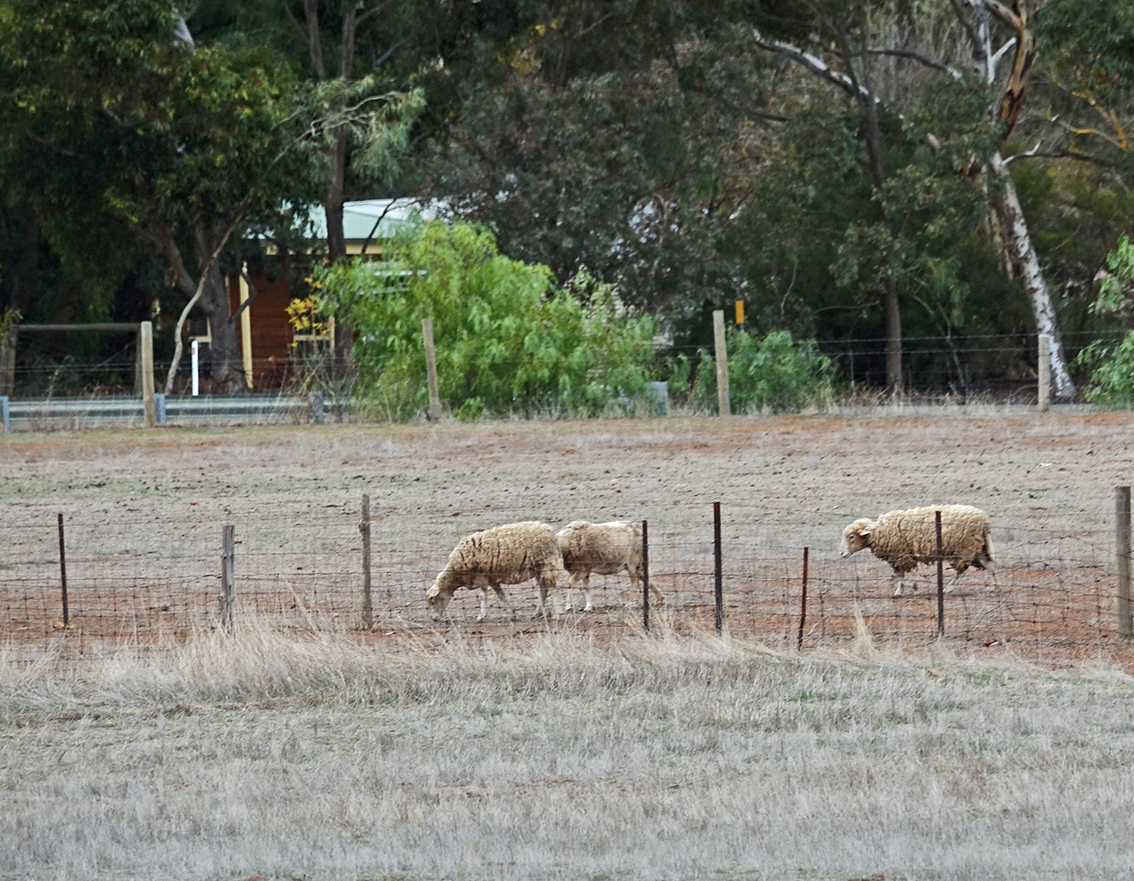
There are sheep in a paddock alongside the mine and some dark coloured birds on the ground near them. Initially, I think they are Ravens but after a closer look through the telephoto lens I spot their red eyes and realise the birds are White-winged Choughs.

Nearby pasture

White-winged Choughs

The Choughs are my final wildlife encounter. However, as I make my way back to the beginning of the looped trail I notice a series of placards telling a story about Sir Sydney Kidman a famous Australian outback figure. A great way to finish my tour of this charming town’s historic mine site.  

A story to end the walk

Cheers

Baz

Additional notes

This is an easy walk and drive which is quite suitable for families and seniors with public toilets, barbecues, parking and other facilities nearby. At the time of writing this post, the trail and facilities were undergoing a major upgrade. It is dog friendly.

Please pass on this blog title and or contact information (URL) to any person or organisation with an interest in taking walks and enjoying wildlife in SA.

Click on these links and see more South Australian stories and pictures in my Weekend Notes articles as well as locating similar blogs on Feedspot’s top 20 Australian wildlife blogs
https://www.weekendnotes.com/adelaide/writer/452/

https://blog.feedspot.com/australian_wildlife_blogs

Kayeema Conservation Park, Kangaroos, Koalas and a nearby winery

23 May

Dear Reader:

On entering the forest of eucalypts, native pine and acacias we hear the bellowing grunts of a male Koala. Within a few minutes we find the perpetrator of this solo cacophony hanging upside down in a gum tree.

An unusual Koala pose

Looking more carefully, we notice a second, smaller animal; probably a female. The story becomes clear as the male rights himself then clambers across the gap towards his intended.

Lady in waiting

On my way

We leave the Koalas to their mating rituals and move further along the narrow trail. The weather has been dry this autumn and the wildlife is scarce with not much food on offer. However, we do spot some Superb Fairy Wrens and an Australian Tree Creeper. With shadows and distance against us, photography is quite a challenge.

Treecreeper on the forest floor (poor light)

Dry weather has also impacted the invertebrate population. However, there are numerous Leaf Curling Spiders stringing their webs across the trail and I manage to find the silken lair of a trapdoor spider. Ants are numerous and there are a few Common Brown Butterflies fluttering around.

Leaf Curling Spider

Common Brown

The Dominant vegetation in the Kyeema Conservation Park varies between Pink Gums and Cup Gums on the flatter stretches to taller Stringy Barks and thick growths of bracken and fern in the gullies . Several different shrubs are flowering in the gullies including bright red Flame Heaths.

Trail near the start of the walk

Stringybark habitat

Heath species

Today, we are following the Mulurus hike, a short walk of about 1.5 Kms. It loops back to the park entrance where it intersects part of the Heysen Trail. We follow the Heysen Trail for around 500meters then cut up to Woodgate Road and return to the small car park.

Park entrance

The park is fringed by pasture and there are Australian Magpies and Adelaide Rosellas feeding on the ground with sheep in the background. The occasional call of little Ravens and White-winged Choughs as well as the twitter of tiny birds in the canopy accompanies us throughout the walk.

Adjacent pasture

After leaving the park we take a series of unsealed roads back to Brookman Road, the main bitumen road leading back to Adelaide through Willunga and McClaren Vale.

Backroads to Brookman Road

Near the intersection of Brookman Road and Woodgate Road, which leads to Kyeema, there is a lovely winery, the Lazy Ballerina, which is certainly worth including on your itinerary.

Lazy Ballerina Winery

Finally, to complete our day visiting Kyeema, a pair of Western Grey Kangaroos are lazing in the shade just walking distance from the Winery. 

Male Western Grey Kangaroo

Cheers

Barry and David

Additional notes

This is an easy to moderate walk which is quite suitable for families and seniors. There is parking. 

Please pass on this blog title and or contact information (URL) to any person or organisation with an interest in taking walks and enjoying wildlife in SA.

Click on these links and see more South Australian stories and pictures in my Weekend Notes articles as well as locating similar blogs on Feedspot’s top 20 Australian wildlife blogs

https://www.weekendnotes.com/adelaide/writer/452/

https://blog.feedspot.com/australian_wildlife_blogs

Khaiserstuhl CP, Wildlife in Wine Country

16 Apr

Dear Reader:

The predatory bird circles high in the morning sky then swoops down low to within a hundred metres of me. A Wedge-tailed Eagle, Australia’s largest bird of prey.

Wedge-tailed Eagle hunting

I am heading for the Kaiserstuhl Conservation Park, a twenty minute drive from Nuriootpa in the Barossa Valley and around 90 kms from Adelaide. Kaiser Stuhl was a popular winery, now incorporated into Penfolds, that flourished in the region for over half a century. The name comes from a prominent hill in the Barossa. Indigenous people referred to the area as Patpoori which means little grass tree, a species common to the area.

Beginning of the Wallowa Trail

As I approach the park from Tanunda Creek Road the boundary between native scrub and vineyards is quite obvious; a metaphor for the unique blend of beautiful countryside and rural endeavour that typifies the Barossa Valley.

Scrub and vines on the periphery of the park

I leave the car opposite the entrance to the park and clean my boots in the scrubbers provided which lessens the chance of transferring Phytophthora (root rot) infection. Two Tracks, Stringybark and Wallowa are clearly marked and I choose the latter. Within a few metres I spot a group of Superb Fairy Wrens in the undergrowth; their fluffy plumage suggests that some are juveniles.

A juvenile Superb Fairy Wren is well camouflaged in the leaf litter

Leaf Curling Spider inside leaf and attached to web

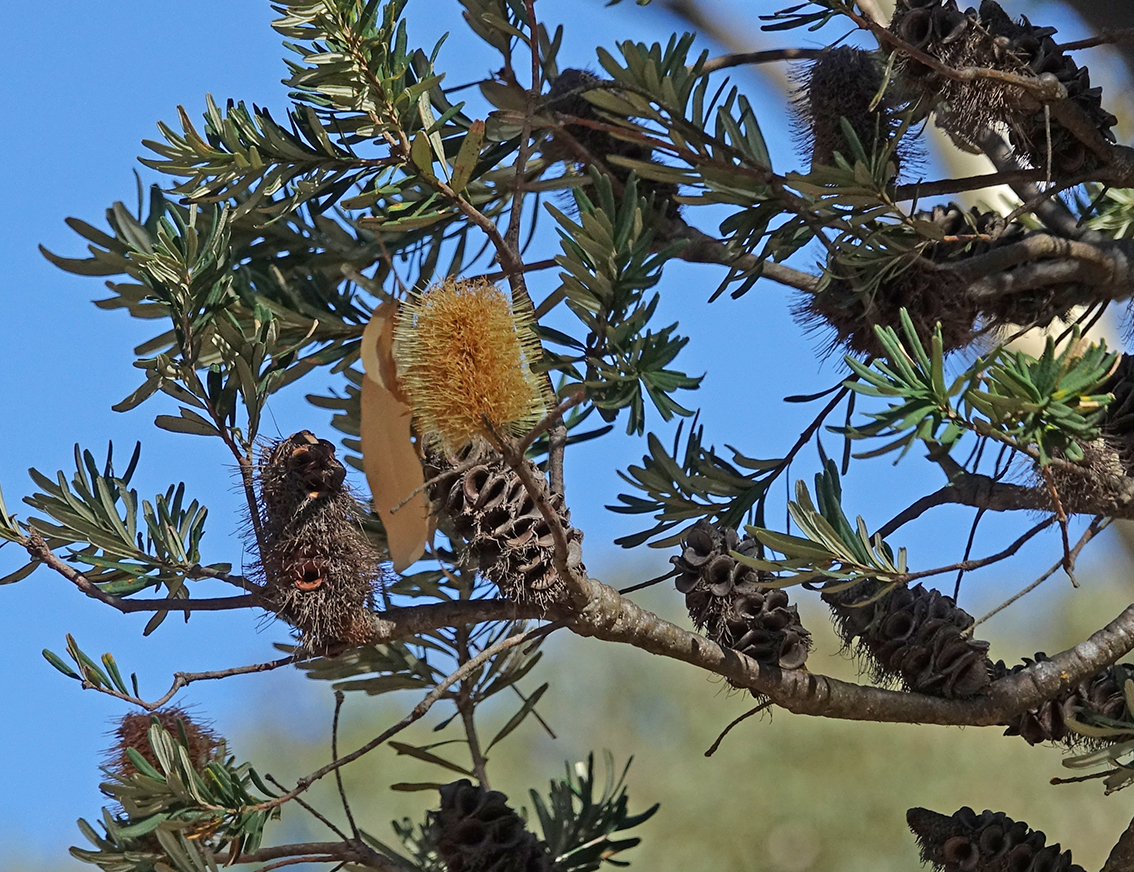
To my surprise and delight there are numerous identification plates near the base of some bushes and trees. As I am not a particularly competent botanist, being able to easily name some of the plants I encounter when constructing my posts is a real bonus. I wish more parks would follow this example. I pass some banksias which have been fire blackened, a process which opens up their seed pods helping to rejuvenate fire affected bushland. Further along the trail I notice a Leaf Curling Spider which has built its web, and suspended home, in a Grass Tree.

Eucalypt and Grass Tree (Xanthoria) scrub


Banksia species showing flower and open seed pods


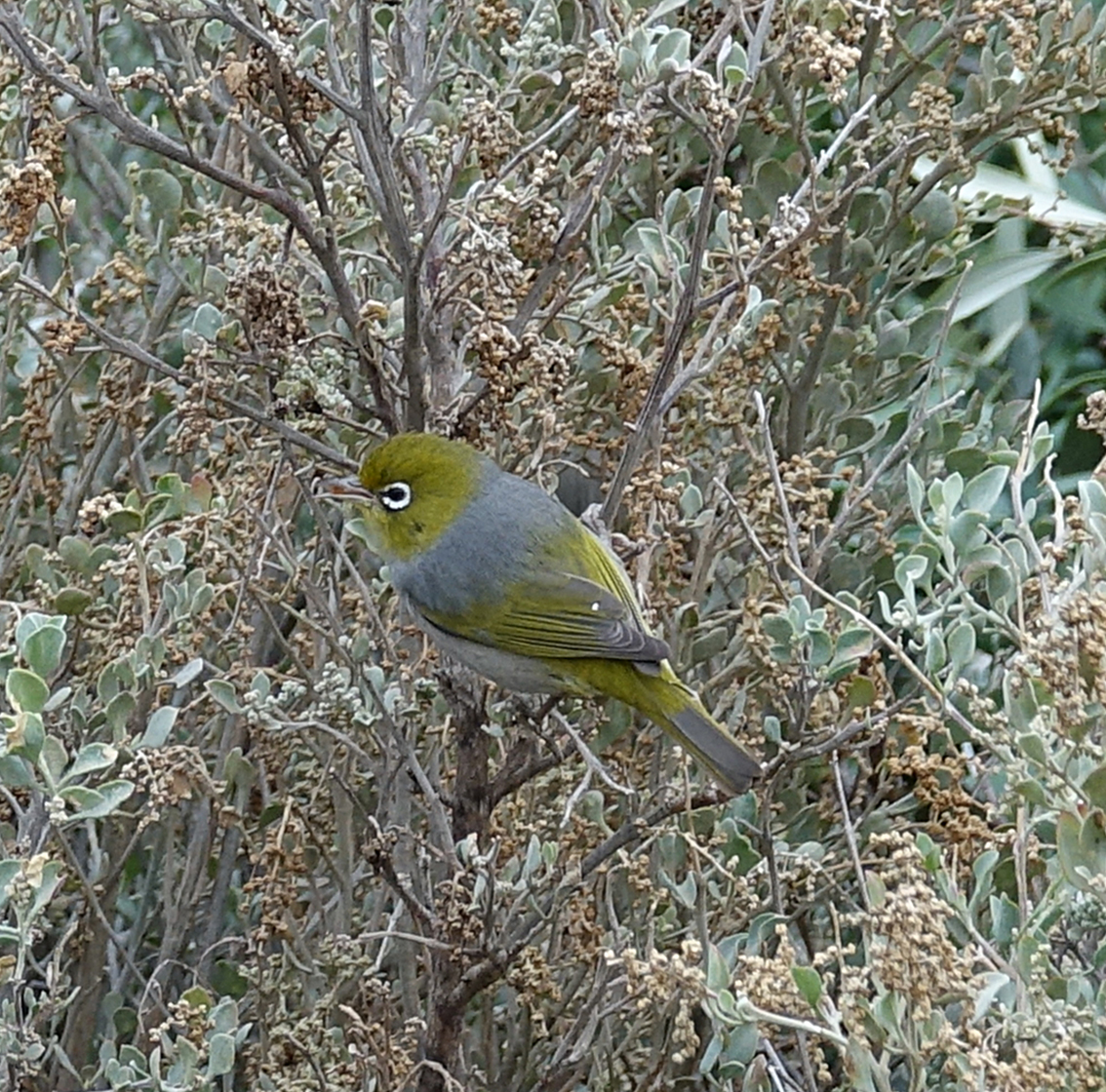
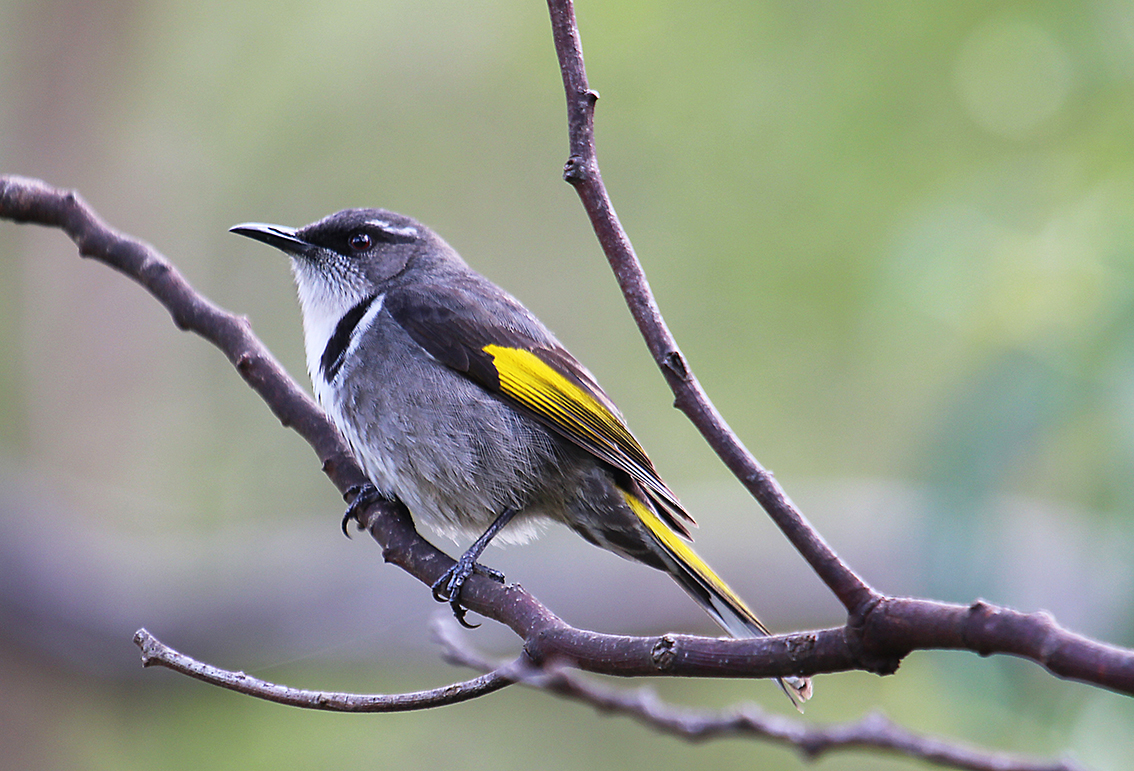
There are smaller birds in the canopy and I use the full extension of my Sony RX10 3 to identify them. However, getting a clear photograph proves impossible. Later examination and a lot of Photoshopping reveals them as: Silvereyes, a pardalote species, Crescent Honeyeaters, New Holland Honeyeaters and a Scarlet Robin.

Crescent Honeyeater (Image from my stock photos)

Time is marching on and I have an appointment in Nuriootpa to learn more about the Khaiserstuhl name and its history; which I will reveal in a later post. As I retrace my way to the entrance I hear the distinctive rustle of a larger animal in the scrub to my left. I freeze and ease the camera around slowly. A pair of Western Grey Kangaroos are standing motionless about fifty metres away. An adult and half grown joey. A lovely way to finish my walk.

Adult Western Grey Kangaroo

Western Grey Kangaroo joey

Cheers

Baz

Additional notes

This is an easy walk and pleasant drive which is quite suitable for families and seniors. There are trail markers as well as panels with maps and other information.

Please pass on this blog title and or contact information (URL) to any person or organisation with an interest in taking walks and enjoying wildlife in SA.

Click on these links and see more South Australian stories and pictures in my Weekend Notes articles as well as locating similar blogs on Feedspot’s top 20 Australian wildlife blogs

https://www.weekendnotes.com/adelaide/writer/452

https://blog.feedspot.com/australian_wildlife_blogs

Monarto’s Wildlife Roads

30 Mar

Dear Reader:

David notices a pair of brightly coloured Mulga Ringneck parrots landing in a tree by the roadside. I pull the car over and power down the window to allow both of us to capture some images.

Mallee Ringneck

On this initial foray into the bushland around Frahns Farm, in the Monarto area, we are exploring the roads surrounding a fenced off region which is being revegetated. We have travelled north along Frahns Farm Road after leaving the old Princes Highway then headed west along Disher Hill Road before returning south to the highway along Wattle Road.

At the crossroads of Theile, Peach, Frahns Farm and Disher Hill Roads 1

At the crossroads of Theile, Peach, Frahns Farm and Disher Hill Roads 2

We stop several times on Disher Hill Road and walk along the roadside for a few hundred metres scanning the terrain for wildlife. There is a continual background noise from the aptly named babblers (White-browed Babblers). In addition, tiny Silvereyes, Diamond Firetail Finches and wren species flit through the bushes and canopy, adding their tweets and twitters to the avian symphony.

White-browed Babbler

Further along Disher Road we are lucky enough to spot and photograph a solitary Brown Treecreeper and a group of White-winged Choughs engaging in their entirely different feeding strategies. The treecreeper meticulously searches the branches for insects while the gang of omnivorous choughs rake their way through the leaf litter.

White-winged Choughs

Brown Treecreeper

As I turn to get back into the car, a movement in the scrub catches my eye. A pair of Western Grey Kangaroos are moving slowly through the trees on the other side of the road. I catch one in the viewfinder before they bound away.

Western Grey Kangaroo

There were a few insects in the area…..Monarch Butterfly feeding

The drive back along Wattle towards the old Princes Highway provides a mixture of scrub, pasture and crop fields. There are freshly shorn sheep in a holding paddock. Little Ravens and Australian Magpies  perch in the trees and we catch sight of a lone bunny and a few more roos in the distance.

A little chilly without our coats on

As well as the wildlife along these roads there have been some interesting ruins and the more contemporary Mannum to Adelaide pipeline; both of which help provide some additional photographic perspectives to our drive.

The Mannum to Adelaide pipelines snakes through the scrub and rural landscape

Old farmhouse

The final stop on our day exploring Monarto’s backroads is an old service station in Callington, a small township just off the Princes Highway. We top up the car and enjoy a couple locally made pies while sitting on an old couch in front of the station.

Callington service station, post office and general store

Cheers

Baz

Additional notes

This is an easy drive which is quite suitable for families and seniors.

Please pass on this blog title and or contact information (URL) to any person or organisation with an interest in taking walks and enjoying wildlife in SA.

Click on these links and see more South Australian stories and pictures in my Weekend Notes articles as well as locating similar blogs on Feedspot’s top 20 Australian wildlife blogs

https://www.weekendnotes.com/adelaide/writer/452

https://blog.feedspot.com/australian_wildlife_blogs

Exploring Meadows Creek……an interesting drive

3 Mar

Dear Reader:

I hear movement in the long grass. Fifty metres away a Western Grey Kangaroo twitches its ears and looks back at me before slowly hopping into the scrub.

Western Grey Kangaroo

I am exploring Meadows Creek from three roads that intersect the creek from Brookman Rd, which starts at the top of Willunga Hill and terminates at Meadows. The first is Adams Gully Road.

Adams Gully Road ford

Here, the creek’s bank is obscured by scrub and grass. I wade through the tangle of dry stalks and spot a Common Brown Butterfly amongst a mat of fallen grass.

Common Brown butterfly

Nearby, a leaf curling spider has strung its web between some bushes. I can just make out its spindly legs protruding from its specially constructed home.

Leaf Curling Spider with legs visible

Sometimes tracking a creek or river is a complex endeavour. Meadows Creek runs through farmland and only flows freely when it has rained. In drier months it is typical of many SA waterways, consisting of a series of shallow pools.

Typical summer pool along Meadows Creek

A few kilometres past Adams Gully Road is Tynan Road where there is a slightly larger more accessible pool. There are prickly blackberry stems (canes) close to the water providing a safe place for small birds to shelter. A Silvereye lands on a branch providing a nice camera angle. Then a Superb Fairy Wren puts in a brief appearance while an Adelaide Rosella perches high in one of the tall roadside eucalypts.

Tynan Road crossing

Silvereye

Adelaide Rosella

My final crossing point is on Wickham Hills Road where I walk along the dry creek bed towards a pool and spend a quiet ten minutes waiting to see what animals are in the area. Eventually a Grey Fantail alights on a nearby rock as it searches for insects near the water. Further along the creek I can hear Kookaburras calling and a pair of Yellow-tailed Black Cockatoos fly overhead.

Wickham Hills ford

Grey Fantail

Rather than drive back to Brookman Road and return to Adelaide via Meadows or Willunga, I continue along Wickham Hills Road and wind my way back to the city through some lovely rural areas.  Rich pastures, stock, vineyards, barns and farmhouses provide some picturesque, rural scenes, making a wonderful ending to my creek exploring day.

Vines and open bushland

Cheers

Baz

Additional notes

This is an easy drive which is quite suitable for families and seniors.

Please pass on this blog title and or contact information (URL) to any person or organisation with an interest in taking walks and enjoying wildlife in SA.

Click on these links and see more South Australian stories and pictures in my Weekend Notes articles as well as locating similar blogs on Feedspot’s top 20 Australian wildlife blogs

https://www.weekendnotes.com/adelaide/writer/452

https://blog.feedspot.com/australian_wildlife_blogs

Wildlife Around Chalk’s Campground

16 Dec

Dear Reader:

With the arrival of summer, grasses turn to gold with remnant shadings of green while pale gums add a subtle contrast to the landscape.

As the countryside flashes past on my way to the campground I notice a field of freshly baled hay. A flock of Sulphur Crested Cockatoos forages for any remaining seed heads.

Sulphur Crested Cockatoos

My destination is Chalk’s Campground, just past the Warren Reservoir on the road between Williamstown and Gumeracha. I am not intending to camp here; however, the interface between human habitation, rural zones and wilderness areas is an excellent place to encounter wildlife.

Although the campsite is closed between December and March, due to the danger of bushfires, it is still accessible for walking and is a destination along the famed Heysen Trail. I drove through the area a few weeks ago on a sunny day and spotted a Shingleback lizard in the undergrowth.

Although it is summer, the weather is overcast and photography a little more challenging than on my previous visit. I use the powerful lens of my Sony RX10 to scan the trees, bushes and ground in search of wildlife.  Common Brown butterflies are the most common animals. They are flitting between the grass and leaf litter where their excellent camouflage is most apparent.

As I walk around the campsite zone, I notice a group of Adelaide Rosellas perched in a pine tree. The birds are wary and I only manage to fire off a couple of long range shots before they take flight.

Bark is peeling off many large River Gums and I probe under it in search of millipedes, spiders, roaches and other bugs. Spiders are not my favourite creatures and I have often come across multiple Huntsman species under the bark. However, today’s arachnid is a jet-black spider which resembles the common Black House Spider.

It is time to wind up this excursion and I backtrack along a little creek towards the car park. On my drive home I will take a break at the Gumeracha Bakery and enjoy a tasty chicken pie and an indulgent custard tart.

In a final attempt to find some different animals, I decide to turn over a few flattish rocks (which I carefully replace in their original position) in the hope of finding one of the elongated skinks that commonly shelter under them. To my surprise, it is a large and very and active Garden Centipede that I unearth. And, on that note, I bid Chalk’s Campground farewell.

Until our next adventure

Cheers

Baz

 Additional notes

This is an easy walk and drive which is quite suitable for families and seniors. It is dog friendly.

 Please pass on this blog title and or contact information (URL) to any person or organisation with an interest in taking walks and enjoying wildlife in SA.

Click on these links and see more South Australian stories and pictures in my Weekend Notes articles as well as locating similar blogs on Feedspot’s top 20 Australian wildlife blogs

 https://www.weekendnotes.com/adelaide/writer/452/

https://blog.feedspot.com/australian_wildlife_blogs/

Port Vincent….. an afternoon walk

30 Oct

Australian Pelican and Silver Gulls

Dear Reader:

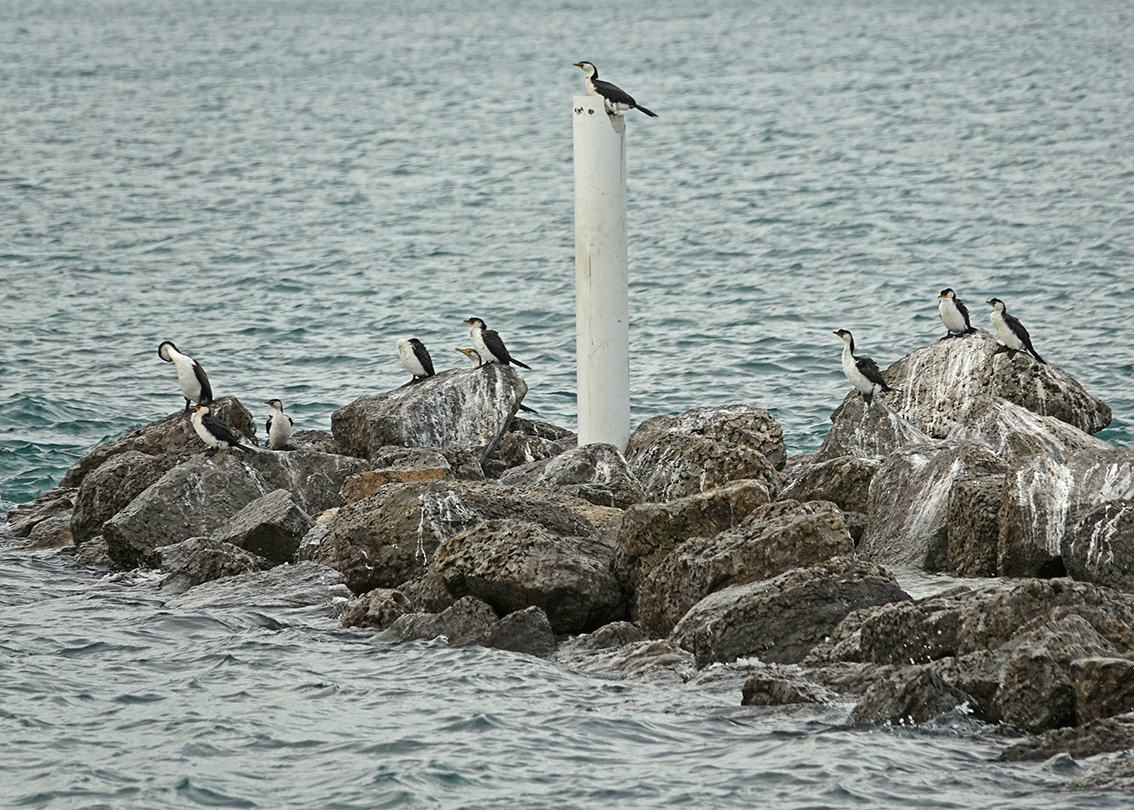
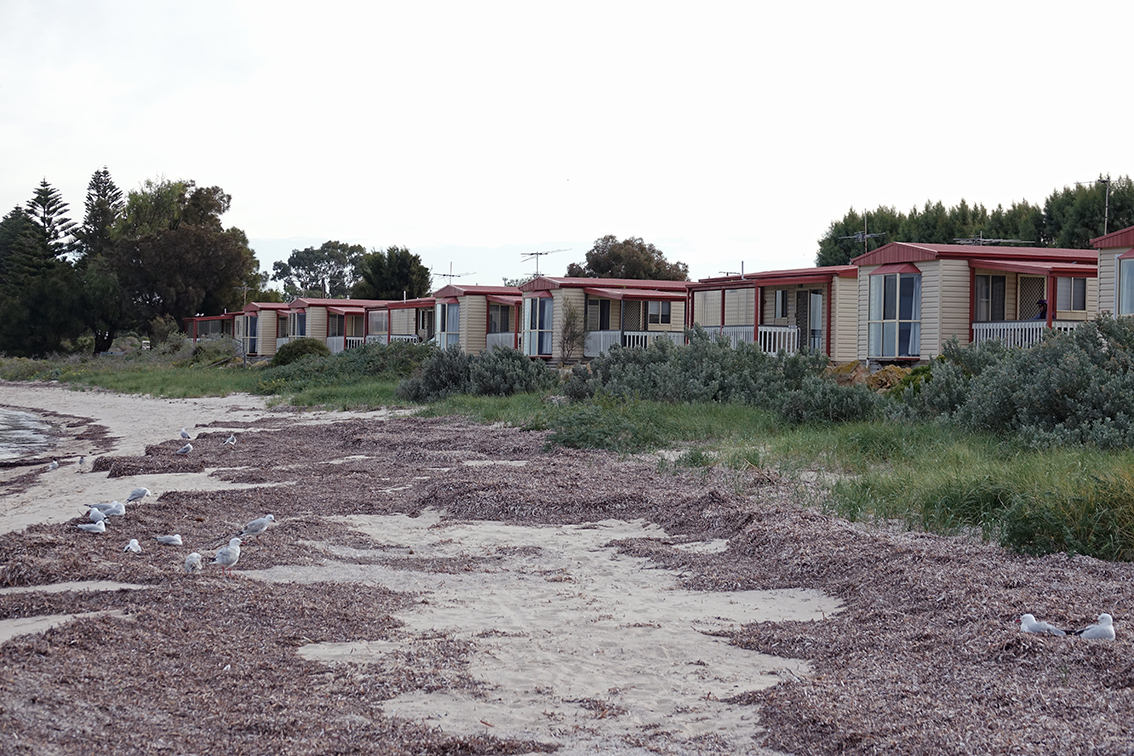
It has been a comfortable two and a half hour drive from Adelaide to Port Vincent. Although, with low cloud cover, I am not anticipating any worthwhile photography until tomorrow. How wrong can I be? As I pull up in the car park, an Australian Pelican lands on the grass verge near the cabins. And, no more than a hundred metres away, I can see a group of Pied Cormorants on the nearby breakwater.

Pied Cormorants

Cabins along the beach front

Apologetically leaving the others to unpack, I grab my Sony RX10 and wander down to the beach. To my surprise, two Bottlenose Dolphins are hunting in the shallows along with another Pelican; much to the consternation of a pair of fishermen who are trying to catch an evening meal themselves.

Pelican hunting solo

Dolphin taking a vertical dive

The dolphins are fascinating; turning, accelerating and diving constantly as they herd the school of fish they are feeding on. Not an easy animal to photograph from the beach as all you see are half a back and the occasional fin. Nevertheless, I continue to track them with the camera. Suddenly, one dives vertically with its tail held high. A nice moment.

Red-necked Stints

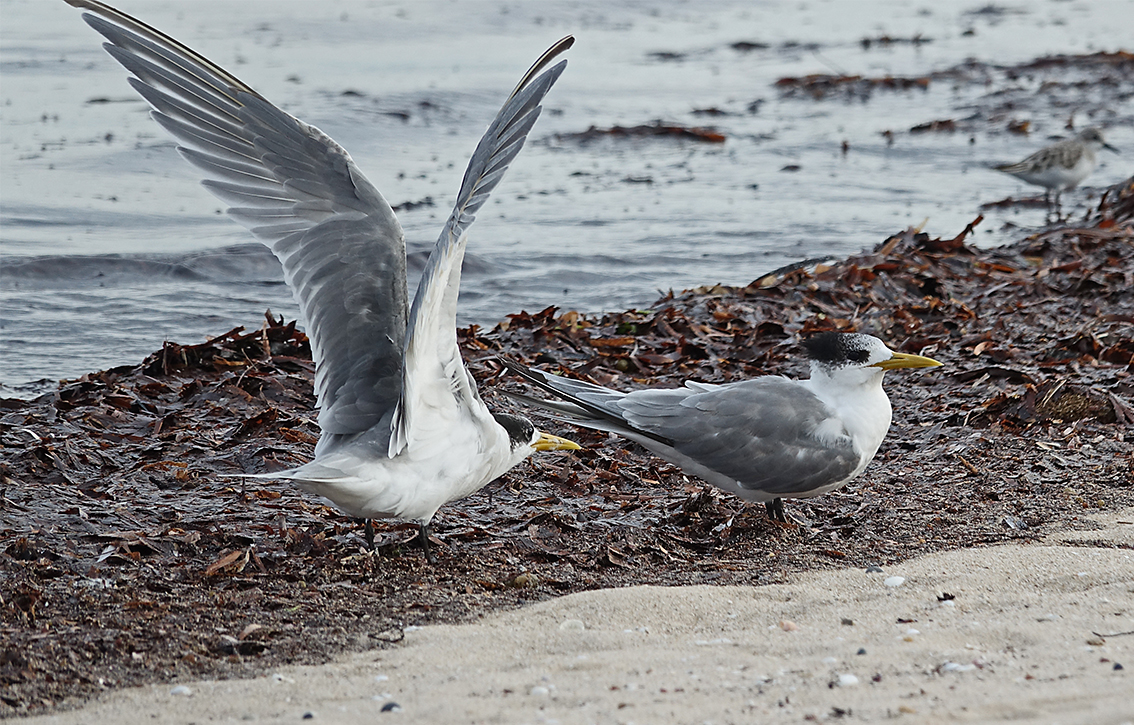
Crested Terns

Along the shoreline, where the waves lap against piled up seaweed, a mixed group of tiny waders; Red-capped Plovers and Red-necked stints, are foraging for tiny worms and crustaceans. Nearby, a Crested Tern is resting on the beach when a second bird flies down to join it, possibly a nesting pair.

Red-capped Plover with eggs

One of the plovers is meandering higher up the beach and doesn’t move far as I approach. I watch it carefully and search the seaweed for a nest. Sure enough, there amongst the brown tangle of weed are two perfectly camouflaged eggs. I back off a dozen metres and wait. After a few minutes the bird returns to its eggs and sits carefully on them eyeing me defiantly. 

Port Jackson Shark egg casing. The spiral shape wedges under rocks.

Remains of a sponge showing silica skeleton

I move away from the little plover and hunt for any other life in the accumulated drifts of weed. My search is fruitful and I turn up a spiral shark egg. Probably from a Port Jackson Shark one of the oviparous (egg laying) species around our coast. Further along the beach I come across the skeletal remains of a sponge. Sponges, unlike nearly all life on earth, have a skeleton made of silica and the fine network of spicules is fascinating and easy to see.

My walk along the shorefront, right in front of our cabin, is coming to an end it is getting cool. Time to head on back and decide on lunch. Probably local seafood at a rather colourful shop on the shore closer to the town. It is easy walking distance and highly recommended by a local I met on my initial Port Vincent walk. 

Cheers

Baz

Additional notes

This is an easy walk and drive which is quite suitable for families and seniors with public toilets, barbecues, parking and other facilities nearby. It is dog friendly.

Please pass on this blog title and or contact information (URL) to any person or organisation with an interest in taking walks and enjoying wildlife in SA.

Click on these links and see more South Australian stories and pictures in my Weekend Notes articles as well as locating similar blogs on Feedspot’s top 20 Australian wildlife blogs

https://www.weekendnotes.com/adelaide/writer/452/

https://blog.feedspot.com/australian_wildlife_blogs/