Archive | Creeks and wetlands RSS feed for this section

Mildura’s Billabong Wildlife Part 1

11 Aug

Dear Reader:

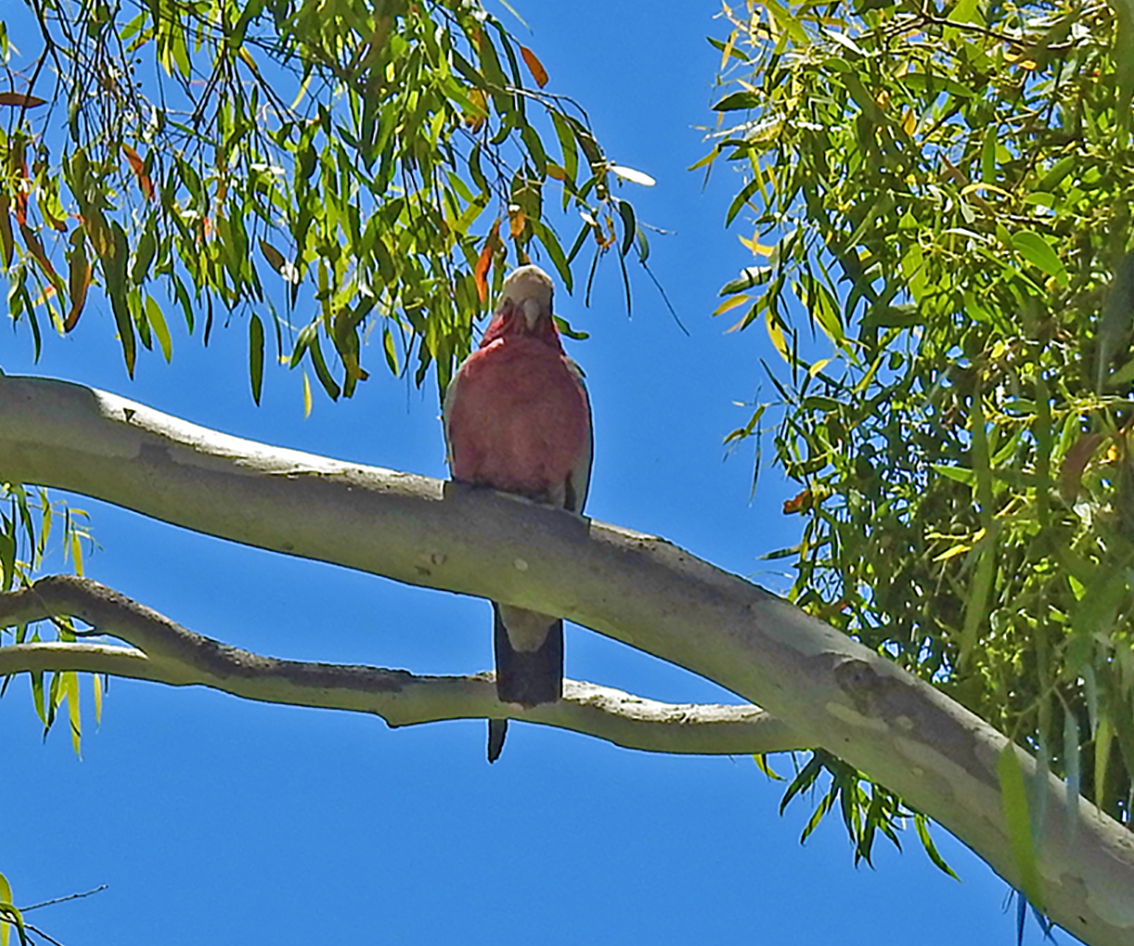
A pair of Red-rumped Parrots perch on a dead branch at the edge of King’s Billabong near Mildura.

Male and Female Red-rumped Parrots

For several years I have travelled to Mildura, on the River Murray, for our annual houseboat trip. Mildura is and a sizeable country centre of around 60,000 people and is an hour’s drive from the SA border and four and half from Adelaide.

Parked on the river banks

As the afternoon light begins to fade, I catch sight of a black and white bird perched on a branch. I assume it is a Magpie or Mudlark but closer examination through the telephoto lens reveals a Pied Butcherbird.

Pied Butcherbird… note the hooked beak

Although there is water in the centre of the billabong, channels around the edge are dry due to a long hot summer with little rain.

The edge of the billabong channel

In a patch of scrub by one of these channels I notice a small group of Crimson Rosellas feeding on some grasses and a Whistling Kite high above in the branches.

Crimson Rosella feeding on grass seeds in the dry channel

A walking trail follows one dried out arm of the billabong and the trees along the trail are a haven for spiders and ants. Large Golden Orb spiders are strung between branches and quite large holes lead into Bulldog Ant colonies.

Female Golden Orb spider

Sunset is not far off and it is time to make my way back to the boat which is moored on the Murray. I take a final walk along the banks of the billabong and spot a beautiful Great Egret perched on a branch while it scans for prey.

Great Egret

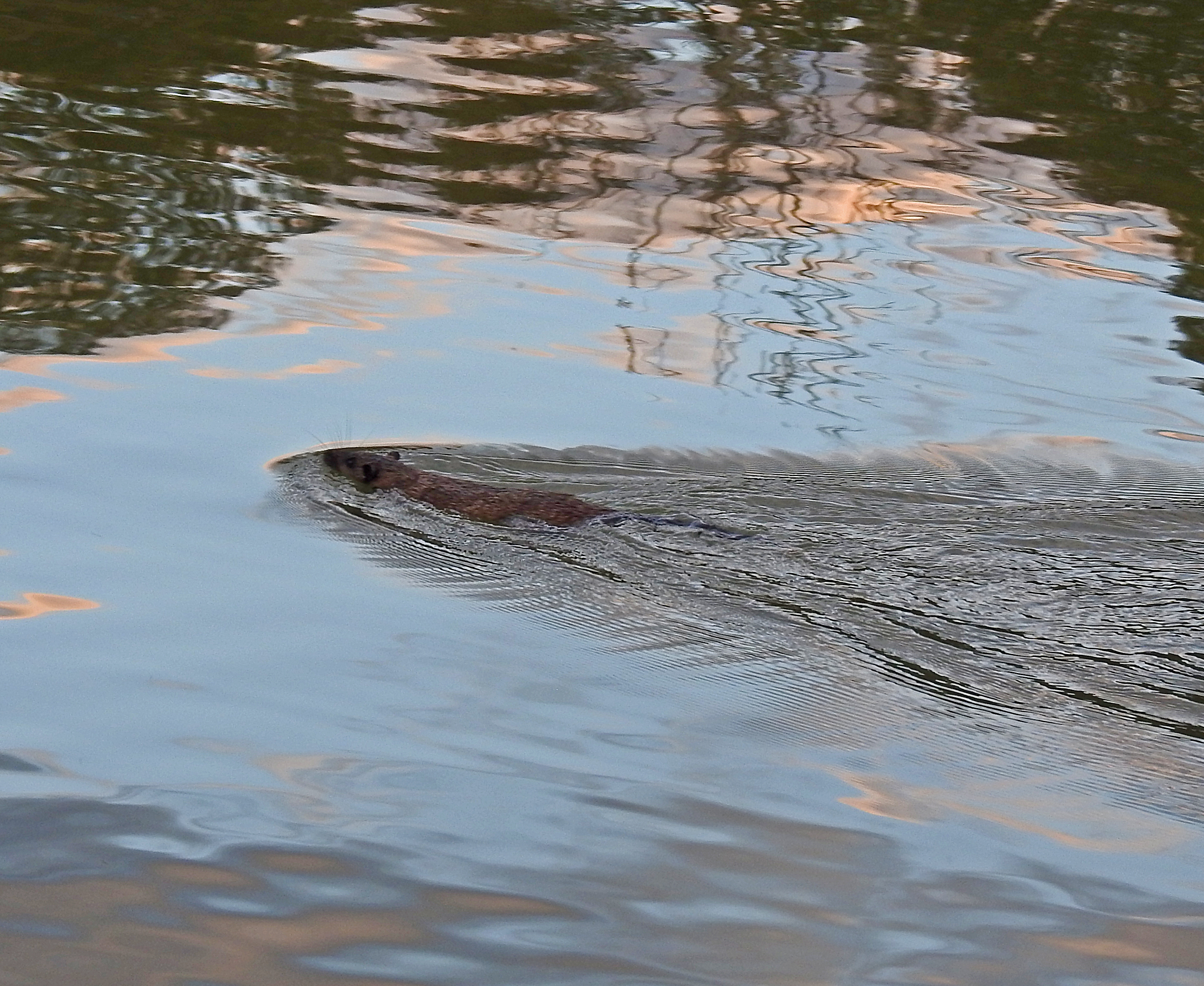
My final encounter is quite unexpected. Stepping aboard, I can just make out the V shaped ripples indicative of an Australian Water Rat as it swims past the boat with the faint pink glow of a Murray River sunset reflected on the water.

Rakali or Australian Water Rat

Cheers

Baz

Additional notes

Other animals seen, heard but not included: Rainbow Lorikeet, Mudlark, Great Cormorant Skimmer, Little Raven, Black Ducks, Grey Kangaroo, Australian Pelican, Rosella species, Australian Magpie 

The camera used for this post is a Nikon P900

This is an easy flat walk which is quite suitable for families and seniors. However, in wet weather the roads in to the billabong can be difficult for 2WD vehicles.

Please pass on this blog title and or contact information (URL) to any person or organisation with an interest in taking walks and enjoying wildlife in SA.

Click on these links and see more South Australian stories and pictures in my Weekend Notes articles as well as locating similar blogs on Feedspot’s top 20 Australian wildlife blogs

https://www.weekendnotes.com/adelaide/writer/452/

https://blog.feedspot.com/australian_wildlife_blogs/

Normanville’s Big Gorge Walk Part 2

24 Jul

Dear Reader:

(30/6/25,12.05, Clear sky and around 18, light wind)

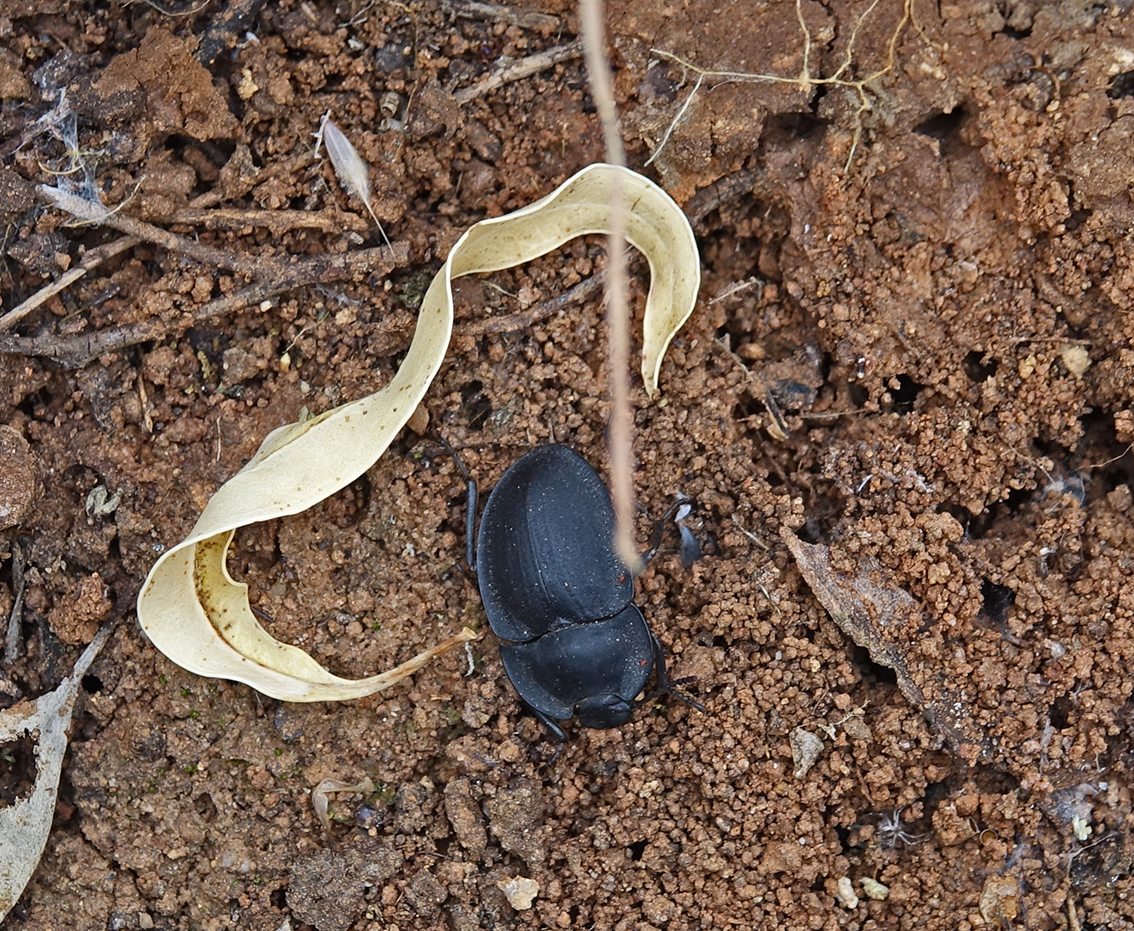
Numerous aged River Red Gums line the watercourse. I remove a few strips of bark to investigate the different animals that shelter there. A Marbled Gecko scuttles out and freezes relying on its camouflage to escape detection.

Marbled Gecko and Pie Dish Beetles

In part 1 of this story (June 7th Post) I had just passed the ruins and was nearing the end of this short but fascinating trail. I will pick up from there and relate the walk to the end of the trail and back by referring to my field notes. Conditions were recorded on my Apple watch.

End of the walk with information about Colonel Light’s exploration of the area

(30/6/25,12.13, Clear sky and around 18, light wind)

Amongst a tangle of branches I can just make out the shape of a large dark bird. I zoom in and pick up the white fringes to its tail and prominent yellow eye…A Grey Currawong.

Grey Currawong

(30/6/25,12.14, Clear sky and around 19, light wind)

Scanning further into the trees, I pick up the distinctive red breast and blue wings of an Adelaide Rosella. The rosella is not the only parrot in the area. There are small groups of Short-beaked Corellas in the canopy and an occasional Galah flying past.

Adelaide Rosella
Short-beaked Corellas

(30/6/25,12.25 Clear sky and around 18, light wind)

I leave the trail and walk closer to the creek and try to capture essence of this beautiful Gorge with a couple of scenic images.

Yankallila River
Surrounding hillsides with sheep grazing

(30/6/25,12.42 Clear sky and around 18, light wind)

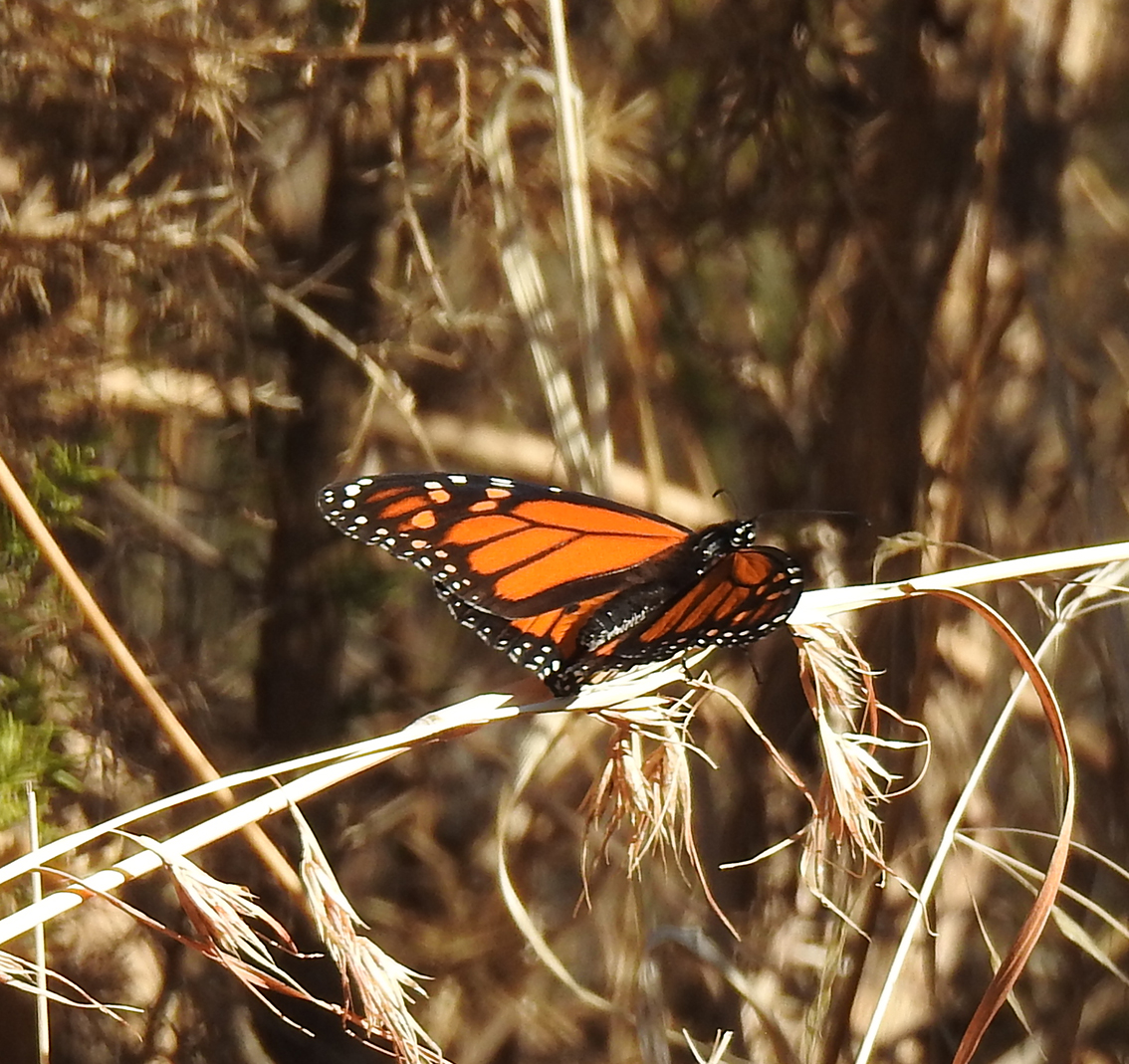
I am almost back at the trailhead when I notice a small group of Silvereyes in a bush. They are probably the same birds I photographed earlier (7th June post). To my surprise, considering the season, I notice a Monarch Butterfly perched on a small branch near the track.

Late season Monarch Butterfly

(30/6/25,12.55 Clear sky and around 20℃, light wind)

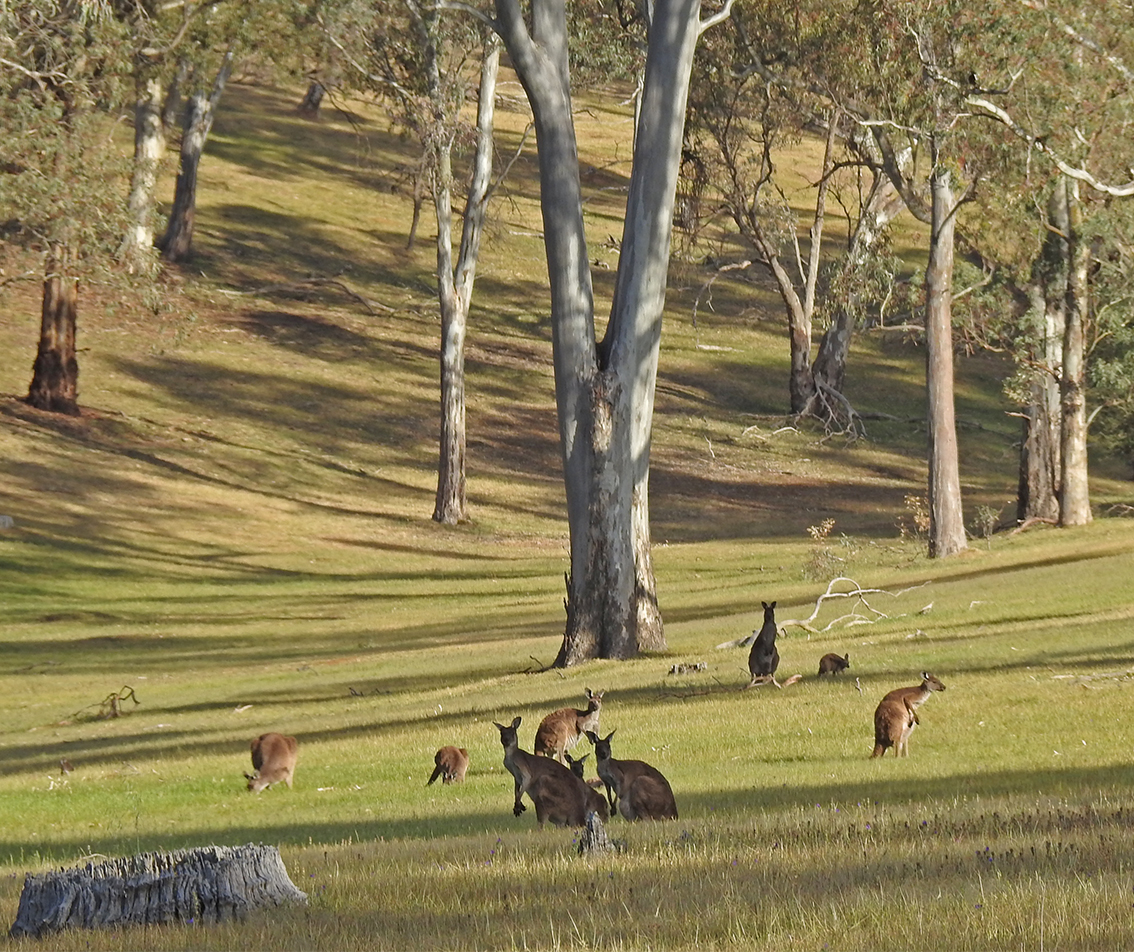
I reach the Norm Garnet Park, pack up my gear and head back to the city. I have been surprised by the lack of Western grey Kangaroos, as I know they are prolific in this area. However, the gods of wildlife photography decide to rectify the problem and I come across a dozen or so ‘roos’ grazing in a fenced paddock, just a few kilometres shy of Normanville.  

Western Grey Kangaroos grazing on farmland

Cheers

Baz

Additional notes

Other animals see, heard but not photographed

The camera used for this post is a

This is an easy walk/drive which is quite suitable for families and seniors with public toilets, barbecues, parking and other facilities nearby. It is dog friendly.

Please pass on this blog title and or contact information (URL) to any person or organisation with an interest in taking walks and enjoying wildlife in SA.

Click on these links and see more South Australian stories and pictures in my Weekend Notes articles as well as locating similar blogs on Feedspot’s top 20 Australian wildlife blogs

https://www.weekendnotes.com/adelaide/writer/452/

https://blog.feedspot.com/australian_wildlife_blogs/

Just Cruising 2 King’s Billabong to Mildura

6 Jul

Dear Reader:

As we back the houseboat into the current and point it downstream a Snakebird or Anhinga perches gracefully on an overhanging branch, the perfect farewell to King’s Billabong.

Snake-bird or Anhinga

In the next hour, I photograph numerous scenes and animals from my vantage point on the upper deck. None of the images are quite as clear as the initial shot as the boat is moving, the engines vibrating, and the riverbanks are a between 50-100 metres away.

Classic red earth riverbank scenery

Because birds fly, it is a challenging task to capture images of them in flight. Dainty swallows hunt insects in the boat’s wake and Whistling Kites circle high in the air using their extraordinary vision to locate prey.

Welcome Swallows resting on the river bank
Welcome Swallows hunting in the houseboat wake
Whistling Kite hunting above the river

Because of their size, shape and slow flight pattern, Australian Pelicans are one of my favourite waterbirds to photograph. Whether hunting, flying, landing or taking off, they are both endearing and elegant.

Australian Pelican in flight
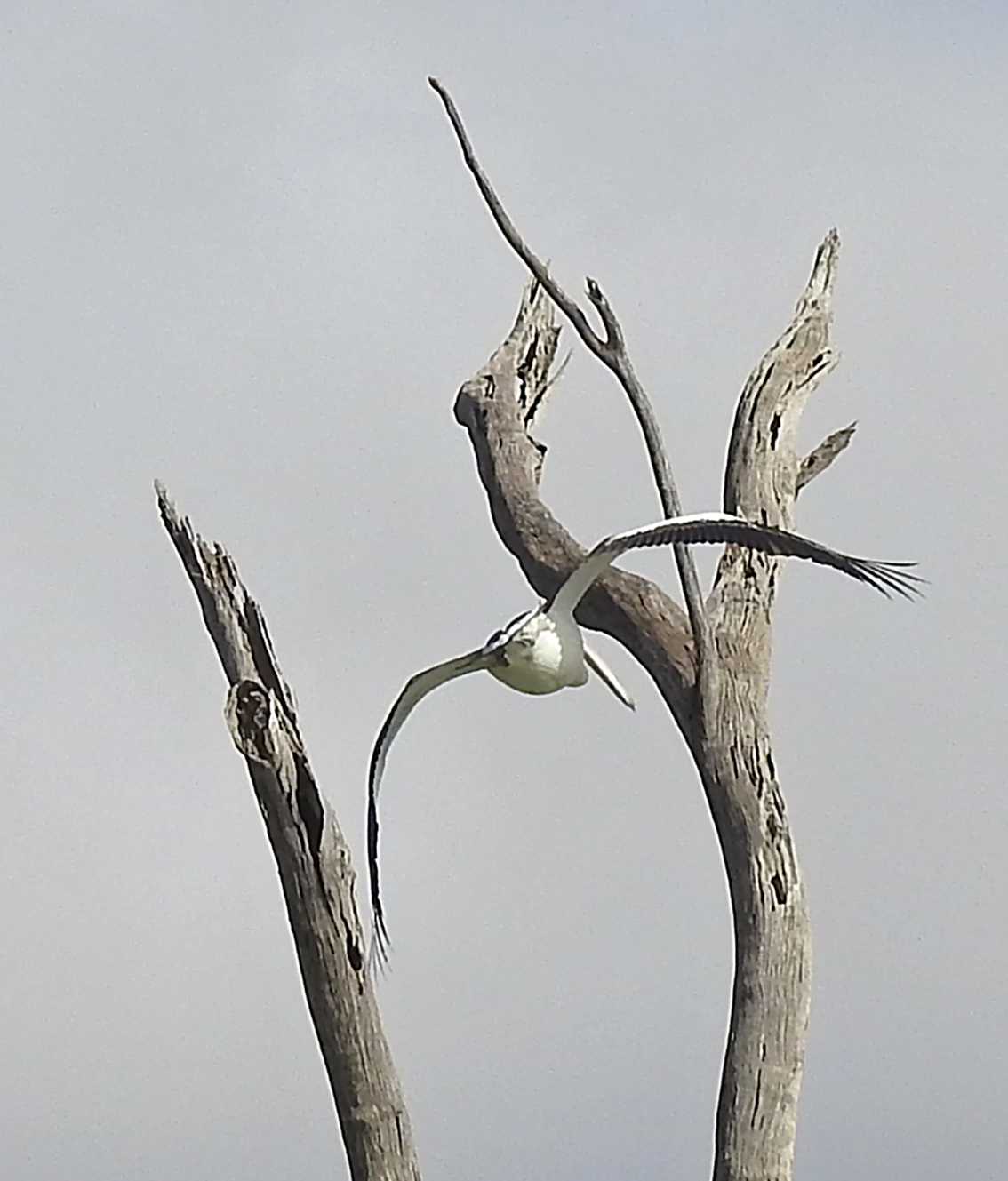
Ancient tree and Pelican composition

The river is used by numerous types of craft which tell a variety of stories. There are old barges from the time when the river was a major transport route. Paddle-teamers, both new and old, rekindle the more romantic days of river travel. Tour boats, houseboats , ski and fishing boats are the most common vessels of the modern era.  

Classic paddle-steamer still in use
Derelict barge

It is a relatively short trip back. As we bring the houseboat into the wharf at Mildura, I notice a Great Cormorant watching us from the bank as a flotilla of Maned Ducks slide past on the port side. Settled snuggly into our mooring I watch a Rakali or Australian Water Rat foraging amongst lily pads: a nice way to finish the week.

Rakali foraging amongst lily pads

Cheers

Baz

Additional notes

The camera used for this post is a Nikon P900

This is an easy excursion which is quite suitable for families and seniors with public toilets, barbecues, parking and other facilities nearby. River bank areas that are not part of national park are dog friendly.

Please pass on this blog title and or contact information (URL) to any person or organisation with an interest in taking walks and enjoying wildlife in SA.

Click on these links and see more South Australian stories and pictures in my Weekend Notes articles as well as locating similar blogs on Feedspot’s top 20 Australian wildlife blogs

https://www.weekendnotes.com/adelaide/writer/452/

https://blog.feedspot.com/australian_wildlife_blogs/

Murray River: Murtho Forest Reserve

21 Jan

Dear Reader:

As I walk across the top of the cliffs from the reserve’s entrance, I notice a Rainbow Bee Eater perched on a dead tree branch. The first one I have seen in Australia.

Rainbow Bee Eater

My next stop is an observation tower which provides splendid up and downstream views of the Murray River.

The observation tower is flanked by cliffs, river and scrub

Murtho forest reserve is part of the greater Riverland Biosphere Reserve. It lies 20 kms northeast of Renmark. There are several walks through the park as well as a camping area, boat launching facilities and the observation tower.

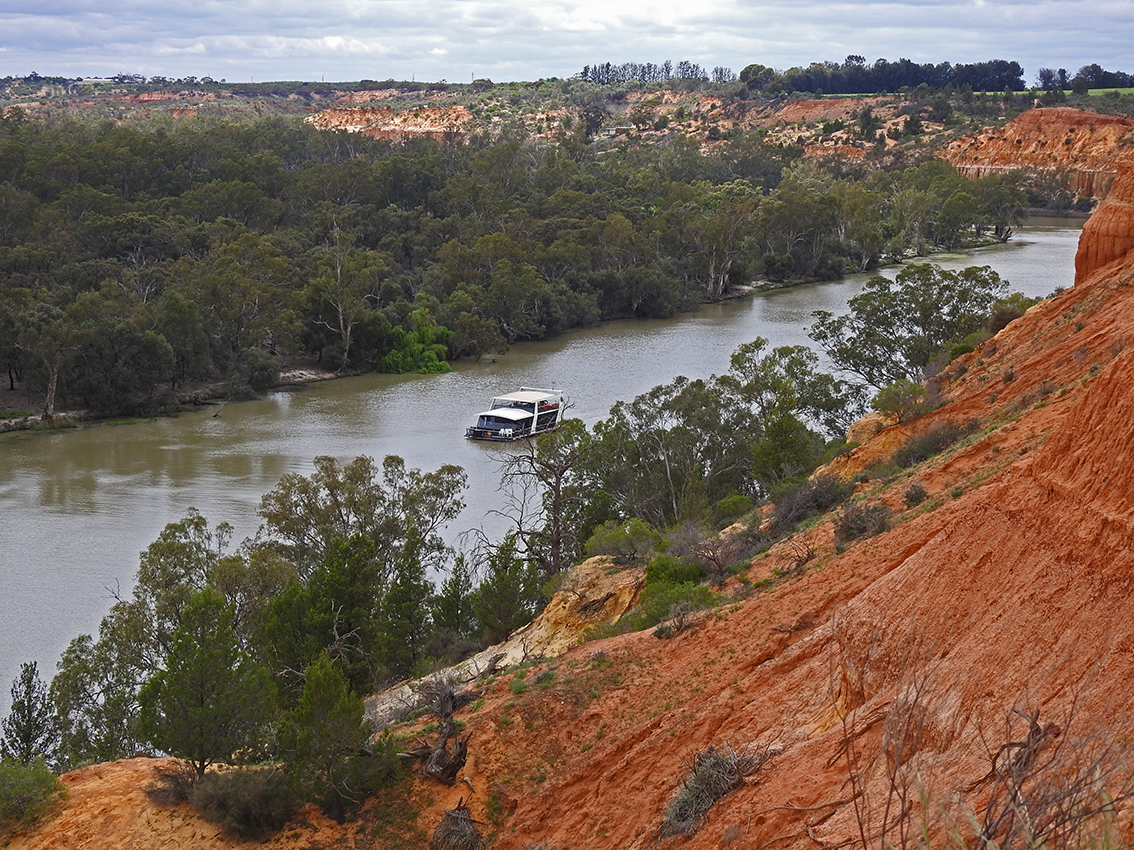
A houseboat makes its way down the river

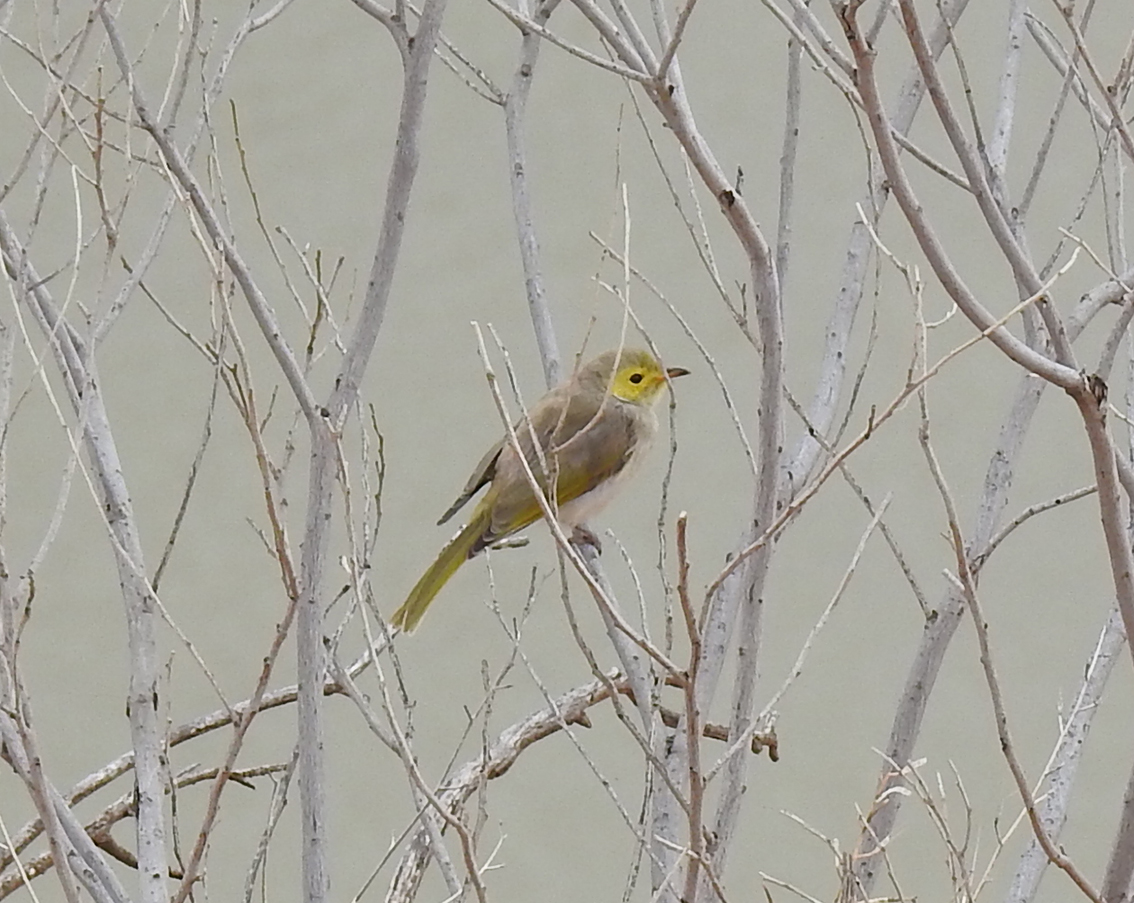
Honeyeaters are common throughout the forest and I am lucky enough to photograph three different species in the area around the tower; White-plumed Honeyeaters, Singing Honeyeaters and the less common Spiny-cheeked Honeyeater. The latter species is perching on a protruding, dead branch above the river and it takes several shots to identify it.

White-plumed Honeyeater

It is hard to shift your gaze from the wonderful scenery; red cliffs, a slow meandering giant of a river as well as billabongs and wetlands on the far bank.

Wetlands opposite the forest

Leaving the viewing platform, I drive to the camping and boat launch area. There are quite a few flowering shrubs and ground covers in this location including an Eremophila species and Pigface, a common coastal succulent. I notice several different types of butterflies and a Hoverfly feeding on the blossoms.

Eremophila species

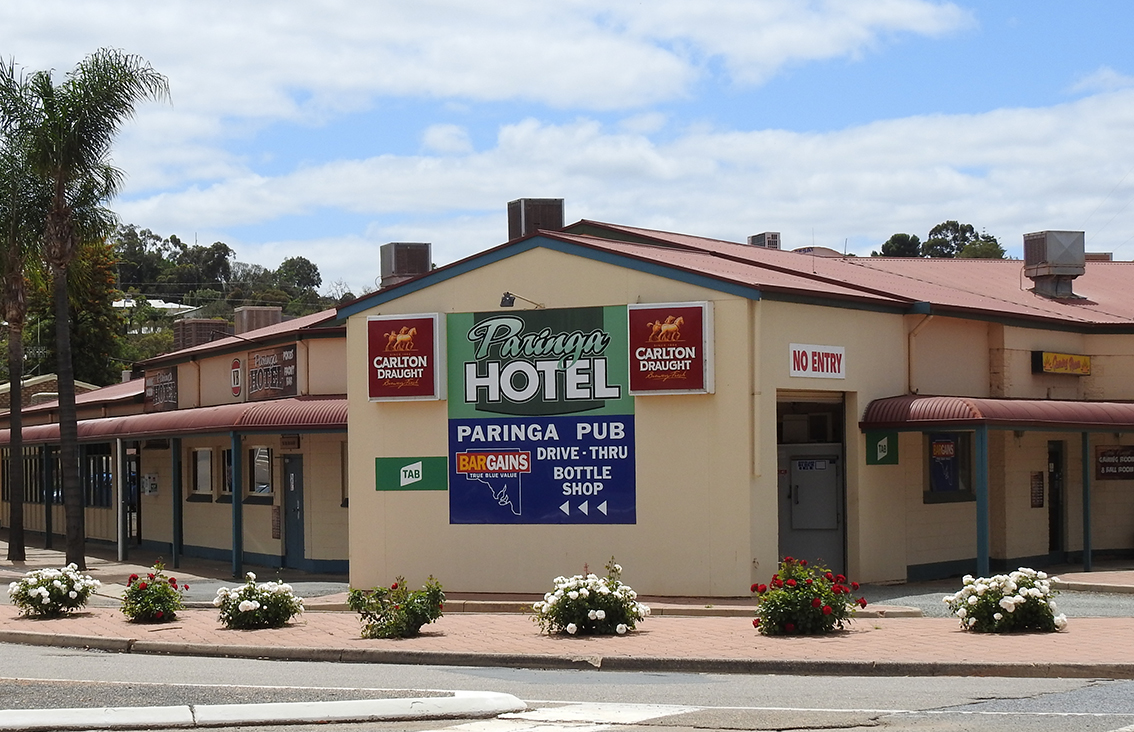
As the cloud cover thickens I decide it is time to drive back to Renmark with a short stop on the way at the Paringa Hotel for a drink and lunch.

Local watering hole

Cheers

Baz

Additional notes

The camera used for this post is a Nikon Coolpix P900

This is an easy drive and walk which is quite suitable for families and seniors. It is dog friendly.

Please pass on this blog title and or contact information (URL) to any person or organisation with an interest in taking walks and enjoying wildlife in SA.

Click on these links and see more South Australian stories and pictures in my Weekend Notes articles as well as locating similar blogs on Feedspot’s top 20 Australian wildlife blogs

Hahndorf Has Wildlife

24 Sep

Dear Reader:

At first glance the little creek appears lifeless but on closer examination I spot a Blue Damselfly and a juvenile Eastern Water Skink on the overgrown stonework.

Hahndorf is a tourist town of German heritage about a forty minute drive from Adelaide’s CBD. Best known for handicrafts, galleries, food and souvenirs; it also has quite a wide variety of wildlife hidden in its streets, trees and parks.

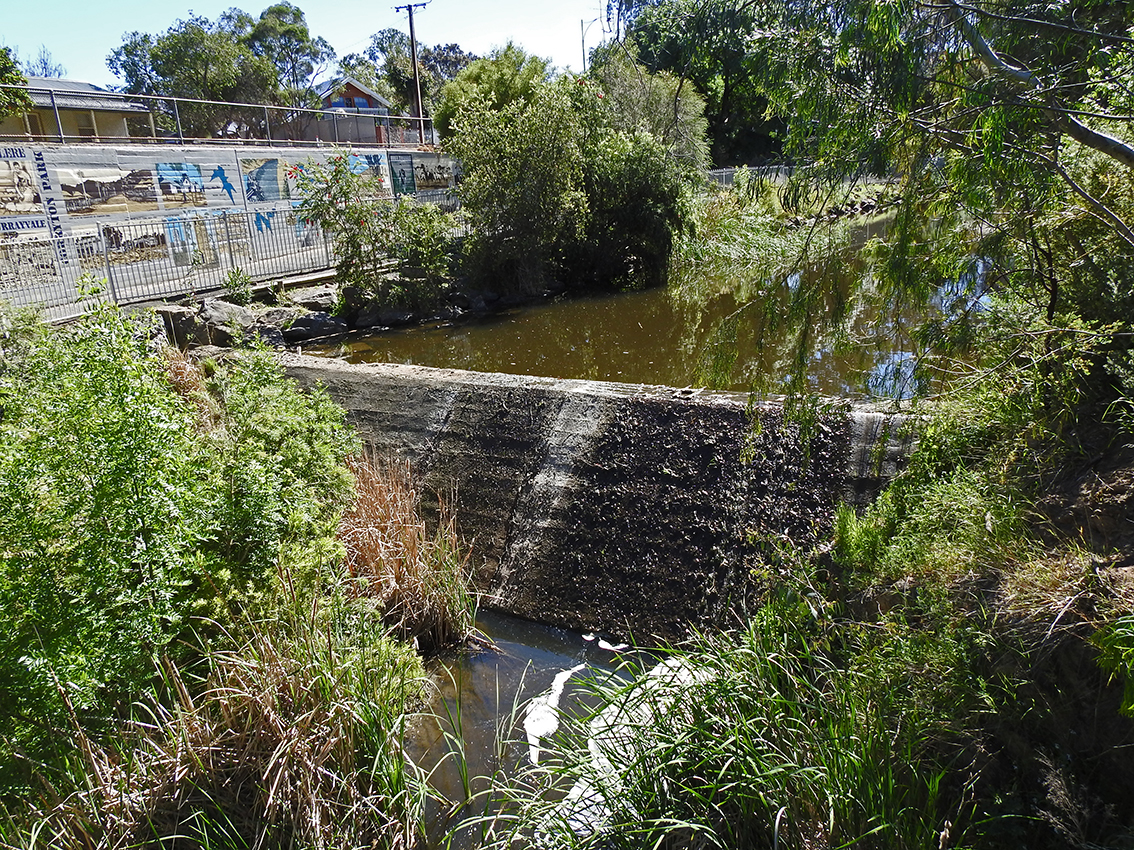
I am currently strolling around the Alec Johnston Park which has a small creek running through it, a soldiers’ memorial as well as a playground, rose garden and a heritage shed.

The trees above me are a haven for parrots. I have seen lorikeets and a rosella. However, it is their larger cockatoo cousins the Galahs and Sulphur Crests that make for the best images.

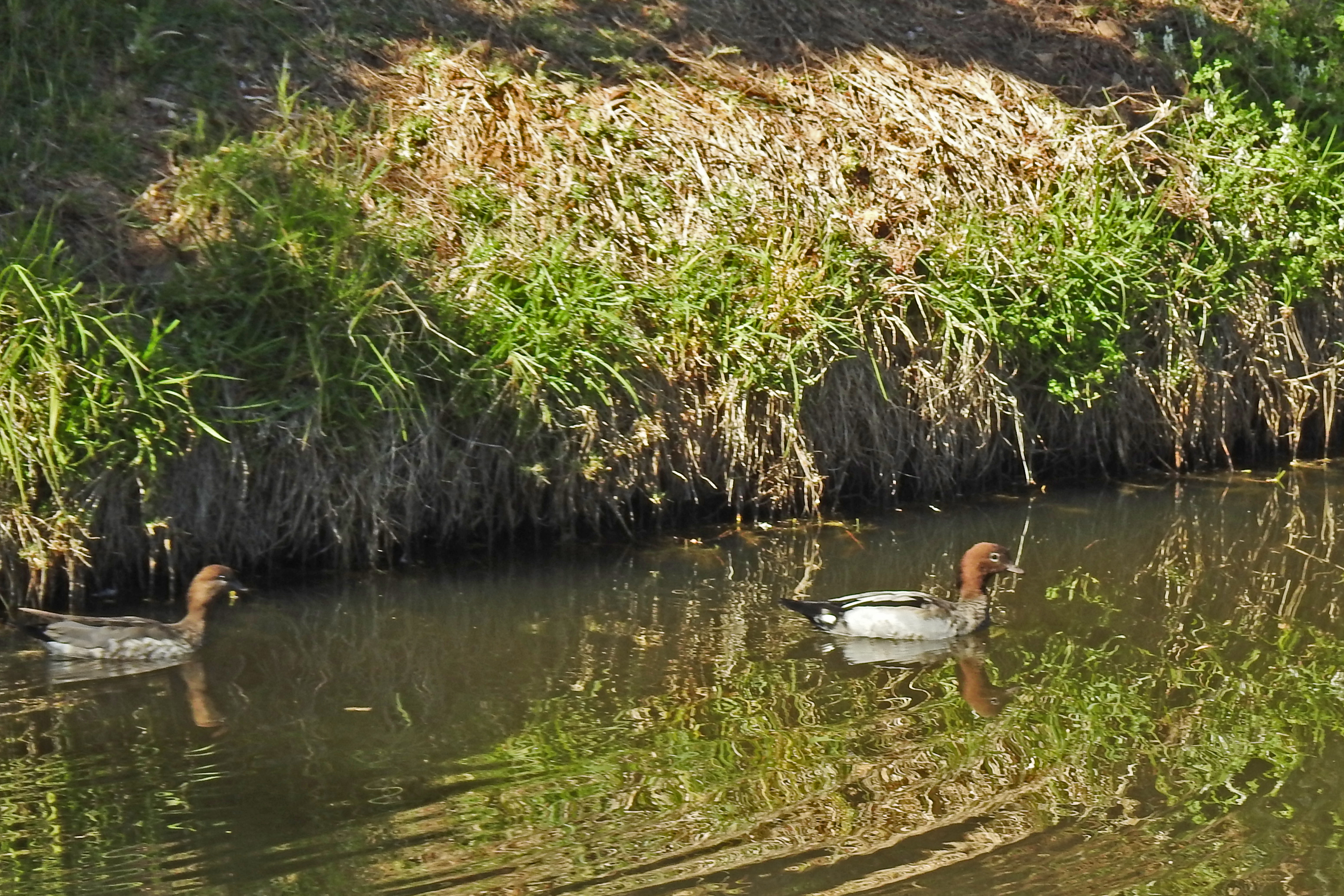
Two species of ducks live in and around the little creek: Pacific Black ducks and Wood or Maned Ducks. Today, a little group of Maned Ducks are dabbling amongst the water plants.

It is early spring and the wildlife is beginning to build up again after the winter hiatus. As with any natural observations weather and time of year are critical. Even a few roses are beginning to bloom.

Finally, I shall avail myself of the many lunch options available in Hahndorf and I am certainly leaning towards Kranskys (German sausages) and Sauerkraut with a serve of Beesting Cake to follow.

Cheers

Baz

Additional notes

This is an easy walk and drive which is quite suitable for families and seniors with public toilets, barbecues, parking and other facilities nearby. It is dog friendly.

Please pass on this blog title and or contact information (URL) to any person or organisation with an interest in taking walks and enjoying wildlife in SA.

Click on these links and see more South Australian stories and pictures in my Weekend Notes articles as well as locating similar blogs on Feedspot’s top 20 Australian wildlife blogs

https://www.weekendnotes.com/adelaide/writer/452/

https://blog.feedspot.com/australian_wildlife_blogs/

Exploring Meadows Creek……an interesting drive

3 Mar

Dear Reader:

I hear movement in the long grass. Fifty metres away a Western Grey Kangaroo twitches its ears and looks back at me before slowly hopping into the scrub.

Western Grey Kangaroo

I am exploring Meadows Creek from three roads that intersect the creek from Brookman Rd, which starts at the top of Willunga Hill and terminates at Meadows. The first is Adams Gully Road.

Adams Gully Road ford

Here, the creek’s bank is obscured by scrub and grass. I wade through the tangle of dry stalks and spot a Common Brown Butterfly amongst a mat of fallen grass.

Common Brown butterfly

Nearby, a leaf curling spider has strung its web between some bushes. I can just make out its spindly legs protruding from its specially constructed home.

Leaf Curling Spider with legs visible

Sometimes tracking a creek or river is a complex endeavour. Meadows Creek runs through farmland and only flows freely when it has rained. In drier months it is typical of many SA waterways, consisting of a series of shallow pools.

Typical summer pool along Meadows Creek

A few kilometres past Adams Gully Road is Tynan Road where there is a slightly larger more accessible pool. There are prickly blackberry stems (canes) close to the water providing a safe place for small birds to shelter. A Silvereye lands on a branch providing a nice camera angle. Then a Superb Fairy Wren puts in a brief appearance while an Adelaide Rosella perches high in one of the tall roadside eucalypts.

Tynan Road crossing

Silvereye

Adelaide Rosella

My final crossing point is on Wickham Hills Road where I walk along the dry creek bed towards a pool and spend a quiet ten minutes waiting to see what animals are in the area. Eventually a Grey Fantail alights on a nearby rock as it searches for insects near the water. Further along the creek I can hear Kookaburras calling and a pair of Yellow-tailed Black Cockatoos fly overhead.

Wickham Hills ford

Grey Fantail

Rather than drive back to Brookman Road and return to Adelaide via Meadows or Willunga, I continue along Wickham Hills Road and wind my way back to the city through some lovely rural areas.  Rich pastures, stock, vineyards, barns and farmhouses provide some picturesque, rural scenes, making a wonderful ending to my creek exploring day.

Vines and open bushland

Cheers

Baz

Additional notes

This is an easy drive which is quite suitable for families and seniors.

Please pass on this blog title and or contact information (URL) to any person or organisation with an interest in taking walks and enjoying wildlife in SA.

Click on these links and see more South Australian stories and pictures in my Weekend Notes articles as well as locating similar blogs on Feedspot’s top 20 Australian wildlife blogs

https://www.weekendnotes.com/adelaide/writer/452

https://blog.feedspot.com/australian_wildlife_blogs

South Para Reservoir’s Water, Wine and Wildlife

13 Feb

Dear Reader:

There’s a small mob of Western Grey Kangaroos feeding close to the path where I am starting my walk. Leaning against a tree, I steady the camera. The roos detect either sound or scent and bound away into the thicker scrub.

Up Up and Away

I am taking a walk around the South Para Reservoir near Williamstown about an hour’s drive from Adelaide’s CBD. The road winds through the Adelaide hills and encompasses a range of environments from rural to wilderness. Unfortunately, it is a bit of a grey day. Not brilliant for photography.  

South Para Reservoir

The track leads down to the water where a kayaker is bringing the craft back to dry land. This reservoir is open for fishing, kayaking, cycling and walking unlike many of our other reservoirs.

A recreational paddle

There are numerous butterflies in the area but it is hard to spot them until they take flight. Eventually I get a reasonably clear shot and identify the species as a Common Brown.

Common Brown

On the water’s edge I can just make out some large birds. I suspect they are either Cormorants or Snake Birds (Anhingas). I approach warily, lie down in the grass and focus. There are two distinct species; a Pied Cormorant and a Great Cormorant.

Pied Cormorant

Working my way around the water’s edge I discover a dry creek bed and another track heading back towards the main road. I follow the creek bed up a gentle slope towards a rocky outcrop. A large male kangaroo watches me from the scrub as I walk. He seems relaxed and stays still enough for a long-range shot.

Just watching

Continuing along the cross track I suddenly freeze and hold my breath. Three adult Emus are walking towards me and have, either not registered my presence, or are not unduly phased by humans. I raise the camera slowly and wait as they approach to within thirty metres. I take a series of shots before they veer away pecking for seeds, insects and whatever else they might find in the dry scrub.

The Emus gang

Emus close by me

As I traverse move up the trail, I notice a variety of wildlife including; musk Lorikeets Sulphur Crested and Rose Breasted Cockatoos, more butterflies, a few native bees as well as ant nests and termite mounds. I turn over a couple of rocks and dead branches (replacing them carefully afterwards), uncovering a snakelike Three-toed Earless Skink and Pie-dish Beetle.

Three-toed Earless Skink

Pie-dish Beetle

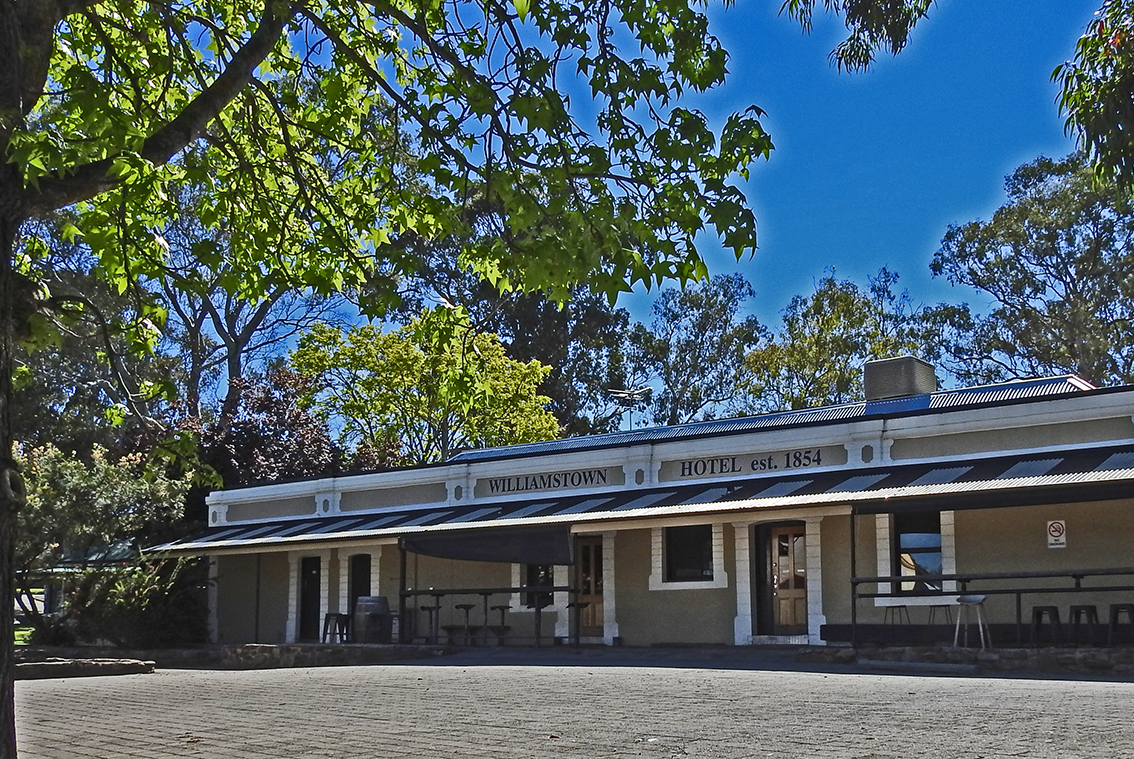
With my walk at an end, I drive on towards Williamstown for lunch at the little bakery across from the creek. However, I do make one more stop on the way at Linfield Road Winery which has a charming bed and breakfast attached. An ideal place to stay when I make my next foray into the wonderful north-eastern region of the Adelaide Hills.

B&B for next time

Linfield Road Winery vines

Cheers

Baz

Additional notes

This is an easy walk/drive which is quite suitable for families and seniors with public toilets, barbecues, parking and other facilities nearby.

Please pass on this blog title and or contact information (URL) to any person or organisation with an interest in taking walks and enjoying wildlife in SA.

Click on these links and see more South Australian stories and pictures in my Weekend Notes articles as well as locating similar blogs on Feedspot’s top 20 Australian wildlife blogs
https://www.weekendnotes.com/adelaide/writer/452 https://blog.feedspot.com/australian_wildlife_blogs

Glacier Rock….Good food, Geology and Wildlife

30 Nov

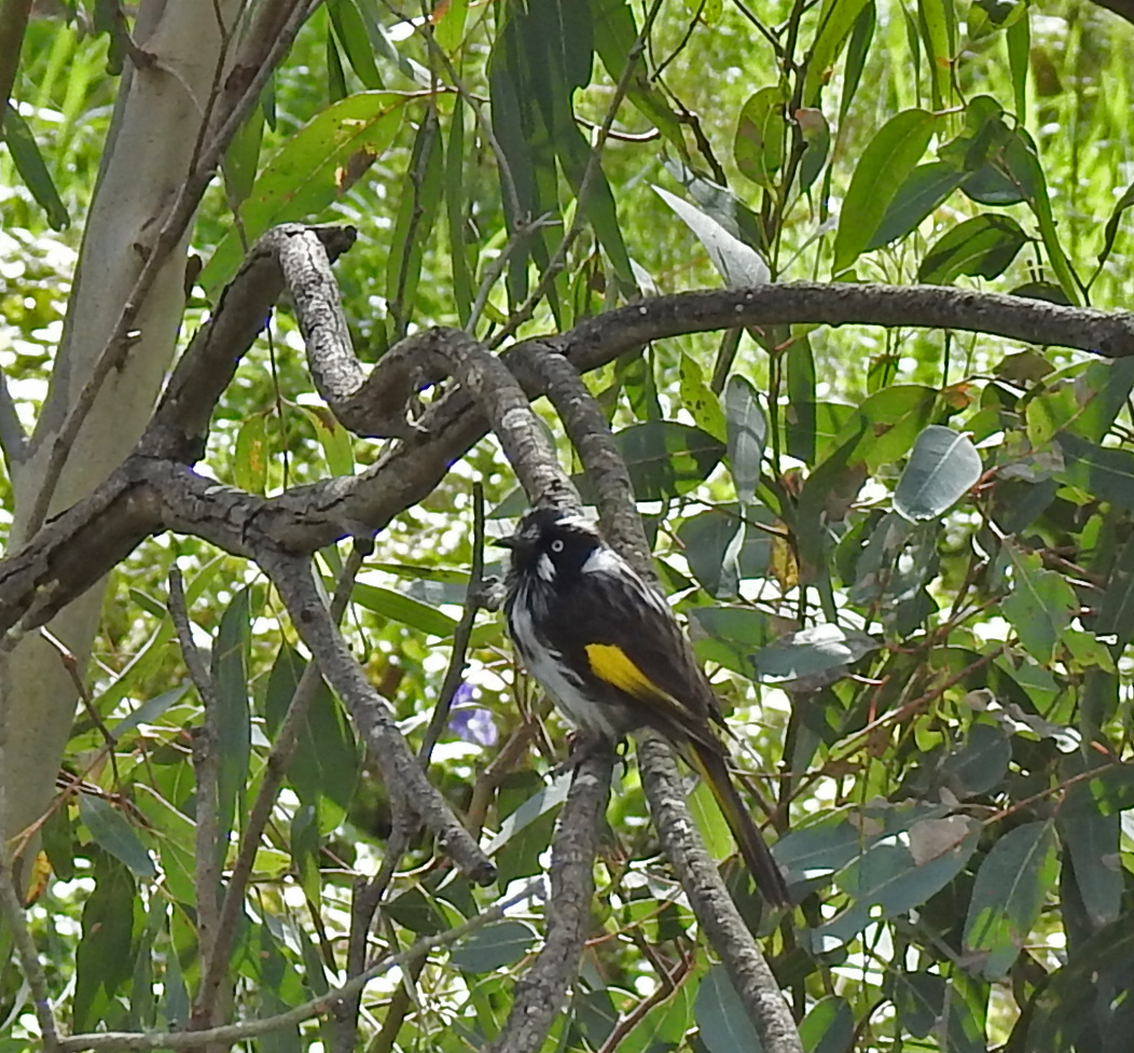
A pair of New Holland Honeyeaters

Dear Reader:

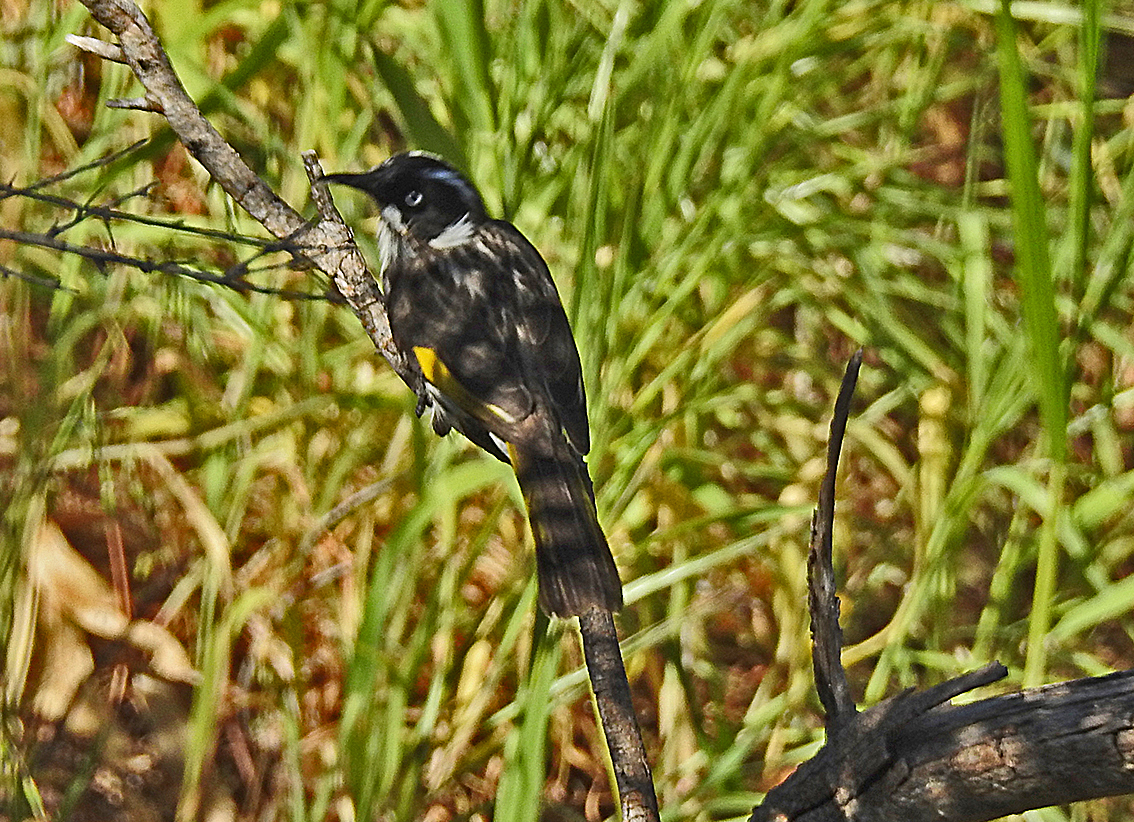
There is white water swirling around the boulders in the river and a family of Pacific Black Ducks are huddling to one side where the water is calmer. Perched amongst the branches of an overhanging eucalyptus tree I make out the shape of several New Holland Honeyeaters and hear the distinctive call of Sulphur-crested Cockatoos as they fly overhead.

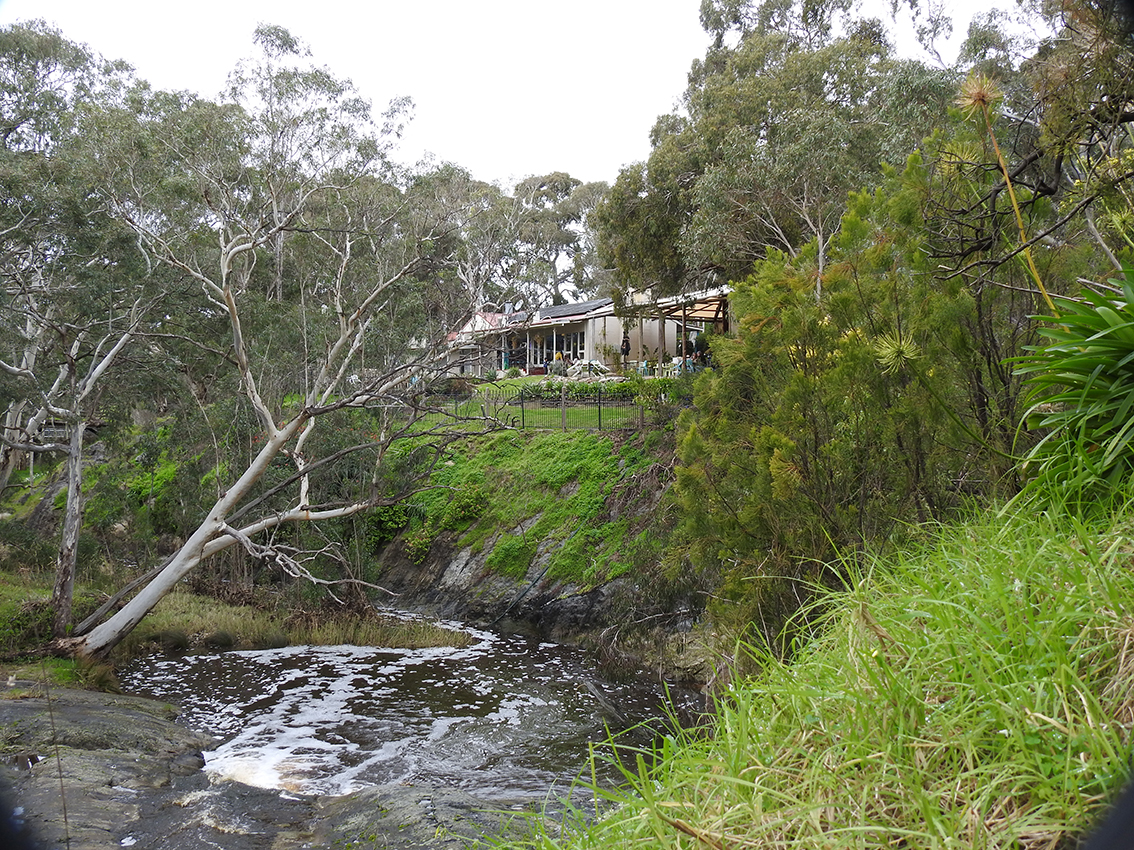
Breakfast at the Tearooms

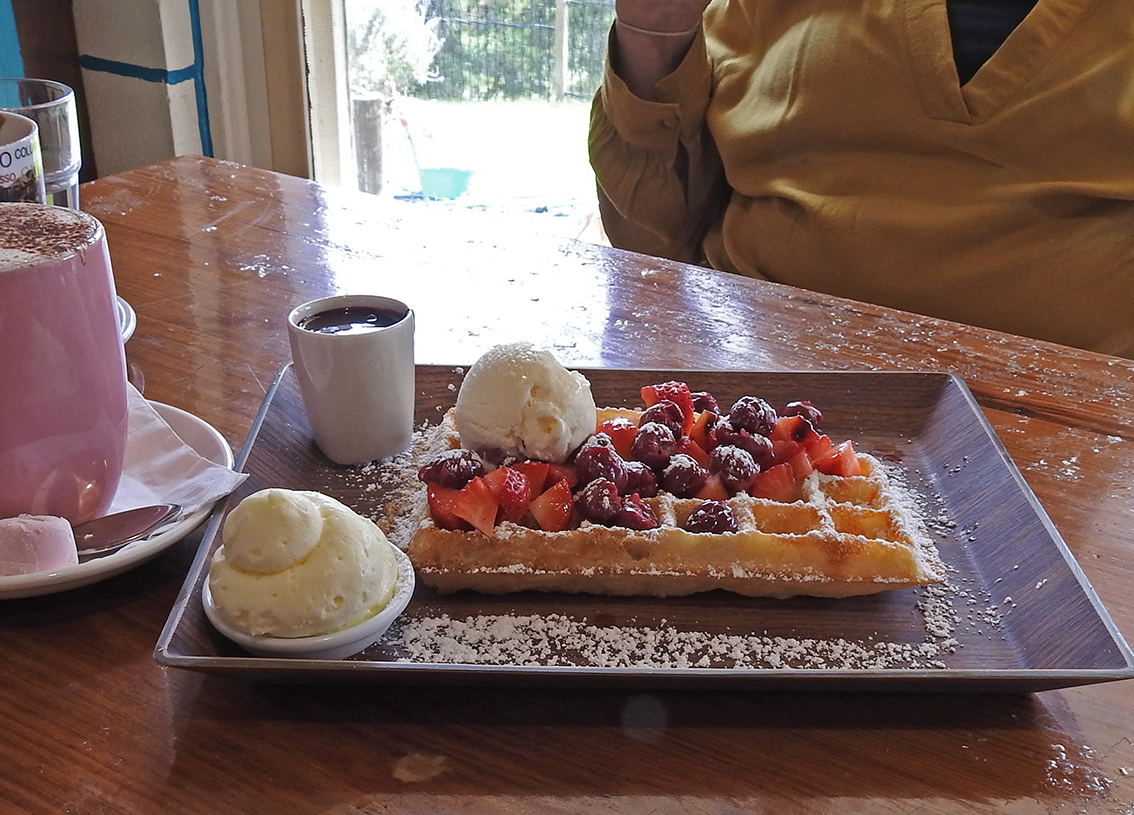
I am sitting on the back decking of the Glacier Rock Tea Rooms  having just devoured a serve of the delicious waffles topped with berries, cream and ice cream; with a little maple syrup for good measure. The weather is overcast and not great for photography but I shall make the best of it.

Typical rural countryside along the Inman Valley

On the drive along the Inman Valley Road we spotted a mob of roos feeding just outside the little township of the same name. There were also  black headed sheep and numerous herds of dairy cattle grazing on the fertile grassland. Some really pleasant rural scenes to photograph.

Inman river and Tearooms

I take the track from the caffe down to the river passing an information board on the way which explains the geological processes that lead to the rock formations. They involved the scraping of surfaces by rocks embedded in an ancient glacier which carved out the valley millions of years ago.

White-naped Honeyeater

Grey Fantail

From the viewing point alongside the river I watch Welcome Swallows and Grey Fantails hawking for insects above the water. And, to my great delight, spot a bird I have never photographed before: a White-naped Honeyeater.  

Old bridge over the Inman River

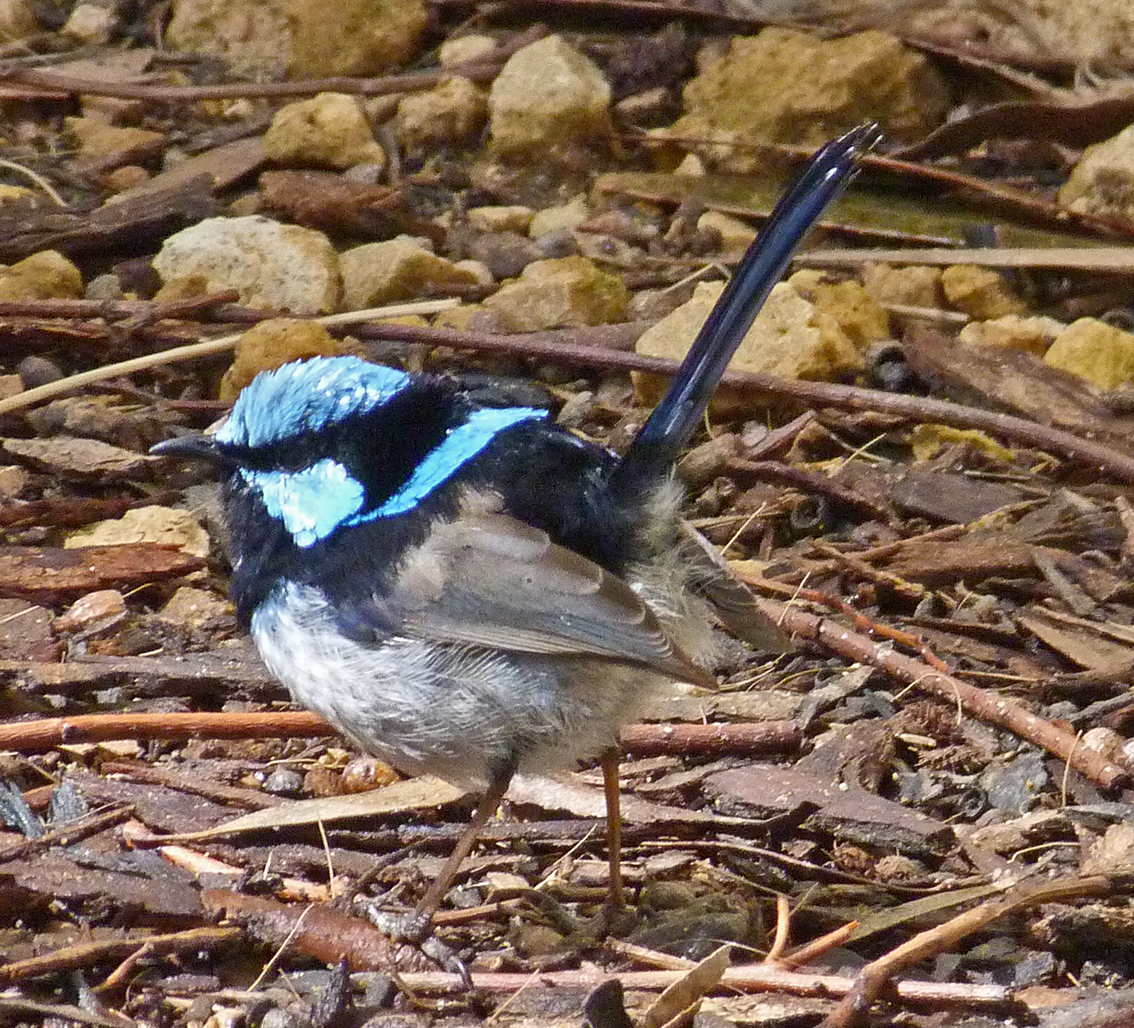
Superb Fairy Wren

The Mt Alma Road runs alongside the café. I walk a short distance along the road to get a good view of a dilapidated, old bridge which crosses the river. Thick brush lines the first section of the road and I can hear the twittering of wrens in the thickets. There are both sheep and cattle in the paddock opposite.

Galahs in silhouette

Red Wattlebird

On the other side of the Inman Valley Road, a narrow, sealed track called Parsons Road climbs a small rise. In the field alongside the road, several Galahs are perched at the top a long dead tree. Nearby a group of Red Wattlebirds are feeding on flowering shrubs along the fence line.

Spider predation or devouring its own carapace after shedding????

However, my final wildlife encounter is on a much smaller scale. A little spider (species unknown) appears to have caught another spider in its web and is starting to wrap it in silk ready to devour later.

Sweet indulgence

My walk is over and I shall return to the tearooms and treat myself to a hot chocolate. An appropriate end to a rather successful walk in this lovely part of the Fleurieu Peninsula.  

Cheers

Baz

Additional notes

This is an easy walk and drive which is quite suitable for families and seniors with public toilets, parking and other facilities nearby. It is dog friendly.

Please pass on this blog title and or contact information (URL) to any person or organisation with an interest in taking walks and enjoying wildlife in SA.

Click on these links and see more South Australian stories and pictures in my Weekend Notes articles as well as locating similar blogs on Feedspot’s top 20 Australian wildlife blogs

https://www.weekendnotes.com/adelaide/writer/452/

https://blog.feedspot.com/australian_wildlife_blogs/

Warren Reservoir…drained for maintenance

14 Jul

Dear Reader:

From Tea Tree Gully, the road climbs into the foothills then snakes past Chain of Ponds Reservoir before it forks to the left towards Williamstown. Just before the town there are often mobs of Western Grey Kangaroos on the hillside to the right. Today, I spot a small group on the opposite side near a layby where I can safely pull off the road to take a few photographs.

Western Grey Kangaroos near Williamstown

I am exploring the Northern section of the Warren Reservoir which is around 10 kms past Williamstown towards Gumeracha on the Warren Road. The sky is a little overcast with a hint of rain in the air which makes photography challenging but in the winter months one takes any opportunity on offer to venture out into the bush. This is my second visit to the Warren and of particular interest because the reservoir has been emptied for dam wall maintenance and comparing it to my last visit, when it was full, is a rare opportunity.

Reservoir full

Reservoir drained and with some improvements to the public car park area

Usually there are numerous duck species as well as cormorants, Australian Pelicans and Anhingas (Snakebirds) around the edge of the reservoir. Today there is just a solitary Pacific Black Duck paddling along a narrow channel. Way off to the north, I can just make out a pair of kites catching thermals above the surrounding scrub.

Anhinga

Grey Fantail

However, all is not lost. For some reason the number of smaller birds seems to have increased around the periphery of the reservoir. Using the full extension of my Nikon P900 Camera lens, I am able to spot Silvereyes, Superb Fairy Wrens, a thornbill species, Grey Fantails and New Holland honeyeaters. Perhaps a lack of predatory species could account for this or maybe there are insects among the leaves and on the smaller branches.

Adelaide Rosella

I finish my loop walk back at the car parking area where a pair of Adelaide Rosellas are feeding on the ground. They are some distance away and as I approach all but one fly into the canopy. The lone bird perches on a wiry grass stem where it appears to be picking out seeds. I take a shot from distance just before it flies off disturbed by a couple of Little Ravens flying into a nearby eucalypt.

Australian Magpie foraging on reservoir floor

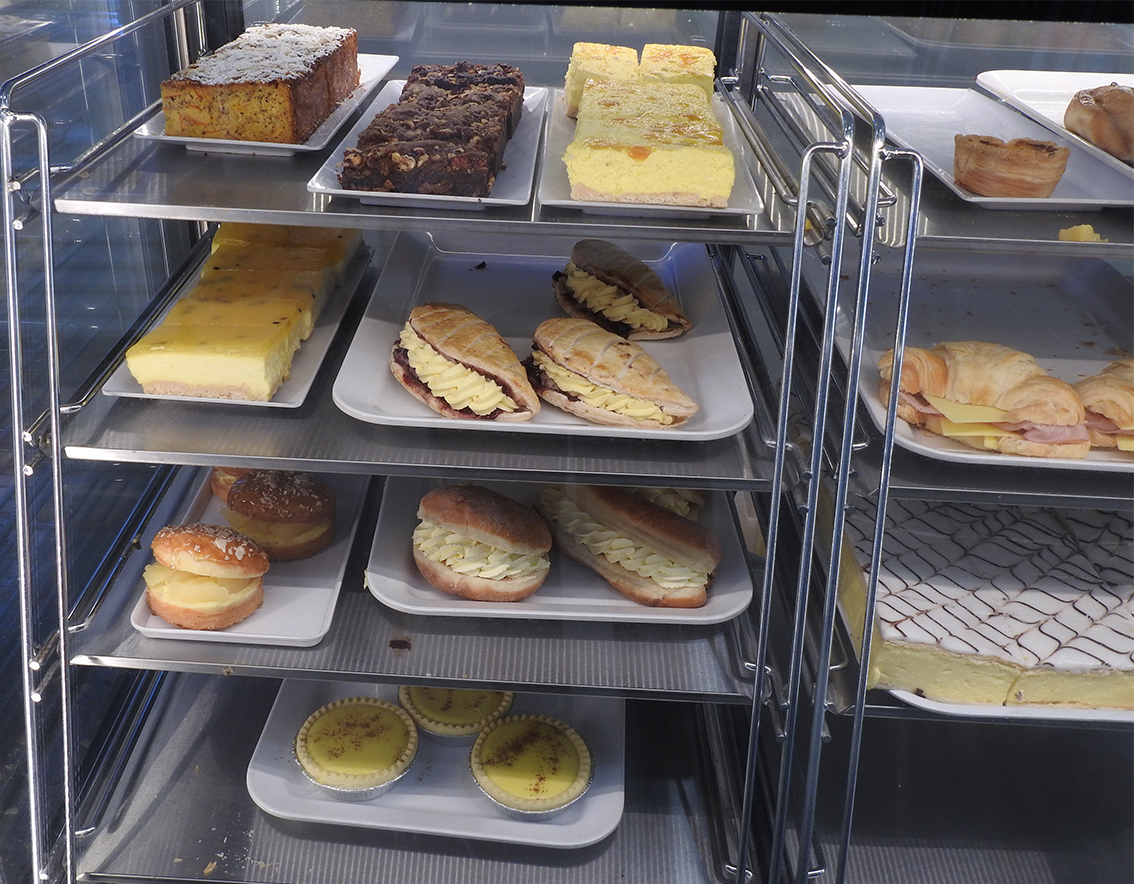
It has been a relatively productive morning’s work and I pack up my gear and head back towards Williamstown and lunch at the local bakery which, by the way, makes one of the best custard tarts I have tasted in a long time.

Snack time

Cheers

Baz

Additional notes

This is an easy walk and drive which is quite suitable for families and seniors with public toilets, barbecues, parking and information boards nearby.

Please pass on this blog title and or contact information (URL) to any person or organisation with an interest in taking walks and enjoying wildlife in SA.

Click on the links below to see more South Australian stories and pictures in my Weekend Notes articles as well as locating similar blogs on Feedspot’s top 20 Australian wildlife blogs

Weekend Notes

Feedspots top 20 Wildlife Blogs


Houseboat stories…..After the Floods

28 Jun

Houseboat stories continued (May 2023)…..After the Floods

Dear Reader:

As I walk across the flood plain, which was inundated in last year’s winter rains, there is a definite lack of wildlife. Bushes, grasses and other ground covers have been decimated. Last time I visited this area there were: Butcherbirds, Mudlarks, parrots, honeyeaters, Western Grey Kangaroos as well as an abundance of insects. Eventually I spot a single white butterfly settling on the cracked earth.

Cabbage White Butterfly

I am exploring Kings Billabong near Mildura, just over the SA border. We have travelled to this location by houseboat but the area is also accessible by unsealed roads. Each year I holiday here from Adelaide and observing the changes along the river, especially after major climatic changes,  is always interesting.
Track to the billabong

First lagoon

Following a pathway carved by a 4WD vehicle, probably a local ranger, I reach a boardwalk leading to a junction of trails accessing various parts of the billabong. From this location I get my first look at one of the many lagoons which make up this fascinating wetland.

Pink-eared Ducks

There are numerous birds congregating around a small island in the middle of the lagoon. They are about one hundred and fifty metres from my nearest vantage point and the light is starting to fade. Challenging conditions for my Nikon P900. I brace myself against a tree trunk, take a breath and fire off a couple of frames as I exhale. Later examination on the laptop reveals some Australian Ibises, a lone White-necked Heron and a flock of Pink-eared Ducks. The latter two species are birds I have never previously photographed.

Whistling Kite

With around half an hour’s light remaining I quickly skirt the first lagoon and sit quietly while scanning a second lagoon. High in a tall, dead tree overlooking the water, I can just make out the distinctive outline of a raptor. Zooming in, I recognise it as a Whistling Kite.

Spoonbills foraging


Fish in beak

There are a few Pacific Black Ducks, herons and a pair of Laughing Kookaburras around the edge of this second pool but it is a small group of Yellow-billed Spoonbills that are most interesting as they swing their bills through the water in search of small prey. However, I am quite surprised when I see one of the birds capture a small fish in its bill; something I have never witnessed before.

Back at the boat

I feel the vibration of my Apple Watch indicating an incoming phone call. The watch, with its emergency capabilities, is a useful tool when you work alone in the bush. The call is just a safety check and a reminder that dinner is being prepared on the houseboat and it’s time to make my way back. Tomorrow I will venture further into the park to explore some other parts of this complex wetland.

For more wildlife stories and pictures go to:

Weekend Notes

Feedspots best wildlife blogs