Archive | history RSS feed for this section

Around Williamstown Part 2

12 Dec

Dear Reader:

A bit of history
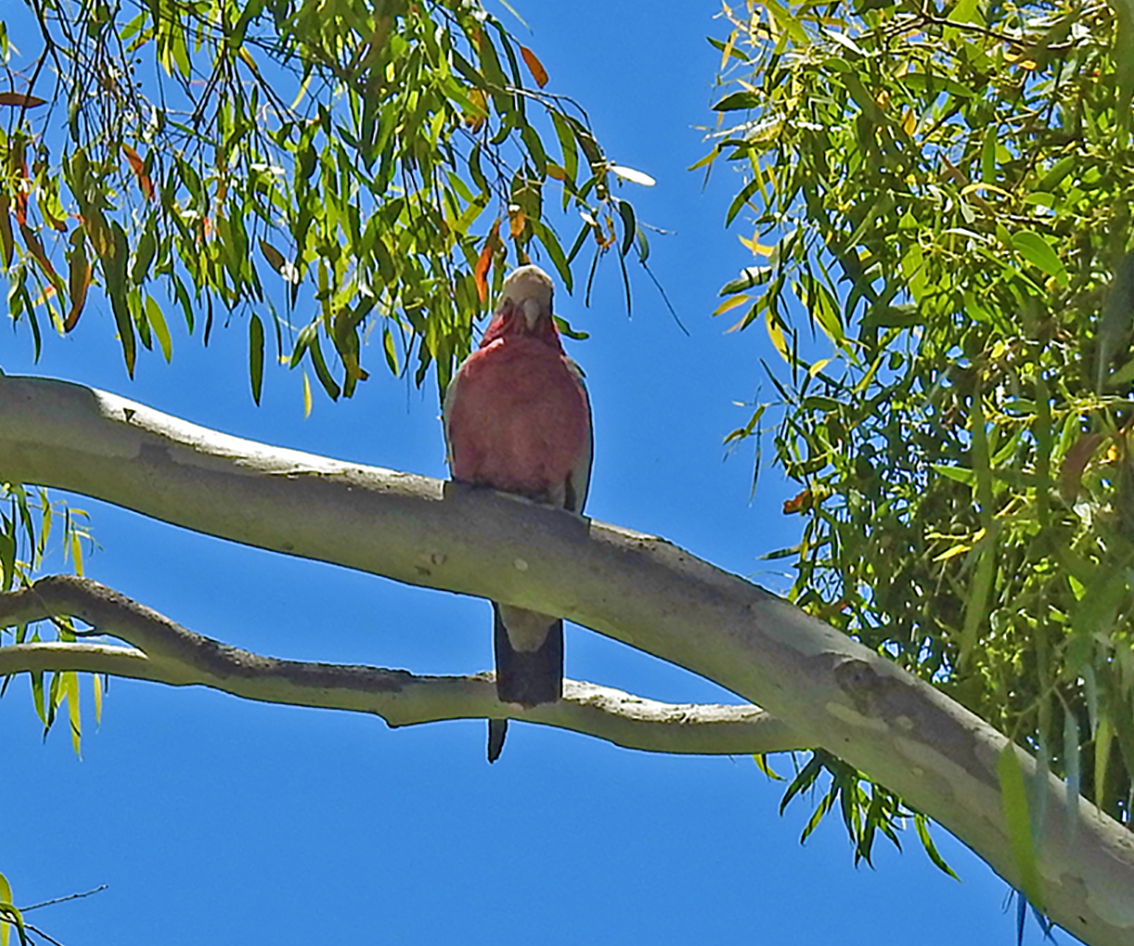
Rose-breasted Cockatoo or Galah

The old, rusted plough sits in a field of waving wild oats. In one of the  massive eucalypts on the edge of the field a Galah watches me as I frame my image. A lovely start to my drive around Williamstown in the Adelaide Hills.

Historic town buildings

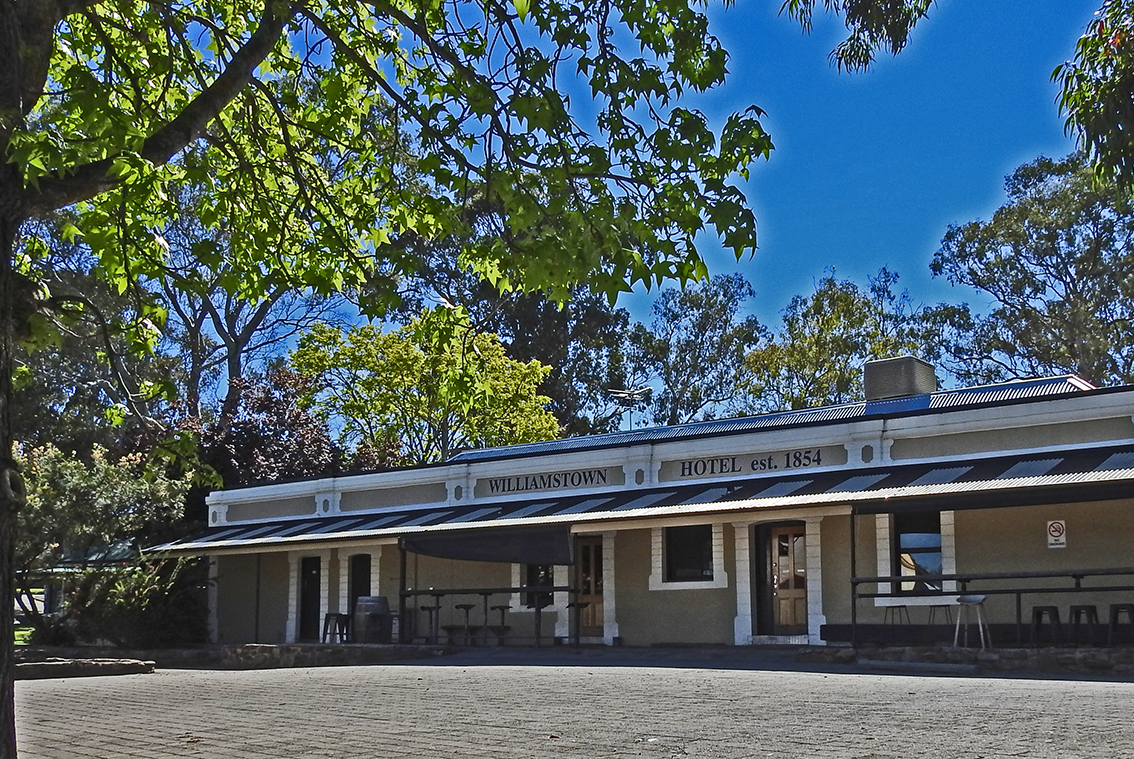
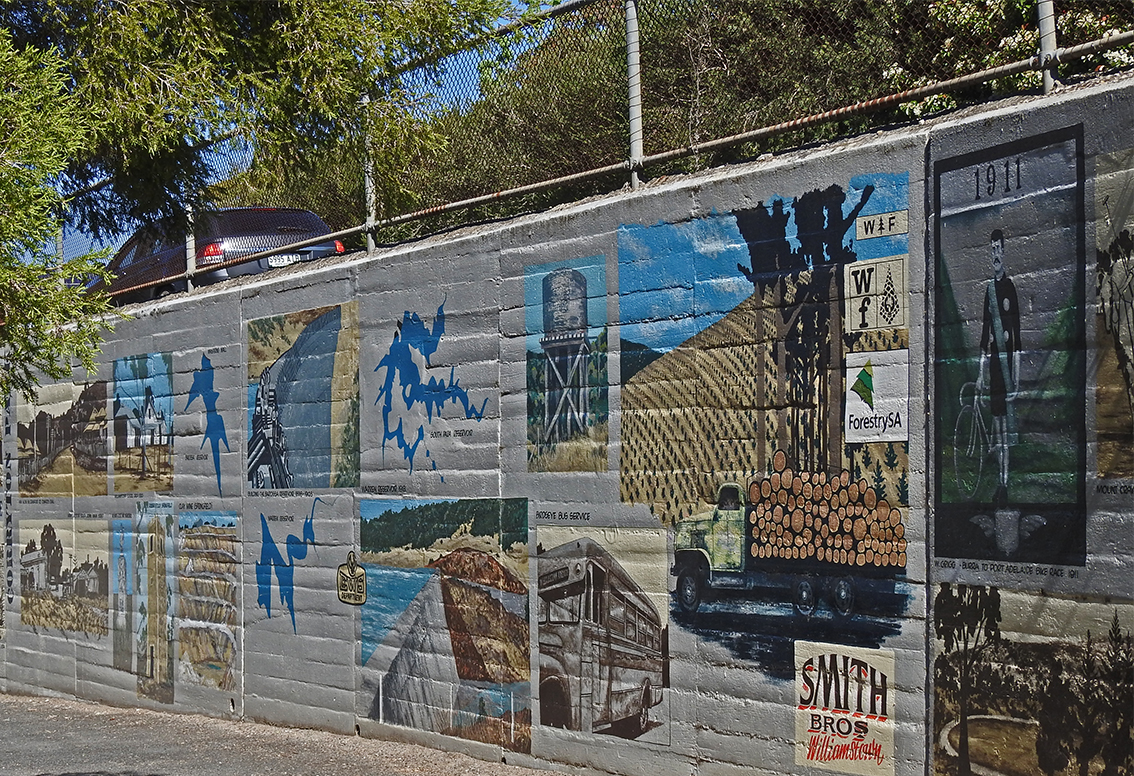
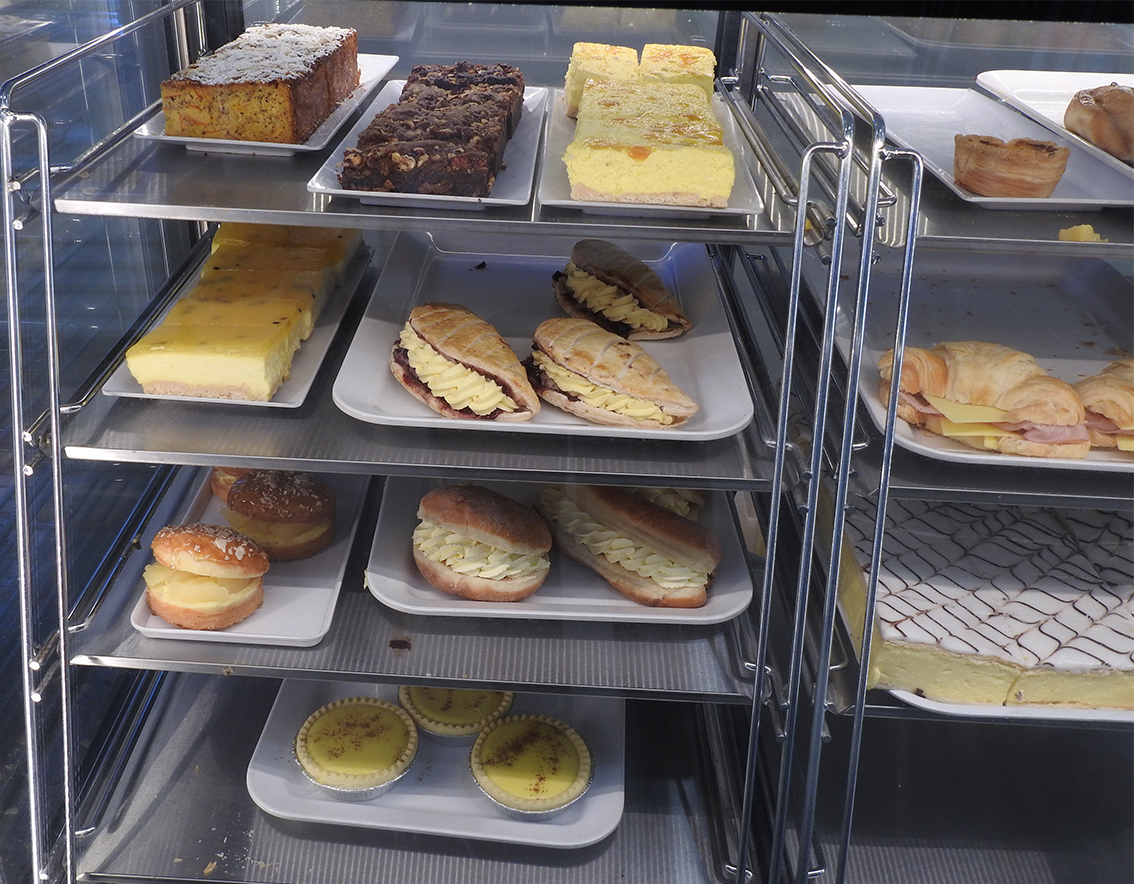
I am exploring the backroads around Williamstown then finishing up in the main street for coffee and cake at one of two equally fine bakeries. Although my focus is on the natural features of the area there is a printed heritage trail available from some of the shops.

Australian Raven and Crested Pigeon on an old building’s roof

Driving into the main road, Queen Street, I turn right into Margaret Street which skirts the town on its northern aspect. I pass a farmer ploughing a hayfield and an old, dilapidated dwelling. Australian Ravens and Magpies are foraging alongside the road and Welcome swallows hawk for insects disturbed by the tractor.

Masked Lapwing
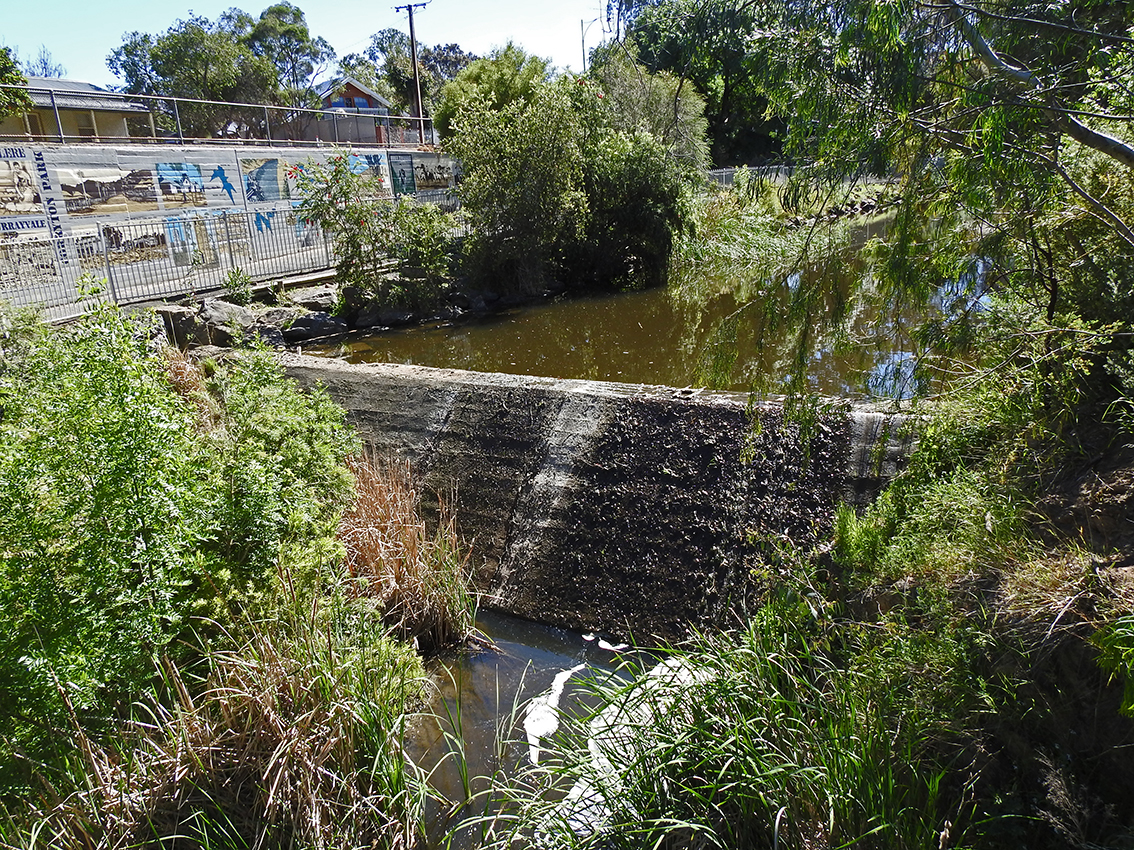
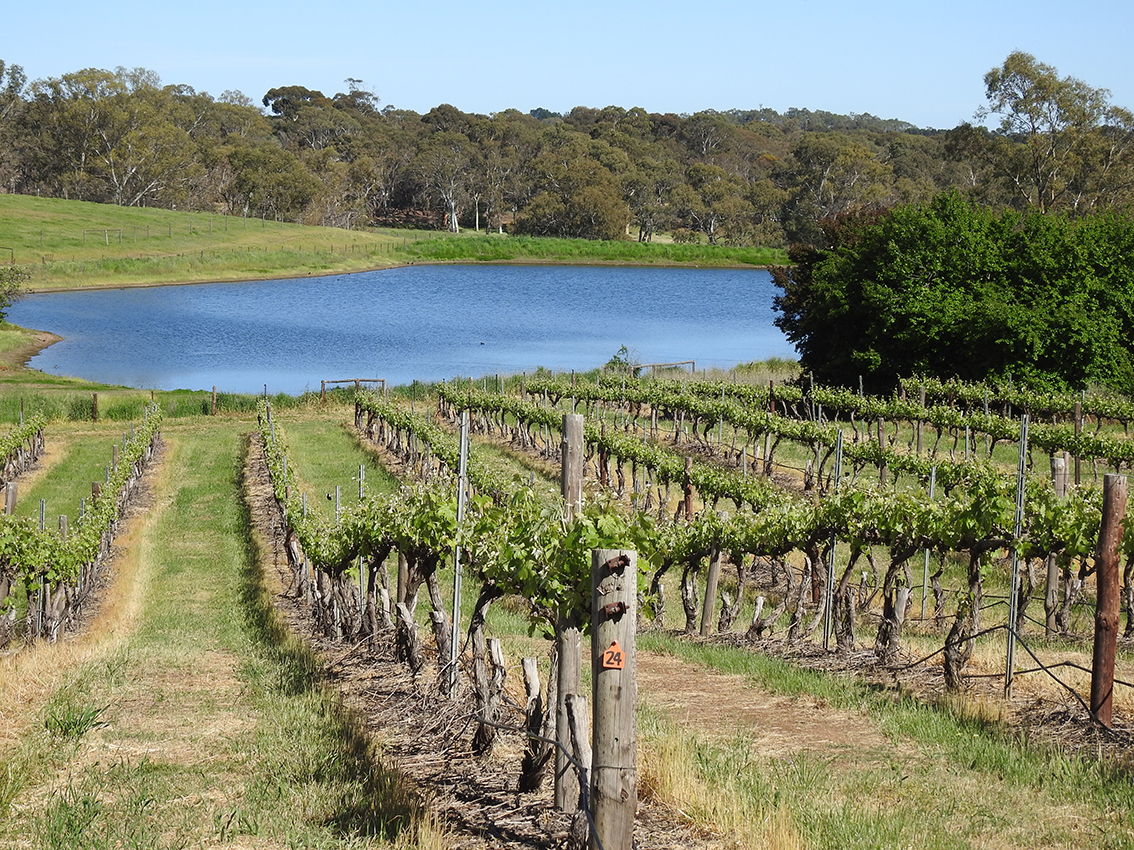
Vines and local dam

There are vines and a sizeable dam to my left and a pair of Masked Lapwings are strutting along the fence loudly proclaiming their territory with their Kek Kek call.

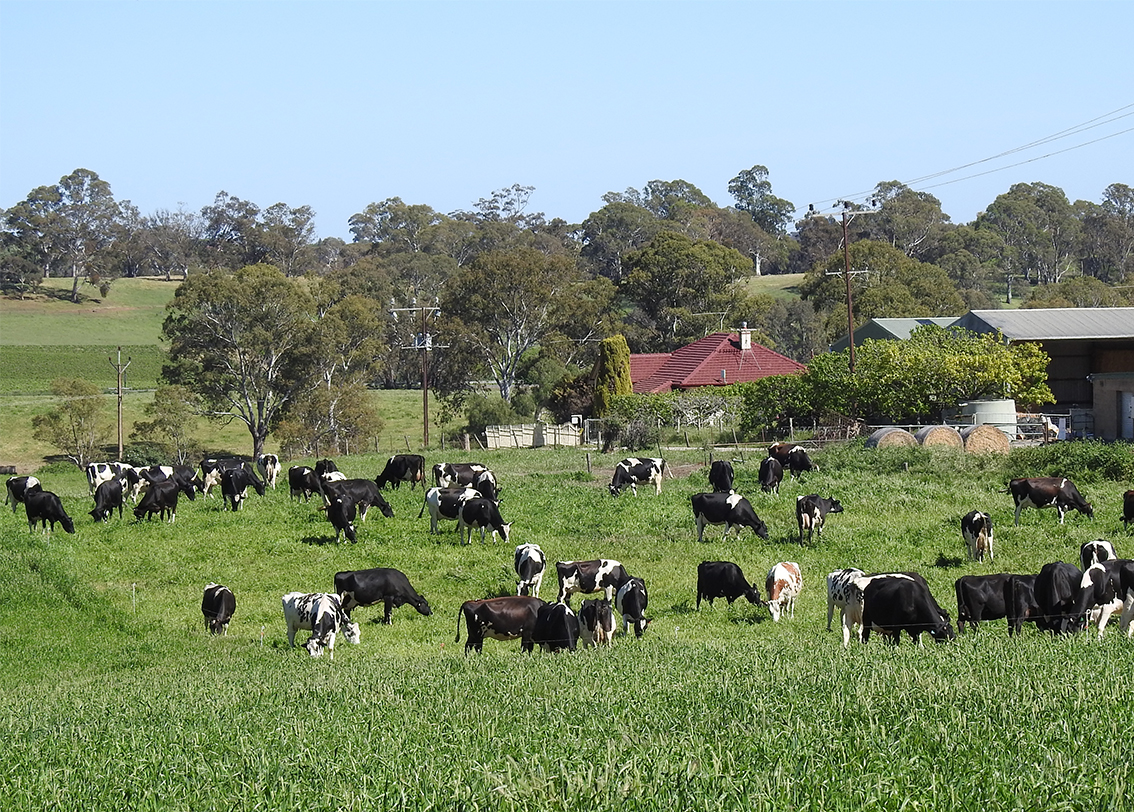
Dairy farm

The road takes a sharp bend and its name changes to Fromm Street. A dairy farm sits on the corner and curious cows move up to the fence as I stop the car to take in this charming rural image. Fromm leads back onto the Lyndoch Road and into Queens Street where there are many old, colonial era buildings………to be continued.

Cheers

Baz

Additional notes

Other animals seen, heard but not photographed, Sulphur Created Cockatoos, Brown Snake, Raptor species probably a kite.

The camera used for this post is a Nikon Coolpix P900

This is an easy drive which is quite suitable for families and seniors with public toilets, caffes, parking and other facilities nearby.

Please pass on this blog title and or contact information (URL) to any person or organisation with an interest in taking walks and enjoying wildlife in SA.

Click on these links and see more South Australian stories and pictures in my Weekend Notes articles as well as locating similar blogs on Feedspot’s top 20 Australian wildlife blogs

https://www.weekendnotes.com/adelaide/writer/452/

https://blog.feedspot.com/australian_wildlife_blogs/

Just Cruising 2 King’s Billabong to Mildura

6 Jul

Dear Reader:

As we back the houseboat into the current and point it downstream a Snakebird or Anhinga perches gracefully on an overhanging branch, the perfect farewell to King’s Billabong.

Snake-bird or Anhinga

In the next hour, I photograph numerous scenes and animals from my vantage point on the upper deck. None of the images are quite as clear as the initial shot as the boat is moving, the engines vibrating, and the riverbanks are a between 50-100 metres away.

Classic red earth riverbank scenery

Because birds fly, it is a challenging task to capture images of them in flight. Dainty swallows hunt insects in the boat’s wake and Whistling Kites circle high in the air using their extraordinary vision to locate prey.

Welcome Swallows resting on the river bank
Welcome Swallows hunting in the houseboat wake
Whistling Kite hunting above the river

Because of their size, shape and slow flight pattern, Australian Pelicans are one of my favourite waterbirds to photograph. Whether hunting, flying, landing or taking off, they are both endearing and elegant.

Australian Pelican in flight
Ancient tree and Pelican composition

The river is used by numerous types of craft which tell a variety of stories. There are old barges from the time when the river was a major transport route. Paddle-teamers, both new and old, rekindle the more romantic days of river travel. Tour boats, houseboats , ski and fishing boats are the most common vessels of the modern era.  

Classic paddle-steamer still in use
Derelict barge

It is a relatively short trip back. As we bring the houseboat into the wharf at Mildura, I notice a Great Cormorant watching us from the bank as a flotilla of Maned Ducks slide past on the port side. Settled snuggly into our mooring I watch a Rakali or Australian Water Rat foraging amongst lily pads: a nice way to finish the week.

Rakali foraging amongst lily pads

Cheers

Baz

Additional notes

The camera used for this post is a Nikon P900

This is an easy excursion which is quite suitable for families and seniors with public toilets, barbecues, parking and other facilities nearby. River bank areas that are not part of national park are dog friendly.

Please pass on this blog title and or contact information (URL) to any person or organisation with an interest in taking walks and enjoying wildlife in SA.

Click on these links and see more South Australian stories and pictures in my Weekend Notes articles as well as locating similar blogs on Feedspot’s top 20 Australian wildlife blogs

https://www.weekendnotes.com/adelaide/writer/452/

https://blog.feedspot.com/australian_wildlife_blogs/

Normanville’s Big Gorge Walk…….part 1

17 Jun

Dear Reader:

Tiny birds are feeding in the canopy of a massive Red River Gum on the edge of the river bed. Scanning the area with the telephoto of my Nikon P900, I spot a diminutive Thornbill.

Thornbill species

Garnet Kelly Park on the southern side of Normanville is the start of the Great Gorge Walk. This charming track of around 3Kms return follows a path walked by explorers and traversed by later settlers.

Park entrance near the old bridge
Alongside the river

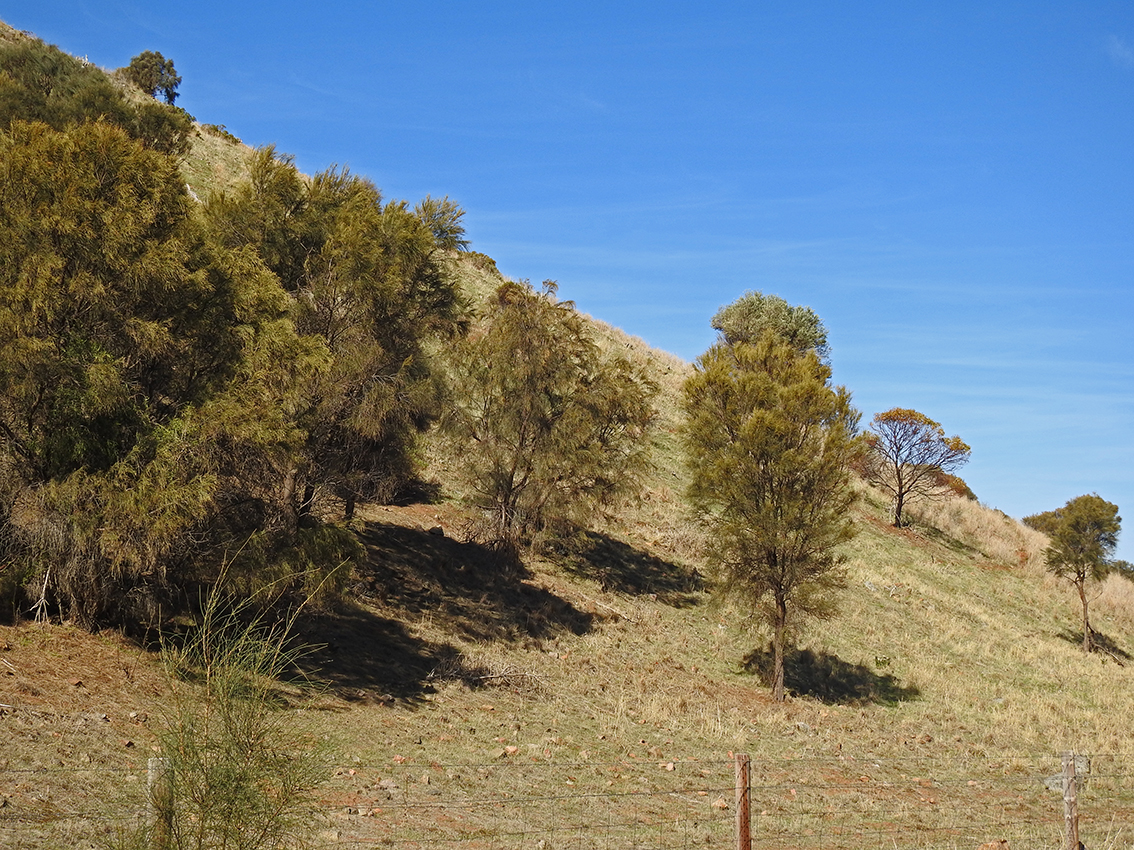
River Red Gums, Sheoaks and Acacia bushes are part of a complex and varied flora.

Sheoaks on hillside, private property bordering the walk

Information placards at the start of the walk and along its route tell the story of the bridge, pathway and the local soldier which the park is named after.

One of numerous informative signs on the walk and in the park

Small birds seem to be prolific in the first kilometre of the walk and I manage to photograph Fairy Wrens, Silvereyes and White-browed Finches. Most of the shots are taken at distance and emphasise the need for a good telephoto lens in this area.

Silvereye feeding on reed-like grasses near a pool in the river bed

I notice small groups of Sulphur-crested and Rose-breasted (Galahs) Cockatoos flying overhead. A few land to feed on the ground while others perch in nearby trees. They advertise their presence with a screeching, almost prehistoric, call.

Sulphur Crested Cockatoo

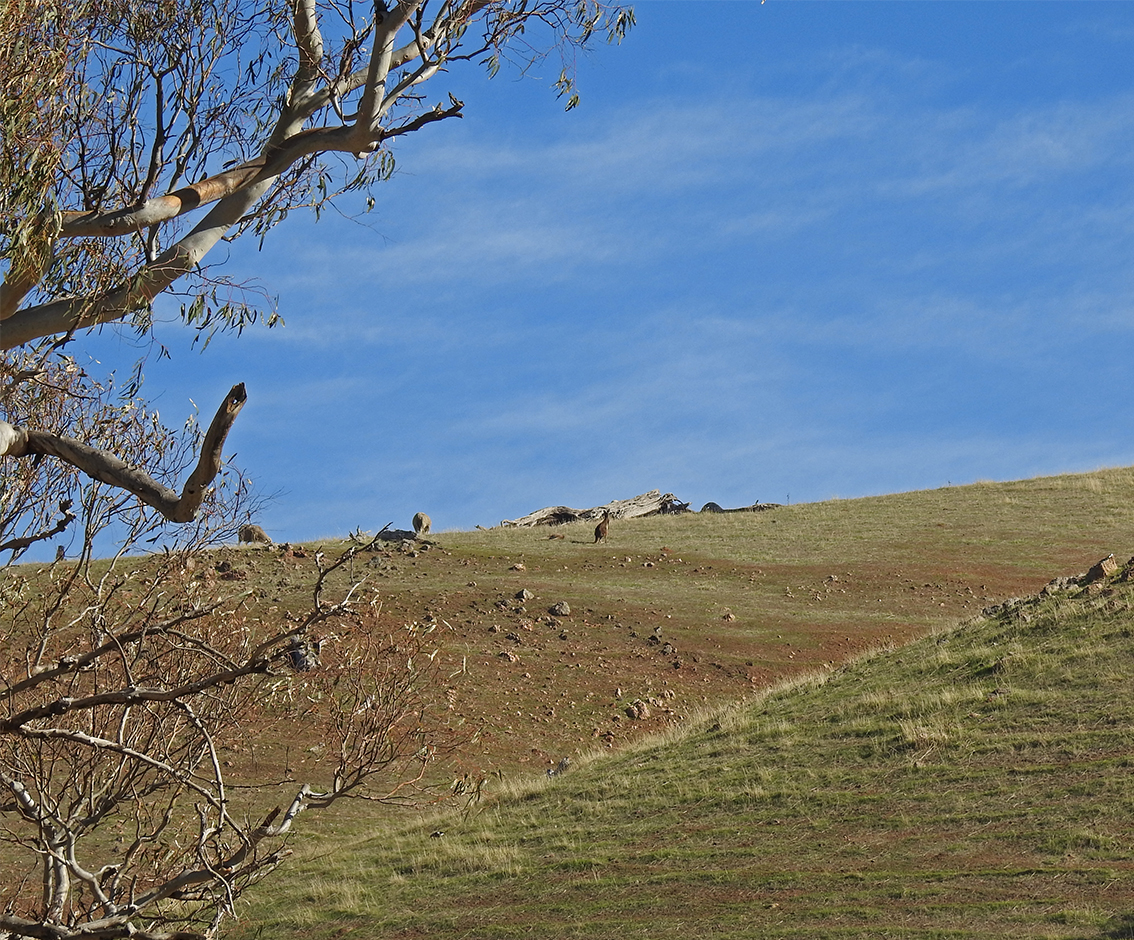
The weather is too cold for reptiles and I see only a few rather tattered looking butterflies. However, there are sheep with lambs in tow, on the hillsides. A closer look on one ridge reveals a lone Western Grey Kangaroo grazing alongside a couple of sheep.

Hilltop grazers

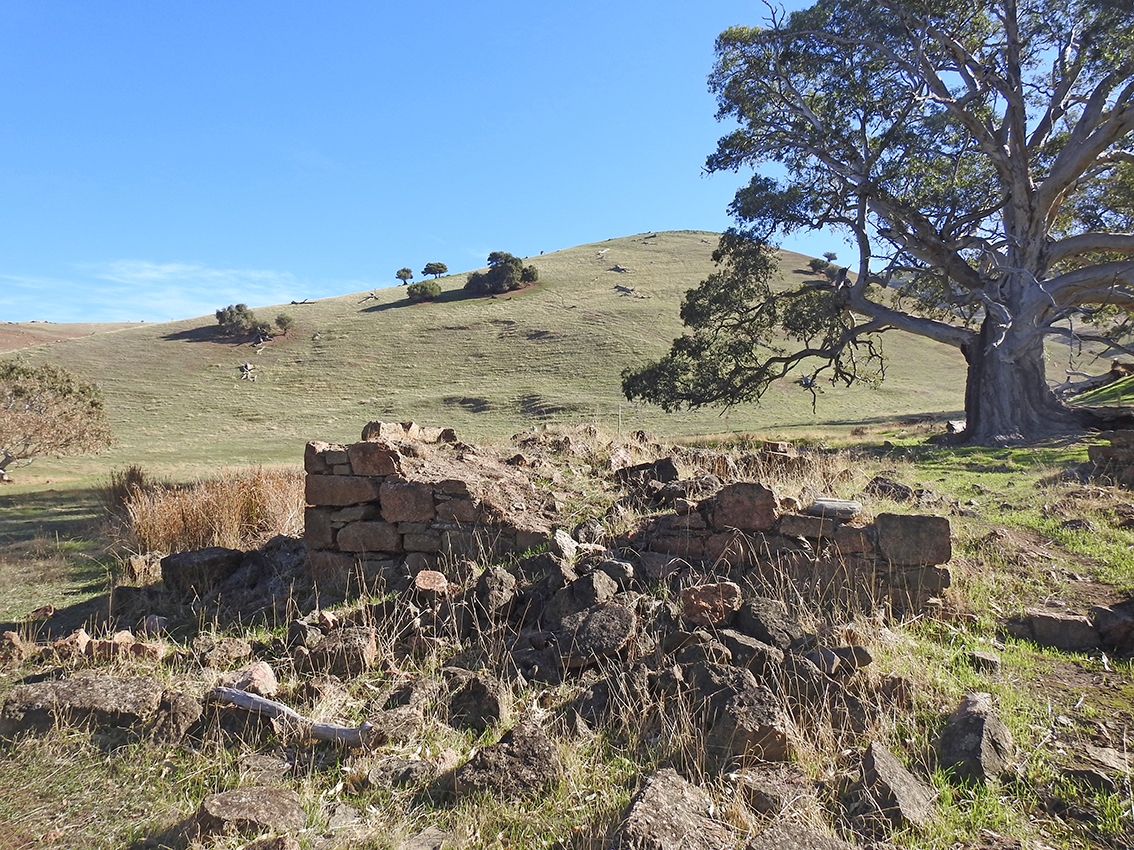
Glancing at the distance reading on my Apple watch, I realise I am almost at the half way (1.5 Km) point of this walk. Though the wildlife and scenery have been both interesting and varied, my writer’s mind wants a little more variation for an article. It comes in the form of an old ruin.

Remains of a once substantial building
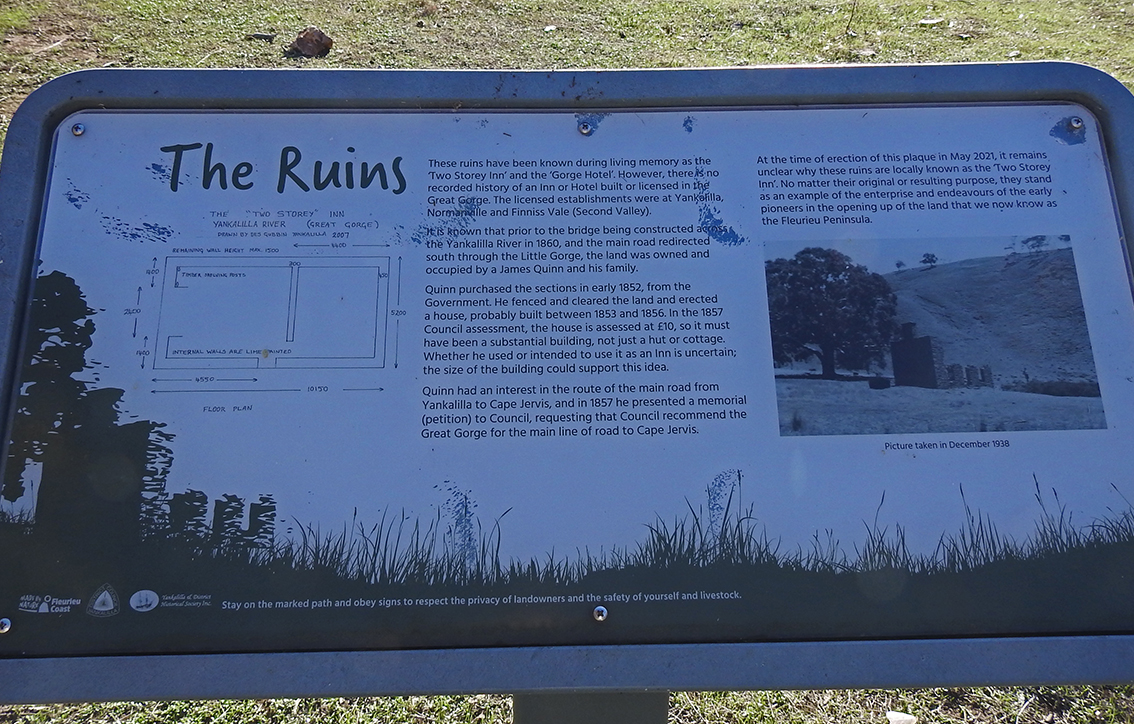
Historical placard near the ruins

The exact nature of the ruin is a little unclear and an information plaque provides some different alternatives. Nevertheless, this old structure and its history provides yet another reason to take this truly beautiful walk on the Fleurieu Peninsular………….to be continued.

Cheers

Baz

Additional notes

The camera used for this post is a Nikon P900

This is an easy walk which is quite suitable for families and seniors, Dogs must be kept on a lead.

Please pass on this blog title and or contact information (URL) to any person or organisation with an interest in taking walks and enjoying wildlife in SA.

Click on these links and see more South Australian stories and pictures in my Weekend Notes articles as well as locating similar blogs on Feedspot’s top 20 Australian wildlife blogs

https://www.weekendnotes.com/adelaide/writer/452/

https://blog.feedspot.com/australian_wildlife_blogs/

The tip of the Fleurieu

28 Apr

Dear Reader:

The school of Silver Drummer and Banded Sea Sweep mill around the rocky outcrop off Cape Jervis SA.

Silver Drummer (top centre) and Banded Sweep

I am exploring the southern tip of South Australia’s Fleurieu Peninsular using images that show a few of its many features and attractions.

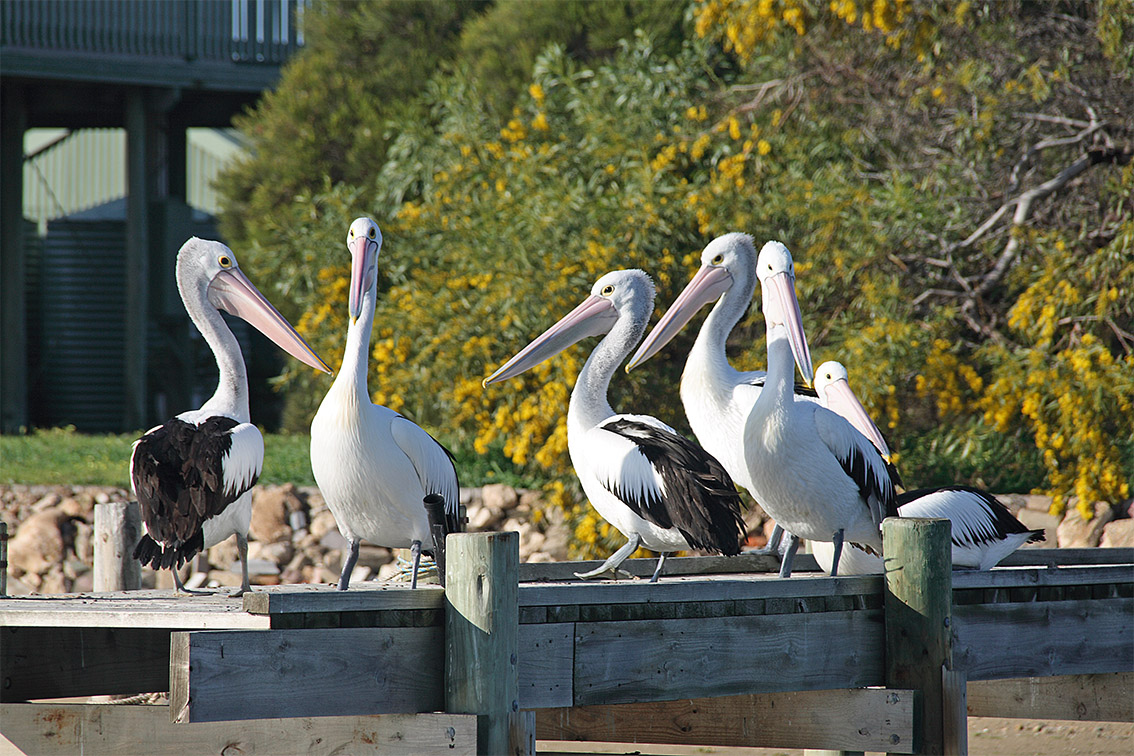
Australian Pelicans Goolwa bird reserve

Cape Jervis is the transit port for the Kangaroo Island Ferry as well as being an interesting wildlife destination in its own right.

Kangaroo Island ferry at Cape Jervis with KI in the background

Numerous seabirds live in this area including: terns, gulls, cormorants and various birds of prey. At different times I have observed Sea Eagles and Nankeen Kestrels.

Nankeen Kestrel hovering

Just before Cape Jervis, a dirt road leads to Fishery Beach where an undersea cable crosses beneath Investigator Strait to KI. I spend a little time snorkelling close to the shore where I photograph a school of Zebra Fish.

Zebra Fish

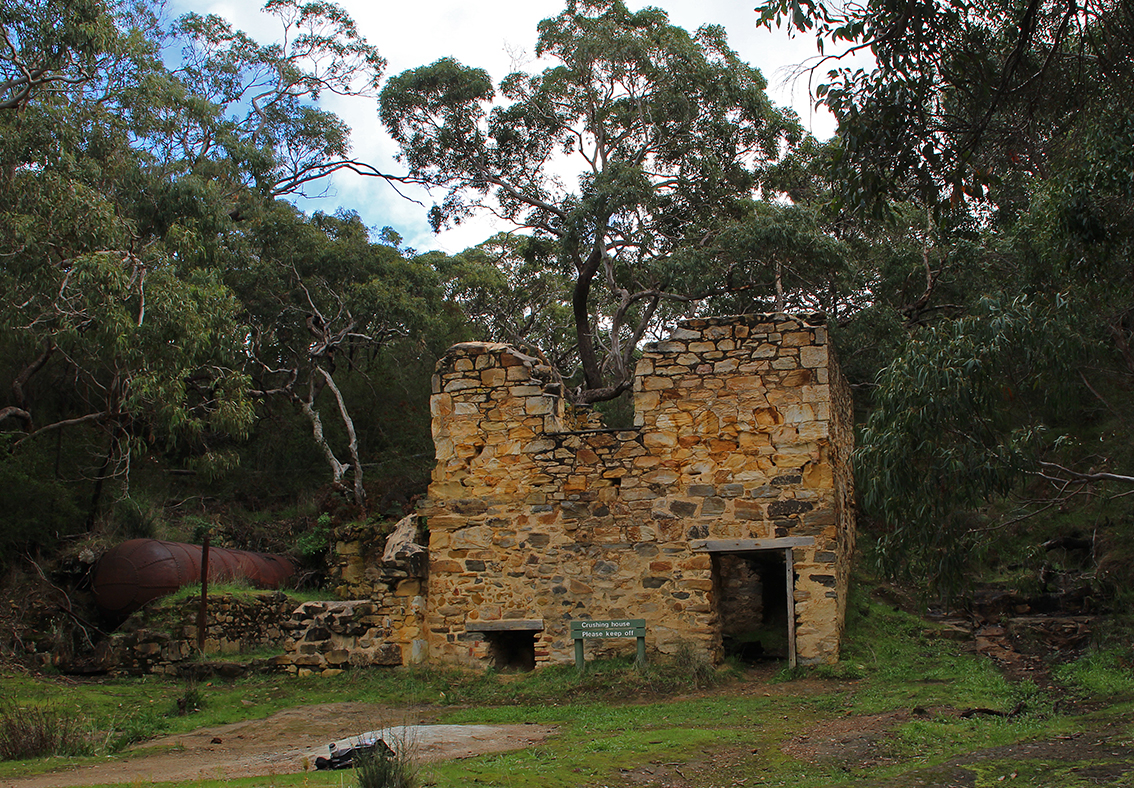
Range Road Curls around the foot of the peninsular passing through pasture, scrub and grazing country. Near the beginning of the road there is an entrance to the old Talisker mine. Numerous small birds inhabit the dense scrub around this area and the old buildings and machinery provide some historical context.

Crusher house and boiler
Crescent Honeyeater

One of the main attractions of the southern Fleurieu is the Deep Creek Conservation Park; a wonderful place to photograph Western Grey Kangaroos and the occasional Echidna.

Lone roo Deep Creek Conservation Park
Roos in the mist Deep Creek CP

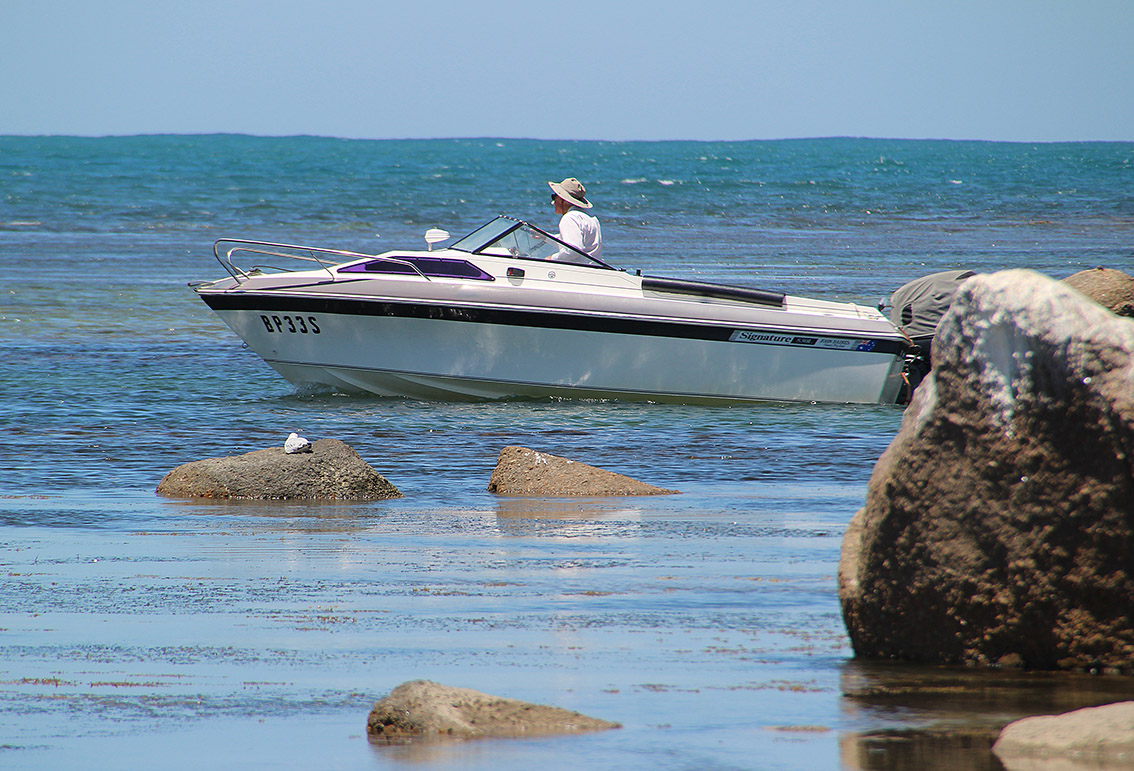
My next stop on this trip is Victor Harbor, where I watch a succession of recreational fishing boats head out to sea while I enjoy a tasty seafood lunch at Whalers Seaside Dining.

Setting out from the Victor Harbor boat ramp

Having reached Victor from the city via South Road and Range Road I decide to return to Adelaide along the B37 (Strathalbyn Route) after a 4WD run along iconic Goolwa Beach towards the mouth of the Murray River.       

Entrance to Goolwa beach

Cheers

Baz

Additional notes

The cameras used for this post are Sony RX, Nikon P900 and Nikon Coolpix AW100  

This is an easy drive which is quite suitable for families and seniors with the exception of the 4WD section which can be tricky depending on tides and wind.

Please pass on this blog title and or contact information (URL) to any person or organisation with an interest in taking walks and enjoying wildlife in SA.

Click on these links and see more South Australian stories and pictures in my Weekend Notes articles as well as locating similar blogs on Feedspot’s top 20 Australian wildlife blogs

https://www.weekendnotes.com/adelaide/writer/452/

https://blog.feedspot.com/australian_wildlife_blogs/

Hahndorf Has Wildlife

24 Sep

Dear Reader:

At first glance the little creek appears lifeless but on closer examination I spot a Blue Damselfly and a juvenile Eastern Water Skink on the overgrown stonework.

Hahndorf is a tourist town of German heritage about a forty minute drive from Adelaide’s CBD. Best known for handicrafts, galleries, food and souvenirs; it also has quite a wide variety of wildlife hidden in its streets, trees and parks.

I am currently strolling around the Alec Johnston Park which has a small creek running through it, a soldiers’ memorial as well as a playground, rose garden and a heritage shed.

The trees above me are a haven for parrots. I have seen lorikeets and a rosella. However, it is their larger cockatoo cousins the Galahs and Sulphur Crests that make for the best images.

Two species of ducks live in and around the little creek: Pacific Black ducks and Wood or Maned Ducks. Today, a little group of Maned Ducks are dabbling amongst the water plants.

It is early spring and the wildlife is beginning to build up again after the winter hiatus. As with any natural observations weather and time of year are critical. Even a few roses are beginning to bloom.

Finally, I shall avail myself of the many lunch options available in Hahndorf and I am certainly leaning towards Kranskys (German sausages) and Sauerkraut with a serve of Beesting Cake to follow.

Cheers

Baz

Additional notes

This is an easy walk and drive which is quite suitable for families and seniors with public toilets, barbecues, parking and other facilities nearby. It is dog friendly.

Please pass on this blog title and or contact information (URL) to any person or organisation with an interest in taking walks and enjoying wildlife in SA.

Click on these links and see more South Australian stories and pictures in my Weekend Notes articles as well as locating similar blogs on Feedspot’s top 20 Australian wildlife blogs
https://www.weekendnotes.com/adelaide/writer/452/

https://blog.feedspot.com/australian_wildlife_blogs/

Bethany SA….. history and wildlife

5 Aug

Dear Reader:

Against a clear blue sky, a Nankeen Kestrel hovers above wheat stubble in search of rodents, lizards and other small animals.

Nankeen Kestrel

I am driving into the village of Bethany in the Barossa Valley about 70 kms from Adelaide. Founded in 1842 by German Lutheran settlers it was originally called Bethanian: German for Bethlehem. This charming hamlet has numerous points of historic interest starting with a Lutheran church constructed in 1883 and located on the site of an original mud, thatch church built in 1843.

Bethany, Lutheran Church

Further along the road, there is a local cemetery. I wander around reading the inscriptions which gives some perspective into the lives of our early settlers. Several Crested Pigeons are perched in one of the many trees and bushes that give the cemetery a garden-like quality.

Crested Pigeon

I take a few images of: homes incorporating original stonework, farm machinery, old fencing and other features that characterise this colonial village. In one front garden, a Monarch Butterfly perches on a shrub while Australian Magpies call (referred to as carolling and warbling) from nearby eucalypts.

Monarch butterfly, credit Debbie Simmonds

Near the town’s exit and heading further into the Barossa there is a ford crossing the Tanunda Creek. An unpaved pathway runs along the waterway. Massive Red River Gums tower above the creek and I spot: Galahs, Adelaide Rosellas and a lone Sulphur-crested Cockatoo high in the branches.

Galahs (Rose-breasted Cockatoos

Walking along the trail I meet a young couple exercising their dogs and ask them about the wildlife. They mention that Western Grey Kangaroos are common and the occasional Echidna.

Echidna, photographed in nearby woodland

Several of the biggest eucalypts have quite a lot of bark peeling off their trunks and I lift it carefully searching for: centipedes, roaches, gecko lizards and termites. All of which frequent this micro-habitat. I discover none of these. Instead, a myriad of half-grown Huntsman Spiders scatter in all directions. Instinctively, I jump back and fire off a couple of shots. I am not ­­­arachnophobic, but spiders are far from my favourite form of wildlife.

Juvenile Huntsmen Spiders head for cover

Close up of juvenile Huntsman to show features

After crossing the creek, I walk back towards my car which is parked near the ford. I will return to Bethany in the Spring and take a longer walk along the creek. However, today I’ll finish my day by visiting the nearby Bethany Winery and pick up a bottle or two to remember a good day exploring this iconic South Australian destination.

Bethany Winery

Cheers

Baz

Additional notes

This is an easy walk and drive which is quite suitable for families and seniors with public toilets, shelter, barbecues, parking and other facilities nearby. It is dog friendly.

Please pass on this blog title and or contact information (URL) to any person or organisation with an interest in taking walks and enjoying wildlife in SA.

Click on these links and see more South Australian stories and pictures in my Weekend Notes articles as well as locating similar blogs on Feedspot’s top 20 Australian wildlife blogs
https://www.weekendnotes.com/adelaide/writer/452/

https://blog.feedspot.com/australian_wildlife_blogs

The Kapunda Mine Trail…History and Wildlife

17 Jul

Dear Reader:

There is an Adelaide Rosella perched amongst the bare branches of a fruit tree in the garden of the old ‘Mine Manager’s House’.

Adelaide Rosella

I am taking a walk around the Kapunda Mine site situated on the southern edge of the mid north town of the same name. It is an easy, short walk. Despite the rather overcast conditions, I am hoping to get a few good shots of the site and local wildlife.

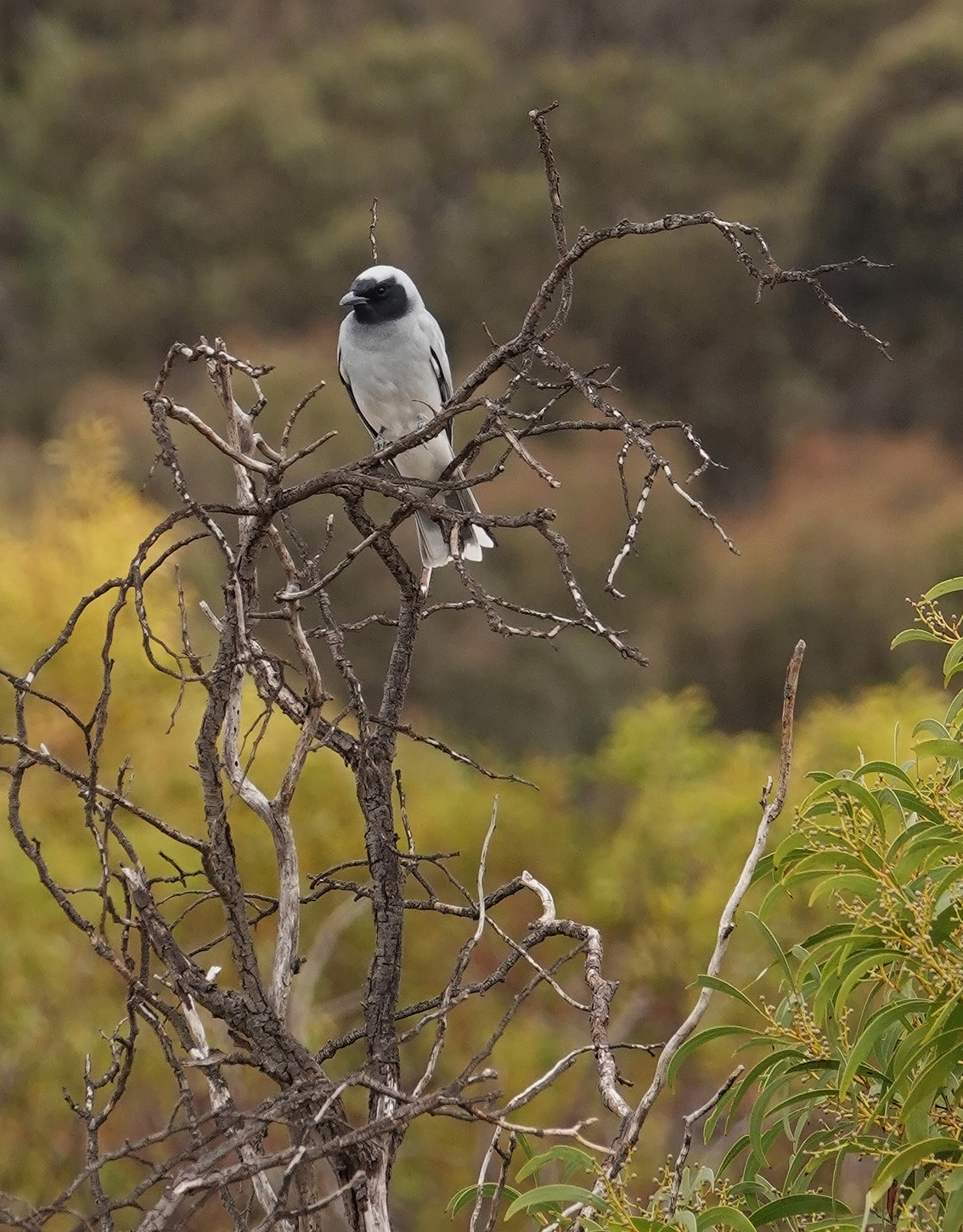
Black-faced Cuckoo Shrike (credit Debbie Simmonds)

Before my walk I spoke to several people at the Visitor Information Centre and the local hotel. They mentioned a mob of Western Grey Kangaroos in the area and the occasional Echidna encounter. Fingers Crossed!

Classic Aussie pub

From the parking bay by the old house, the marked trail leads up to a lookout and tall Chimney which was connected to the boiler house and steam engine.  This system ran different pieces of mining equipment.

Start of the trail

Leaving the chimney site I make my way down to a playground area with fascinating metal sculptures. As I read the information plaque I notice some movement in the bushes to my right. Kangaroo? No! A bunny which skips away into the bushes.

European Rabbit

Rounding one of the bends at the top of the walk I encounter more information plaques which detail a range of stories about mining processes, the life of miners as well as some anecdotes from the mine’s historic past.

One of many stories

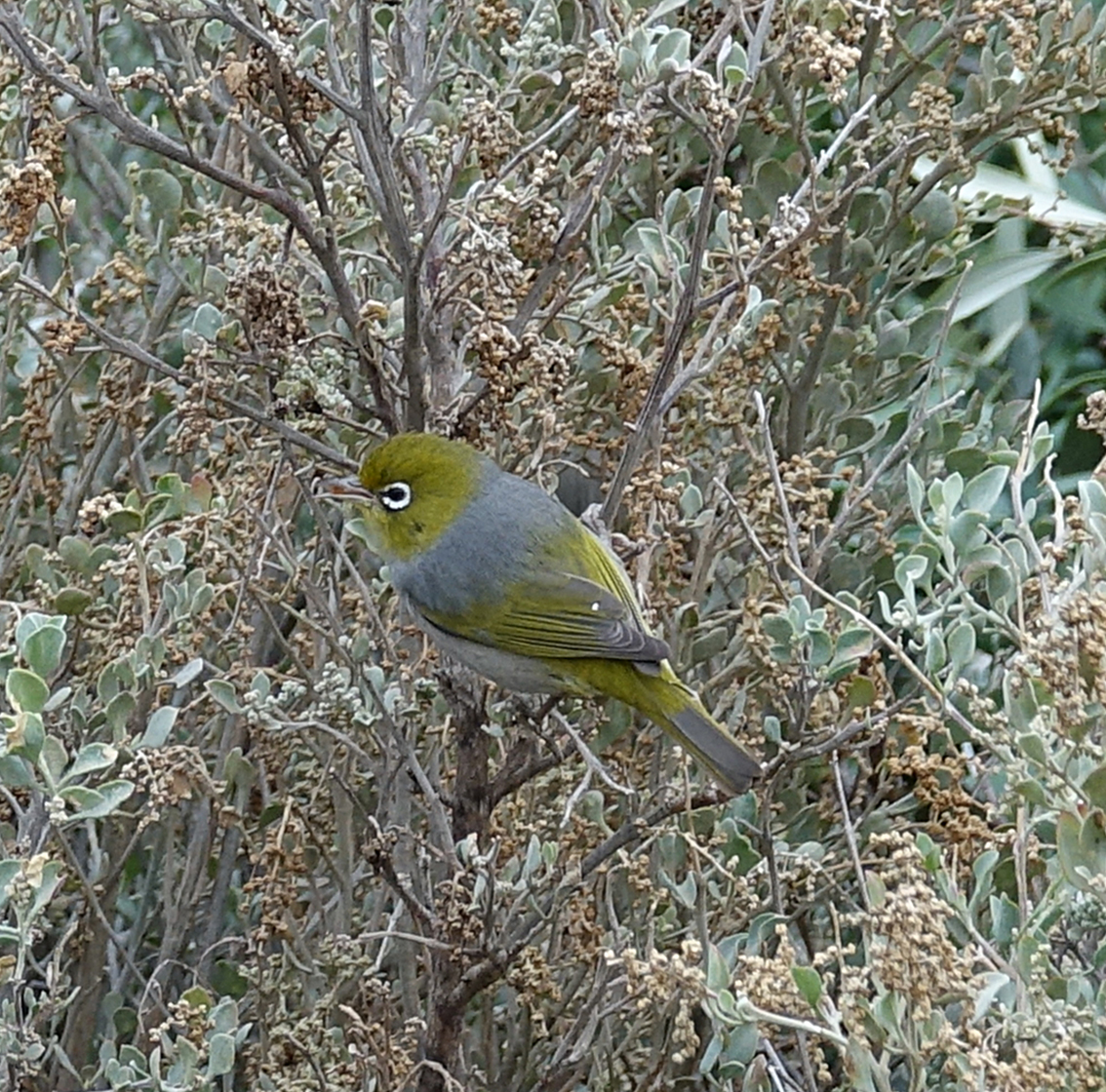
I read some information about ‘Wheal Charles’ an early part of the complex catch a  glimpse of some tiny birds feeding on nearby saltbush plants. Focus is tricky in the poor light and with such speedy little birds I have to take a dozen shots before getting one right. They are Silvereyes, one of our smallest local species.

Silvereye

The views across the ‘minescape’ from here are quite fascinating with the streaks of different coloured minerals standing out from the browner soil and background rock strata.

View across part of the open cut section of the mine

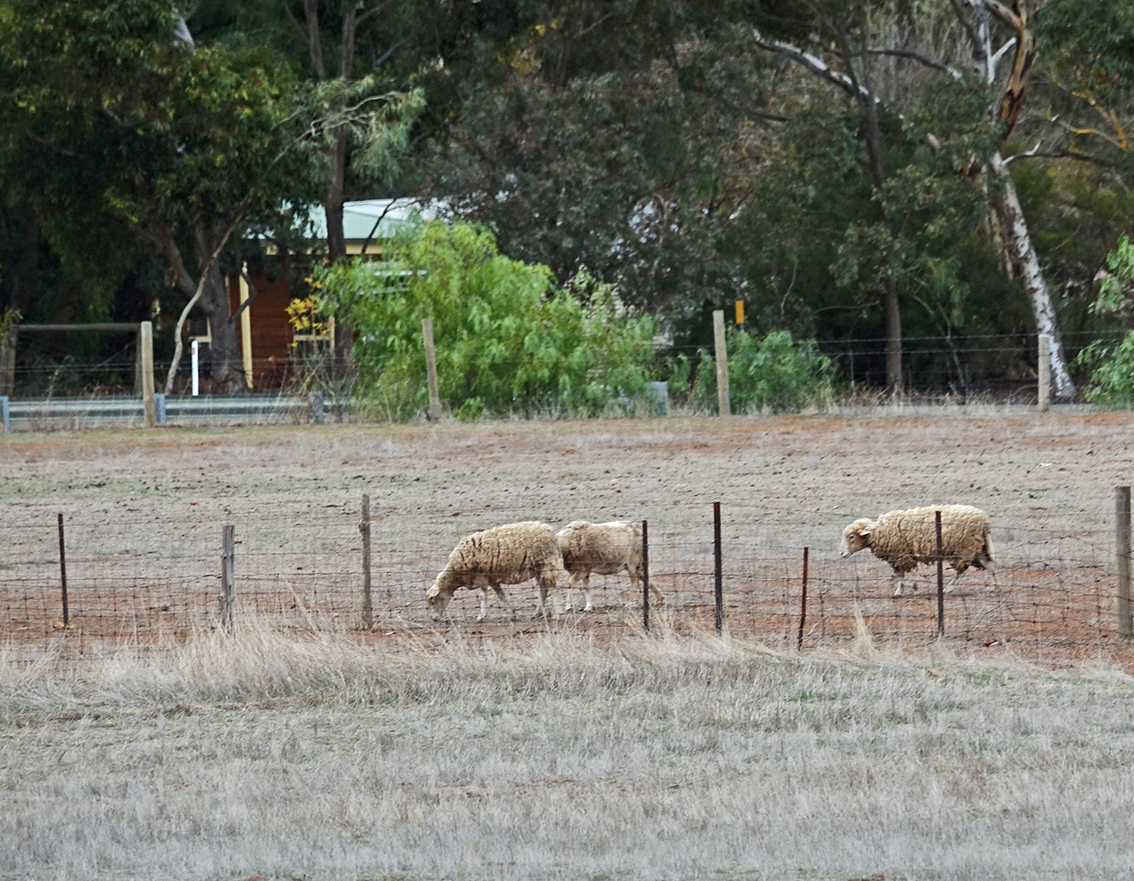
There are sheep in a paddock alongside the mine and some dark coloured birds on the ground near them. Initially, I think they are Ravens but after a closer look through the telephoto lens I spot their red eyes and realise the birds are White-winged Choughs.

Nearby pasture

White-winged Choughs

The Choughs are my final wildlife encounter. However, as I make my way back to the beginning of the looped trail I notice a series of placards telling a story about Sir Sydney Kidman a famous Australian outback figure. A great way to finish my tour of this charming town’s historic mine site.  

A story to end the walk

Cheers

Baz

Additional notes

This is an easy walk and drive which is quite suitable for families and seniors with public toilets, barbecues, parking and other facilities nearby. At the time of writing this post, the trail and facilities were undergoing a major upgrade. It is dog friendly.

Please pass on this blog title and or contact information (URL) to any person or organisation with an interest in taking walks and enjoying wildlife in SA.

Click on these links and see more South Australian stories and pictures in my Weekend Notes articles as well as locating similar blogs on Feedspot’s top 20 Australian wildlife blogs

https://www.weekendnotes.com/adelaide/writer/452/

https://blog.feedspot.com/australian_wildlife_blogs

Exploring the Southern Flinders Ranges…..Kanyaka Ruins

4 May

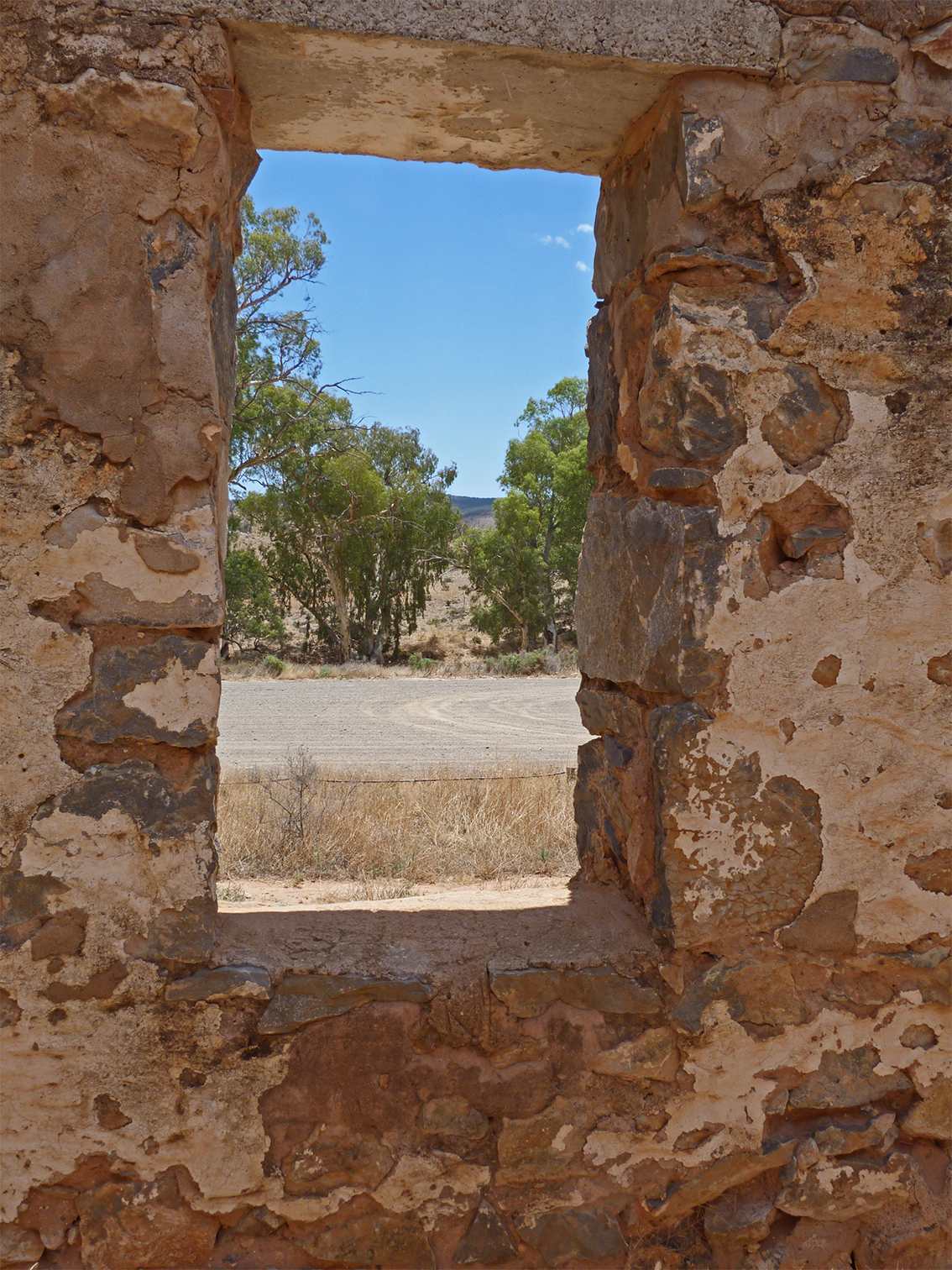
A window view of the area around Kanyaka Ruins

Dear Reader:

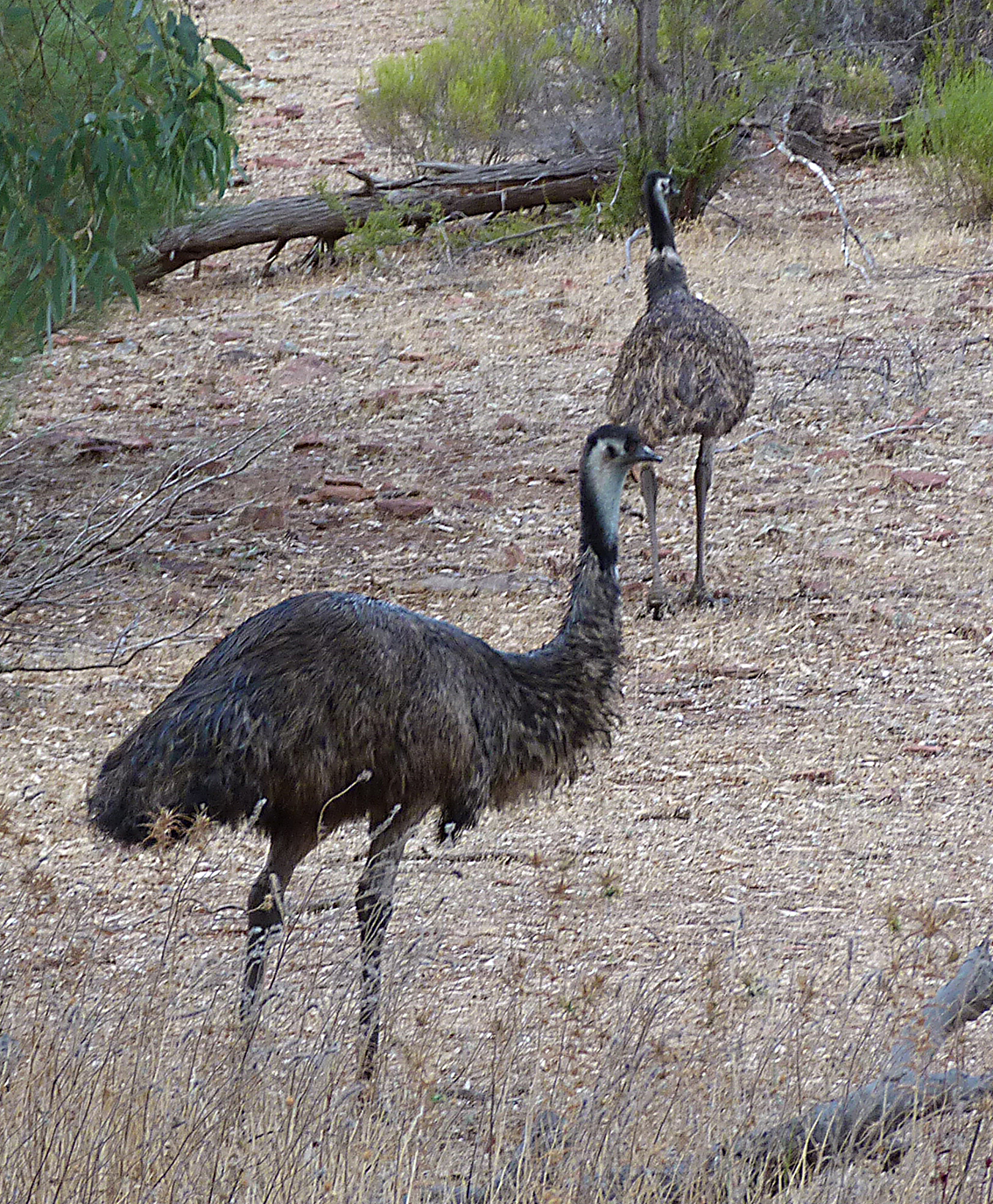
There are patches of low scrub and gravelly, ochre shaded soil on either side of the dirt road leading to the ruins. We are not expecting to see much wildlife on this exposed track. A pair of adult Emus surprise us as they dash across the road and I have just enough time to grab the camera from the console and fire off a few frames.

Driving into Kanyaka Ruins

Pair of Emus

We are driving along the entrance track to Kanyaka Ruins between Quorn and Hawker in South Australia’s Southern Flinders Ranges. This area is the ancestral home to the Barngarrla people. Kanyaka (most likely meaning ‘place of stone’) was originally established as a cattle station in 1852 by Hugh Proby who tragically died in the flash flooding of the nearby Willochra Creek. At its height, under later ownership, Kanyaka housed up to 70 families and ran sheep rather than cattle.

Ringneck Parrots

We have timed our arrival for mid-afternoon in order to have lunch at the ruins, explore the area then search for wildlife in the cooler hours before sunset. Our planning is rewarded as a small flock of Ring-neck Parrots settle a few hundred metres away amongst some wild grasses. With the parrots intent on their feeding, I am able to get close enough for an acceptable shot.

Apostle Birds

Nearby in the shade of a eucalyptus grove, I spot a pair of medium sized grey and brown birds fossicking amongst the leaf litter. On closer examination, I recognise them as Apostle Birds; a species I have never encountered around the Adelaide area where I live.

Small mob of Western Grey Kangaroos near the highway

With the sun getting lower in the sky it is time to leave in order to reach Hawker before dusk. Driving at night or in low light conditions is a recipe for disaster around the Flinders. With so many kangaroos in the area it is easy to have a collision, which can be devastating for both wildlife and driver alike. As if to emphasise the point, we pass a small mob of Western Grey Kangaroos, some with joeys in the pouch, feeding ­close to the highway.

Yellow-footed Rock Wallaby on steep hillside

After resting overnight in Hawker we will head into the heart of the Ranges and search for Yellow-footed Rock Wallabies in the steep gorges. However, that is a story for another time.

Cheers

Baz

Additional notes

This is a long drive from Adelaide but easy walking and quite suitable for families and seniors 

Please pass on this blog title and or contact information (URL) to any person or organisation with an interest in taking walks and enjoying wildlife in SA.

Click on the links below to see more South Australian stories and pictures in my Weekend Notes articles as well as locating similar blogs on Feedspot’s top 20 Australian wildlife blogs.

https://www.weekendnotes.com/profile/651267/

https://blog.feedspot.com/australian_wildlife_blogs/

Kites and Kestrels Around Ardrossan

30 Dec

Dear Reader:

I am driving back to Adelaide from Marion Bay and the Innes National Park at the tip of the York Peninsular. The weather is overcast and I have tucked the cameras away after a successful couple of days photographing this lovely area of our state.

Grey Kangaroos in Innes National Park

Marion Bay area

After an hour’s driving I am on the York Highway (B86) near Ardrossan; a coastal town which is central to agriculture. Here, farmers unload cereal crops into silos then onto grain carriers for overseas markets.

Black-shouldered Kite

Nankeen Kestrel

The Highway is straight and I am sitting on the speed limit and it is only by chance that I catch a glimpse of a Black Shouldered Kite sitting on a fencepost. I slow and pull over at the same time noticing a Nankeen Kestrel perched a further hundred metres along the road. Looking at the wheat fields I am tempted to think that there is probably an abundance of mice this time of the year.

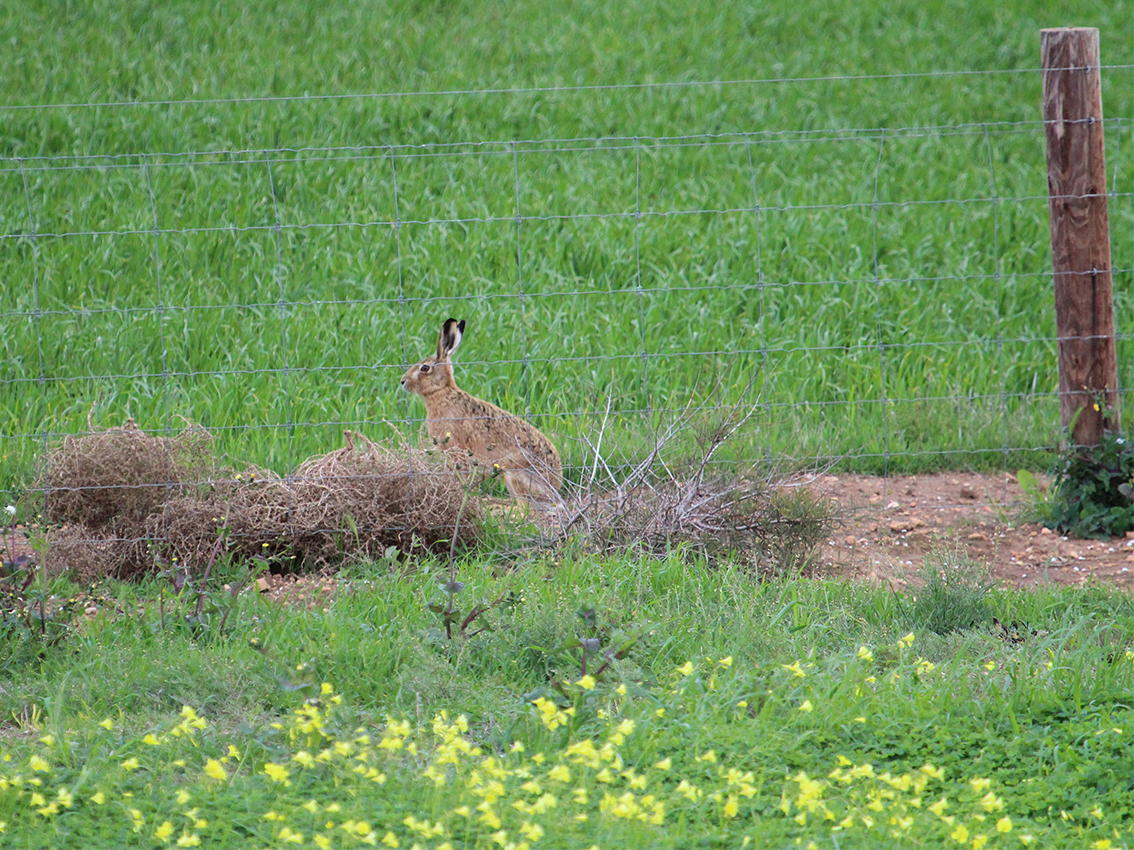
Hare stopped by fence

Better head back into the field

There are some animals you occasionally see but are rarely able to photograph due to their speed and wariness. Therefore, when the opportunity arises to get a shot of these speedsters I welcome it with open arms. Hence, this series of images of a hare I spotted near the main highway just past Ardrossan. A fence forced the hare to stop for a few seconds and allow me to fire off a few frames albeit at long distance on a dull day.

Loading a grain ship at Ardrossan

Just as I finish photographing the hare, rain sets in. Time to resume my trip home with an essential stop at the bakery in Port Wakefield; an historic little town at the head of the gulf and one I have researched previously.

One of many historic building in Port Wakefield

I hope you have enjoyed this little recount and follow my stories in the New Year. All the best to you and your families,

BAZ

Additional Notes

Click on these links and see more South Australian stories and pictures in my Weekend Notes articles as well as locating similar blogs on Feedspot’s top 20 Australian wildlife blogs

https://www.weekendnotes.com/profile/651267/

https://blog.feedspot.com/australian_wildlife_blogs/

Around Kersbrook

14 Nov

Dear Reader

The road is dusty after a rare dry spell during the Spring months. I catch a quick glimpse of a large kangaroo through the corner of my eye and pull over to the far side of the track and wait for the dust to settle. Next to a farmer’s dam there is a small mob of Western Grey Kangaroos They watch me closely, ears twitching. The big male I first spotted, stands to his full height, protective of his small harem.

Large male Grey Kangaroo

I am driving around the roads surrounding Kersbrook a small hills town about an hour’s drive from the city centre, a continuation of the Main North East Road past Tea Tree Gully and Chain of Ponds Reservoir. Using the GPS maps I have found a network of small roads around the town and I am randomly exploring them.

Small mob of greys

Checking the GPS I note that I am driving along Bagshaw Road. As I walk back to the vehicle I notice an old brick chimney on the other side of the road; the remains of an old farmhouse. Old ruins always fascinate me and I wonder what stories of family, drought, flood and celebration have resonated within the home that once stood there.

Stories to tell

A long way from the highlands of Scotland

On Bulman Road, I come across a small farmhouse. There are Alpacas fenced off near the home and a little further along the road I can see Highland Cattle. Nothing indigenous about these species but they are still a treat to see on the rich green background of spring pasture.

Grey Currawong silhouetted

My next encounters are on Smith Road where I come across two bird species that are not too common around the city and urban landscapes. A Grey Currawong (related to crows and ravens) is perched on a fallen branch.

Red-rumped Parrot and fence


There are also a beautiful Red-rumped Parrots feeding behind a fence which ‘try as I might’ I cannot remove from the picture. Then again, this is farming country and fences are part of the landscape. Later on my drive home I spot another two parrots feeding in rough stubble about 50 metres from the car, another tricky shot.

Well camouflaged Red-rumped Parrots

Although today’s trip exploring the backroads around Kersbrook is at an end before returning home I’ll visit ‘Kersbrook Hill Wines and Cider’ followed by a short stop at Williamstown Bakery: a couple of favourite destinations when I drive through the north-eastern region of the Adelaide Hills.

Additional notes

This is an easy drive which is quite suitable for families and seniors

For more pictures and short stories about SA places and wildlife go to:

https://www.weekendnotes.com/profile/651267/