Archive | wildlife photography RSS feed for this section

Williamstown’s Wildlife…..The Drive

11 Nov
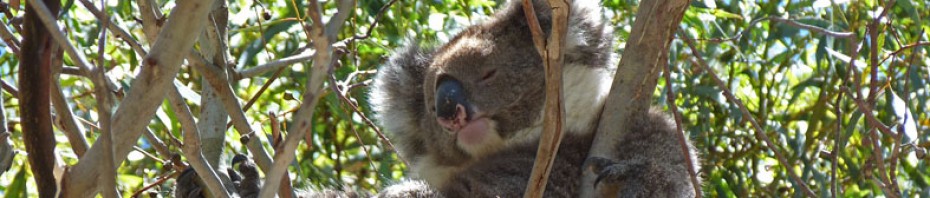
Koala observing photographer

Dear Reader:

A Koala suddenly appears on the edge of the road then runs across both lanes. I check my mirrors and pull off into a small recess. Walking back along the edge of the road, I scan the trees until I spot the Koala high in the branches looking down on me.

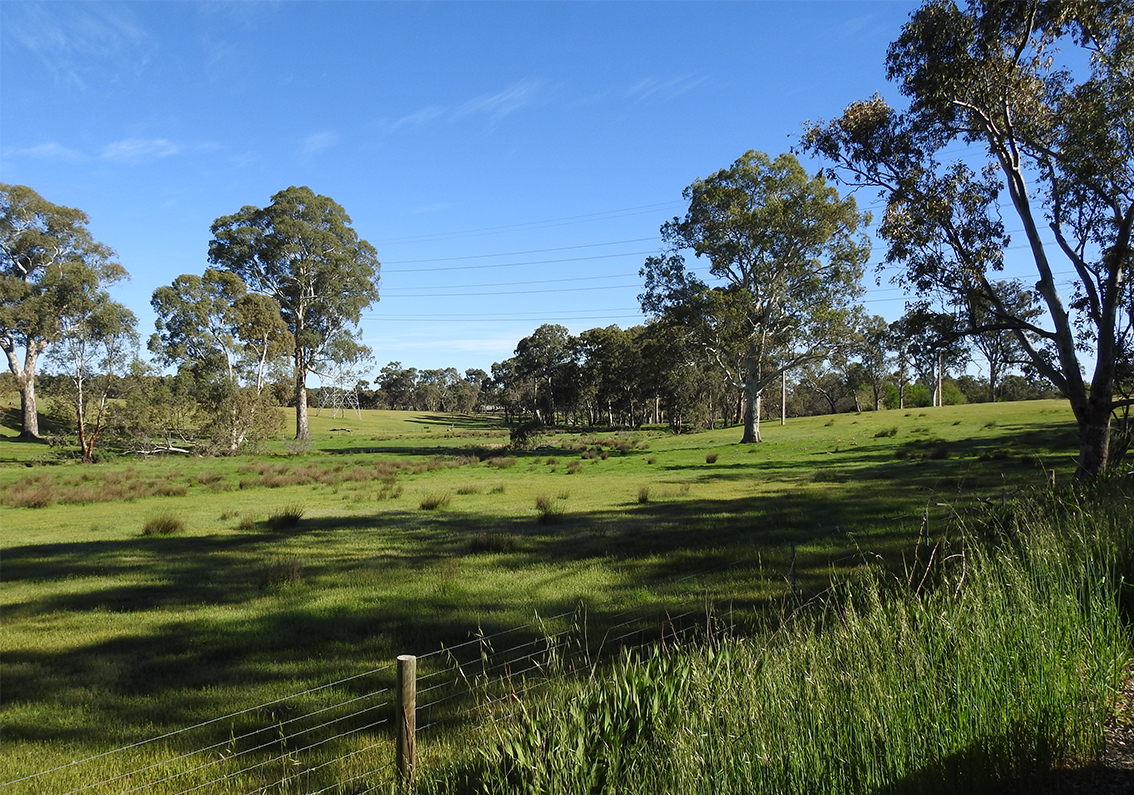
Classic grazing area with remnant eucalypts
Goat herd feeding near the reservoir

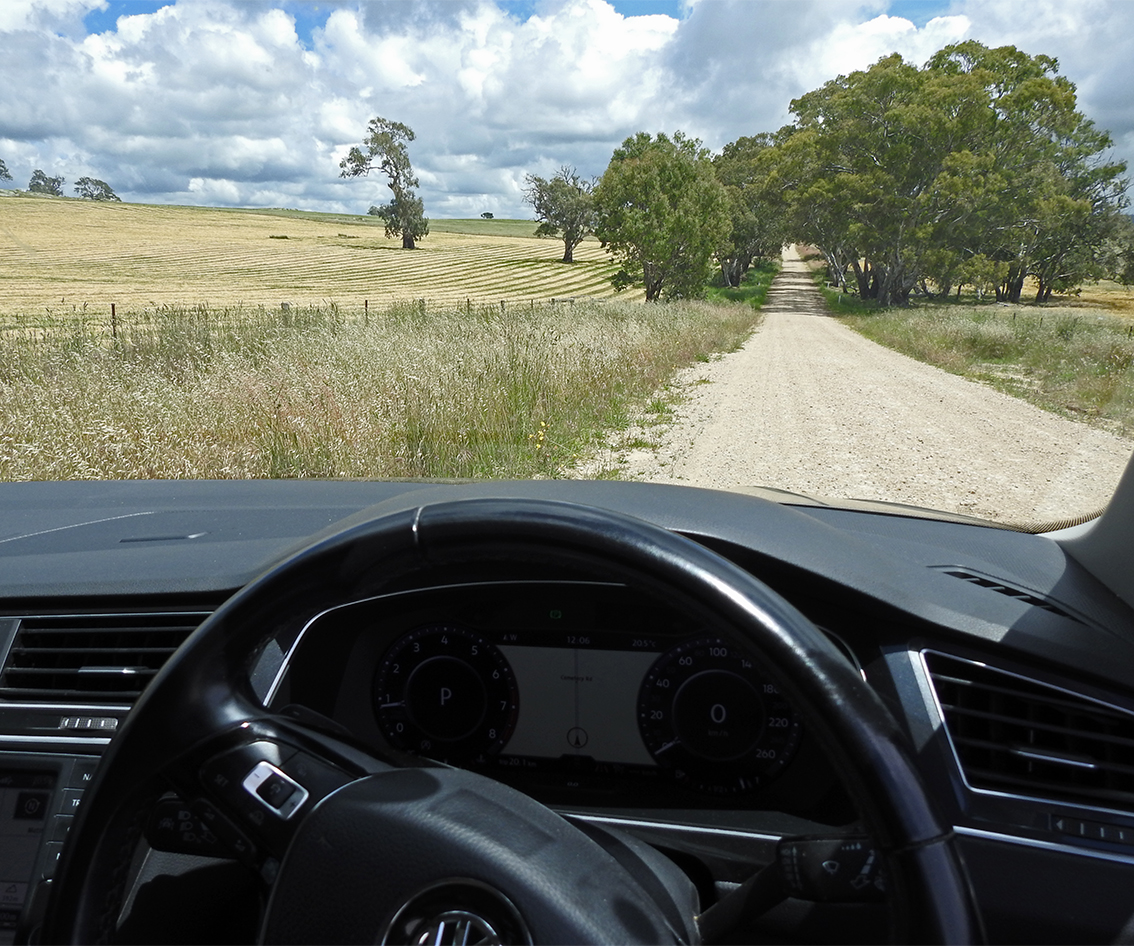
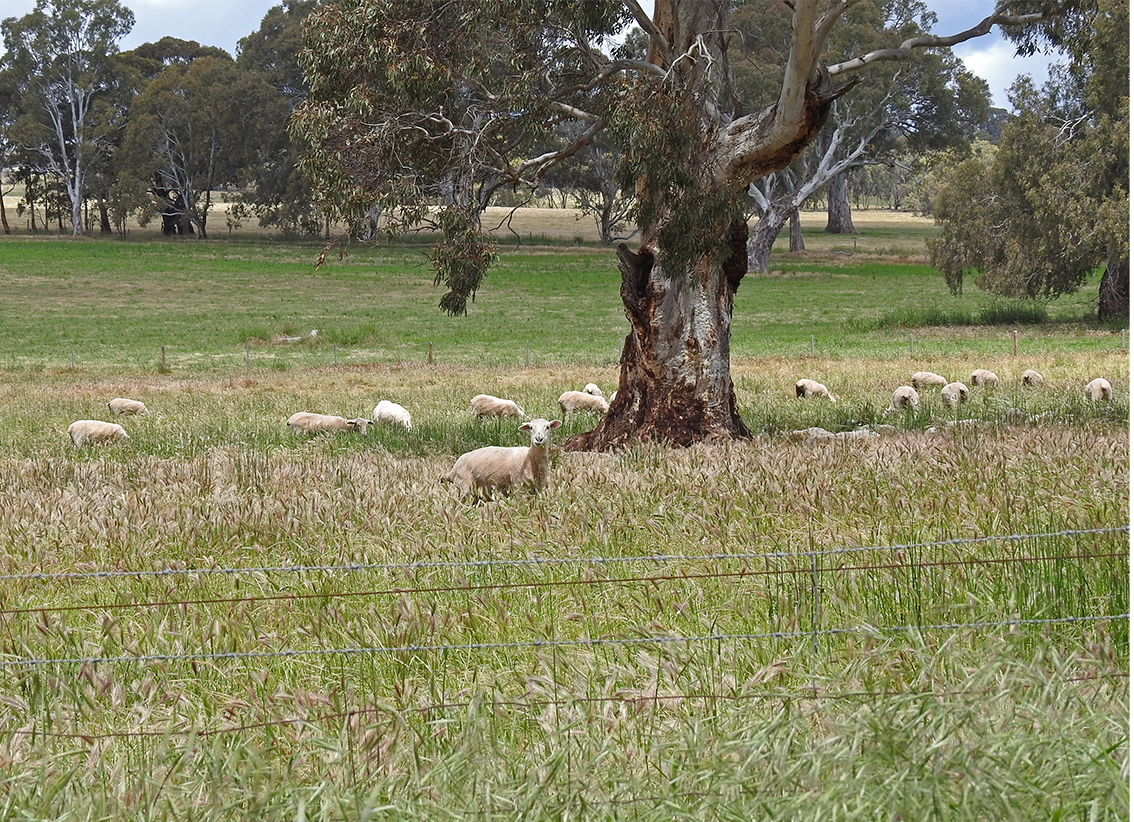
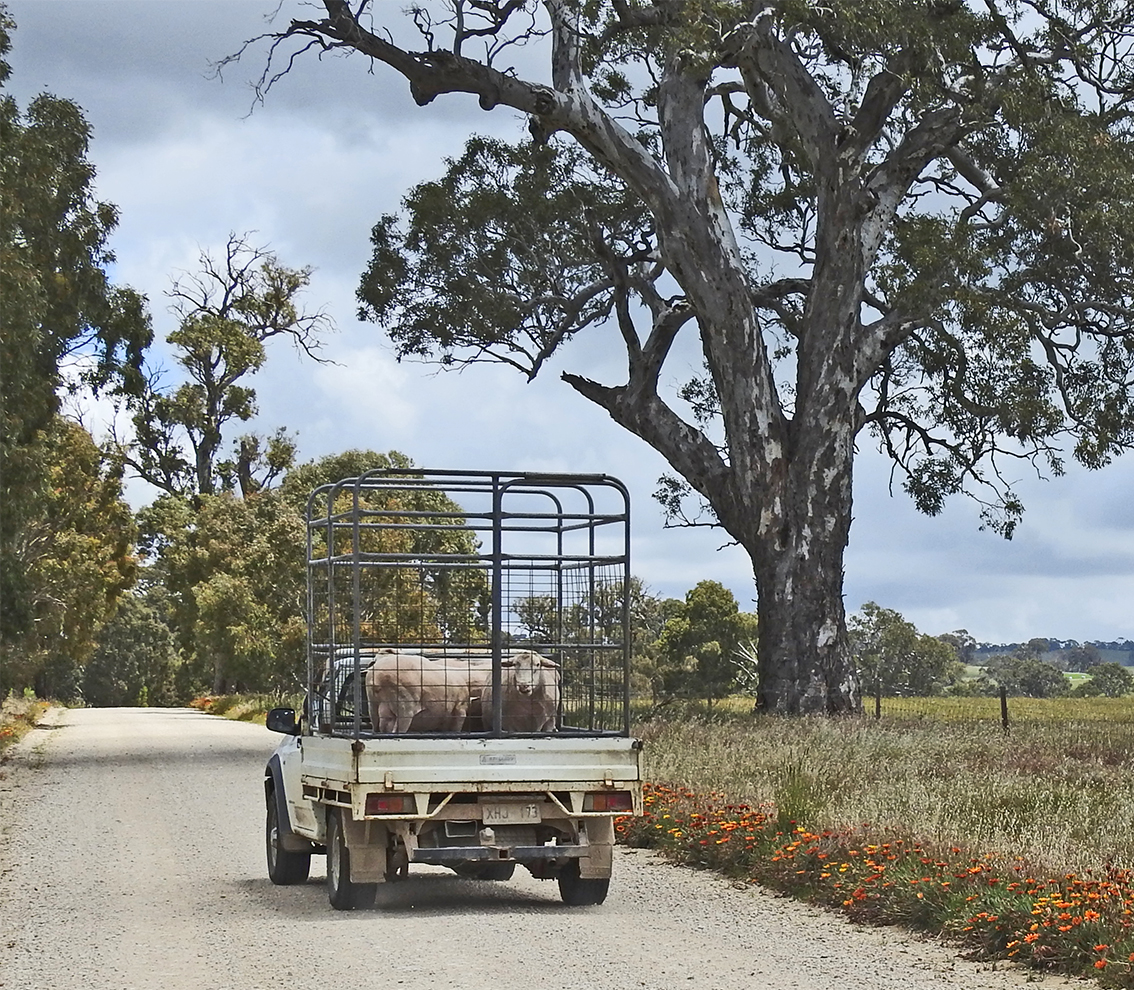
Further along the road, I stop again to photograph classic open pasture dotted with sizeable eucalypts.  A nearby fenced off paddock is home to a small herd of Angora Goats. As I stop to photograph them a lone Emu pops its head up from a ditch by the side of the road.

Surprise

I am driving to Williamstown to explore this historic little town and document the wildlife around the area. However, I am more than a little surprised to have encountered so many interesting photo-subjects before I even reach my destination.

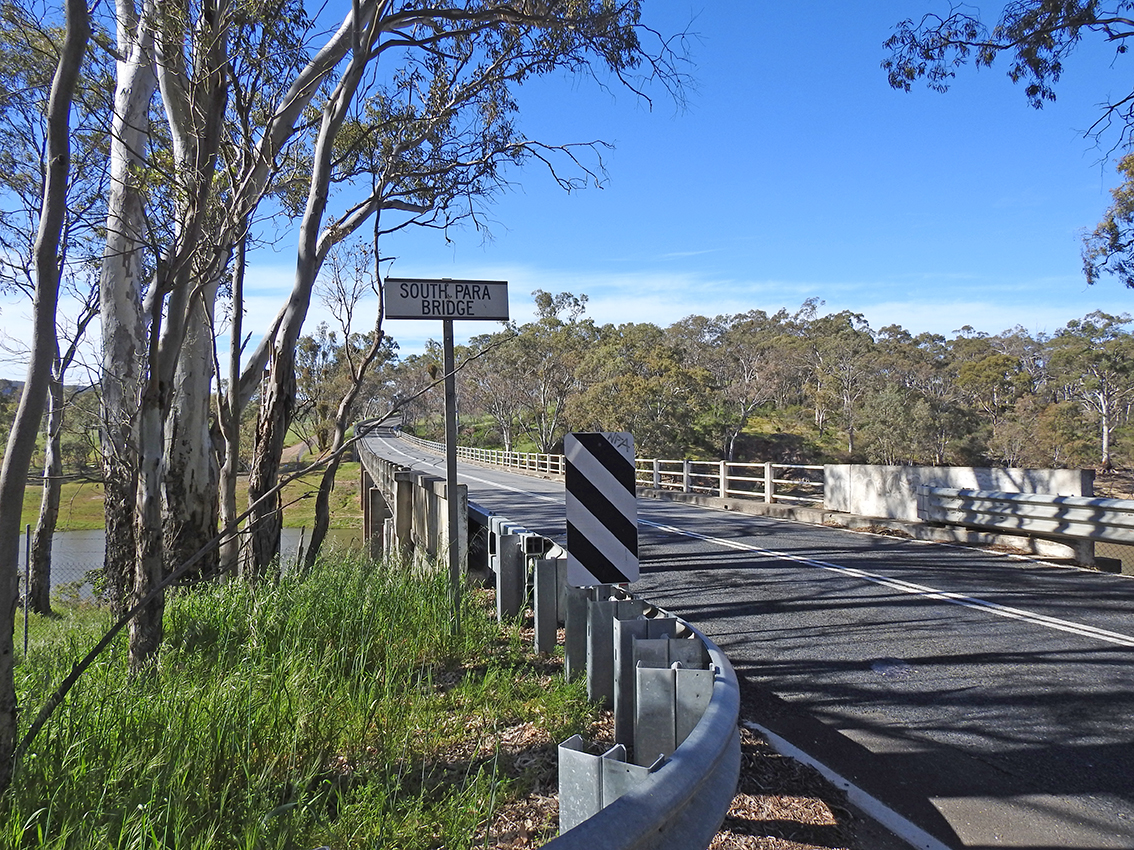
Bridge over the reservoir

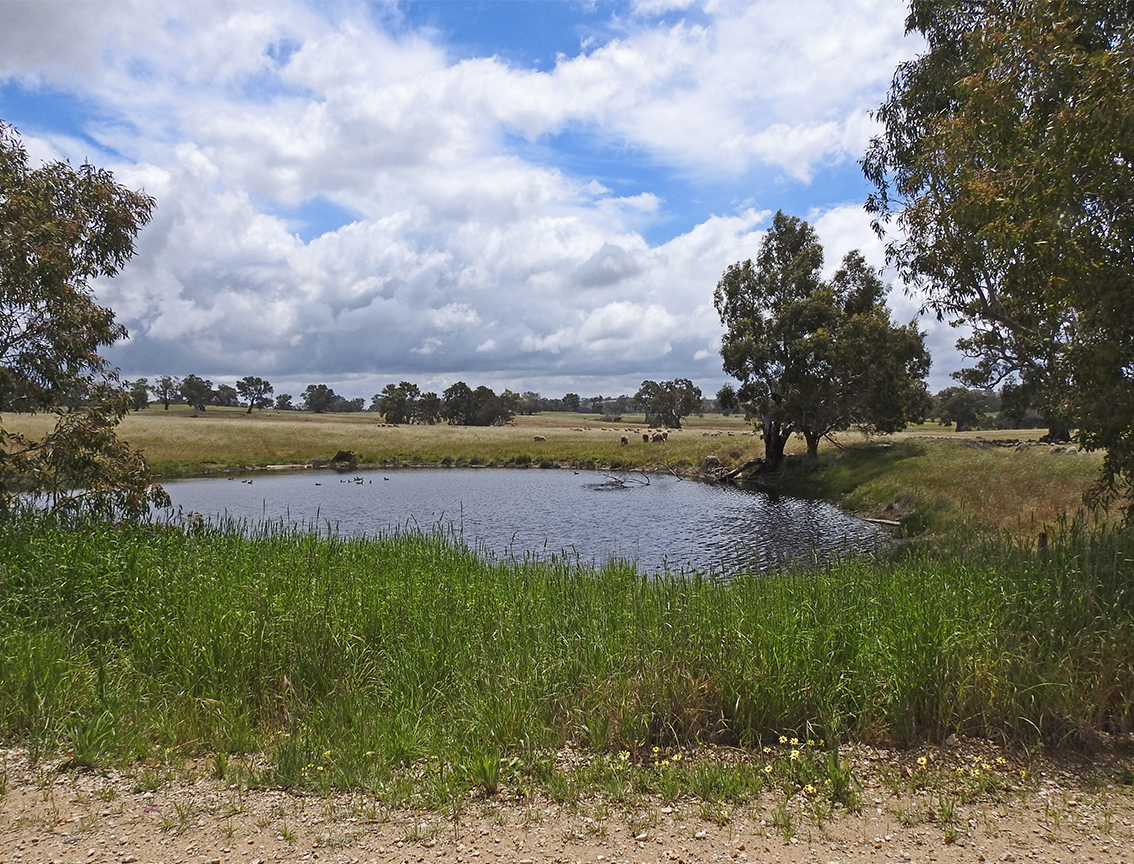
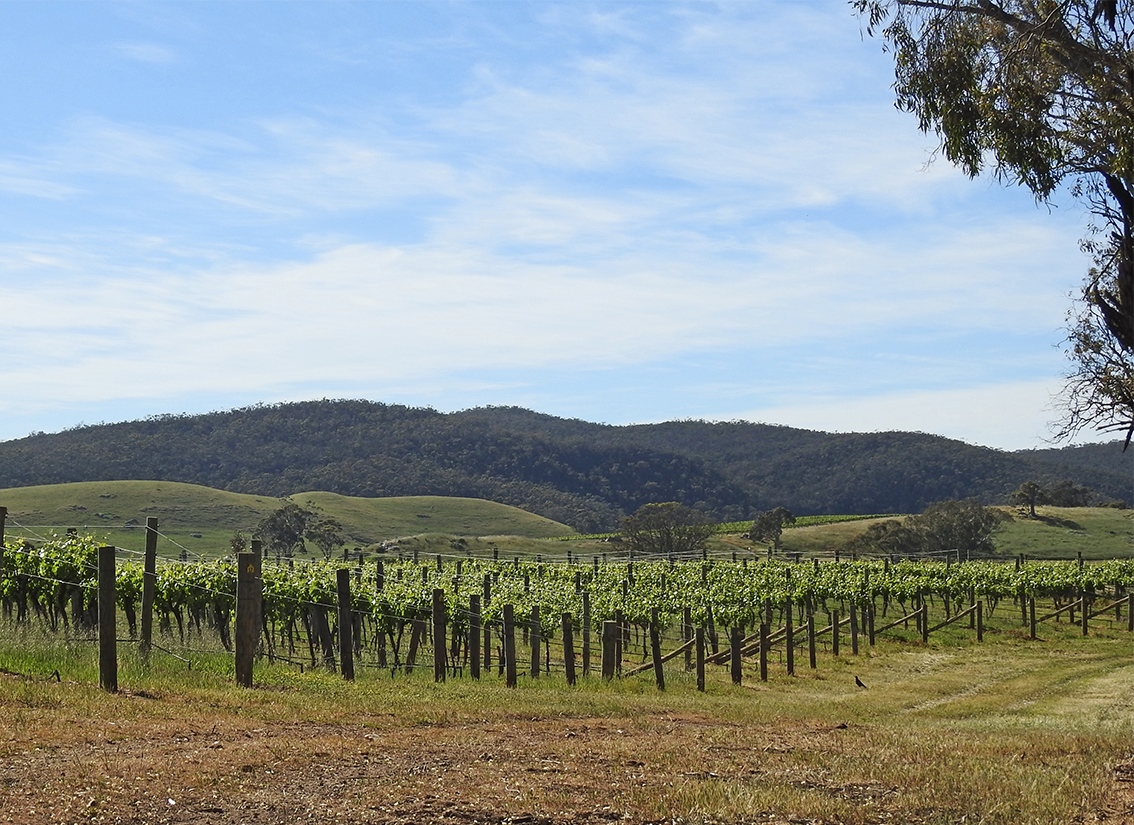
Crossing the bridge over the South Para Reservoir, I notice the water level is quite high, a good sign for the approaching summer. Nearby, the extensive vines, which are a more recent feature of this landscape, contrast starkly with the adjacent scrub-draped hillsides. Clearing bushland for vines is always a contentious issue in South Australia.

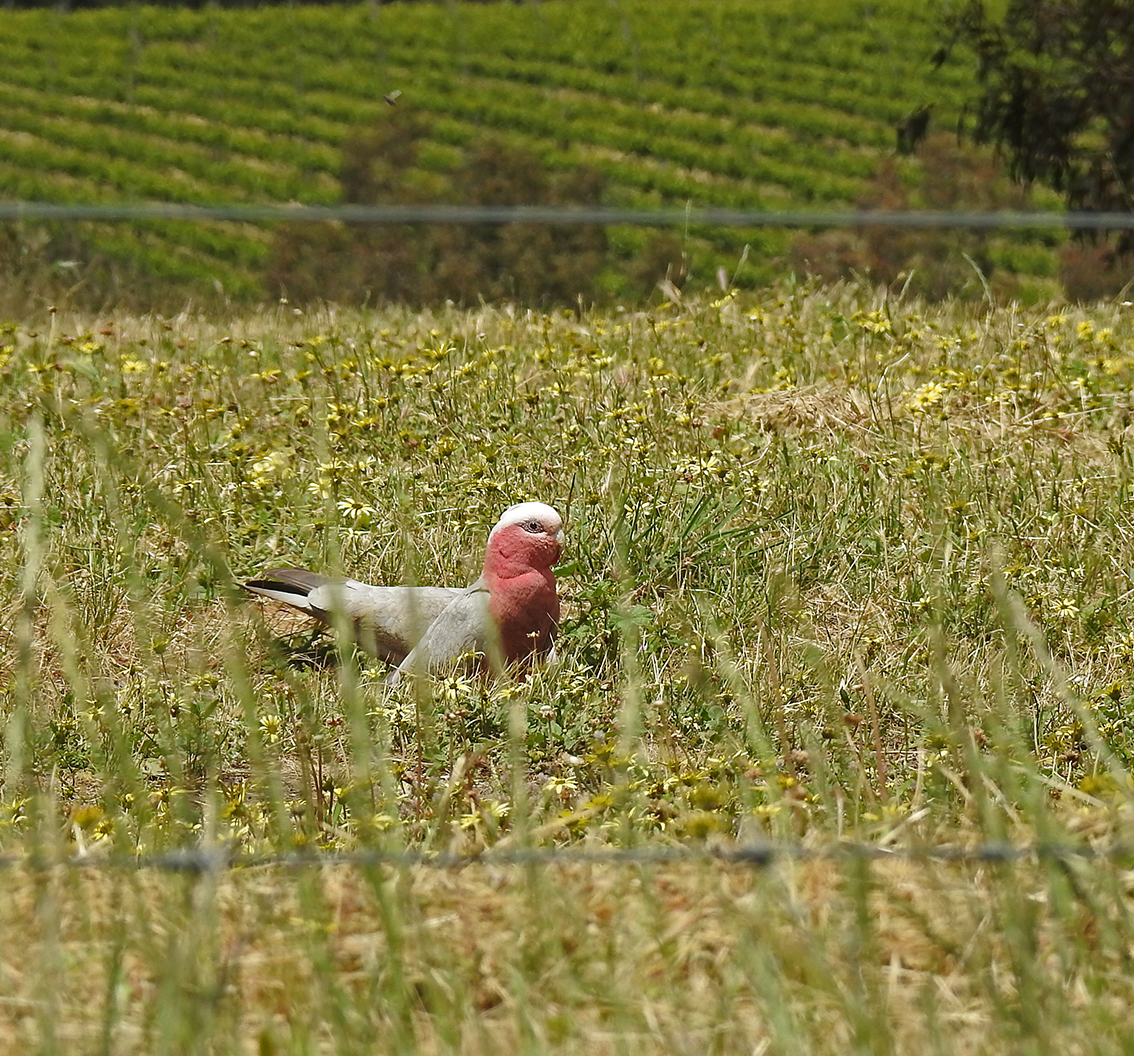
Vines, pasture and bushland

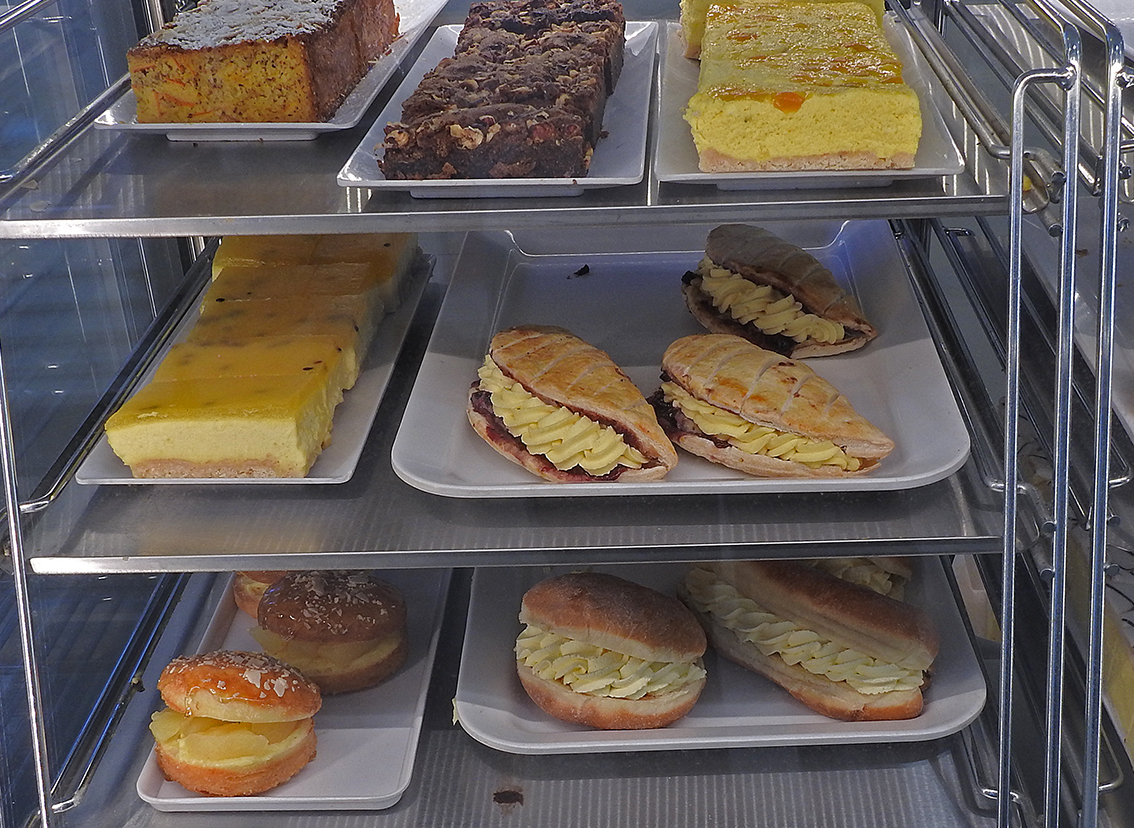
I am on the outskirts of Williamstown and decide it is time for a break at the local bakery before traversing some of the backroads and exploring other features of this historic township………..to be continued.

Too much choice

Cheers

Baz

Additional notes

Other animals seen/heard but not photographed: Western grey Kangarooos, Sulphur-crested Cockatoo, Australian Magpie, Blackbirds, House Sparrows, Rabbits

The camera used for this post is a Nikon P900

This is an easy drive which is quite suitable for families and seniors with public toilets, barbecues, parking and other facilities in Williamstown. It is dog friendly.

Please pass on this blog title and or contact information (URL) to any person or organisation with an interest in taking walks and enjoying wildlife in SA.

Click on these links and see more South Australian stories and pictures in my Weekend Notes articles as well as locating similar blogs on Feedspot’s top 20 Australian wildlife blogs

https://www.weekendnotes.com/adelaide/writer/452/

https://blog.feedspot.com/australian_wildlife_blogs/

One Tree Hill Road Roundabout to Kersbrook Part 1

20 Sep

Dear Reader

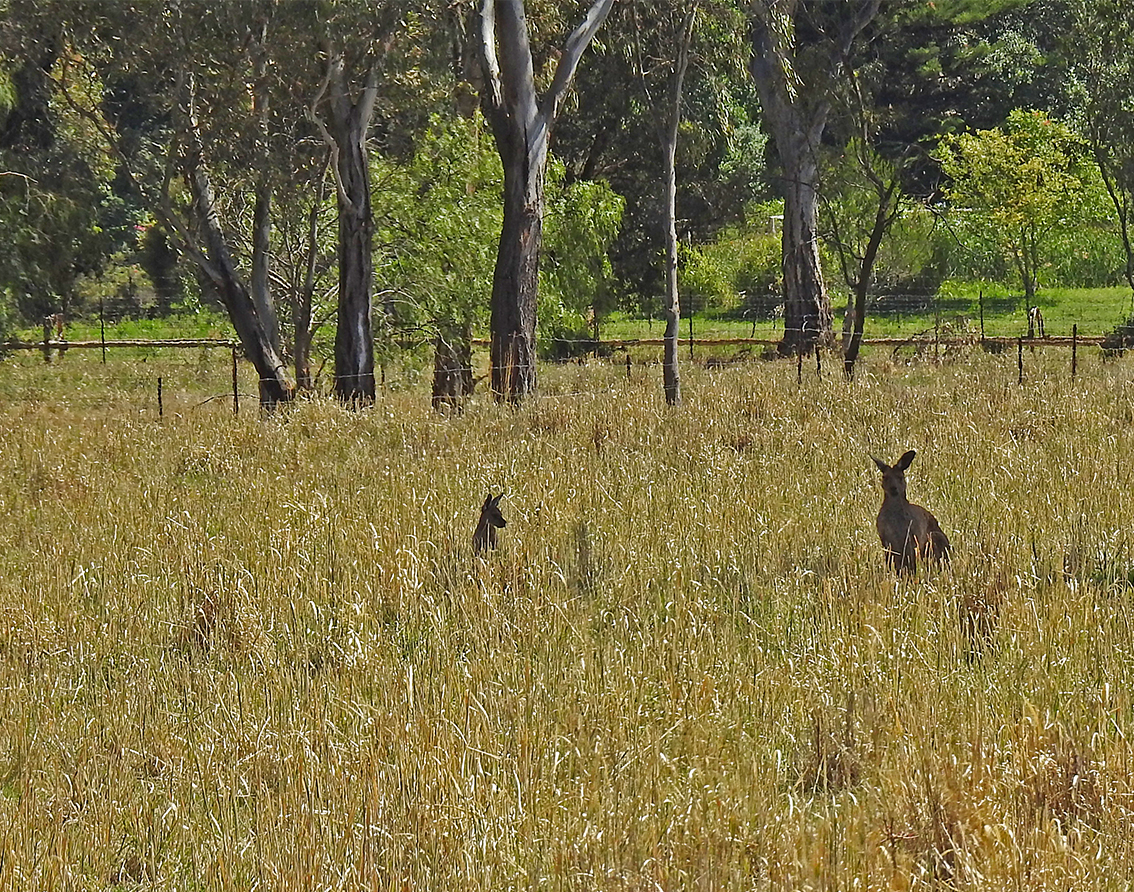
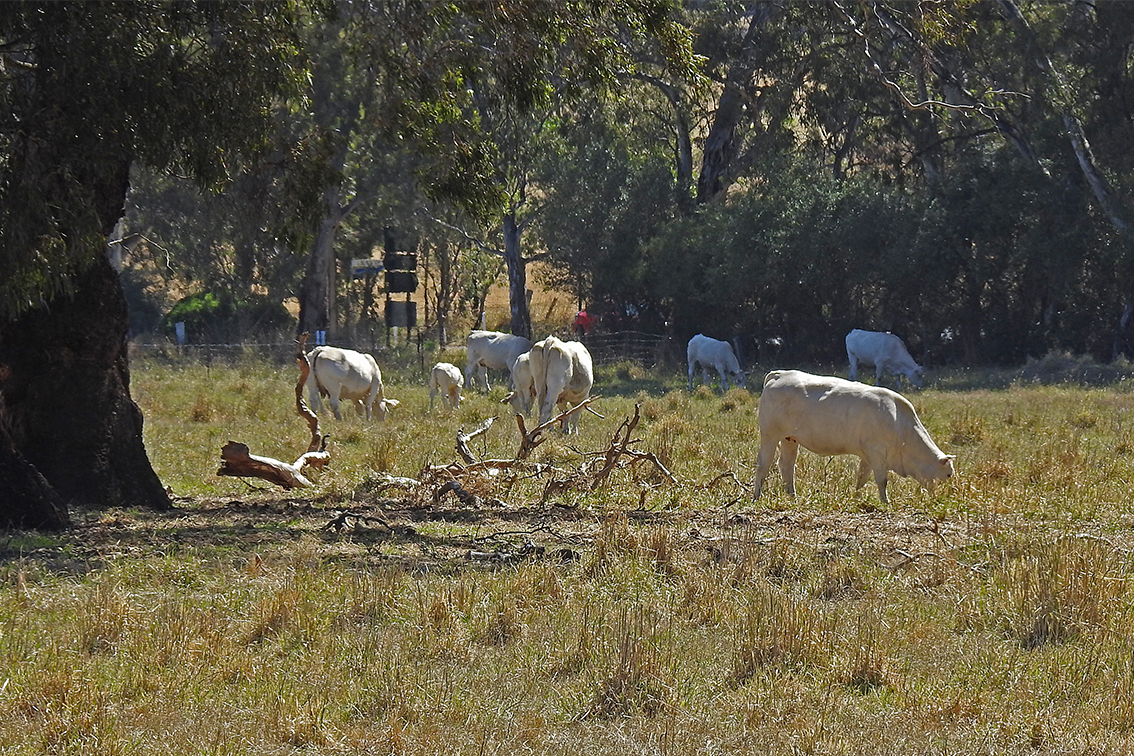
After leaving the One Tree Hill Road roundabout for Kersbrook Road, I expect to drive a few kilometres before making my first roadside stop. Two Western Grey Kangaroos and a small herd of cattle put pay to that plan as they appear a mere hundred metres from my starting point.

Western Grey kangaroo and joey amongst the tall grasses
Murray Grey Cattle

Leaving the roos and cattle behind I start to climb the winding road towards Kersbrook stopping at a convenient roadside layby after 2.3Kms.

Roadside scrub

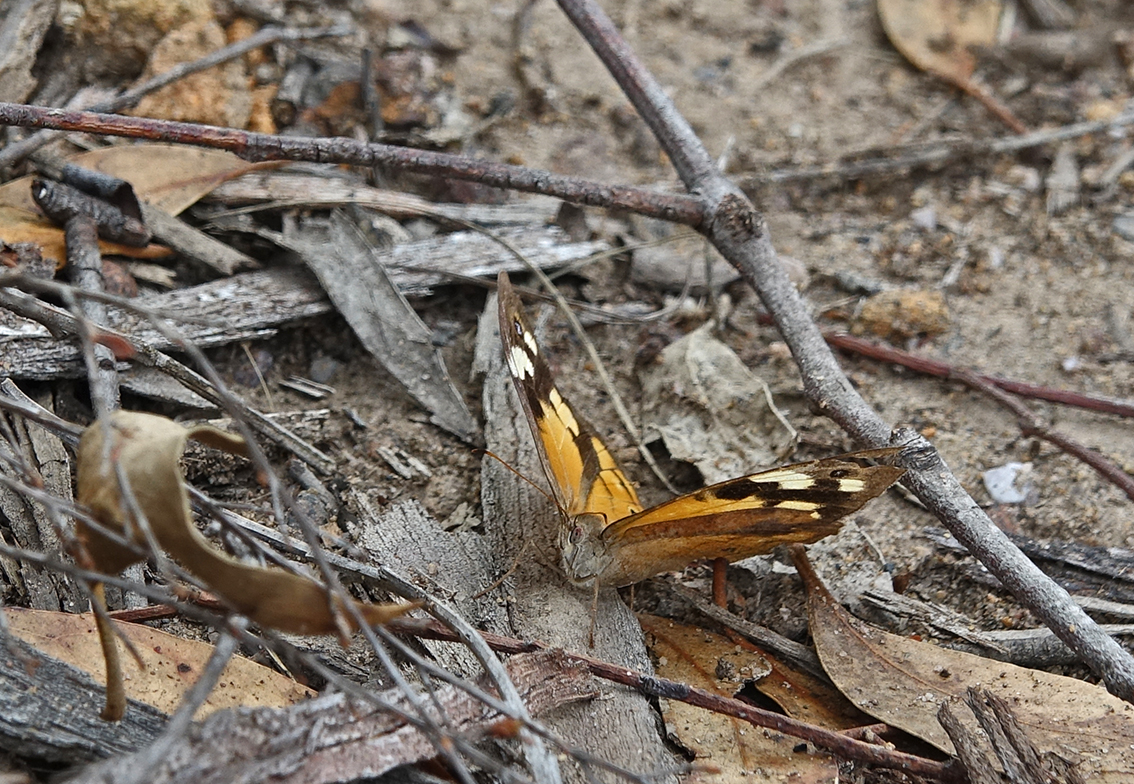
After clambering over an old fence, I catch a brief glimpse of a Grey Fantail and some small parrots in the thick scrub which makes them impossible to photograph. Luckily, a decorative, Common Brown Butterfly settles on a fallen branch providing a nice image.

Common Brown Butterfly

I fossick around in the undergrowth moving fallen branches and bark and unearth a Piedish Beetle and a large Garden Centipede. It seems that invertebrates might be the flavour of the day.

Piedish Beetle
Garden Centipede species

At the 3.7 Km mark Karwin Road leads off to the left with a sign for Minya Sanctuary. I park on the corner where there’s a small patch of scrub and a panoramic view of open farmland as well as an earthen dam for sheep and cattle.

Local dam for stock

Following a small path through Sheoak sapplings, I am lucky enough to encounter Honeybees feeding on Scabia flowers as well as a native Blue-banded Bee and a Mud-dauber Wasp.

Blue-banded Bee
Common Honey Bee

Although I have only covered around 4kms of the 11Km drive to Kersbrook it has been a revealing and fascinating look at this part of the foothills and I am sure that the next 7kms will be equally enthralling.

Mud-dauber Wasp

Cheers

Baz

Additional notes

Other animals seen, heard but not photographed: Mistletoe Bird

The camera used for this post is a Nikon Coolpix P900

This is an easy drive which is quite suitable for families and seniors.

Please pass on this blog title and or contact information (URL) to any person or organisation with an interest in taking walks and enjoying wildlife in SA.

Click on these links and see more South Australian stories and pictures in my Weekend Notes articles as well as locating similar blogs on Feedspot’s top 20 Australian wildlife blogs

https://www.weekendnotes.com/adelaide/writer/452/
https://blog.feedspot.com/australian_wildlife_blogs/

Kenneth Stirling Conservation Park SA Wotton’s Scrub

28 Aug

Dear Reader:

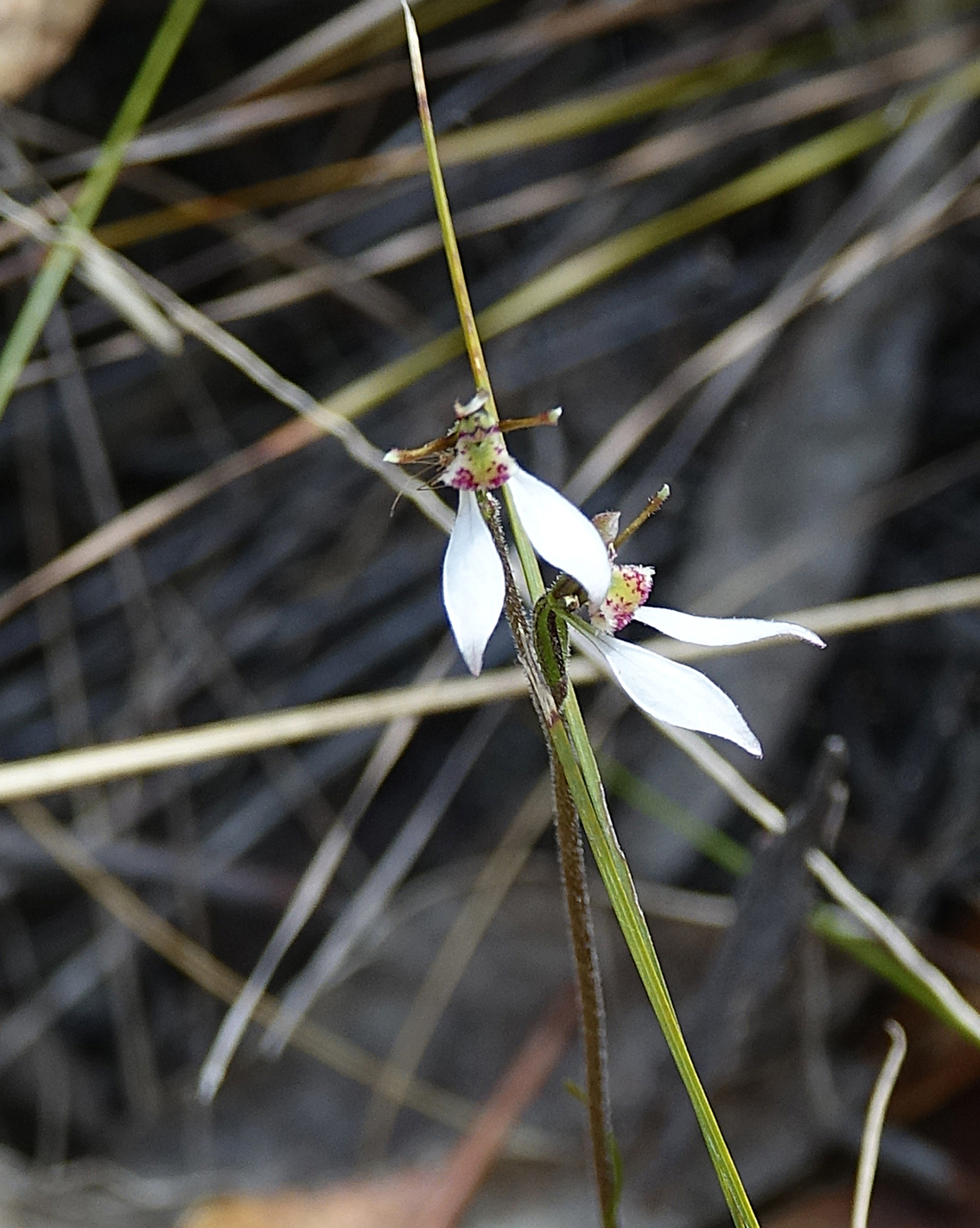
For once, my first interesting sighting is not an animal but a delicate orchid known as a Parson’s Bands because the two delicate petals resemble a clergyman’s white collar.

Parson’s Bands Orchid

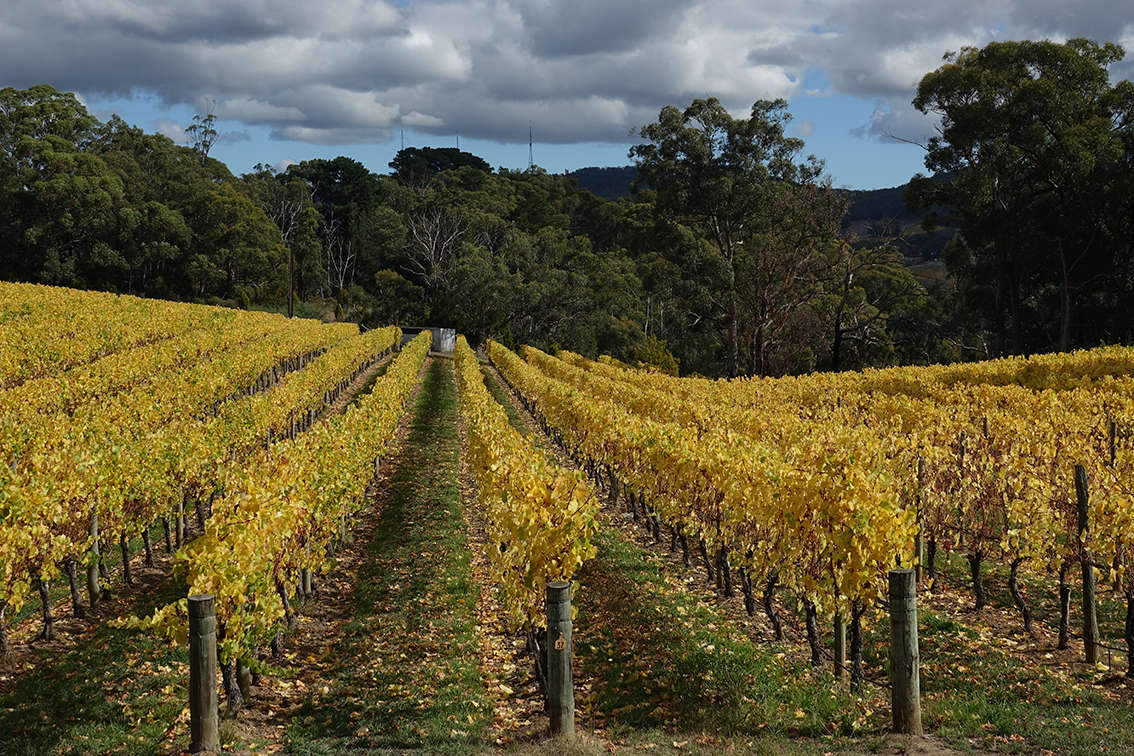
I am walking along Wottons Track from the gate 3 entrance to the Kenneth Stirling series of Conservation Parks near Carey Gully and Uraidla. The drive up Greenhill Road towards the park has taken me through some beautiful hill country adorned by vines, native forest and orchards.

Autumn vines near Uraidla

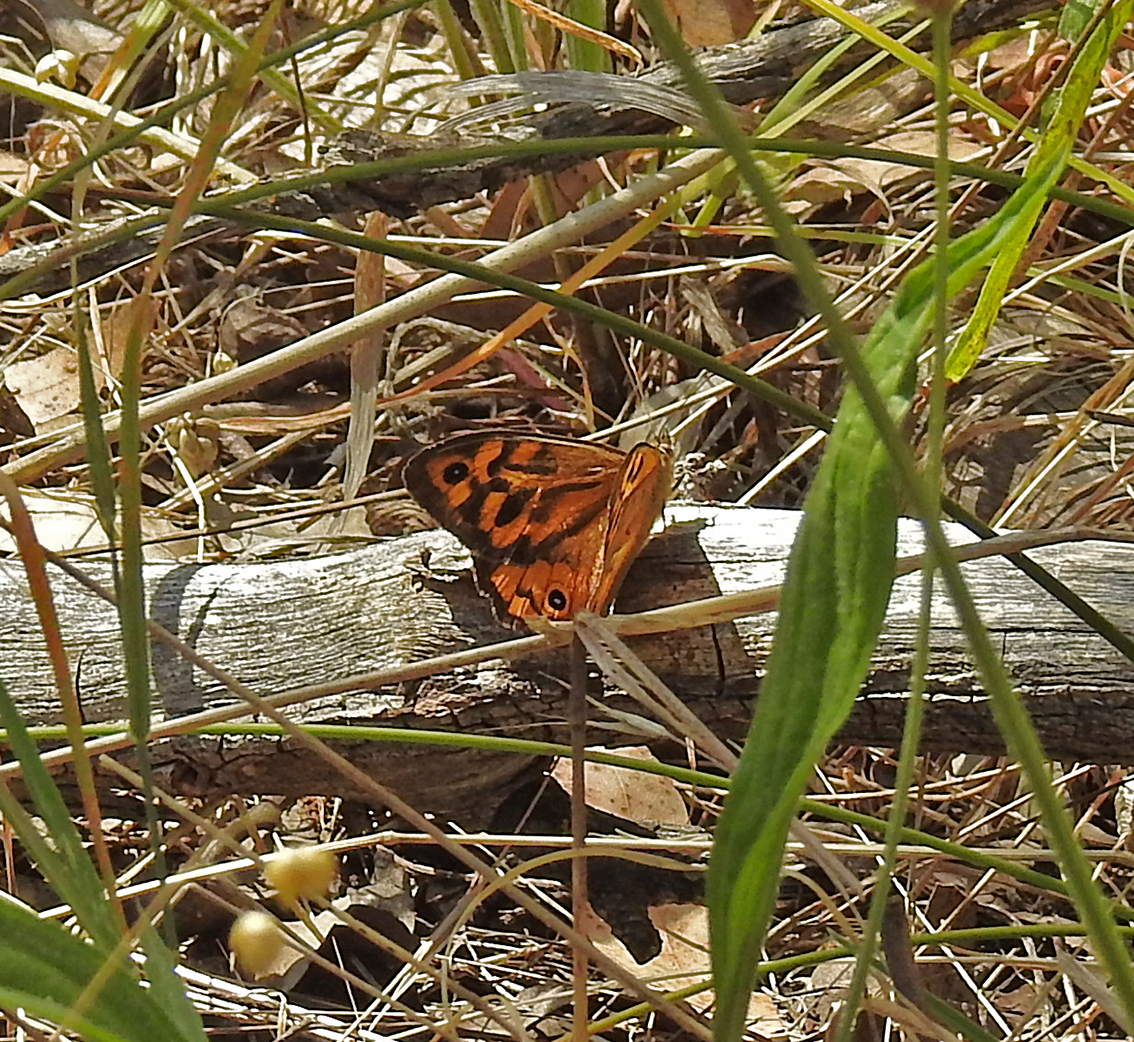
It is early winter and I am not expecting much wildlife and it is quite a surprise to see an ornate Common Brown Butterfly amongst the leaf litter. With wings folded it is remarkably well camouflaged.

Effective camouflage
Female Common Brown (same animals as above image)

Late blooming flowers seem to be the order of the day and far easier to photograph. Hills Daisies and Common or Pink Heaths dot the lush green undergrowth.

Hills Daisy
Common Heath

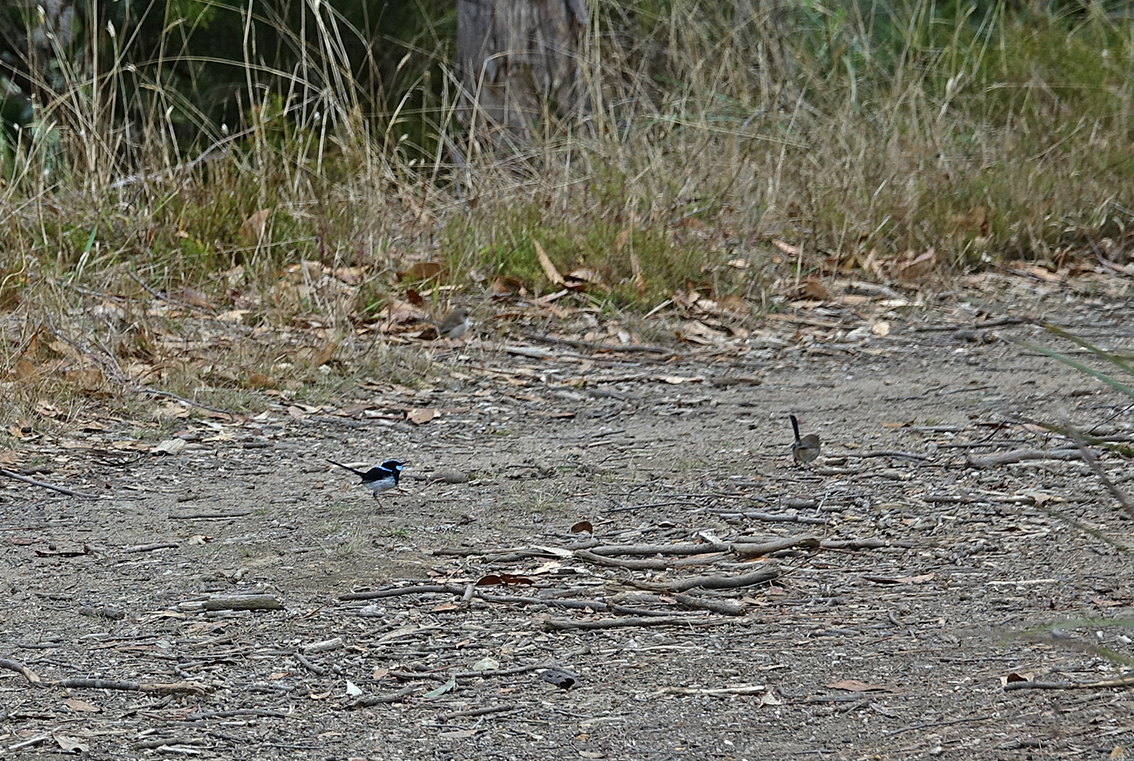
There are the twittering calls of wrens in the bushes alongside the path but they are wary and hard to spot. Eventually a pair appear on the trail some fifty metres ahead of me. I steady myself and fire off a couple of frames trying to catch both male and female together. They are a perfect example of sexual dimorphism in birds.

Male and female Superb Fairy Wren
Superb Fairy Wren, Image shot at similar location by author

I have walked around three kilometres and spotted a few Grey Fantails, Adelaide Rosellas and Rainbow Lorikeets, all too far away to photograph.  

BGrey Fantail. Image shot at similar location by author

Near a fork in the trail leading to Fern Gully I can hear the rasping calls of Spotted Grass Frogs and assume there must be a creek or wetland area there. However, as this trail appears to have more steep sections my ‘not so young knees’ suggest it is time to turn back and head for home.

Spotted Marsh (or Grass) frog, Image from my collection

My drive home takes me back through Uraidla where I stop off the local caffe which incorporates a fine bakery and micro-brewery. Always a good way to round off any trip to this part of the Adelaide Hills

A bite to eat and a refreshing brew

Cheers

Baz

Additional notes

The camera used for this post is a Sony RX10 M3

This is a moderate walk with some steep sections

Please pass on this blog title and or contact information (URL) to any person or organisation with an interest in taking walks and enjoying wildlife in SA.

Click on these links and see more South Australian stories and pictures in my Weekend Notes articles as well as locating similar blogs on Feedspot’s top 20 Australian wildlife blogs

https://www.weekendnotes.com/adelaide/writer/452/

https://blog.feedspot.com/australian_wildlife_blogs/

Mildura’s Billabong Wildlife Part 1

11 Aug

Dear Reader:

A pair of Red-rumped Parrots perch on a dead branch at the edge of King’s Billabong near Mildura.

Male and Female Red-rumped Parrots

For several years I have travelled to Mildura, on the River Murray, for our annual houseboat trip. Mildura is and a sizeable country centre of around 60,000 people and is an hour’s drive from the SA border and four and half from Adelaide.

Parked on the river banks

As the afternoon light begins to fade, I catch sight of a black and white bird perched on a branch. I assume it is a Magpie or Mudlark but closer examination through the telephoto lens reveals a Pied Butcherbird.

Pied Butcherbird… note the hooked beak

Although there is water in the centre of the billabong, channels around the edge are dry due to a long hot summer with little rain.

The edge of the billabong channel

In a patch of scrub by one of these channels I notice a small group of Crimson Rosellas feeding on some grasses and a Whistling Kite high above in the branches.

Crimson Rosella feeding on grass seeds in the dry channel

A walking trail follows one dried out arm of the billabong and the trees along the trail are a haven for spiders and ants. Large Golden Orb spiders are strung between branches and quite large holes lead into Bulldog Ant colonies.

Female Golden Orb spider

Sunset is not far off and it is time to make my way back to the boat which is moored on the Murray. I take a final walk along the banks of the billabong and spot a beautiful Great Egret perched on a branch while it scans for prey.

Great Egret

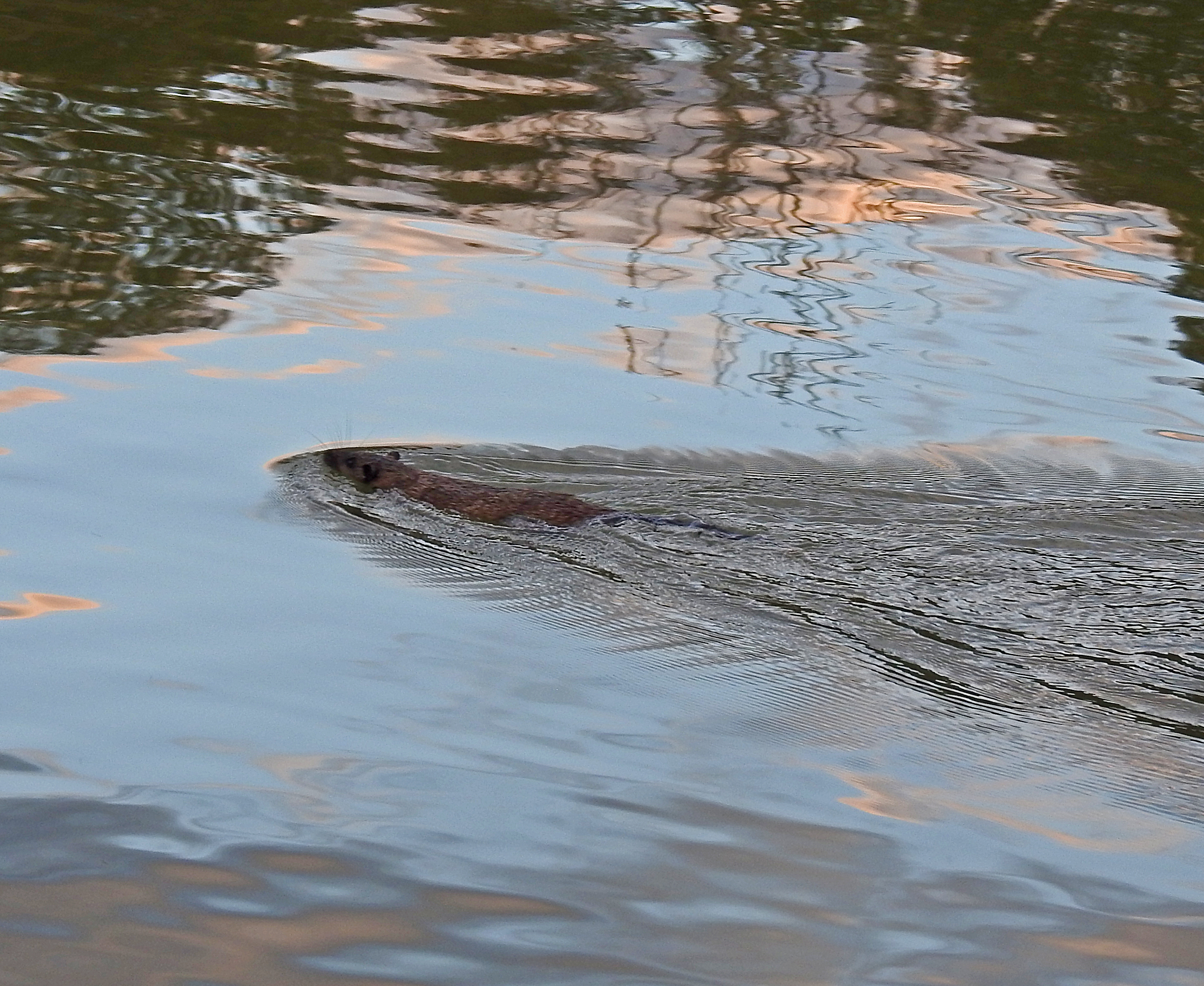
My final encounter is quite unexpected. Stepping aboard, I can just make out the V shaped ripples indicative of an Australian Water Rat as it swims past the boat with the faint pink glow of a Murray River sunset reflected on the water.

Rakali or Australian Water Rat

Cheers

Baz

Additional notes

Other animals seen, heard but not included: Rainbow Lorikeet, Mudlark, Great Cormorant Skimmer, Little Raven, Black Ducks, Grey Kangaroo, Australian Pelican, Rosella species, Australian Magpie 

The camera used for this post is a Nikon P900

This is an easy flat walk which is quite suitable for families and seniors. However, in wet weather the roads in to the billabong can be difficult for 2WD vehicles.

Please pass on this blog title and or contact information (URL) to any person or organisation with an interest in taking walks and enjoying wildlife in SA.

Click on these links and see more South Australian stories and pictures in my Weekend Notes articles as well as locating similar blogs on Feedspot’s top 20 Australian wildlife blogs

https://www.weekendnotes.com/adelaide/writer/452/

https://blog.feedspot.com/australian_wildlife_blogs/

Normanville’s Big Gorge Walk Part 2

24 Jul

Dear Reader:

(30/6/25,12.05, Clear sky and around 18, light wind)

Numerous aged River Red Gums line the watercourse. I remove a few strips of bark to investigate the different animals that shelter there. A Marbled Gecko scuttles out and freezes relying on its camouflage to escape detection.

Marbled Gecko and Pie Dish Beetles

In part 1 of this story (June 7th Post) I had just passed the ruins and was nearing the end of this short but fascinating trail. I will pick up from there and relate the walk to the end of the trail and back by referring to my field notes. Conditions were recorded on my Apple watch.

End of the walk with information about Colonel Light’s exploration of the area

(30/6/25,12.13, Clear sky and around 18, light wind)

Amongst a tangle of branches I can just make out the shape of a large dark bird. I zoom in and pick up the white fringes to its tail and prominent yellow eye…A Grey Currawong.

Grey Currawong

(30/6/25,12.14, Clear sky and around 19, light wind)

Scanning further into the trees, I pick up the distinctive red breast and blue wings of an Adelaide Rosella. The rosella is not the only parrot in the area. There are small groups of Short-beaked Corellas in the canopy and an occasional Galah flying past.

Adelaide Rosella
Short-beaked Corellas

(30/6/25,12.25 Clear sky and around 18, light wind)

I leave the trail and walk closer to the creek and try to capture essence of this beautiful Gorge with a couple of scenic images.

Yankallila River
Surrounding hillsides with sheep grazing

(30/6/25,12.42 Clear sky and around 18, light wind)

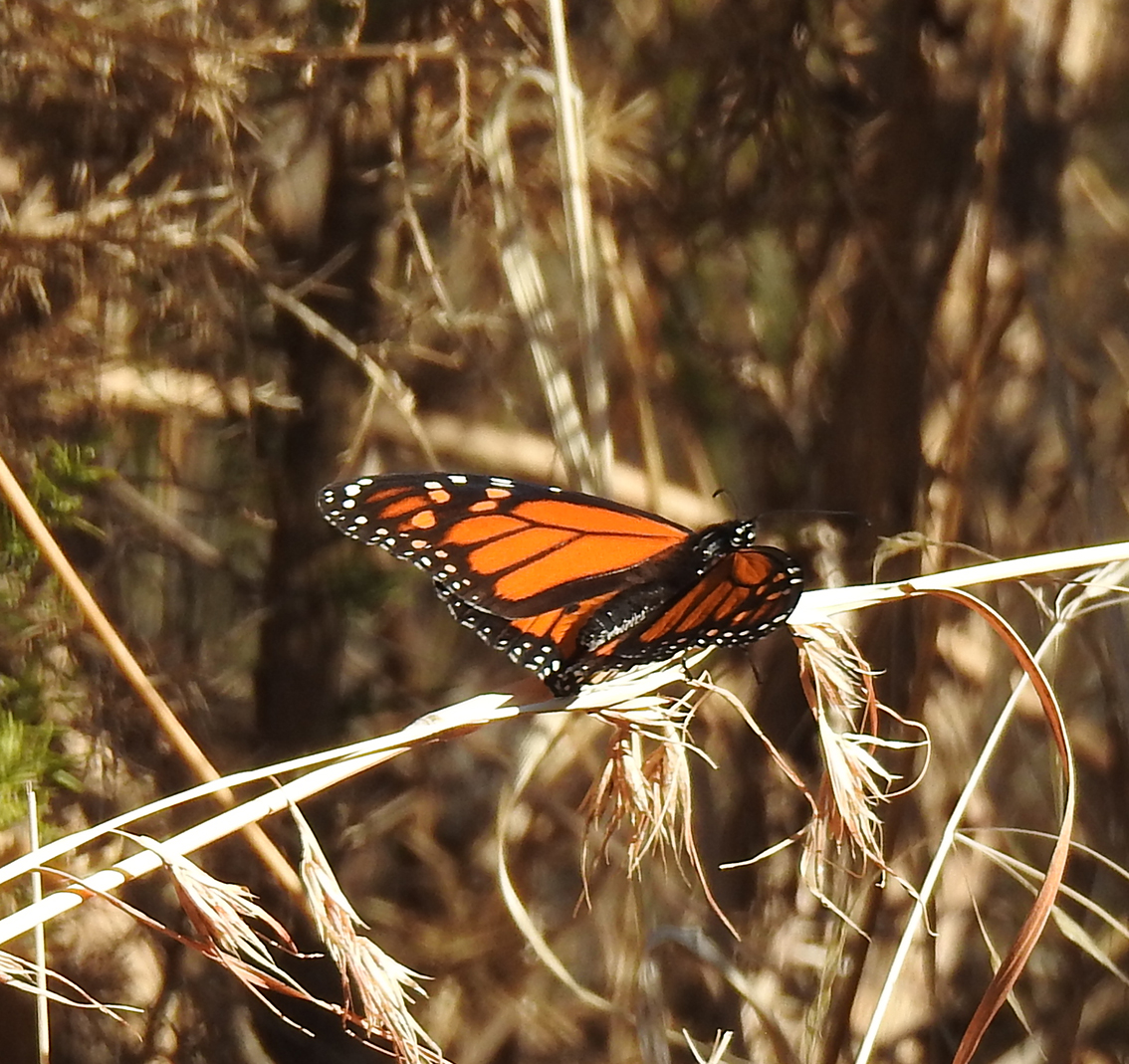
I am almost back at the trailhead when I notice a small group of Silvereyes in a bush. They are probably the same birds I photographed earlier (7th June post). To my surprise, considering the season, I notice a Monarch Butterfly perched on a small branch near the track.

Late season Monarch Butterfly

(30/6/25,12.55 Clear sky and around 20℃, light wind)

I reach the Norm Garnet Park, pack up my gear and head back to the city. I have been surprised by the lack of Western grey Kangaroos, as I know they are prolific in this area. However, the gods of wildlife photography decide to rectify the problem and I come across a dozen or so ‘roos’ grazing in a fenced paddock, just a few kilometres shy of Normanville.  

Western Grey Kangaroos grazing on farmland

Cheers

Baz

Additional notes

Other animals see, heard but not photographed

The camera used for this post is a

This is an easy walk/drive which is quite suitable for families and seniors with public toilets, barbecues, parking and other facilities nearby. It is dog friendly.

Please pass on this blog title and or contact information (URL) to any person or organisation with an interest in taking walks and enjoying wildlife in SA.

Click on these links and see more South Australian stories and pictures in my Weekend Notes articles as well as locating similar blogs on Feedspot’s top 20 Australian wildlife blogs

https://www.weekendnotes.com/adelaide/writer/452/
https://blog.feedspot.com/australian_wildlife_blogs/

Normanville’s Big Gorge Walk…….part 1

17 Jun

Dear Reader:

Tiny birds are feeding in the canopy of a massive Red River Gum on the edge of the river bed. Scanning the area with the telephoto of my Nikon P900, I spot a diminutive Thornbill.

Thornbill species

Garnet Kelly Park on the southern side of Normanville is the start of the Great Gorge Walk. This charming track of around 3Kms return follows a path walked by explorers and traversed by later settlers.

Park entrance near the old bridge
Alongside the river

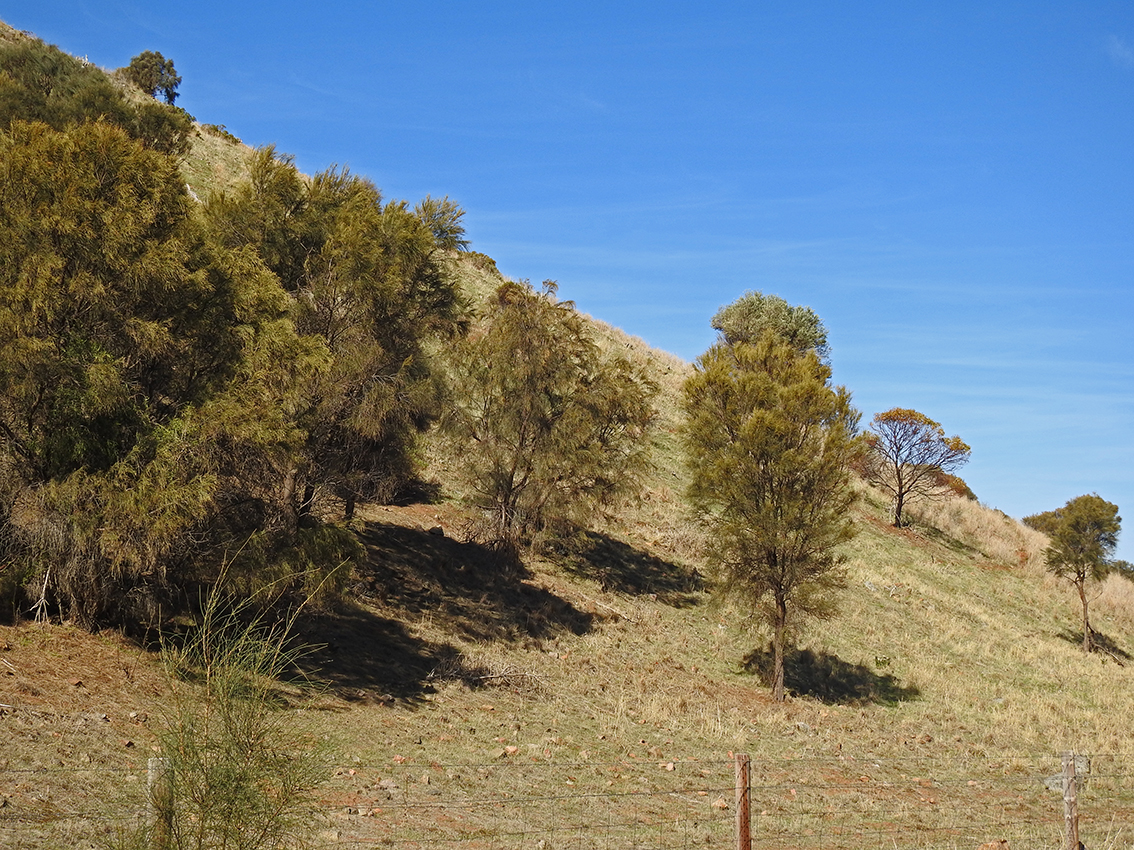
River Red Gums, Sheoaks and Acacia bushes are part of a complex and varied flora.

Sheoaks on hillside, private property bordering the walk

Information placards at the start of the walk and along its route tell the story of the bridge, pathway and the local soldier which the park is named after.

One of numerous informative signs on the walk and in the park

Small birds seem to be prolific in the first kilometre of the walk and I manage to photograph Fairy Wrens, Silvereyes and White-browed Finches. Most of the shots are taken at distance and emphasise the need for a good telephoto lens in this area.

Silvereye feeding on reed-like grasses near a pool in the river bed

I notice small groups of Sulphur-crested and Rose-breasted (Galahs) Cockatoos flying overhead. A few land to feed on the ground while others perch in nearby trees. They advertise their presence with a screeching, almost prehistoric, call.

Sulphur Crested Cockatoo

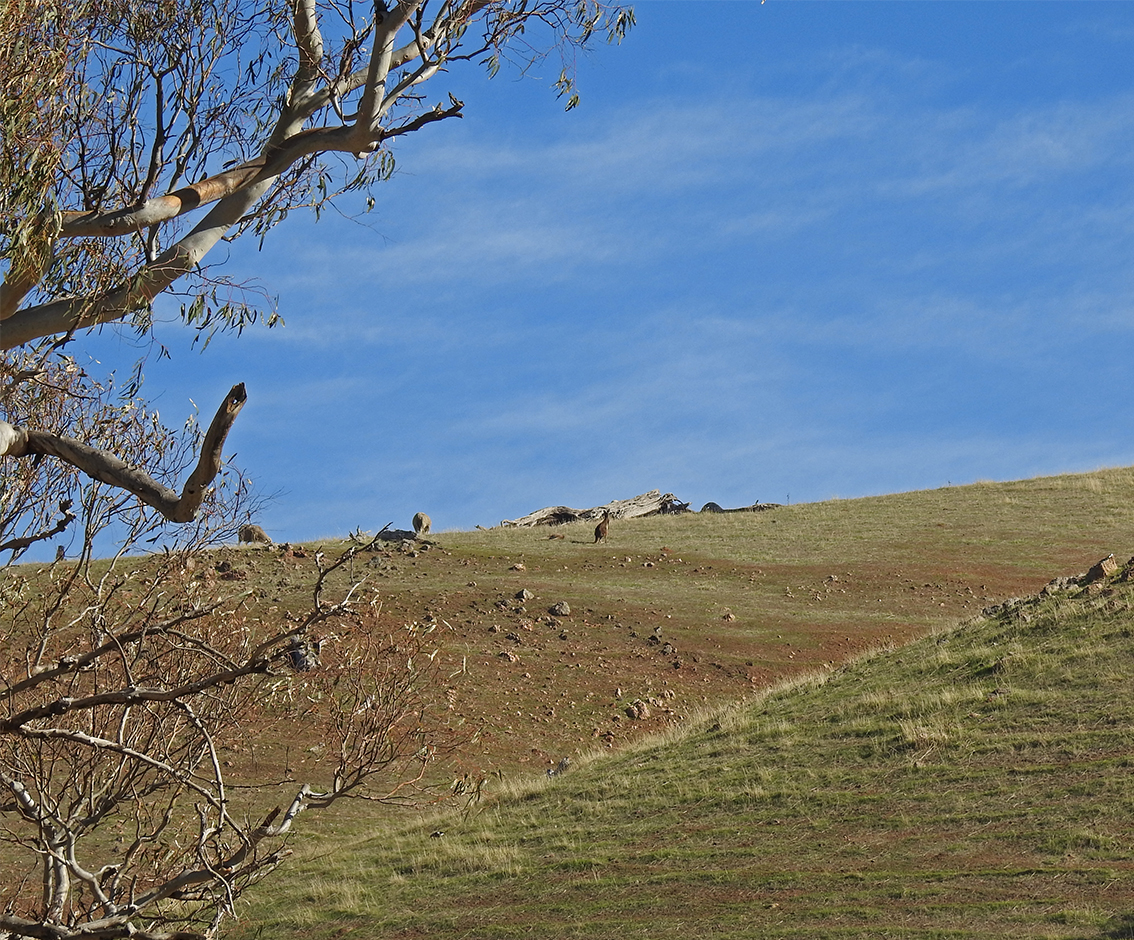
The weather is too cold for reptiles and I see only a few rather tattered looking butterflies. However, there are sheep with lambs in tow, on the hillsides. A closer look on one ridge reveals a lone Western Grey Kangaroo grazing alongside a couple of sheep.

Hilltop grazers

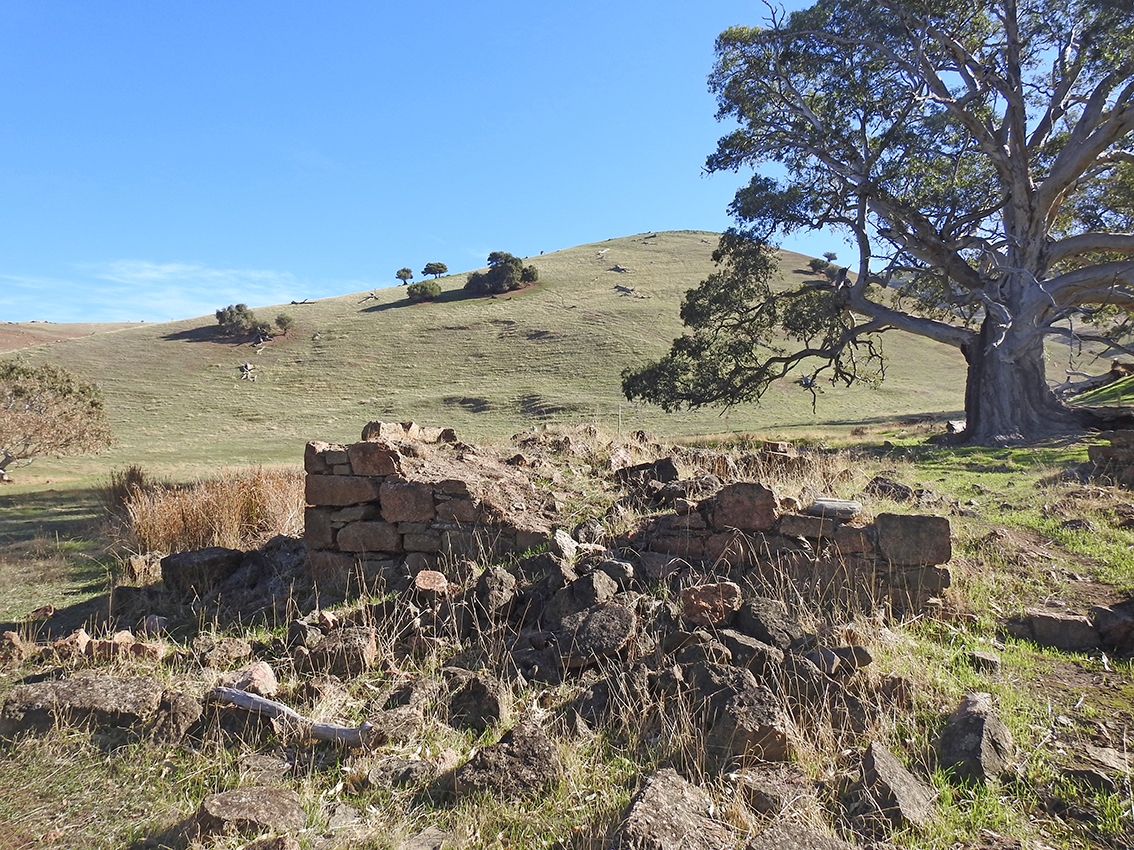
Glancing at the distance reading on my Apple watch, I realise I am almost at the half way (1.5 Km) point of this walk. Though the wildlife and scenery have been both interesting and varied, my writer’s mind wants a little more variation for an article. It comes in the form of an old ruin.

Remains of a once substantial building
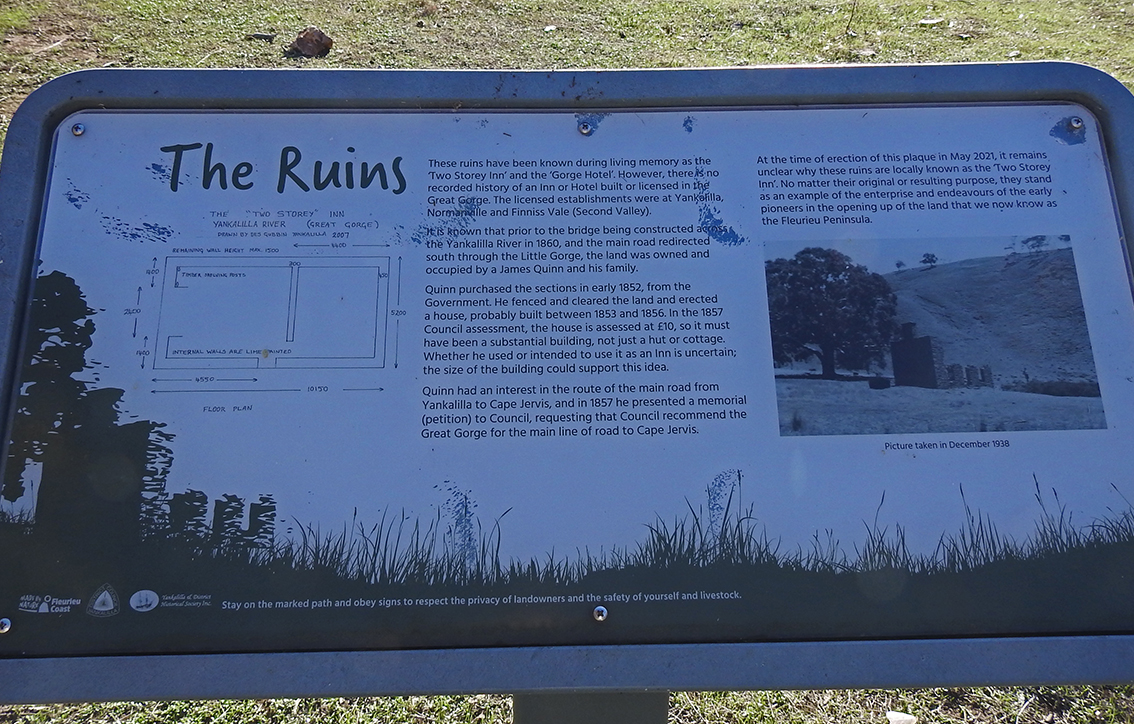
Historical placard near the ruins

The exact nature of the ruin is a little unclear and an information plaque provides some different alternatives. Nevertheless, this old structure and its history provides yet another reason to take this truly beautiful walk on the Fleurieu Peninsular………….to be continued.

Cheers

Baz

Additional notes

The camera used for this post is a Nikon P900

This is an easy walk which is quite suitable for families and seniors, Dogs must be kept on a lead.

Please pass on this blog title and or contact information (URL) to any person or organisation with an interest in taking walks and enjoying wildlife in SA.

Click on these links and see more South Australian stories and pictures in my Weekend Notes articles as well as locating similar blogs on Feedspot’s top 20 Australian wildlife blogs

https://www.weekendnotes.com/adelaide/writer/452/
https://blog.feedspot.com/australian_wildlife_blogs/

Murray River Cruising part 1

28 May

Dear Reader:

As we release the mooring ropes and pull away from the dock, I notice an Australasian Darter or Anhinga, stretching its neck out to mimic the branch it is perched on.

Anhinga or Australian Darter or Snake Bird

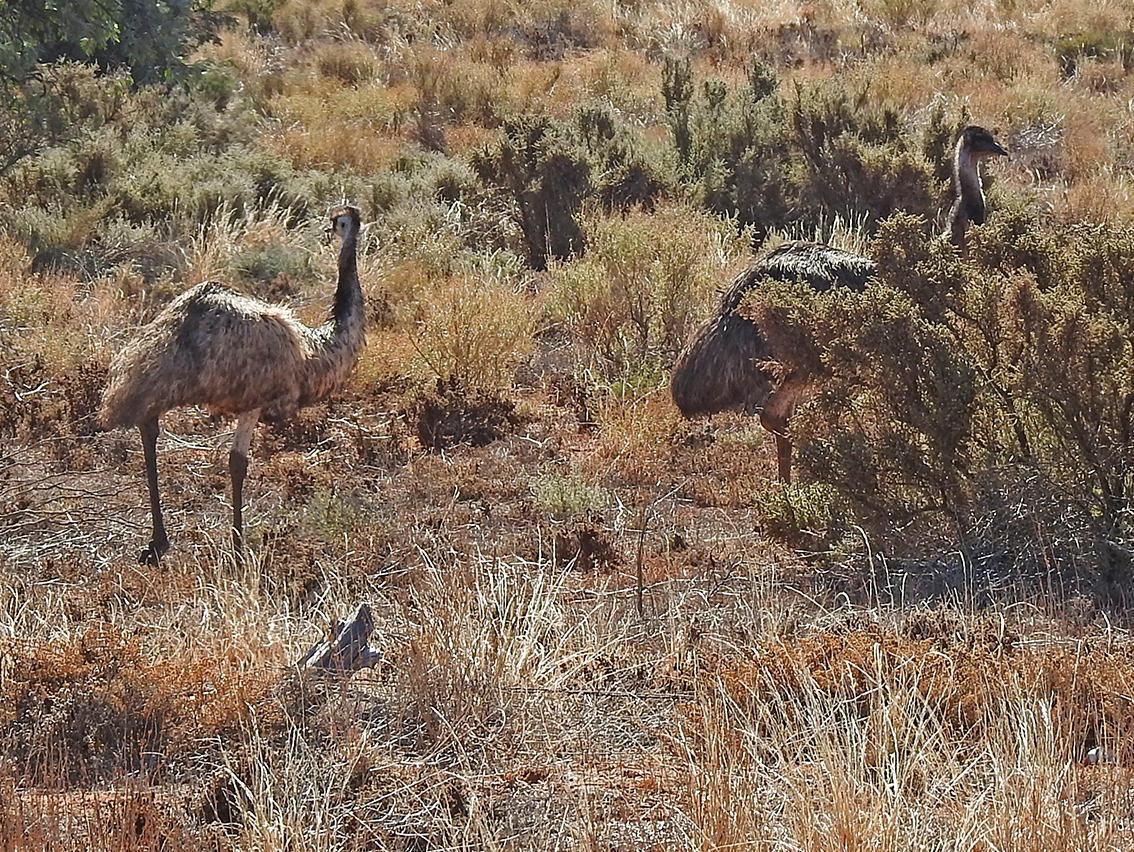
I am taking my annual houseboat trip on the Murray River from Mildura which is just over the South Australian border in Victoria. The trip from Adelaide takes around four hours and on this occasion I was lucky enough to sight emus on several occasions.

A wheat field of Emus

While we are cruising at a leisurely 6 kph I am scanning the banks for interesting images that capture different aspects the river.

Entrance to a billabong

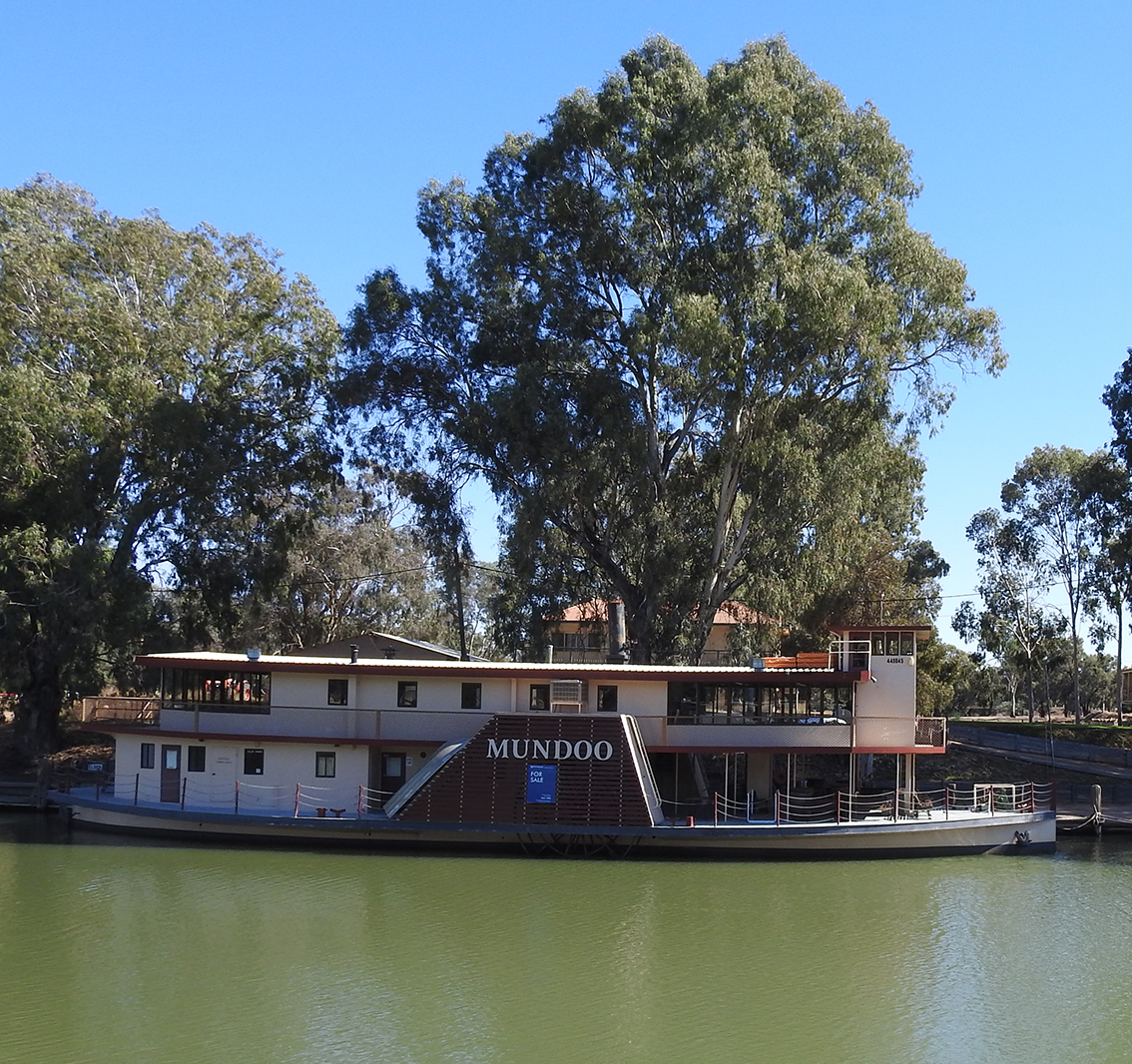
A wide variety of boats use the river, ranging from rebuilt paddle steamers to ski-boats, fishing craft, canoes and houseboats. Most of the ‘boaties’ give a casual wave as we pass them.

Reproduction of a classic Murray Paddlesteamer design
Fisher working the snags near the bank

Numerous bird species inhabit the Murray’s banks, billabongs, reed beds and open water. I spot a Pied Cormorant perched in a long dead tree and quickly focus before the moment is lost.

Pied Cormorant

We search for a place to tie up and carefully manoeuvre the boat into the shallows then secure the ropes to large trees on the bank. There is little current near the bank and I watch dragonflies and damselflies trace their erratic flight paths over the water.

Red and Blue Damsel (Xanthagrion erythroneurm)

After disembarking, I walk quietly through the scrub then sit on a fallen log to search the leaf litter and fallen branches for the small creatures inhabiting this understory environment.

Fence or Snake-eyed Skink found under bark and in leaf litter and fallen branches

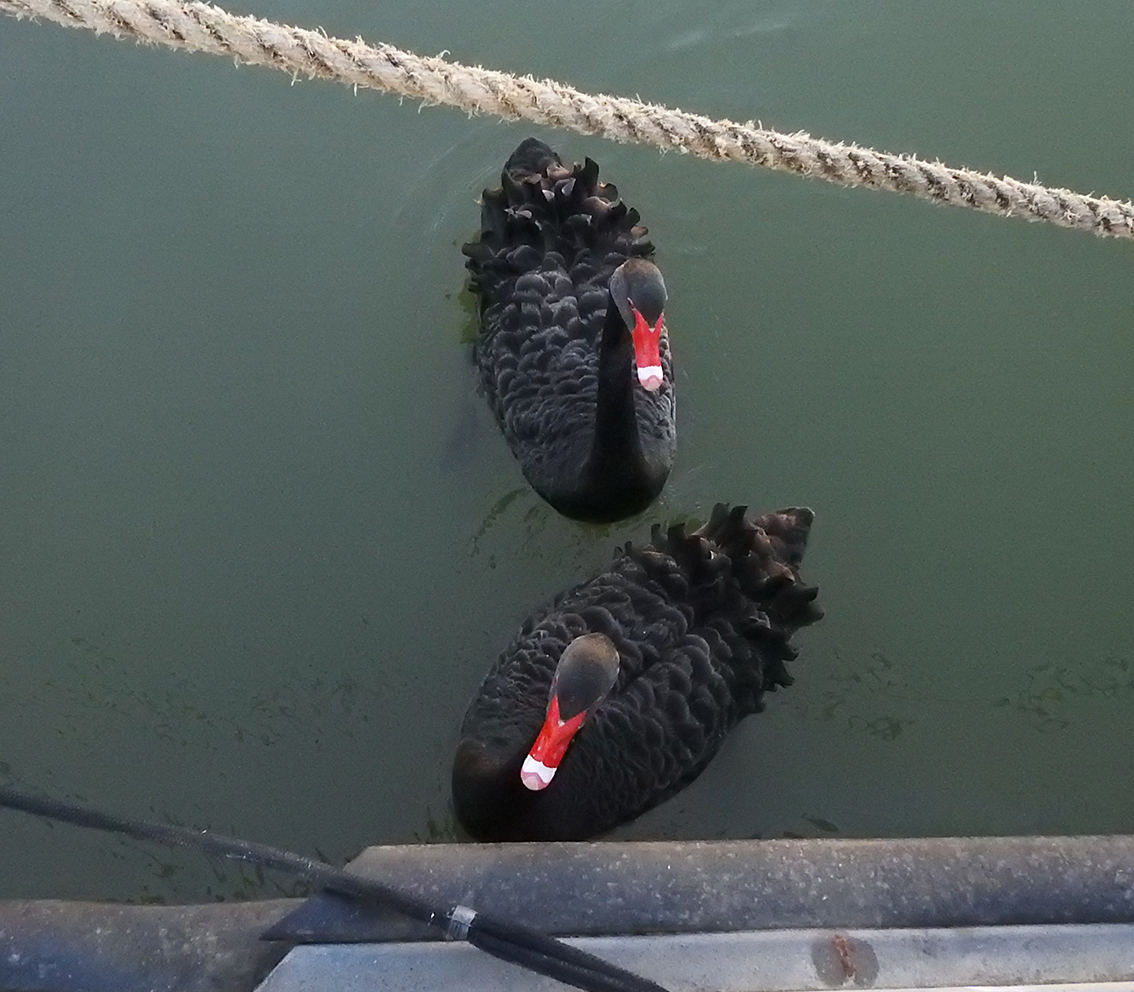
As evening approaches I make my way back to the boat photographing a pair of Black Swans under the mooring ropes as I climb aboard. They are probably looking for scraps from houseboaters. However attractive, feeding native birds is not a good idea as many processed foods can be damaging to their health.

Black Swans by the houseboat

My day cruising the river is done and I am rewarded with the most appropriate of endings; a spectacular sunset over the river.  

Murray River sunset

Cheers

Baz

Additional notes

The camera used for this post is a Nikon Coolpix P900

This is challenging but wonderful experience which is quite suitable for families.

Please pass on this blog title and or contact information (URL) to any person or organisation with an interest in taking walks and enjoying wildlife in SA.

Click on these links and see more South Australian stories and pictures in my Weekend Notes articles as well as locating similar blogs on Feedspot’s top 20 Australian wildlife blogs

https://www.weekendnotes.com/adelaide/writer/452/
https://blog.feedspot.com/australian_wildlife_blogs/

The tip of the Fleurieu

28 Apr

Dear Reader:

The school of Silver Drummer and Banded Sea Sweep mill around the rocky outcrop off Cape Jervis SA.

Silver Drummer (top centre) and Banded Sweep

I am exploring the southern tip of South Australia’s Fleurieu Peninsular using images that show a few of its many features and attractions.

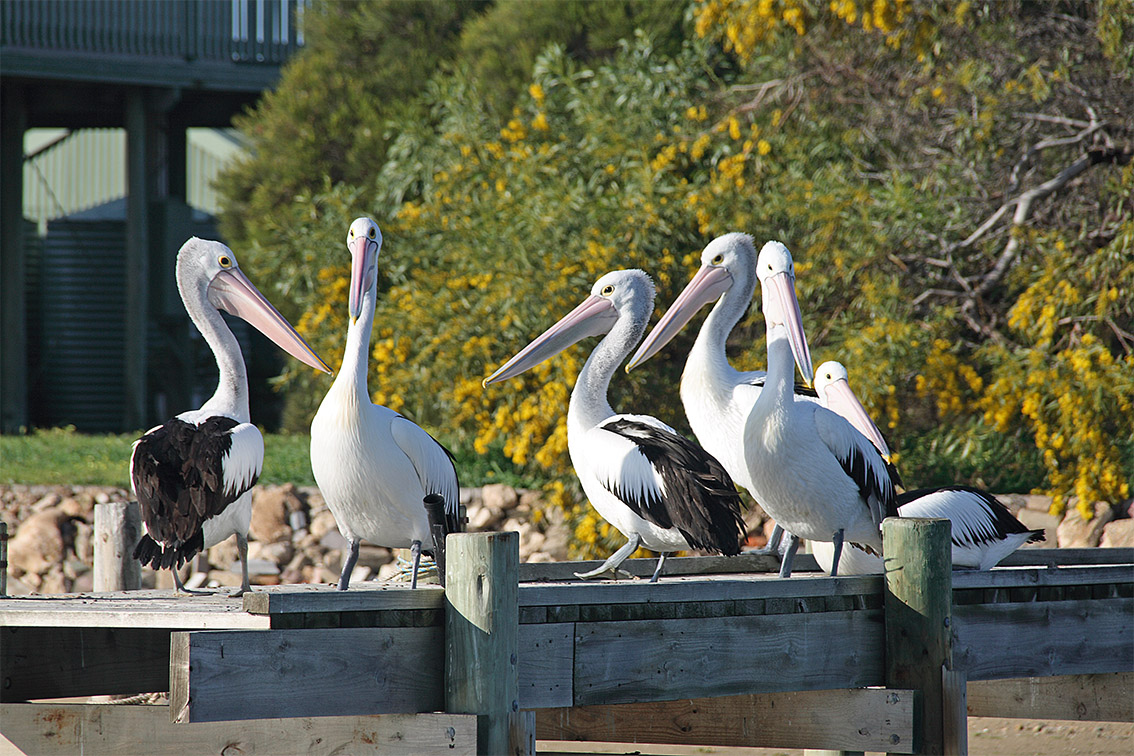
Australian Pelicans Goolwa bird reserve

Cape Jervis is the transit port for the Kangaroo Island Ferry as well as being an interesting wildlife destination in its own right.

Kangaroo Island ferry at Cape Jervis with KI in the background

Numerous seabirds live in this area including: terns, gulls, cormorants and various birds of prey. At different times I have observed Sea Eagles and Nankeen Kestrels.

Nankeen Kestrel hovering

Just before Cape Jervis, a dirt road leads to Fishery Beach where an undersea cable crosses beneath Investigator Strait to KI. I spend a little time snorkelling close to the shore where I photograph a school of Zebra Fish.

Zebra Fish

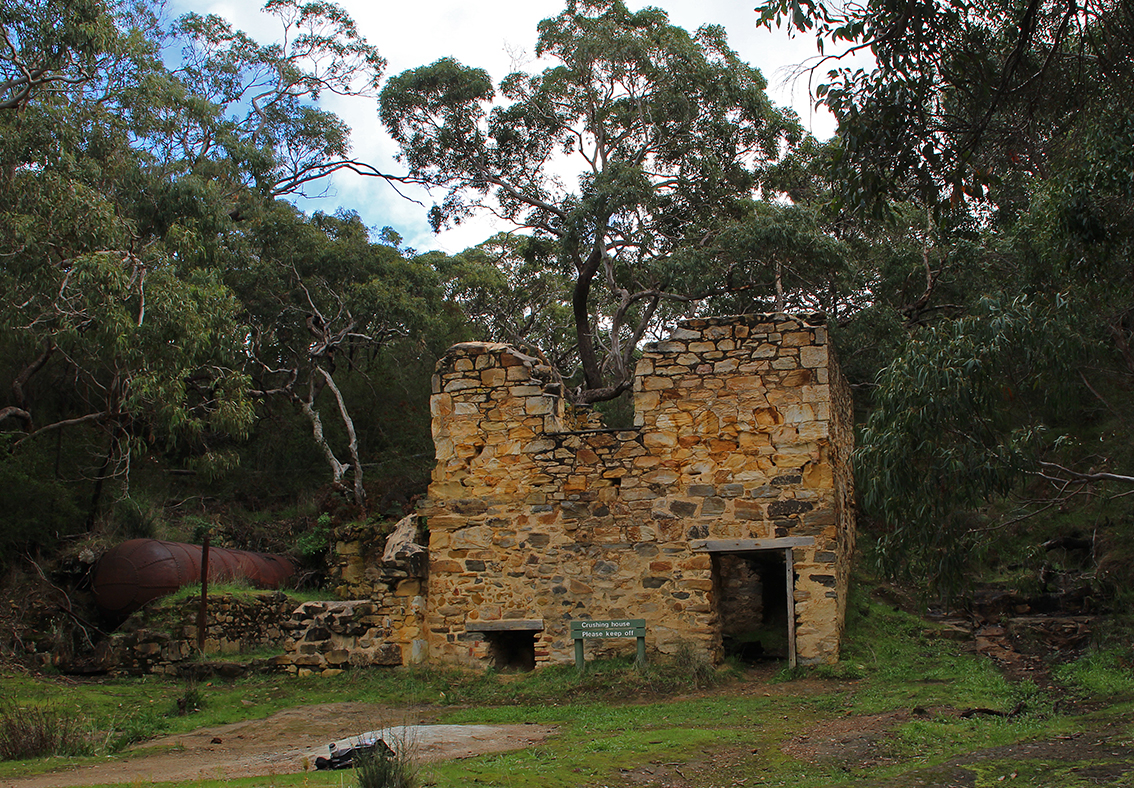
Range Road Curls around the foot of the peninsular passing through pasture, scrub and grazing country. Near the beginning of the road there is an entrance to the old Talisker mine. Numerous small birds inhabit the dense scrub around this area and the old buildings and machinery provide some historical context.

Crusher house and boiler
Crescent Honeyeater

One of the main attractions of the southern Fleurieu is the Deep Creek Conservation Park; a wonderful place to photograph Western Grey Kangaroos and the occasional Echidna.

Lone roo Deep Creek Conservation Park
Roos in the mist Deep Creek CP

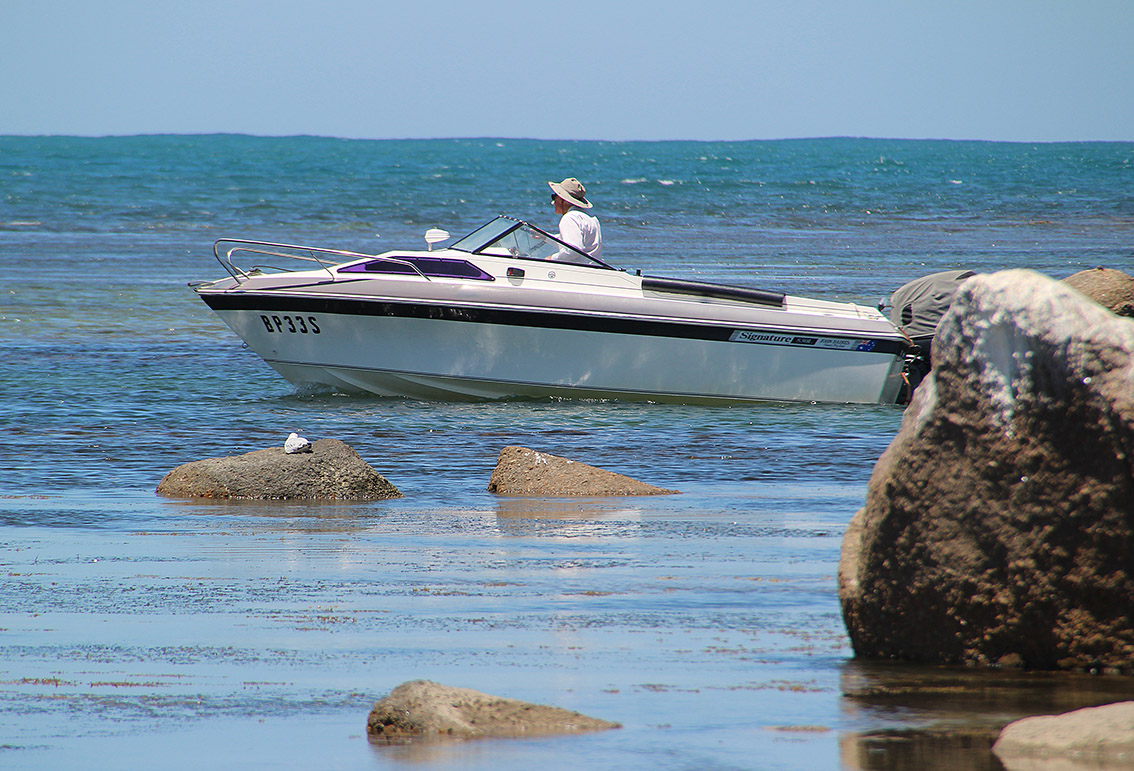
My next stop on this trip is Victor Harbor, where I watch a succession of recreational fishing boats head out to sea while I enjoy a tasty seafood lunch at Whalers Seaside Dining.

Setting out from the Victor Harbor boat ramp

Having reached Victor from the city via South Road and Range Road I decide to return to Adelaide along the B37 (Strathalbyn Route) after a 4WD run along iconic Goolwa Beach towards the mouth of the Murray River.       

Entrance to Goolwa beach

Cheers

Baz

Additional notes

The cameras used for this post are Sony RX, Nikon P900 and Nikon Coolpix AW100  

This is an easy drive which is quite suitable for families and seniors with the exception of the 4WD section which can be tricky depending on tides and wind.

Please pass on this blog title and or contact information (URL) to any person or organisation with an interest in taking walks and enjoying wildlife in SA.

Click on these links and see more South Australian stories and pictures in my Weekend Notes articles as well as locating similar blogs on Feedspot’s top 20 Australian wildlife blogs

https://www.weekendnotes.com/adelaide/writer/452/
https://blog.feedspot.com/australian_wildlife_blogs/

Tasmania’s Flinders Island….Day 1

18 Apr

Dear Reader:

The Black Tiger Snake is a good two metres long with its head raised towards me. However, I am safely seated in the driver’s seat of the rented SUV.

The reflection in the side mirror suggests a cautious approach to photographing a large Black Tiger Snake

I am spending seven days exploring Tasmania’s Flinders Island in Bass Strait, the largest of the Furneaux Island group. My apologies for straying from my usual South Australian blogs but this fascinating Island is certainly worth a few posts.

Typical Flinders Island coastline

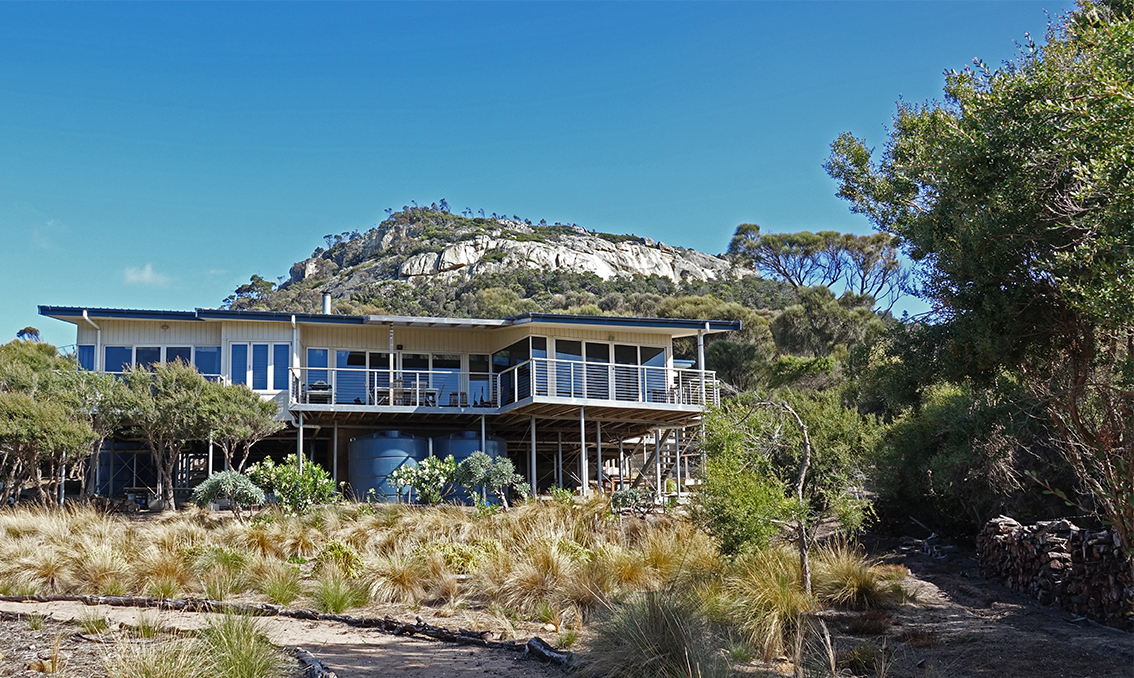
Nautilus, the coastal rental we are staying in, is truly wonderful; beautifully appointed and self-contained it offers panoramic views of the coastline.

View from Nautilus’s main living area

Unpacked and settled in, I take the path through the back garden and a  few metres of scrub emerging onto a granite platform which typifies this section of coast.

A gap in the scrub leads to the coast
Nautilus from the bottom of the garden area

The rugged outcrops and cliffs extend both ways along the shoreline, punctuated on the eastern flank by a bay with and stretch of golden sand. The sand yields Topaz crystals called ‘Killiekrankie Diamonds’. named for the tiny settlement and beach where they are found.

Killiecrankie’s bay and beach

A small bench sits on the border between scrub and granite. It is the perfect place to enjoy the striking scenery and look out for seabirds, dolphins and other coastal wildlife. I do not have to wait too long as a pod of dolphins cruises past several hundred metres out to sea while both Silver Gulls and Pacific Gulls fly along the seashore.

A Pacific Gull flies past

The sun is getting lower in the sky and there is just enough time to explore one of the many rockpools worn into the granite and accessible at low tide. This cursory look reveals periwinkles in the splash zone, limpets along the waterline and an occasional red anemone.

Rockpool in the granite coastline
Three Limpets amongst the Periwinkles….both use their tight sealing processes to retain water and can survive low tide exposure

Evening is closing in and it’s time to get back and start preparing dinner. Approaching the steps leading to the house, I notice a Red-necked or Bennett’s Wallaby in the driveway. It doesn’t seem too perturbed by my presence and hops into the nearby tree-line then stops and looks back at me.

A Red-necked Wallaby bounds across the path behind the house

My first day on Flinders Island has been quite exciting and I hope for more revelations as the week goes by.

Cheers

Baz

Additional notes

Other animals seen, heard but not photographed, Kookaburra, Fairy Wrens, Black Currawong, cormorant species

The camera used for this post is a Sony RX10 111

Please pass on this blog title and or contact information (URL) to any person or organisation with an interest in taking walks and enjoying wildlife in SA.

Click on these links and see more South Australian stories and pictures in my Weekend Notes articles as well as locating similar blogs on Feedspot’s top 20 Australian wildlife blogs

https://www.weekendnotes.com/adelaide/writer/452/
https://blog.feedspot.com/australian_wildlife_blogs/

Wirrina Foreshore Reserve

25 Mar

Dear Reader:

The Western Grey Kangaroo stops feeding and looks at me, twitches its ears then hops deeper into the bushes where it is joined by a second roo.

Western Grey Kangaroo
Then there were two

I am driving along the access road to Wirrina Cove marina, where I will walk along the Wirrina Foreshore Reserve. It is a rather overcast day which adds a few extra photographic challenges.

Beginning of the walk

Like other parts of the Fleurieu the story told by the rock formations is fascinating. The areas geoheritage includes: deep sedimentary basins, massive plate tectonic collisions, glaciation and mountain formation.

Rock formations along the shoreline

At low tide the rocky foreshore is a maze of rockpools. Within each of these ecological niches lives a wonderful variety of marine organisms such as anemones, sponges, seasnails and crustaceans; to mention just a few.

Shore crab species on the edge of a rockpool
Turban Shell

Banks of seaweed cover some parts of the shoreline and I am amazed to see an Australian Magpie probing the weed. Closer observation suggests it might be gathering nesting material.

Australian Magpie in seaweed pile

After spending some time exploring the edges of the pools, I move back to the trail to capture a few images of the typical birdlife. There are White-faced herons stalking the shallows, Pied Cormorants and Masked Lapwings resting on the rocks and a pair of grebes further out to sea.

White-faced Heron

Having captured images of molluscs, birds, crustaceans and marsupials, I turn my attention to plants, insects and other life forms. Butterflies and native bees are feeding on flowering Scabia blooms, lichens coat the rock formations and Cushion Bushes colonise niches in the rock formations.  

The weather closes in and it is time to leave the walking trail. However, I am determined to return on a warmer, sunnier day with some snorkeling gear to further explore this fascinating area.

Cheers

Baz

Additional notes

The camera used for this post is a Nikon Coolpix P900

This is an easy walk and drive which is quite suitable for families and seniors. It is dog friendly.

Please pass on this blog title and or contact information (URL) to any person or organisation with an interest in taking walks and enjoying wildlife in SA.

Click on these links and see more South Australian stories and pictures in my Weekend Notes articles as well as locating similar blogs on Feedspot’s top 20 Australian wildlife blogs

https://www.weekendnotes.com/adelaide/writer/452/

https://blog.feedspot.com/australian_wildlife_blogs/

, , , , , , , , ,