Tag Archives: Australian parrots

Normanville’s Big Gorge Walk…….part 1

17 Jun

Dear Reader:

Tiny birds are feeding in the canopy of a massive Red River Gum on the edge of the river bed. Scanning the area with the telephoto of my Nikon P900, I spot a diminutive Thornbill.

Thornbill species

Garnet Kelly Park on the southern side of Normanville is the start of the Great Gorge Walk. This charming track of around 3Kms return follows a path walked by explorers and traversed by later settlers.

Park entrance near the old bridge
Alongside the river

River Red Gums, Sheoaks and Acacia bushes are part of a complex and varied flora.
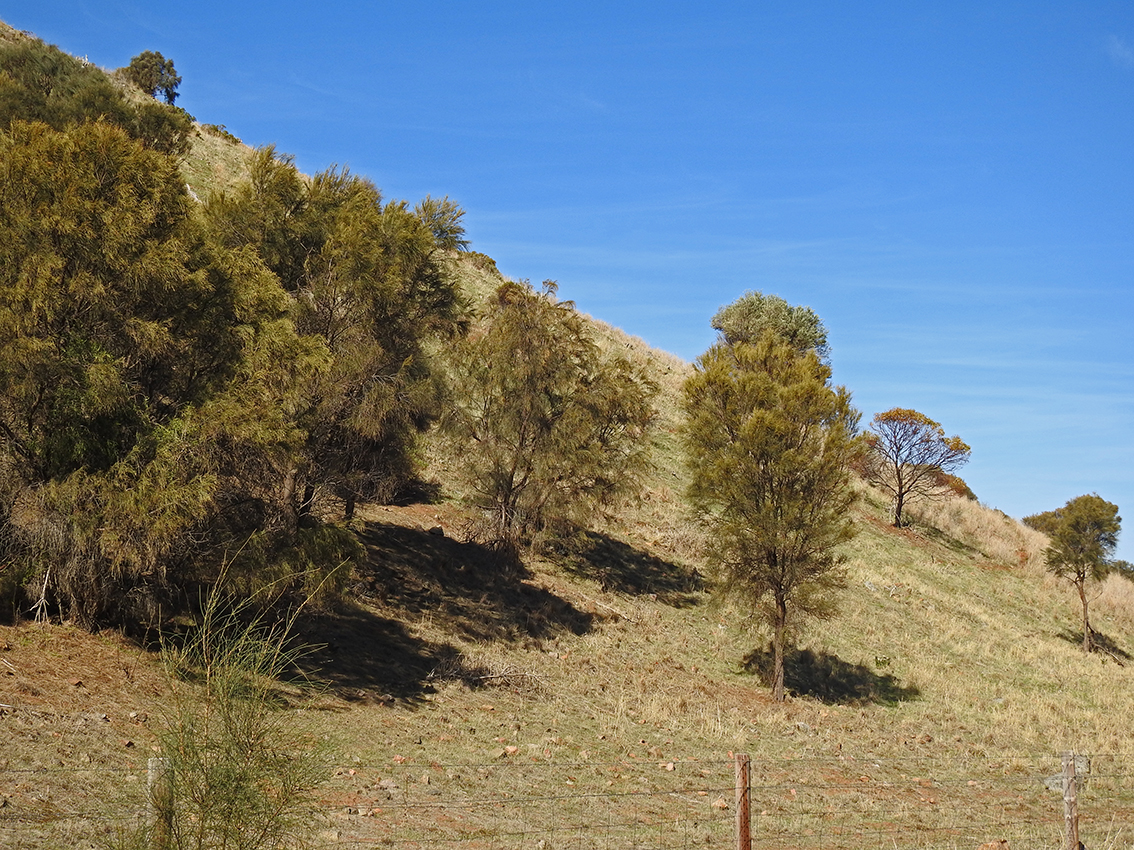
Sheoaks on hillside, private property bordering the walk

Information placards at the start of the walk and along its route tell the story of the bridge, pathway and the local soldier which the park is named after.

One of numerous informative signs on the walk and in the park

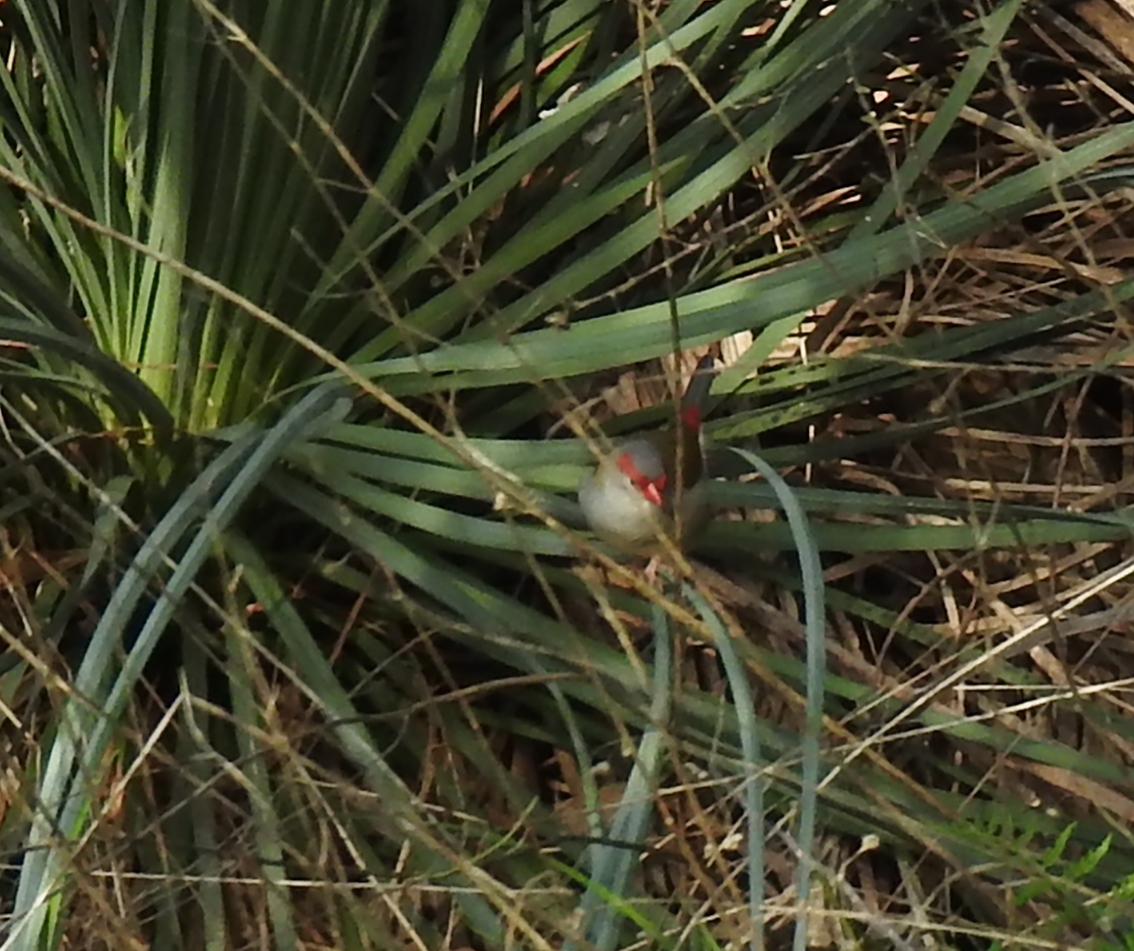
Small birds seem to be prolific in the first kilometre of the walk and I manage to photograph Fairy Wrens, Silvereyes and White-browed Finches. Most of the shots are taken at distance and emphasise the need for a good telephoto lens in this area.

Silvereye feeding on reed-like grasses near a pool in the river bed

I notice small groups of Sulphur-crested and Rose-breasted (Galahs) Cockatoos flying overhead. A few land to feed on the ground while others perch in nearby trees. They advertise their presence with a screeching, almost prehistoric, call.

Sulphur Crested Cockatoo

The weather is too cold for reptiles and I see only a few rather tattered looking butterflies. However, there are sheep with lambs in tow, on the hillsides. A closer look on one ridge reveals a lone Western Grey Kangaroo grazing alongside a couple of sheep.
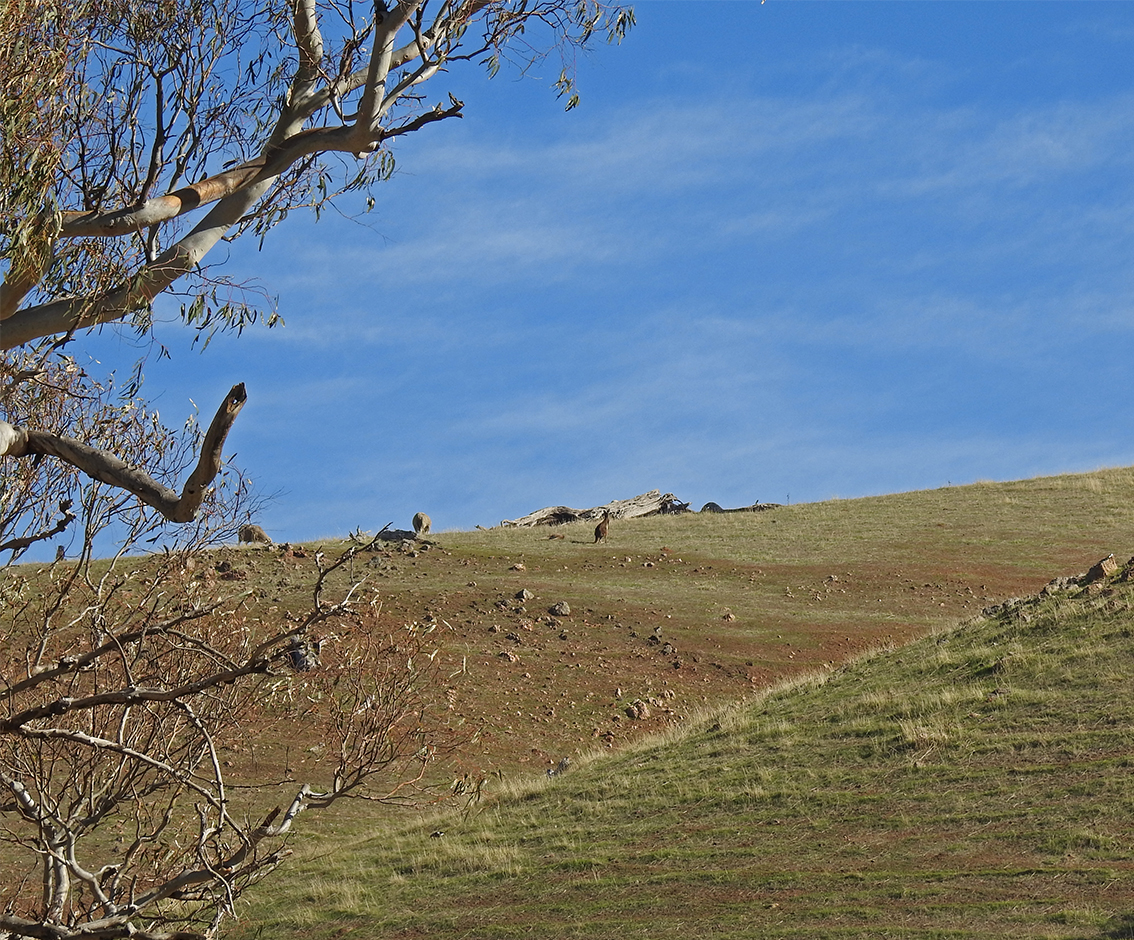
Hilltop grazers

Glancing at the distance reading on my Apple watch, I realise I am almost at the half way (1.5 Km) point of this walk. Though the wildlife and scenery have been both interesting and varied, my writer’s mind wants a little more variation for an article. It comes in the form of an old ruin.
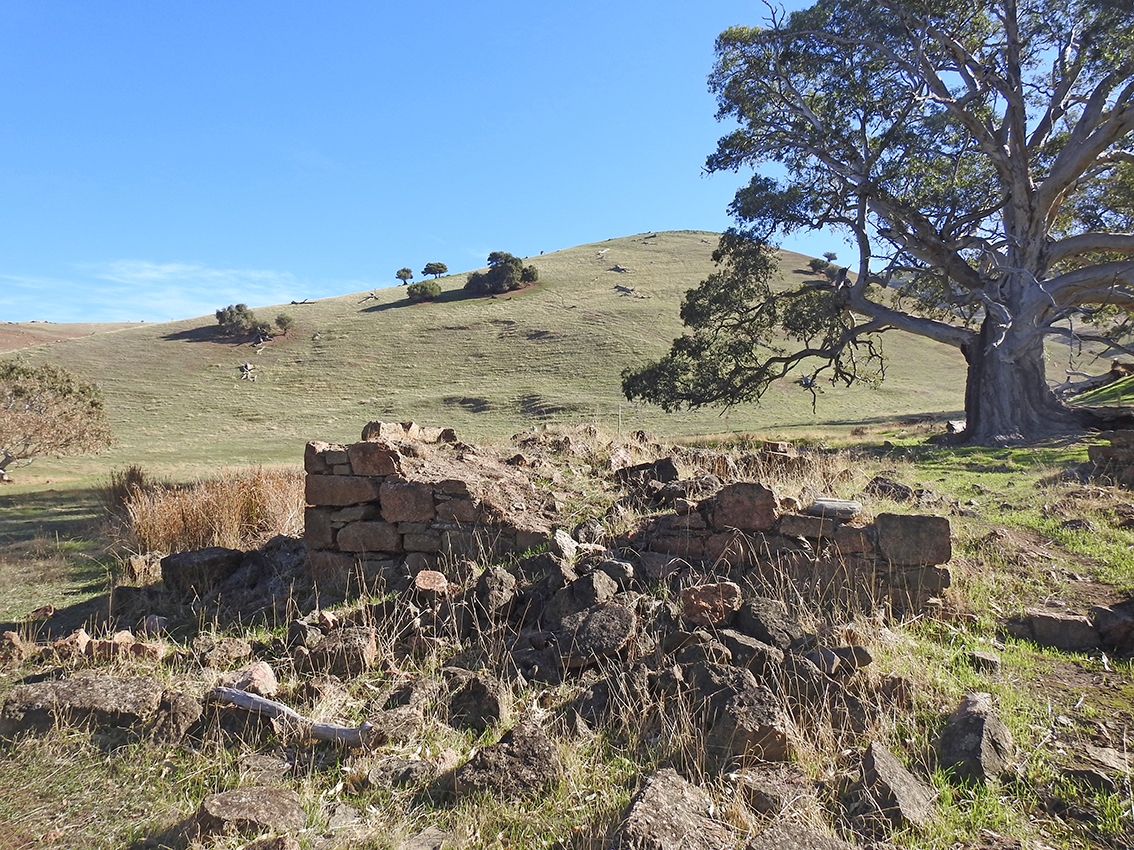
Remains of a once substantial building
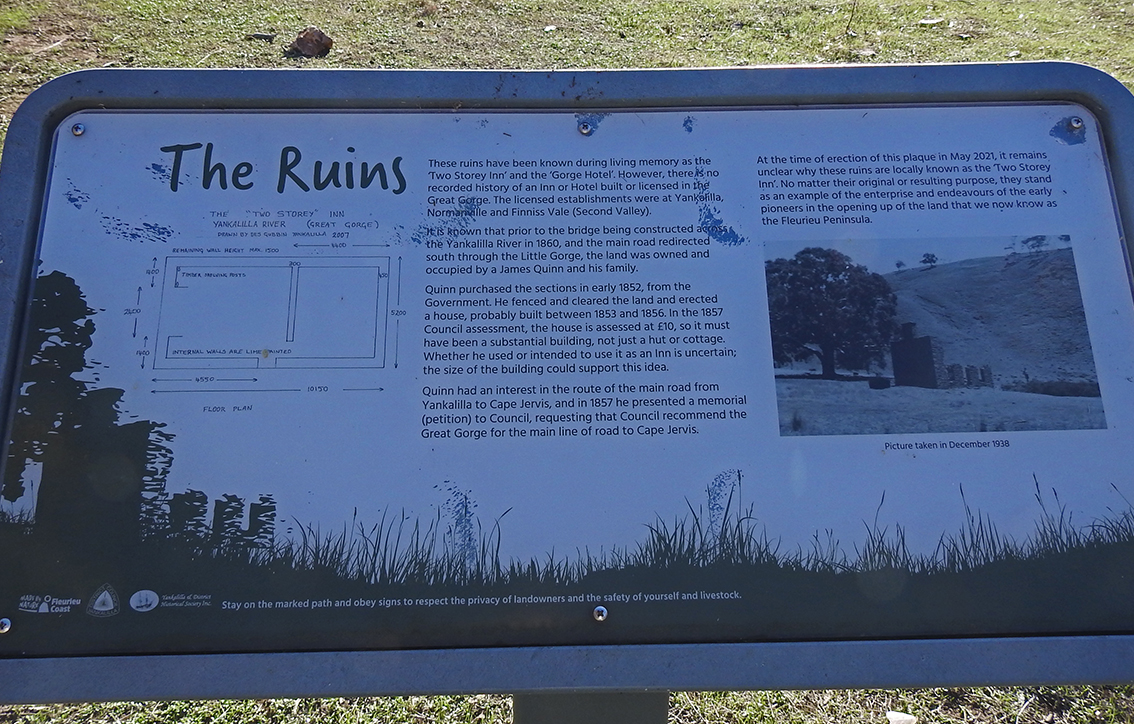
Historical placard near the ruins

The exact nature of the ruin is a little unclear and an information plaque provides some different alternatives. Nevertheless, this old structure and its history provides yet another reason to take this truly beautiful walk on the Fleurieu Peninsular………….to be continued.

Cheers

Baz

Additional notes

The camera used for this post is a Nikon P900

This is an easy walk which is quite suitable for families and seniors, Dogs must be kept on a lead.

Please pass on this blog title and or contact information (URL) to any person or organisation with an interest in taking walks and enjoying wildlife in SA.

Click on these links and see more South Australian stories and pictures in my Weekend Notes articles as well as locating similar blogs on Feedspot’s top 20 Australian wildlife blogs

https://www.weekendnotes.com/adelaide/writer/452/

https://blog.feedspot.com/australian_wildlife_blogs/

Aldgate to Stirling…a short walk

24 Sep

Dear Reader:

It is still early Spring and the sun is out and I have often spotted a small copper headed skinks basking in the sun at this time of year. There are several logs on the northern facing aspect of the path and with a little patience and perseverance I manage to find one of the little lizards. Their correct name is the Common Garden Skink or Sun Skink.

Common Garden Skink

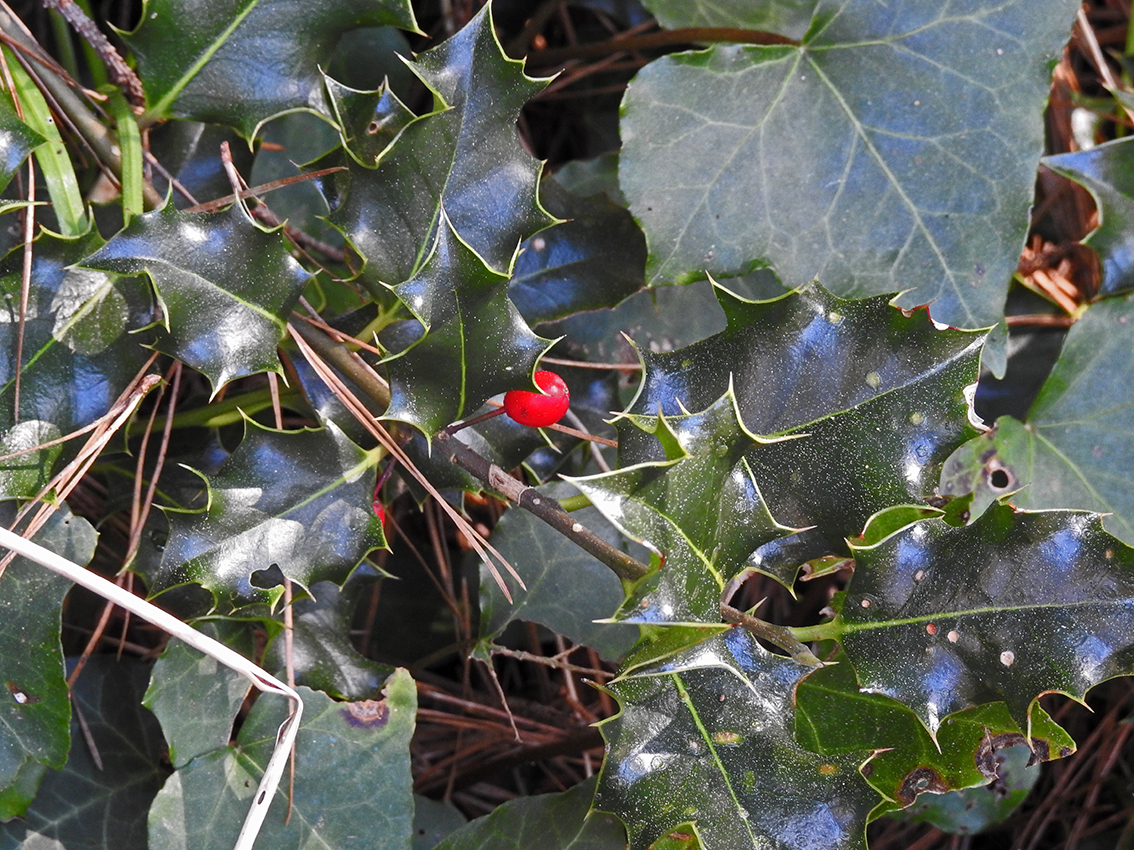
Following up on my previous post, which covered the area around the RSL Hall, on the edge of Aldgate, I am now walking the short path to Stirling. The trail follows the road and creek on one side and is heavily wooded on the other. There are numerous plants both native and introduced along the pathway including: Holly, tall pines, grevilleas, a few eucalyptus and acacia species as well as ferns and bracken.

Holly in the Hills

Grevillea species

After a fifteen-minute stroll along the pathway I reach the outskirts of Stirling. The town has an English country village feel about it with some lovely old homes and many small shops and businesses. Whenever I visit Stirling there always seems to be a welcoming committee of Little Ravens (often mistaken for Crows) in the area. Today is no exception as a group of the shiny black corvids trumpet their characteristic calls from a nearby garden.

Little Raven Stirling

I do not venture far into Stirling as it will be the subject of a later blog. I head back down the path to Aldgate. The dense vegetation, now to my right, is full of movement and the sounds of small birds in the undergrowth; probably wrens and finches. I scan the other side of the road and spot a Koala high in the branches. I take a couple of shots to demonstrate how difficult locating wildlife can be and how training your eyes to notice subtle changes and movement takes continual practice.

Koala at 100 metres

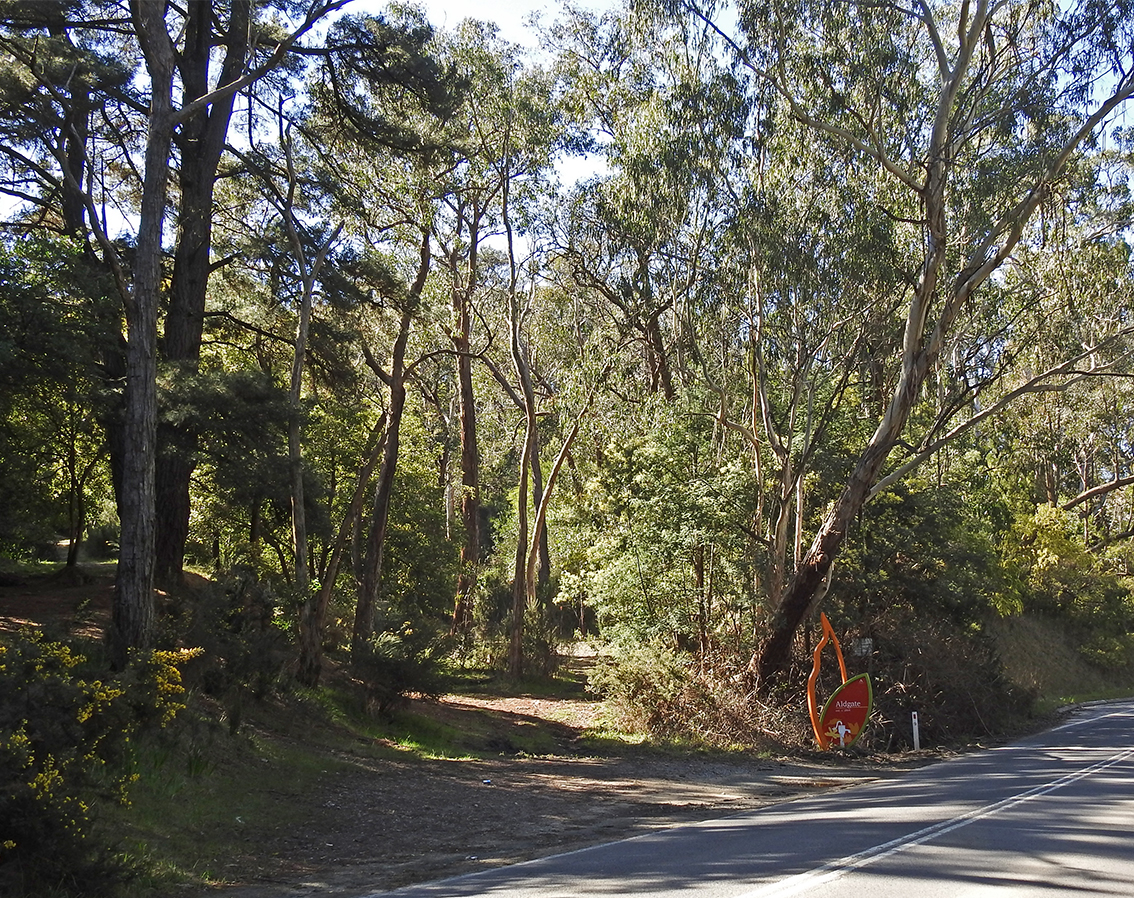
As I approach the outskirts of Aldgate I notice a track on the other side of the road near the township sign. Crossing over, I follow it a short way as it cuts along the hillside and into the scrub. This area is dominated by tall eucalypts and is a more typical hills bushland setting than the pathway.

The track near the entrance to Aldgate

Adelaide Rosella

Koala Aldgate

My detour is well worth the effort. Within a few minutes I have managed to photograph an Adelaide Rosella perched on an old, gnarled branch and a Koala at far closer range than before.

FRED……..Barista at work

FRED….Cosy place to dine

With the walk concluded I drive into Aldgate for lunch at Fred, a wonderful local eatery and another compelling reason to visit Aldgate. Over the years, I have had some wonderful meals in this iconic hills café and I’m sure today will be no exception. The only problem is one of choice with so many interesting dishes to choose from. After some serious deliberating, I end my day in Aldgate with a Croque Monsieur and a Chai Latte, selected from the ‘All Day Breakfast Menu’.    

Cheers Baz

Additional notes

This is an easy walk and drive which is quite suitable for families and seniors with public toilets, parking and other facilities nearby. It is dog friendly.

Please pass on this blog title and or contact information (URL) to any person or organisation with an interest in taking walks and enjoying wildlife in SA.

Click on these links and see more South Australian stories and pictures in my Weekend Notes articles as well as locating similar blogs on Feedspot’s top 20 Australian wildlife blogs

https://www.weekendnotes.com/adelaide/writer/452/

https://blog.feedspot.com/australian_wildlife_blogs/

Hale Conservation Park

14 Aug

Adelaide Rosella

Dear Reader:

Over the years I have made several major errors as a wildlife photographer. Perhaps the most telling has been the tendency to see a shot at the beginning of a field trip and not take it as I believe there will be a better one later. Not this time! As I climb out of the SUV I notice a pair of Adelaide Rosellas flying into a gum tree about a hundred metres away. I steady my camera against the vehicle and fire off a couple of frames. And yes; they were the only Rosellas I came close to photographing for the rest of the day.

Trailhead

Typical section of the trail showing some fire damage

I am walking the loop trail in the Hale Conservation Park a few kilometres out of Williamstown on Warren Road which leads to Gumeracha. It is a lovely, compact park with a small parking area and a well-defined track with information panels at the head of the trail.

Flame Heath with Goodenia flower growing through

Cryptandra species

The path climbs gently with generous views of the surrounding rural landscape. There is evidence of fire damage in some areas and significant regrowth; especially the Blue Gums. Although it is winter there are still numerous flowering plants along the trail including Flame Heath and Prickly Cryptandra bushes with Goodenia flowers growing through them.

Clever hands

I continually scan both trees and bushes for birdlife, possums and Koalas. On a level section, which gives me an excellent view of trees growing below me on the hillside, I spot a large Koala in the forked branches of a eucalypt. Its grip on the tree provides an excellent example of the prehensile nature of the marsupial’s ‘opposable thumb grip’-a feature more common in primates.

Scarlet Robin and New Holland Honeyeater (ID images only)

Red-browed Finch (ID image only)

With rain clouds gathering, I decide to backtrack rather than continue along the loop trail. Near the parking area there is a noticeable population of smaller birds which are hard to photograph as they flit between branches and leaves. I decide to take a sit and wait approach and capture some images for identification purposes. My results are far from ideal but they do give a true sense of the difficulty inherent in acquiring good clear shots in a natural environment where animals are wary. Nevertheless, I have included my attempts in this post.

Spotted Ctenotus

When I explore a new area I try to find and photograph animals from as many groups or classifications as possible. In the cooler months, cold blooded animals such as invertebrates and reptiles are the most difficult to locate. It is always worth turning over a rocks and dead tree branches or peering under bark to find animals that might take shelter there, (always replace the item or make sure the animal can move back to a safe place). Today, I find a Spotted Ctenotus; a small, stripy, long-tailed skink, hiding under a rock on a north facing incline.

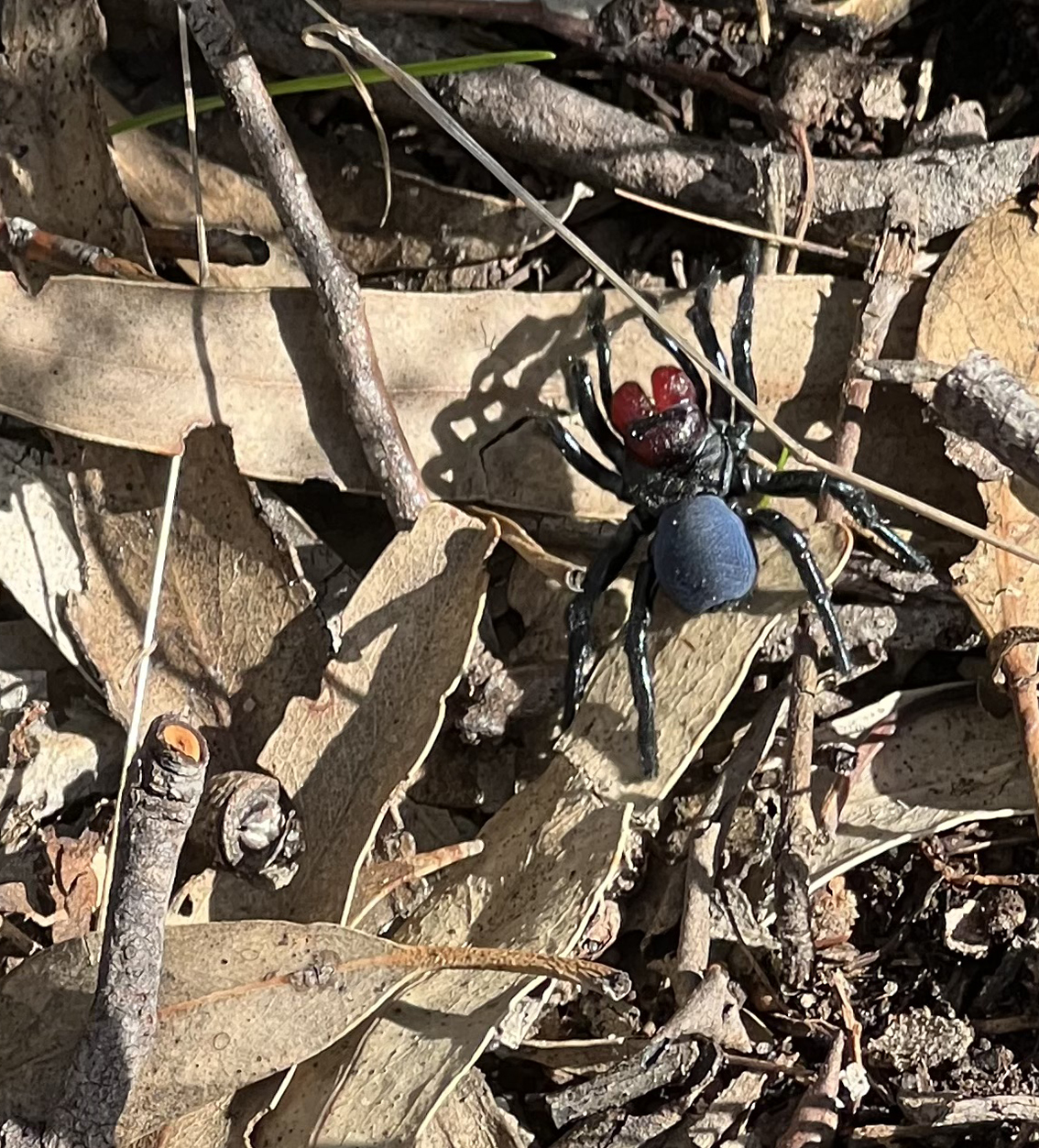
Mouse Spider (Credit Andrew Fitzner)

One of the best things about exploring our parks is encountering like-minded people and today’s walk is no exception. I meet a couple who passed me on the trail earlier and we chat about what we have seen. They show me a picture of a Mouse Spider spotted on the trail and photographed with an I Phone.

My walk completed, including a promise to myself to return in the spring, I drive back to Williamstown and the local bakery to treat myself to a chai latte and one of the best custard tarts I have eaten in ages.  

Cheers

Baz

Additional notes

This is a moderately steep walk with a small parking bay. It is not dog friendly.

Please pass on this blog title and or contact information (URL) to any person or organisation with an interest in taking walks and enjoying wildlife in SA.

Click on these links and see more South Australian stories and pictures in my Weekend Notes articles as well as locating similar blogs on Feedspot’s top 20 Australian wildlife blogs

https://www.weekendnotes.com/adelaide/writer/452/

https://blog.feedspot.com/australian_wildlife_blogs/

Warren Reservoir…drained for maintenance

14 Jul

Dear Reader:

From Tea Tree Gully, the road climbs into the foothills then snakes past Chain of Ponds Reservoir before it forks to the left towards Williamstown. Just before the town there are often mobs of Western Grey Kangaroos on the hillside to the right. Today, I spot a small group on the opposite side near a layby where I can safely pull off the road to take a few photographs.

Western Grey Kangaroos near Williamstown

I am exploring the Northern section of the Warren Reservoir which is around 10 kms past Williamstown towards Gumeracha on the Warren Road. The sky is a little overcast with a hint of rain in the air which makes photography challenging but in the winter months one takes any opportunity on offer to venture out into the bush. This is my second visit to the Warren and of particular interest because the reservoir has been emptied for dam wall maintenance and comparing it to my last visit, when it was full, is a rare opportunity.

Reservoir full

Reservoir drained and with some improvements to the public car park area

Usually there are numerous duck species as well as cormorants, Australian Pelicans and Anhingas (Snakebirds) around the edge of the reservoir. Today there is just a solitary Pacific Black Duck paddling along a narrow channel. Way off to the north, I can just make out a pair of kites catching thermals above the surrounding scrub.

Anhinga

Grey Fantail

However, all is not lost. For some reason the number of smaller birds seems to have increased around the periphery of the reservoir. Using the full extension of my Nikon P900 Camera lens, I am able to spot Silvereyes, Superb Fairy Wrens, a thornbill species, Grey Fantails and New Holland honeyeaters. Perhaps a lack of predatory species could account for this or maybe there are insects among the leaves and on the smaller branches.

Adelaide Rosella

I finish my loop walk back at the car parking area where a pair of Adelaide Rosellas are feeding on the ground. They are some distance away and as I approach all but one fly into the canopy. The lone bird perches on a wiry grass stem where it appears to be picking out seeds. I take a shot from distance just before it flies off disturbed by a couple of Little Ravens flying into a nearby eucalypt.

Australian Magpie foraging on reservoir floor

It has been a relatively productive morning’s work and I pack up my gear and head back towards Williamstown and lunch at the local bakery which, by the way, makes one of the best custard tarts I have tasted in a long time.

Snack time

Cheers

Baz

Additional notes

This is an easy walk and drive which is quite suitable for families and seniors with public toilets, barbecues, parking and information boards nearby.

Please pass on this blog title and or contact information (URL) to any person or organisation with an interest in taking walks and enjoying wildlife in SA.

Click on the links below to see more South Australian stories and pictures in my Weekend Notes articles as well as locating similar blogs on Feedspot’s top 20 Australian wildlife blogs

Weekend Notes

Feedspots top 20 Wildlife Blogs


Blanche Harbour

8 Dec

Dear Reader:

There is a White-browed Babbler fossicking in the leaf litter which has accumulated under a small tree. Several more birds are perched in a nearby Lemon-flowered Gum watching me warily. Most of the Babblers I have encountered in this region seem to feed on the ground looking for insects, spiders, small lizards as well as fallen fruit and other vegetation.

White-browed Babbler foraging

The area I am investigating has been planted out by the Blanche Harbour Revegetation Group and is at the southern extremity of Blanche Harbour which is south of Commissariat Point along Shacks Road (I wrote about Commissariat Pt in my 25th of October blog). The coast adjacent to Blanche Harbour and the army training zone of Cultana, also incorporates the Douglas Banks Marine Reserve.

View across saltbush and mangroves

At low tide the exposed shoreline and coastal fringe is a mixture of saltbush, samphire, mangroves and exposed seagrasses.  This region is the perfect environment for wading birds ranging from herons to plovers and oystercatchers; making this an ideal birding destination.

Coral Gum

Coral Gum flowers

Many of the trees, shrubs and flowering plants have been planted by the local conservation group and they are well labelled. A large shelter with excellent information displays, explains some aspects of the local ecology and provides pictures of significant wildlife.


Shelter and interpretive displays

The sun is low in the sky and photography is becoming more difficult and mosquitoes more prevalent; time to hop back in the car and head back to Commissariat Point where I am staying. However, the windows are left open and my mate Geoff cradles the camera as this is often the best time to encounter wildlife.

Blue Bonnet Parrots

Wester Grey Kangaroo

We are not disappointed when Geoff spots a pair of glorious Blue Bonnet Parrots in a roadside tree. A few minutes later, a Western Grey Kangaroo lifts its head from feeding, twitches its radar ears and watches us drive by. A couple of wonderful encounters as we head back to the shacks for a well-earned dinner.

Driving into Commissariat Point at dusk with wind on the other side of the gulf

Cheers

BAZ

Additional notes

This is an easy walk/drive which is quite suitable for families and seniors. It is dog friendly.

Please pass on this blog title and or contact information (URL) to any person or organisation with an interest in taking walks and enjoying wildlife in SA.

Click on this link and see more South Australian stories and pictures in my Weekend Notes articles

https://www.weekendnotes.com/profile/651267/

Mildura to Trentham Estate Winery….part 2…..Around the Winery

18 Jun

Moored at the winery


Dear Reader:

We arrived at Trentham Estate Winery around 1.00 pm. After tying up and sprucing up, as we are eating at the winery, we wander ashore to indulge in a little pre-lunch wine tasting. Our meal is served under a large marquis with wonderful views of the river and surrounding countryside.


Coffee by the river


A sipbefore lunch


The Duck Breast in a Hoisin sauce is moist and cooked to perfection and coffee, dessert and good company make the afternoon fly. However, before the light disappears I take a walk upstream to explore the properties and bushland alongside the winery.


Peaceful Dove by the water

As I edge along the bank I notice Anhingas, Black Ducks (not the source of lunch) and some unusual doves. I wait behind a large river gum and manage to snag a shot of these smallish, striped birds which turn out to be Peaceful Doves.


Grey Butcherbird


Laughing Kookaburra


Further along the pathway I hear the first few notes of a Kookaburra’s call. The bird is perched on a dead tree branch and the Nikon P900’s telephoto is stretched close to maximum extension. In a thorny bush below the tree, I can just make out the outline of a Grey Butcherbird. Despite waiting for the bird to emerge I settle for an image taken through the branches; not a portrait shot but certainly a realistic one.


Yellow Rosella


Male and female Red-rumped Parrots


Parrots are feeding high in the trees which makes focussing difficult. There seems to be two distinct groups. Scanning the branches, I recognise Yellow Rosellas and Red-rumped Parrots. Both are beautiful birds which I rarely see in SA. 


Boatel coming in to dock

The light is beginning to fade and it’s time to get back to the boat. When I reach the mooring I can hardly miss the opulent vessel parked a little further on. It is called ‘Boatel’ for obvious reasons and is a luxury version of our houseboat constructed by the same company ‘All Seasons’.

However, our craft has luxury enough for this photographer and I am about to sit back and relax with a cup of coffee and a piece of cake.

Until my next blog, enjoy our wonderful wildlife and countryside.

Cheers

Baz

Please pass on this blog title and or contact information (URL) to any person or organisation with an interest in taking walks and enjoying wildlife in SA.

Click on this link and see more South Australian stories and pictures in my Weekend Notes articles

https://www.weekendnotes.com/profile/651267/

Trentham winery

https://www.tripadvisor.com.au/Restaurant_Review-g255355-d1752428-Reviews-Trentham_Estate_Winery_Restaurant-Mildura_Victoria.html


Birdwood’s Cromer Conservation Park…….Part 2

11 Mar

Classic Cromer scrub

Dear Reader:

This is my second visit to the Cromer CP. Unlike my first wander around this unique patch of South Aussie scrub the immediate weather is not treating me in a kindly fashion with low clouds and mist forecast for the morning then clearing as the day progresses. Not great for detailed photography but it might add a different atmosphere to my images.

Roos in the fields

Close up shot from car

As I drive along the road from Birdwood I am forced to a stop to avoid a small group of Western Grey Kangaroos bounding in front of the car. They settle in a field and start to graze only looking up as I power down the window for a shot.

Thornbill species?

Treecreeper sp or Sitella sp

I enter the park from an unmarked gate on the far corner of the park about 1 km from the main entrance. A barely visible track runs into scrub which is dominated by two distinct types of eucalypts. The taller trees have smooth bark while the other’s is rougher and darker. There are small noisy birds flitting about in the canopy and despite the poor light I get a couple of shots at distance thanks to the extreme range of my Nikon P900. A bit of Photoshopping later suggests one is a variety of thornbill and the other a sitella or treecreeper species (any ID feedback would be welcome).

Cockies Galahs) in the mist

The track disappears after a few hundred metres and just where it peters out there is a small mound surrounded by old, rusted fencing. I take a closer look and discover, what appears to be,  a well or perhaps mine digging. There are several smaller unfenced depressions in the area and in one I catch a glimpse of a Blue Tongue Lizard just before it quickly disappears into the undergrowth. The sudden movement startles a pair of Galahs perched high above me. Despite the poor light I manage to capture a rather atmospheric image of the parrots.

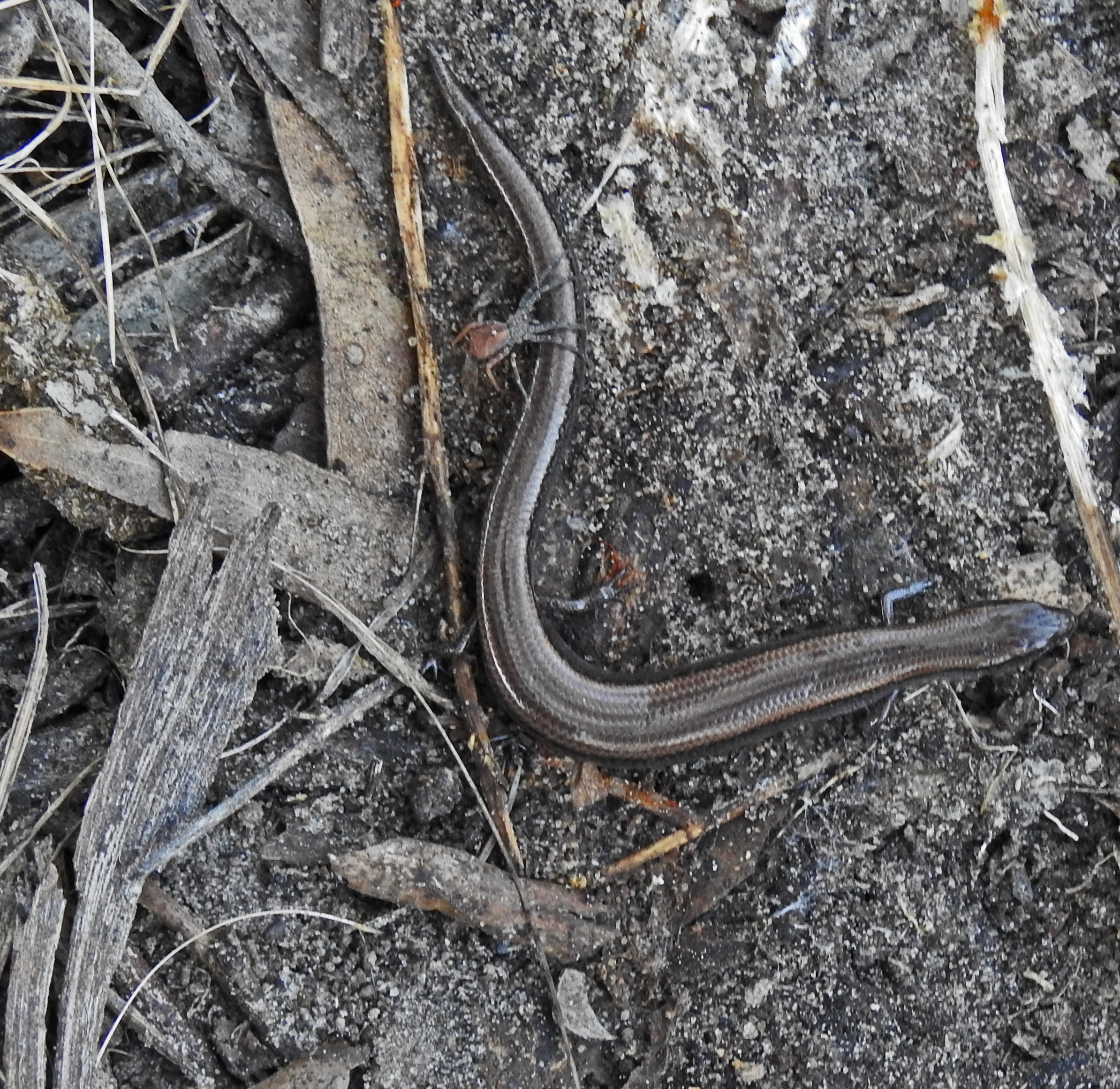
Unknown skink species possibly a slider

To my delight the sun is starting to burn off the low cloud and blue skies allow for faster shutter speeds and more depth of field. I decide to turn my attention to the smaller animals inhabiting the park. Under a fallen log, I discover a plethora of life; roaches, a centipede plus a lovely striped skink, possibly a slider species. It has tiny legs and a long slender body for living in the leaf litter and under rocks and fallen branches. Further examination of the shot reveals a small spider by its tail.

Bakery delights at Birdwood

It is time to leave the park on this, my second visit, but I shall return in spring to witness the emergence of delicate wildflowers, birds building nests and roos breeding. Now it is time to obey the urges of my stomach clock and enjoy the calorific delights of the local bakery. So much to choose from but my walk in Cromer Conservation Park might justify my indulgence.     

Cheers

Baz

Additional notes

This is an easy walk which is quite suitable for families and seniors but care must be taken because of the pristine nature of the scrub and the possibility of snakes in the warmer months.

Please pass on this blog title and or contact information (URL) to any person or organisation with an interest in taking walks and enjoying wildlife in SA.

Click on this link and see more South Australian stories and pictures in my Weekend Notes articles

https://www.weekendnotes.com/profile/651267/

Birdwood’s Cromer Conservation Park… Part 1

26 Feb

Cromer Conservation Park… Part 1

Dear Reader:

Red and Pink Gums as well as Long Leafed Box trees tower above me. They echo with birdsong which ranges from the twittering of finches and pardalotes to the raucous calls of lorikeets. My Nikon P 900 has a phenomenal telephoto and I use it to scan the treetops in the hope of identifying the birds and capturing an image or two.

Eventually I spot a Red Wattlebird and a Musk Lorikeet close enough to photograph. The silhouette of the wattlebird calling is a particularly pleasing image. While I continue to search the foliage for a makeable shot I watch a pair of Adelaide Rosellas flit between trees and high above me a kestrel is circling.

My destination today is the Cromer Conservation Park about 5 Kms from Birdwood. This small, fenced off section of bush is all that remains of the original scrub that once blanketed this part of the ranges. As such, it is an important repository of endemic plant and animal species. Indeed, over 100 bird species have been recorded in the park and I am sure plant and invertebrate tallies would also be high.

As I walk slowly along the main pathway near the boundary fence I notice another faint track winding into the scrub. I step cautiously and stop to listen every few paces. There is a rustle in the bush a dozen metres ahead and a Western Grey Kangaroo suddenly appears. We both freeze. I slide the Nikon up the rapid release strapping to eye level and take a wide angle shot for context then a close-up. The second click of the camera alerts the roo which swivels its ears, looks in my direction, then bounds away.

The sun is well up, the day is warming and with a rise in temperature the sounds of the scrub also change. Cicadas start to buzz and Fairy Wrens twitter in and around the grass trees which seem to be the centre of their territories. My morning walk is almost over therefore I decide to focus on the smaller plants and animals surrounding me. Although it is late summer there are still a few plants in bloom. The delicate, little Flax Lilies growing along this trail catch my attention. However, my final image for today is of a tiny speckled spider living under the bark of a long dead gum tree…….to be continued

Cox Scrub Conservation Park’s Wildlife…..Part 1. Entering from Coles Crossing

23 Jan

Old dairy building

Dear Reader:

It is a glorious day for a drive and some wildlife photography. The bitumen road winds past lush farmland and every so often I come across an old building that reminds me of the rich heritage this region of South Australia boasts. I keep a watchful eye out for kangaroos which are often seen grazing near stock and have been known to hop across the road even in the daylight hours. Rosellas and cockatoos fly between the eucalyptus trees fringing the road. I stop to capture an unusual image of two Galahs feeding on an embankment behind a barbed wire fence.


Galahs on embankment

I am exploring the Cox Scrub Conservation Park which is around an hour’s drive south of Adelaide’s CBD near Mt Compass and Ashbourne. It is one of the largest parks on the Fleurieu Peninsula. The park has numerous walking trails cutting through stands of Stringy Barks and a dense understory of Banksias and many other native shrubs. There are several entrances to the park and today I am starting at Cole’s Crossing where the Finniss River cuts through the north western perimeter of the conservation park.


Coles Crossing

He Coles Crossing track ends at a ford which is too deep to cross in the SUV but a great place to stop and eat lunch. There are small fish in the river and quite a lot of macroinvertebrates (tiny aquatic invertebrates like water boatmen and pond skaters) in the shallow water by the reeds. Several butterfly species are settling amongst exposed sand and pebbles to drink and I can see a Kookaburra perched on a dead tree branch about a hundred metres downstream.


Painted Lady

I follow a fence-line which skirts the river. There are numerous small birds twittering in the reeds and high in the canopy of the massive River Gums which tower over the water. I use the extreme telephoto on my Nikon P900 as a bird spotting tool then manage to get a half decent shot of a small honeyeater-like bird which I later identify as a Brown-headed Honeyeater (note to readers…please correct me if I am wrong with this ID).


Brown-headed Honeyeater

It has been interesting just pottering around the crossing but I want to enter the park from a different direction and see if there is any variation in the terrain and wildlife. However, that will be my next blog ‘Cox Scrub CP from Ridge and Bull Creek Roads’

Cheers

Baz

Additional notes

This is an easy walk and drive which is quite suitable for families.

Please pass on this blog title and or contact information (URL) to any person or organisation with an interest in taking walks and enjoying wildlife in SA.

Click on this link and see more South Australian stories and pictures in my Weekend Notes articles

https://www.weekendnotes.com/profile/651267/

Morgan Houseboat Cruise…continued…….Day 5 Taylor Flat

14 Dec

Tight against the bank

Morgan Houseboat Cruise…continued…….

Dear Reader

,,,,,,,,Continued from last post…………… Having photographed a frolicking group of goats I head down to the main deck for lunch.


Classic dry-land scrub

We have pulled up alongside a fallen tree where there is a short stretch of sandy beach. The bank downstream rises quite sharply and there is dryland scrub all around us. This is difficult country for spotting wildlife as food is scarce and the animals extremely wary.


Watchful Sulphur Crests high in the tress…tricky low light situation and the Nikon P900 did well

I take my leave of the group telling them that I’ll be back in a couple of hours. Recently I have taken to wearing an Apple Watch that automatically signals emergency services and selected people if I should fall or need help. A great device for anyone who spends a lot of time alone, or in my case, in remote areas working on my own in the outdoors. Though, to be honest,  I am not totally alone as a pair of Sulphur Crested Cockatoos watch me from the safety of a tall red gum on the river’s edge.


Vines amongst the scrub

Machinery from another era

Walking directly east from the boat I notice a well-worn, dirt track that cuts inland then breaks to the right along the river. Several hundred metres along the trail the land is fenced off protecting rows of grapevines and not far away I find the remains of some heavy machinery lying rusted above the riverbank. Perhaps they are the remnants of a pumping station or a hoist for loading cargo on the old paddle steamers which plied these waters in the early part of the last century.


Antlion trap

Predator (Antlion) and prey

All around me there are cone shaped depressions in the sandy soil. They are the traps dug by Antlions. Unwary ants or other small, non-flying invertebrates fall down the sides and are unable to climb back out as the soil particles are rounded and slip back down to the centre where the ferocious little predator waits partially buried in the trap itself.


Tangle web

Web builder

There are also numerous spider webs in the branches of the low shrubs. They are quite extensive and designed to snare anything that falls into them. It takes me some time to find one of the eight-legged constructors as they are very small compared to their webs. Perhaps it is a colonial effort or a web that is built on each day…..a little more research is needed on this one!

My walk is over and its time to return to the boat for a meal and some good company. Tomorrow is our last day and I’m sure this beautiful river will yield a few more natural surprises as we motor on back to Morgan.  

Cheers

Baz

Please pass on this blog title and or contact information (URL) to any person or organisation with an interest in taking walks and enjoying wildlife in SA.

Click on this link and see more South Australian stories and pictures in my Weekend Notes articles

https://www.weekendnotes.com/profile/651267/